






 We do what's right for you...


Key Advantages of Choosing a CTVS Surgeon in India
Dr. (Prof.) Tarun Kumar
Cheap surgery is not good surgery. That cliché persists, and it misleads patients considering India for complex heart care. I take the opposite view. The right CTVS surgeon in India combines volume, technology, and disciplined protocols to deliver outcomes that stand up to scrutiny. Price becomes an advantage, not a warning sign. What follows is a practical review of how to choose well, why the ecosystem works, and where the real value lies for serious cardiac cases.
Top CTVS Surgeons in India
When I recommend a ctvs surgeon to an international patient, I focus on case mix, team maturity, and postoperative discipline. Titles help. Track records matter more. Here is how leading names anchor that standard in practice.
Dr Naresh Trehan at Medanta
Professor Trehan exemplifies the modern ctvs surgeon who scales quality with systems. He helped popularise minimally invasive approaches that shortened recovery and reduced blood loss. As Quest of affordable cardiac care with public-private partnership highlights, he has also championed collaboration across public and private settings to widen access. That combination of technique and reach changes patient selection and timing. It means earlier intervention and fewer decompensations.
- Strong focus on valve repair, complex re-do cases, and fast-track recovery protocols.
- Integrated heart team model with anaesthesia, perfusion, and ICU nursing aligned to shared metrics.
I rate this approach because it de-risks surgery for higher-risk cohorts. A ctvs surgeon who systematises care tends to deliver consistent outcomes.
Dr Ramji Mehrotra at BLK Hospital
Dr Mehrotra represents the high-volume Delhi practice where precision meets throughput. He is widely recognised for advanced minimally invasive work and reliable bypass outcomes, which is exactly what a ctvs surgeon must master before venturing into complex reconstructions. The theatre cadence is calm. The postoperative playbook is exacting. That is how complication rates stay low.
- Expertise includes small-incision CABG, valve repairs, and hybrid procedures with the cath lab team.
- Focus on early mobilisation and respiratory protocols that cut ICU stays.
For patients comparing options, this balance of technique and predictable recovery is decisive. A cardiothoracic surgeon with this profile is usually a safe choice for first-time surgery.
Dr Ajay Kaul at Fortis Escorts
Dr Kaul’s teams have built a reputation for complex coronary work, including multi-vessel disease and fragile patients. I look for how a ctvs surgeon structures intraoperative decision making. His emphasis on complete revascularisation and graft quality stands out. It signals long-term thinking, not just a fast discharge.
- High use of arterial grafts where suitable, improving durability.
- Well-drilled pathways for elderly and diabetic patients, who need tighter glucose and infection control.
The lesson is simple. Technique plus perioperative nuance protects outcomes. It is the quiet work that matters.
Dr Devi Shetty at Narayana Health
Dr Shetty’s model shows what a ctvs surgeon can achieve with scale and standardisation. Large-volume units refine processes in a way small centres cannot. They spot complications early and handle them fast. And yet, volume alone is not the story. The real story is disciplined pathways for children, adults, and transplant candidates under one roof.
- Paediatric and adult cardiac programmes with shared infrastructure and data feedback loops.
- Cost engineering that lowers barriers without relaxing clinical safeguards.
That is not a trade-off. It is a capability. A vascular surgeon would recognise a similar truth in limb salvage programmes. Scale builds judgement.
Dr Suresh Joshi Pioneer in Minimally Invasive Surgery
Dr Joshi has long advanced small-incision techniques for valves and septal repairs. I value how a ctvs surgeon like him selects cases. Minimally invasive is a method, not a badge. When chosen well, patients often walk sooner, breathe better, and go home earlier. When chosen poorly, it adds risk.
- Focus on thoracoscopic and mini-sternotomy approaches where anatomy and risk profiles fit.
- Use of advanced imaging to plan access routes and cannulation.
Here is the practical takeaway. Ask for the conversion policy. A serious team will convert to open if the field is compromised. Safety first.
Dr Sandeep Attawar Leading Heart Transplant Specialist
Transplant programmes are unforgiving. Dr Attawar’s work underscores what matters when stakes are maximal. Donor selection, transport times, and immunosuppression protocols must click. A ctvs surgeon in this arena manages more than a theatre. He manages probability.
- End-stage heart failure pathways including VAD bridges and ECMO support.
- Tight infection control and biopsy surveillance during early rejection windows.
If your case involves advanced heart failure, choose the transplant ecosystem, not just the individual. The ecosystem keeps you safe when variables multiply.
Exceptional Cost Benefits
Cost is not a footnote. It shapes decisions and timelines. In India, a ctvs surgeon operates within a pricing model that lowers entry barriers while keeping quality high. Here is how the economics work without compromising standards.
Surgery Costs 80 Percent Lower than Western Countries
Roughly speaking, total treatment outlays can be a fraction of US or UK bills. The driver is structural cost advantage, not shortcut medicine. A ctvs surgeon earns less in absolute terms, consumables are negotiated at scale, and length of stay is optimised. The outcome is access. The risk is under-quoting. Insist on itemised inclusions.
- Ask for theatre time, perfusion, implants, ICU, medicines, and investigations in one schedule.
- Confirm currency, tax, and exchange rate assumptions before transfer of funds.
A precise financial plan reduces delays. It also keeps clinical choices free of billing noise. That matters in a crisis.
Comprehensive Treatment Packages Including All Services
Many hospitals offer bundled pathways from pre-op workup to rehab. This protects patients from add-on costs and gaps in care. As Open Heart Surgery: Types, Costs, and Coverage explains in the context of open procedures, packages typically include assessments, surgery, and postoperative care with standard diagnostics. I advise confirming exclusions in writing. It avoids surprises if complications extend stays.
|
Package Element |
What I Confirm |
|
Pre-operative |
Full bloods, imaging, dental clearance, and anaesthesia fitness included |
|
Surgery |
Surgeon, assistant, perfusion, implants, and disposables covered |
|
ICU and Ward |
Daily caps, antibiotics policy, and step-down criteria specified |
|
Follow-up |
First review, suture removal, and rehab sessions scheduled |
Well-built packages let a ctvs surgeon focus on clinical judgement rather than micro-approvals mid-care.
Government Hospitals Offering Free Cardiac Procedures
Public sector programmes in India support free or very low-cost cardiac surgery at designated centres. Eligibility varies by state scheme and timing. The practical point is straightforward. A ctvs surgeon working within these programmes follows the same anatomical principles and sterile protocols as private peers. The queue is longer. The standards are aligned.
- Verify inclusion criteria, documentation, and referral pathways early.
- Carry comprehensive imaging to avoid rework at the receiving centre.
For families balancing urgency and affordability, this route is a lifeline. It buys time without sacrificing science.
Insurance Coverage and Medical Tourism Options
For eligible Indian households, the Ayushman Bharat cover eases high-cost events like valve replacements. As Policybazaar notes, annual coverage of up to ₹5 lakh per family supports secondary and tertiary care, with reach across more than 12 crore families and reported out-of-pocket savings of over ₹1.52 lakh crore. For international patients, medical tourism facilitators coordinate visas, travel, and step-down care. I still advise direct hospital contact for clinical decisions. Keep logistics and medicine cleanly separated.
- Request a medical visa letter, package quote, and tentative surgery date together.
- Confirm ICU bed availability before booking flights for high-risk cases.
Insurance clarity helps the ctvs surgeon plan implants and length of stay with confidence. This improves patient flow and outcomes.
World-Class Medical Infrastructure
Infrastructure is the quiet multiplier. A ctvs surgeon relies on ventilation, imaging, perfusion, and nursing discipline to convert skill into results. India’s top centres invest heavily here.
JCI and NABH Accredited Hospitals
Accreditation aligns daily routines to transparent standards. It covers patient rights, sterilisation, medication safety, and clinical audits. A ctvs surgeon in an accredited unit benefits from predictable checklists and traceable outcomes. In practice, that shows up as fewer line infections and fewer near-misses.
- Look for published indicator dashboards and infection control bulletins.
- Ask for sterilisation logs and hand hygiene compliance rates, not just the certificate.
This is not bureaucracy. It is how teams keep patients safe, shift after shift.
Zero-Bacteria Operation Theatres with HEPA Systems
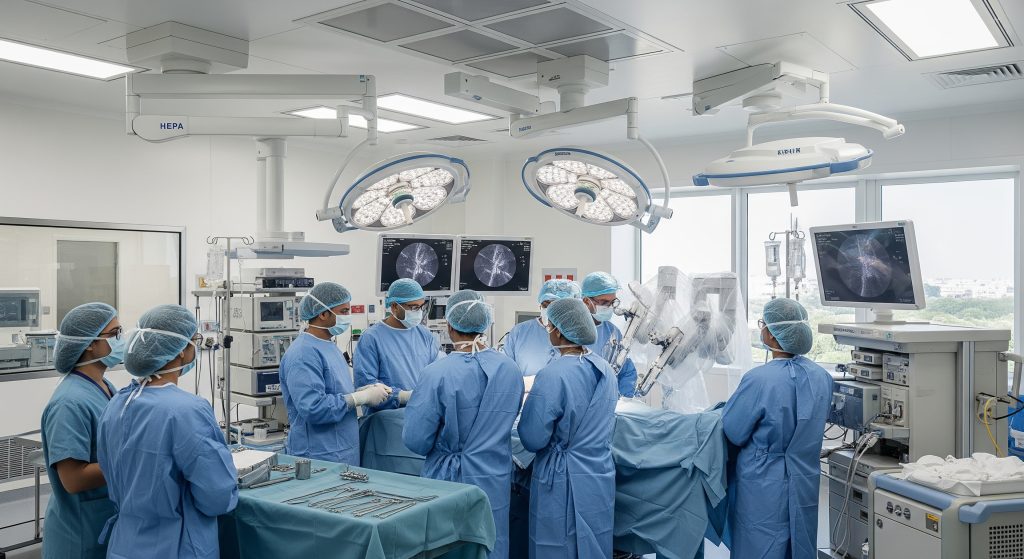
Modern theatres use laminar airflow and HEPA filtration to reduce airborne load. The result is a lower risk of deep sternal infection. A ctvs surgeon who insists on these controls protects grafts and prosthetic valves when it matters most.
- Check HVAC maintenance logs and filter replacement frequency.
- Confirm theatre discipline on door openings and traffic during bypass.
Small details decide outcomes. Airflow is not glamorous, but it is decisive.
Advanced Heart-Lung Machines and Robotic Surgery
Perfusion hardware affects inflammatory response and haemodynamics during bypass. Newer pumps and oxygenators stabilise flows at lower prime volumes. That means gentler physiology. Where appropriate, robotic platforms expand precision for valve and coronary work. A ctvs surgeon chooses tools that match anatomy and risk. Not every case needs a robot. Some absolutely do.
- Discuss cannulation strategy, target flows, and temperature management pre-op.
- For robotic cases, request the conversion threshold and emergency plan.
Technology should serve judgement. Not replace it.
Dedicated Cardiothoracic ICUs with One-to-One Nursing
Postoperative hours are unforgiving. One-to-one nursing in the early phase prevents small drifts from becoming big problems. A ctvs surgeon depends on ICU vigilance for rhythm changes, drain outputs, and ventilation weaning. When ratios are tight and handovers crisp, complications fall.
- Ask for average nurse-to-patient ratios by shift and by acuity tier.
- Review protocols for fast-track extubation and early mobilisation.
This is where outcomes are won quietly. Night shifts count as much as the surgeon’s name.
Latest Imaging Technology and Cardiac Catheterisation Labs
Hybrid decision making is now standard. High-resolution CT, TEE in theatre, and state-of-the-art cath labs let teams pivot between intervention and surgery safely. A ctvs surgeon who reviews imaging personally often spots anatomy that changes the plan. That habit saves lives.
- Confirm access to TAVI-capable cath labs if valves are in play.
- Ensure TEE and perfusion teams are available for urgent crossovers.
Speed is strategy. Imaging removes guesswork when minutes matter.
Superior Training and Expertise
Titles alone do not safeguard outcomes. Training quality and repetition do. A ctvs surgeon trained through rigorous pathways and exposed to complex case loads develops stable judgement. That is what you want in the room.
MCh and DNB Qualifications from Premier Institutions
India’s MCh and DNB routes demand structured exposure across coronary, valve, and thoracic work. I look for logbooks with variety and escalating responsibility. A ctvs surgeon who has practiced under senior mentors in high-volume centres tends to manage surprises calmly.
- Verify formal qualifications and current medical council registration.
- Review recent CME credits and workshop participation for technique updates.
Education does not end with a degree. It compounds with cases.
International Fellowships from Mayo Clinic and Cleveland Clinic
International fellowships broaden pattern recognition. Exposure to complex aortic, transplant, and minimally invasive programmes sharpens both hands and judgement. When a ctvs surgeon returns with those habits, local teams adopt stronger audits and debriefs.
- Ask about specific modules completed and the role held in theatre.
- Request recent outcomes data reflecting those techniques at home base.
Global practice. Local execution. That is the winning mix.
Expertise in Complex Procedures Like TAVI and Heart Transplants
Complex pathways stress-test teams. TAVI requires heart team consensus, imaging precision, and bailout readiness. Transplants demand immunology and infection control discipline. A ctvs surgeon competent in these areas typically elevates the whole institute’s standard.
- Check the heart team composition, including interventional cardiology and imaging leads.
- Confirm 24×7 availability for ECMO and cath lab access for emergencies.
The corollary is simple. If the ceiling is high, routine cases benefit too.
Experience Handling 15000 Plus Surgeries Per Surgeon
Experience does not guarantee excellence, though it correlates with safer decision trees. When a ctvs surgeon has managed thousands of varied cases, cognitive load falls during crises. Patterns surface faster. Teams move with fewer words.
- Ask for the personal case mix breakdown, not just the department total.
- Evaluate outcomes for your specific procedure and risk profile.
High volume is useful. Relevant volume is decisive.
Making Your Choice for Cardiac Care in India
Selection is an exercise in clarity. I suggest building a short list of three centres and two surgeons per centre. Meet them, in person or virtually. The best ctvs surgeon will answer pointed questions plainly and welcome a second opinion. The wrong fit will deflect or oversell.
Use this quick framework to compare options without bias.
- Outcomes and Transparency
- Ask for 30-day mortality, stroke, deep sternal wound infection, and readmission rates.
- Request definitions and risk adjustments used for those figures.
- Team and Coverage
- Confirm backup surgeons, round-the-clock intensivist cover, and perfusion staffing.
- Check nursing ratios, weekend cover, and escalation ladders.
- Infrastructure and Protocols
- Review ICU ventilator weaning, glycaemic control, and antibiotic stewardship policies.
- Verify imaging, cath lab, and blood bank readiness for urgent needs.
- Financials and Logistics
- Demand an itemised package and visibility on exclusions and conversion scenarios.
- Set realistic timelines for visas, travel, and rehabilitation.
Two final points. First, align goals. A cardiothoracic surgeon may have multiple safe options, but one fits your life better. Second, plan recovery. Physiotherapy, nutrition, and follow-up schedules influence outcomes as surely as suture choice. For high-risk vascular patients with coronary disease, coordinate with a vascular surgeon early. It prevents surprise bottlenecks during rehab.
My bottom line is direct. Choose the ecosystem, not only the star. The right ctvs surgeon works inside a system that anticipates problems and solves them before they escalate. That is how you buy safety and time.
What qualifications should I verify when choosing a CTVS surgeon in India
I verify an MCh or DNB in cardiothoracic and vascular surgery, current medical council registration, and hospital privileges. I then review the ctvs surgeon’s recent case mix for similarity to the planned procedure. Fellowship exposure in valve, aortic, transplant, or minimally invasive work strengthens the profile. Finally, I ask for audited outcomes and ICU staffing details. Credentials plus context. Both matter.
How much can international patients save on cardiac surgery costs in India
Depending on procedure and complexity, total expenditure is often substantially lower than in Western centres. Savings typically include surgery, ICU, medicines, and stay within a single package. When the ctvs surgeon works in an accredited, high-volume unit, that lower price does not imply lower rigour. It usually reflects scale and efficient procurement. Always compare itemised inclusions and currency assumptions across quotes.
Which minimally invasive cardiac procedures are available from Indian CTVS surgeons
Options include minimally invasive valve repairs or replacements, mini-sternotomy AVR, thoracoscopic ASD closure, and selected robotic procedures. TAVI is widely available in major centres with hybrid labs and experienced imaging teams. A ctvs surgeon will match approach to anatomy and risk, not fashion. The safety rule is consistent. Approaches should convert to open promptly if fields or stability degrade.
What post-operative care standards do Indian cardiac hospitals maintain
Leading units maintain one-to-one nursing early post-op, structured ventilator weaning, and strict infection control with HEPA-backed theatres. They monitor rhythm, drains, urine output, and glucose on protocol. A ctvs surgeon rounds with intensivists to adjust fluids, anticoagulation, and mobilisation. Discharge is followed by scheduled reviews and rehab. Ask to see pathway documents and recent audit summaries before admission.
How do Indian CTVS surgeons handle emergency cardiac cases
Emergency pathways prioritise rapid imaging, cath lab access, and theatre readiness with full perfusion support. The on-call ctvs surgeon coordinates anaesthesia and ICU bed allocation while labs prepare blood products. For shock or arrest, ECMO and balloon pumps are mobilised where available. The best centres treat speed as a clinical skill. Decision and action align within minutes, not hours.

