






 We do what's right for you...


Low Blood Pressure Remedies Starting with the Right Diet
Dr. (Prof.) Tarun Kumar
Conventional advice often treats hypotension as an afterthought. That is a mistake. A precise low blood pressure diet can stabilise daily energy, reduce dizzy spells, and prevent avoidable falls. I will lay out the foods, patterns, and practical tactics I recommend in clinic, alongside clear guardrails. Where medication or medical conditions drive pressure down, diet still matters. It just shares the stage with targeted care.
Best Foods to Raise Low Blood Pressure Naturally
1. Salt-Rich Foods for Instant Blood Pressure Boost
I use salt tactically within a low blood pressure diet, especially when dehydration or heat is part of the picture. Sodium helps the body retain fluid, which increases circulating volume and can lift blood pressure. For fast relief, I suggest simple options like salted lemonade, salted buttermilk, olives, or a small handful of salted nuts. A light pinch of salt on fruit can also help.
In acute episodes, a practical approach is helpful. Sit or lie down, drink water, and pair fluids with a salty snack. As Cleveland Clinic notes, dehydration shifts blood pressure significantly, so fluid plus sodium often works better than either alone. For routine intake, moderation and monitoring are key. If there is heart or kidney disease, I discuss limits with the treating physician before raising salt.
- Everyday choices: soups, pickles, cottage cheese, hard cheese, salted tahini on toast.
- On-the-go fix: oral rehydration solution, or coconut water plus a salty snack.
- Check for swelling or headaches. If they appear, reduce salt and review medication.
Some patients benefit from a defined sodium target. When a doctor advises an increased allowance, I align the low blood pressure diet to that plan and track symptoms for two to three weeks. Rapid improvement is common. Sustainable improvement is the goal.
2. Caffeine Sources for Quick Relief
Caffeine can provide a short, useful bump in blood pressure. I employ it as a contingency tool within a low blood pressure diet, not as a crutch. Strong tea, coffee, or even dark chocolate can help when standing produces a head rush. The effect is transient, so I pair caffeine with fluids, light salt, and food.
A measured routine works best. One or two cups of tea or coffee earlier in the day can reduce lightheadedness without disturbing sleep. I avoid late evening caffeine, which can fragment rest and worsen morning fatigue. For those sensitive to coffee, black tea, green tea, or mate can be gentler options.
- Use caffeine before long standing periods, travel, or hot weather exposure.
- Avoid excess. Too much may raise heart rate and cause jitteriness.
- Combine with protein or fibre to smooth the effect and reduce rapid dips later.
3. Iron-Rich Foods to Combat Anaemia-Related Hypotension
If anaemia is present, a low blood pressure diet must emphasise iron. Iron supports haemoglobin production and oxygen delivery. Low iron worsens fatigue and can aggravate hypotension. I prioritise heme iron sources when acceptable, and optimise non-heme iron absorption for plant-forward diets.
|
Iron type |
Food sources and notes |
|
Heme iron |
Lean red meat, chicken thigh, turkey, sardines. Better absorption and fewer inhibitors. |
|
Non-heme iron |
Spinach, amaranth leaves, lentils, chickpeas, kidney beans, sesame, pumpkin seeds, jaggery, fortified cereals. |
|
Absorption booster |
Vitamin C from guava, amla, oranges, lemon, tomatoes. Add lemon to dal or spinach to improve uptake. |
|
Inhibitors |
Tea, coffee, and calcium with iron meals reduce absorption. Separate by at least two hours. |
If blood tests confirm iron deficiency, diet sits alongside supplementation. The low blood pressure diet then doubles down on iron at lunch and dinner. I also add a fruit rich in vitamin C to lunch. It is simple and effective.
4. Vitamin B12 and Folate Sources for Blood Health
Deficiencies of vitamin B12 or folate can cause anaemia and worsen hypotension. In a low blood pressure diet, I include both nutrients deliberately. For B12, animal products are the primary sources. Vegetarians often require fortified foods or supplements to meet needs. Folate is abundant in legumes and leafy greens, but daily inclusion matters.
- B12 sources: eggs, dairy, meat, fortified plant milks, fortified nutritional yeast.
- Folate sources: spinach, methi, chana, moong, rajma, peas, sesame, sunflower seeds, and fortified grains.
- Planning tip: include one folate source in every main meal, and one B12 source daily.
Where absorption is uncertain, I encourage testing. Low levels are common in older adults and in strict vegetarian diets. As Frontiers in Nutrition has discussed, limited dietary B12 raises deficiency risk in such groups. Correcting these gaps often improves stamina within weeks.
5. Hydrating Foods and Electrolyte-Rich Options
Hydration is central to any low blood pressure diet. Water sustains blood volume, and electrolytes help retain and distribute that fluid. I aim for steady intake across the day rather than large boluses at once. Morning hydration, pre-lunch water, and another serving mid afternoon often reduce symptoms.
- Fluids: water, lightly salted buttermilk, lemon water with a pinch of salt, coconut water, diluted fruit juices.
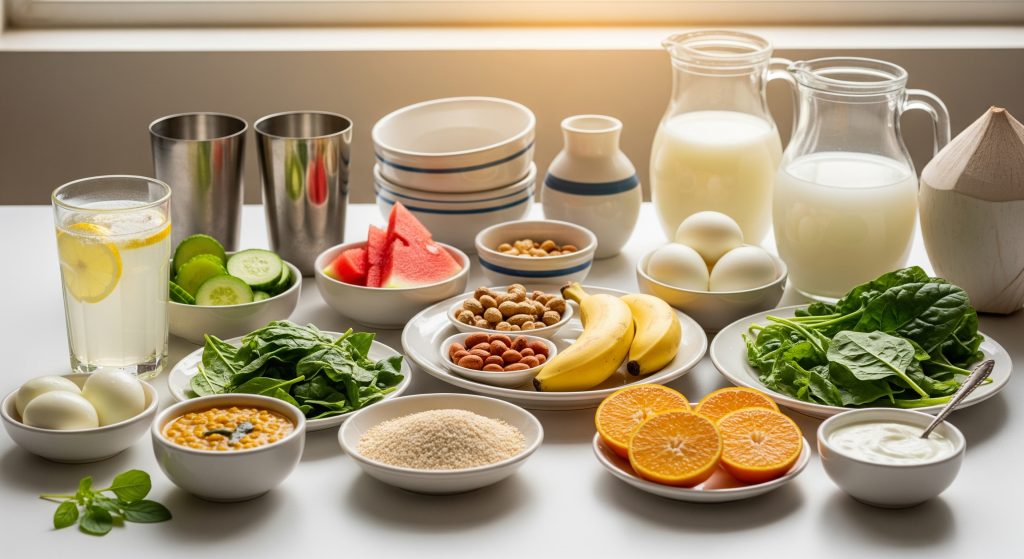
- Hydrating foods: cucumber, watermelon, muskmelon, oranges, tomatoes, courgette, yoghurt.
- Electrolyte foods: bananas, avocados, spinach, potatoes, pumpkin, tender coconut.
For those who sweat heavily, I add an electrolyte solution in the afternoon. This is particularly useful in summer. As NCBI Bookshelf outlines, hydration status influences blood pressure stability to a notable degree, especially when fluid losses are high. The practical effect is straightforward. Better hydration, steadier readings.
Dietary Patterns and Eating Strategies for Managing Hypotension
Small, Frequent Meals to Prevent Postprandial Drops
Large meals can shunt blood towards the gut and away from the brain. That drop after eating has a name: postprandial hypotension. In a low blood pressure diet, I reduce meal size, increase frequency, and add protein to blunt the fall. Five to six small meals often work better than three large ones.
- Keep breakfast modest, and include protein.
- Add a mid morning snack with fluids and salt.
- Split lunch into two smaller servings two hours apart.
- Include a protein snack mid afternoon.
- Finish with a lighter dinner, not a feast.
A typical day might include poha with peanuts, then buttermilk, then dal rice in two courses, then yoghurt and fruit, and finally a light soup with toast. Structured, not rigid. It works.
Protein-Rich Diet Requirements for Stable Blood Pressure
Protein slows gastric emptying and mitigates post meal dips. It also supports red blood cell production when paired with iron and folate. I integrate protein across the low blood pressure diet rather than concentrating it at dinner.
- Vegetarian proteins: dal, chana, rajma, soy chunks, tofu, paneer, yoghurt, nuts, seeds.
- Non-vegetarian proteins: eggs, chicken, fish, lean meats.
- Pattern: target a protein source in all main meals and most snacks.
For vegetarians, I add sesame or peanut chutney to breakfast. For non-vegetarians, an egg works well mid morning. Consistency beats sporadic loading. The effect is cumulative.
Limiting Carbohydrate Intake to Avoid Sudden Drops
High carbohydrate meals can worsen post meal dips by pulling blood to the gut and spiking then dropping glucose. A low blood pressure diet benefits from moderating refined carbohydrates and balancing plates with protein, fibre, and fat. I replace sugary drinks with water, add legumes to grains, and prefer whole grains over refined flour.
- Swap juice for fruit plus water.
- Choose chapati and dal over large servings of white rice alone.
- Add vegetables and ghee or olive oil to stabilise digestion.
Roughly speaking, the steadier the plate, the steadier the pressure. The change is subtle at first. Over weeks, episodes often decline.
Traditional Indian Remedies and Foods
Cultural foods can serve the low blood pressure diet well. Salted chaas, lime water with a pinch of salt, jeera water, and lemon rice with peanuts are practical, inexpensive, and familiar. Licorice tea appears in traditional lists, but I use it carefully and for short periods due to potential sodium retention.
- Summer: salted chaas with roasted cumin, cucumber, and a banana.
- Monsoon: tomato rasam with rice and a side of roasted peanuts.
- Travel: oral rehydration solution and salted roasted chana.
I prioritise remedies that fit modern routines. The best plan is the one followed daily. Small, repeatable meals. Enough fluids. Adequate salt within medical advice. That is the core of a resilient low blood pressure diet.
Understanding Low Blood Pressure Causes and Risk Factors
Medical Conditions Leading to Hypotension
Hypotension has multiple pathways. Dehydration reduces circulating volume. Heart conditions reduce effective pumping. Endocrine disorders can disturb vascular tone. A low blood pressure diet supports stability, but the cause still needs attention. As Mayo Clinic defines, readings below 90/60 mm Hg fall into low territory and warrant evaluation when symptoms occur.
Orthostatic hypotension is a frequent pattern in clinic. Blood pressure drops on standing by at least 20 mm Hg systolic or 10 mm Hg diastolic. As StatPearls details, causes include volume depletion and autonomic dysfunction, and symptoms arise from shortfalls in cerebral blood flow. The practical message is straightforward. Stand up slowly. Hydrate. Add salt within guidance. And review medications.
I also screen for anaemia, thyroid disorders, and adrenal issues when symptoms persist. Diet helps, but diagnosis matters. Here is why. Treating the cause prevents reliance on quick fixes and reduces relapse.
Medication-Related Low Blood Pressure
Drugs for hypertension, depression, and prostate symptoms can lower pressure too far. In such cases, diet can buffer symptoms, but the prescription needs review. I ask patients to keep a simple log of readings, symptoms, and timing relative to doses. Patterns appear within days.
- If readings drop after new medication, contact the prescriber.
- Split doses where advised to reduce peaks and troughs.
- Coordinate salt and fluid timing with the dose to reduce dizziness.
There is a common counterpoint. Why not rely on a low blood pressure diet alone. Because drug induced hypotension is pharmacological. Food helps, but still, medical adjustment is often required. The combined approach is safer.
Age and Pregnancy Factors
Blood pressure tends to run lower in younger adults and can decline with age due to autonomic changes and medications. Pregnancy often lowers pressure in the first two trimesters. Most cases are benign. I still recommend a structured low blood pressure diet during these phases to reduce symptoms and maintain hydration.
- Ageing: prioritise fluids, calcium rich foods, and protein to counter frailty risk.
- Pregnancy: smaller meals, steady fluids, iron, folate, and B12 as indicated.
- Safety: avoid untested herbal remedies in pregnancy without medical approval.
If fainting, chest pain, severe headache, or vision changes occur, immediate medical assessment is required. Diet is an adjunct, not a substitute, in these scenarios.
Conclusion
A low blood pressure diet has three pillars: hydration with electrolytes, strategic salt, and nutrient density for red blood cell health. Around that, build steady meal timing and adequate protein to prevent post meal dips. Use caffeine as a precise tool, not a habit. Where there are clear low blood pressure causes, combine diet with medical review for medication, blood loss, or endocrine issues.
I follow a simple test. Does the plan reduce dizzy spells within two weeks. If not, escalate diagnostics and adjust. Practical, repeatable steps win here. The aim is not to chase numbers. It is to restore stability and daily confidence.
Can drinking salt water immediately raise low blood pressure?
It can help in select situations by increasing fluid and sodium together. I prefer water with a pinch of salt and lemon, or an oral rehydration solution. If there is heart or kidney disease, avoid salt water without specific clearance. As Johns Hopkins Medicine notes, sodium raises blood volume, but dosage should be individualised when chronic disease is present.
Which fruits help increase blood pressure quickly?
Fruits support hydration and electrolytes rather than instant pressure spikes. Bananas, oranges, watermelon, and guava fit a low blood pressure diet well. Pair fruit with salted nuts or yoghurt for better stability. Use fruit as part of a plate, not as a solo fix for acute dizziness.
How much water should I drink daily for low blood pressure?
Needs vary by climate and body size. A practical start is regular intake spread through the day plus extra after sweating. Many adults do well with two to three litres, but I individualise based on symptoms, urine colour, and activity. If there is a fluid restriction in place, follow the clinician’s limit.
Are there specific foods to avoid with hypotension?
Very high carbohydrate meals, large alcohol servings, and long gaps between meals can worsen dips. In a low blood pressure diet, I reduce refined sugars, avoid heavy lunches, and pair carbs with protein and fat. Plain caffeine on an empty stomach can also backfire in some people. Test and adjust.
When should I seek medical help for low blood pressure symptoms?
Seek urgent care for fainting, chest pain, shortness of breath, black stool, severe headache, or new neurological symptoms. See a doctor soon if low blood pressure symptoms persist beyond two weeks on a structured low blood pressure diet, or if there is a recent medication change. If readings are repeatedly below 90/60 mm Hg with symptoms, arrange evaluation promptly.

