






 We do what's right for you...


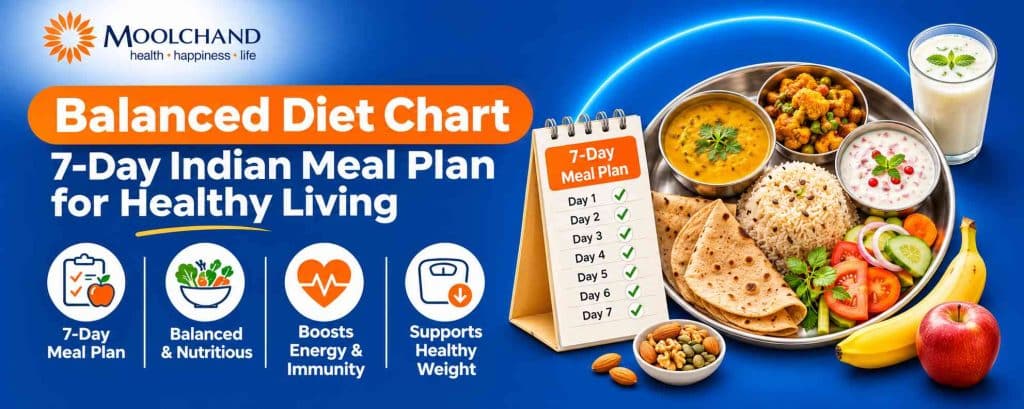
Balanced Diet Chart: 7-Day Indian Meal Plan for Healthy Living
Dr. Juhee Chandra
A balanced diet gives your body the nutrients it needs every day. It helps you feel energetic and keeps your weight steady. Many people eat well but still miss key nutrients. This guide explains the basics in simple words. You will find a healthy food chart and a 7-day Indian meal plan. Tips for different age groups also appear. Read it slowly and pick one small change to start today. Many people search for a balance diet chart online. The idea matches a balanced diet chart.
Balanced Diet Definition
A balanced diet means eating the right amount of each food group. It gives protein, carbohydrates, fats, vitamins, minerals, fibre and water. The balanced diet definition is simple. Your plate should cover all the main nutrients. Nutrition food is not about one magic item. It is about variety and portion size every day.
The definition of balanced diet also includes timing. Eat meals at regular times. Avoid long gaps that push you to overeat. Small, steady meals keep energy stable through the day.
Components of Balanced Diet
The components of balanced diet are the building blocks of your meals. Each one plays a clear role in health.
- Carbohydrates give quick and steady energy.
- Proteins repair muscles and support immunity.
- Healthy fats protect the heart and brain.
- Vitamins and minerals keep bones and blood strong.
- Fibre supports digestion and keeps you full.
- Water keeps every body system working.
A chart of balanced diet usually shows these groups on one plate. A chart of healthy food also shows safe choices for every meal. Half the plate should hold vegetables and fruits. A quarter should hold whole grains. The last quarter should hold protein.
Related: Vitamin B12 Deficiency: Symptoms, Causes, Foods and Treatment
Balanced Diet Benefits
Balanced diet benefits show up in daily life. People who eat well sleep better and think clearly. They also feel less tired during work. Over time, a balanced diet lowers the risk of heart disease and diabetes.
- Better energy and focus through the day
- Healthy weight and better digestion
- Stronger bones, teeth and muscles
- Stronger immunity against common illness
- Better mood and sleep quality
A balanced diet for healthy lifestyle works best with exercise. Walking, yoga or sports add to the benefits.
Healthy Food Chart: What to Eat Every Day
A healthy food chart helps you plan meals quickly. Use this simple guide for most adults. This Balanced diet food list helps you shop for groceries. A healthy diet plan starts with small, simple changes.
- Whole grains: rotis, brown rice, oats, millets and daliya
- Pulses and beans: dal, rajma, chole, sprouts and soya
- Vegetables: at least two cups of mixed green and colourful vegetables
- Fruits: one or two seasonal fruits each day
- Milk and curd: one to two cups of dairy or fortified alternatives
- Nuts and seeds: a small handful each day
- Oil: small amounts of mustard, groundnut or olive oil
The healthy diet chart is only a guide. Your needs change with age, activity and health conditions. The daily diet chart below shows how these foods fit into one day.
Daily nutrition requirements differ for each person. Adults need enough protein, fibre and water daily. A dietitian can calculate personal needs.
Balanced Diet Chart for Adults, Men and Women
A balanced diet chart for adults focuses on steady energy and weight. Men often need more calories due to higher muscle mass. Women need extra iron, calcium and folate at many life stages. A balanced diet chart for women needs extra iron and calcium. A balanced diet chart for men focuses on protein and whole grains. Both need enough protein and fibre.
Balanced diet chart for women
- Iron-rich foods like green leafy vegetables, dal and jaggery
- Calcium from milk, curd, ragi and paneer
- Folate from green vegetables, beans and whole grains
Balanced diet chart for men
- Protein from dal, eggs, fish, chicken or paneer
- Whole grains for long-lasting energy
- Plenty of vegetables to support digestion and heart health
Related: Vitamin Deficiency Diseases: Symptoms, Causes, Tests
7-Day Indian Balanced Diet Chart
This indian balanced diet chart uses simple home foods. A Balanced diet chart Indian style uses dal, roti and sabzi. Balanced diet examples include dal with roti or poha with curd. It is vegetarian-friendly. Non-vegetarians can add eggs, fish or chicken at lunch or dinner. Adjust portions to your needs.
Day 1
- Breakfast: Oats with milk and fruit
- Lunch: Brown rice, dal, sabzi and salad
- Snack: Roasted chana
- Dinner: Two rotis, paneer bhurji and cucumber raita
Day 2
- Breakfast: Vegetable poha with peanuts
- Lunch: Two rotis, rajma and green salad
- Snack: Apple and a few almonds
- Dinner: Moong dal khichdi with curd
Day 3
- Breakfast: Besan chilla with mint chutney
- Lunch: Millet roti, palak dal and sabzi
- Snack: Buttermilk
- Dinner: Vegetable upma and a bowl of soup
Related: B12 Levels Normal: What They Mean and Why They Matter
Day 4
- Breakfast: Idli with sambar
- Lunch: Brown rice, chole and cucumber salad
- Snack: Guava or seasonal fruit
- Dinner: Two rotis, mixed vegetable curry and curd
Day 5
- Breakfast: Daliya with milk and seeds
- Lunch: Two rotis, lauki dal and salad
- Snack: Sprouts chaat
- Dinner: Paneer tikka with grilled vegetables
Day 6
- Breakfast: Multigrain paratha with curd
- Lunch: Brown rice, sambhar and beans sabzi
- Snack: Pomegranate or orange
- Dinner: Vegetable pulao with raita
Day 7
- Breakfast: Ragi dosa with coconut chutney
- Lunch: Two rotis, mixed dal and sabzi
- Snack: Roasted makhana
- Dinner: Light vegetable soup with two rotis
An Indian vegetarian balanced diet chart uses dal, paneer and seasonal vegetables. Follow this 7-day balanced diet chart for one week. Then rotate foods to keep meals interesting.
Balanced Diet Chart for Children and Students
Children and students need energy for growth and study. A balanced diet chart for children includes milk, eggs, dal, fruits and whole grains. Avoid sugary drinks and fried snacks at school.
- Breakfast with milk, eggs or poha
- Lunch with a roti, dal, sabzi and curd
- Evening snack with fruit or sprouts
- Dinner that is light and early
A balanced diet chart for students should include brain foods like nuts and seeds. Regular meals improve attention and mood. Drink water through the day.
Related: इम्यूनिटी कैसे बढ़ाएं: घरेलू उपाय, खानपान और बच्चों के लिए आसान तरीके
Balanced Diet Chart for Weight Loss
A balanced diet chart for weight loss focuses on portion control. It uses high-fibre foods and lean protein. It avoids sugar and deep-fried food. Weight loss should stay gradual, around half a kilogram to one kilogram each week.
- Start the day with protein, such as eggs, sprouts or dal
- Fill half the plate with vegetables at lunch and dinner
- Choose brown rice or millet over white rice
- Eat dinner at least two hours before sleep
Consult a dietitian before a strict plan. Extreme diets can harm health.
Balanced Diet Chart for Diabetic Patients
A balanced diet chart for diabetic patients helps keep sugar levels steady. It focuses on low glycaemic foods. Choose whole grains, pulses and non-starchy vegetables. Limit white bread, sweets and fruit juice. Spread carbohydrates evenly across meals.
Medicines and sugar targets differ for each patient. Always follow your doctor’s plan. A dietitian can adjust the chart to your needs.
Foods to Avoid in a Balanced Diet
Some foods work against a balanced diet. Limit them rather than remove them completely.
- Sugary drinks and packaged juices
- Deep-fried snacks and fast food
- Processed meats and instant noodles
- Excess salt and pickles
- Refined flour products in large amounts
Related: What Is a Vitamin D Test and Why It Matters for Your Health
Getting Diet Help in Delhi
Many people look for a Dietetics Hospital in Delhi for expert guidance. A Nutrition Hospital in Delhi can offer dietary plans with lab support. A Dietitian in Delhi can design a plan for your daily life. A Nutritionist in Delhi may offer lifestyle and food coaching.
Check qualifications before booking. Ask about follow-up visits and how plans change over time. A best hospital in Delhi should offer dietitian services along with doctor care. A Private Hospital in Delhi may offer faster appointments. Compare costs before you decide.
Conclusion
A balanced diet is simple when you plan ahead. A nutrition diet chart lists foods by meal and by day. The balanced diet food pyramid places grains at the base and fats at the top. Use the chart, pick one small change each week and track your progress. Good food choices protect your health for years. Start with breakfast and build from there.
Frequently Asked Questions
What is a balanced diet chart?
A balanced diet chart is a daily guide. It shows the right mix of grains, pulses, vegetables, fruits and dairy.
What are the 7 components of a balanced diet?
They include carbohydrates, proteins, fats, vitamins, minerals, fibre and water. Each one supports body functions.
What is the best Indian balanced diet chart?
A good chart uses roti, dal, sabzi, curd and seasonal fruit. It balances whole grains with pulses and vegetables.
What foods should I eat daily to stay healthy?
Eat whole grains, pulses, vegetables, fruits, milk or curd and nuts. Drink enough water every day.
How do I prepare a 7-day balanced diet chart?
Plan breakfast, lunch, snack and dinner for each day. Repeat simple meals and rotate vegetables and pulses.
What are the benefits of a balanced diet?
It gives steady energy, healthy weight, strong immunity and better sleep. It also lowers the risk of many diseases.
What is a balanced diet chart for weight loss?
It uses high-fibre foods, lean protein and small portions. It limits sugar, fried food and refined flour.
What is a healthy vegetarian diet chart?
It includes dal, paneer, milk, curd, beans, nuts and vegetables. It adds iron and vitamin B12 sources through food or advice.
What is the ideal balanced diet for adults?
Adults need whole grains, pulses, vegetables, fruits and dairy every day. Portion size depends on activity and health.
Which foods should be avoided in a balanced diet?
Limit sugary drinks, fried snacks, processed meats and excess salt. Keep refined flour products occasional.