





 We do what's right for you...


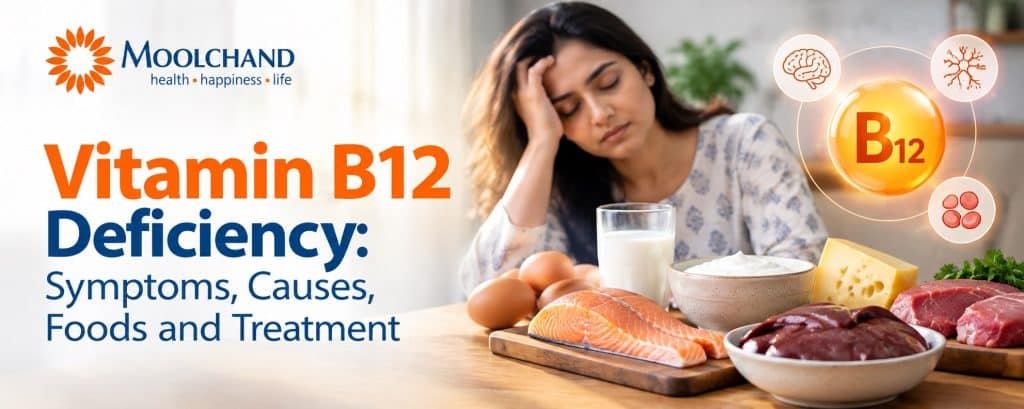
Vitamin B12 Deficiency: Symptoms, Causes, Foods and Treatment
Introduction
Vitamin B12 is important for your blood, nerves, and overall health. When B12 levels become low, different symptoms can develop slowly. Many people ignore these symptoms because they seem like everyday tiredness.
Vitamin B12 deficiency can affect people of different ages. It can happen because of poor dietary intake or absorption problems. Some medicines and medical conditions can also lower B12 levels.
Knowing the vitamin B12 deficiency symptoms can help you seek timely medical advice. Understanding B12 deficiency causes can also help prevent future problems.
This guide explains low B12 symptoms, B12 foods, and available B12 treatment options.
What Is Vitamin B12 Deficiency?
Vitamin B12 helps your body make healthy red blood cells. It also supports normal nerve function and DNA production.
Your body cannot produce vitamin B12 on its own. Therefore, you need B12 through food or supplements.
When your body does not get enough B12, vitamin B12 deficiency can develop. The deficiency may develop slowly over several months.
Some people notice tiredness first. Others may develop numbness, weakness, or concentration problems.
Early diagnosis can help prevent serious complications. Proper vitamin B12 deficiency treatment depends on the underlying cause.
Related: Vitamin Deficiencies in Adults: Causes, Symptoms, and Fixes
What Are the Vitamin B12 Deficiency Symptoms?
The vitamin B12 deficiency symptoms can vary from person to person. Some symptoms may remain mild for a long time.
Common low B12 symptoms include:
- Constant tiredness
- General weakness
- Pale skin
- Headaches
- Dizziness
- Shortness of breath
- Numbness
- Tingling in the hands
- Tingling in the feet
- Muscle weakness
- Poor balance
- Memory problems
- Difficulty concentrating
- Mood changes
- Sore or swollen tongue
These vitamin B12 deficiency symptoms can have other causes. Therefore, symptoms alone cannot confirm a deficiency.
A doctor may recommend blood tests for proper diagnosis.
How Does Vitamin B12 Deficiency Affect Your Body?
B12 supports several important functions inside your body. A deficiency can therefore affect multiple systems. Low B12 can affect red blood cell production. This may lead to a type of anaemia.
The nervous system can also be affected. Some people develop tingling or numbness.
Long-term deficiency may cause problems with balance and coordination. Memory and concentration may also become difficult.
These symptoms can interfere with daily activities. Early vitamin B12 deficiency treatment may help prevent further complications.
What Are the Main B12 Deficiency Causes?
There are several B12 deficiency causes. Poor dietary intake is one possible reason.
Some people eat enough B12 but cannot absorb it properly. Digestive conditions can interfere with B12 absorption.
Important B12 deficiency causes include:
- Low dietary B12 intake
- Strict vegan diets
- Certain digestive disorders
- Stomach-related conditions
- Certain intestinal conditions
- Previous stomach surgery
- Previous intestinal surgery
- Pernicious anaemia
- Long-term use of certain medicines
The exact cause differs from person to person.
Finding the cause is important for choosing the right B12 treatment.
Related : Vitamin Deficiency Diseases: Symptoms, Causes, Tests and Treatment
Can a Vegetarian Diet Cause Vitamin B12 Deficiency?
Vitamin B12 naturally occurs mainly in animal-based foods. Therefore, people avoiding these foods may have a higher risk.
This does not mean every vegetarian will develop a deficiency. Fortified foods can provide additional B12.
People following a strict vegan diet should pay particular attention to B12 intake.
Supplements may be recommended when dietary intake remains insufficient. A healthcare professional can suggest the appropriate option.
Which B12 Foods Are Good Sources?
Several foods naturally provide vitamin B12. Including suitable B12 foods can support healthy B12 levels.
Common B12 foods include:
- Eggs
- Milk
- Curd
- Paneer
- Fish
- Chicken
- Meat
- Shellfish
- Liver
Some breakfast cereals contain added vitamin B12. Certain plant-based milk products are also fortified.
Always check the nutrition label of fortified products. The amount of B12 can differ between products.
Can B12 Foods Correct Vitamin B12 Deficiency?
The answer depends on the cause of deficiency.
Dietary deficiency may improve with suitable B12 foods. However, food alone may not correct every deficiency.
Some people have absorption problems. Their bodies may struggle to absorb B12 from food.
Such people may need supplements or injections. Their doctor will decide the appropriate B12 treatment.
Therefore, do not depend only on food after a confirmed deficiency.
What Is the Deficiency of Vitamin B?
The term deficiency of vitamin B can refer to different B vitamins. The B-vitamin family contains several individual vitamins.
Vitamin B12 is different from vitamin B1 and vitamin B6. Folate is also a separate B vitamin.
Each vitamin has different functions in the body. Their deficiency symptoms can also differ.
Therefore, proper testing helps identify the specific nutritional deficiency.
If B12 is low, treatment should focus on correcting the B12 deficiency.
What Are Low B12 Symptoms in the Nervous System?
The nervous system can be affected by low B12 levels.
Some people experience tingling in their hands or feet. Others may notice numbness or burning sensations.
Balance can also become difficult for some patients. Muscle weakness may develop in more advanced cases.
Some people report memory or concentration difficulties. Mood changes can also occur.
These low B12 symptoms should not be ignored.
Early medical assessment can help identify the cause.
Related: B12 Levels Normal: What They Mean and Why They Matter
Can Vitamin B12 Deficiency Cause Anaemia?
Yes, B12 deficiency can cause a type of anaemia.
B12 helps your body produce healthy red blood cells. Low levels can affect normal red blood cell production.
Anaemia can cause tiredness and weakness. Some people may also experience dizziness or breathlessness.
However, several conditions can cause anaemia. Iron deficiency and folate deficiency are common examples.
Blood tests can help identify the actual cause.
Can Vitamin B12 Deficiency Cause Numbness?
Yes, numbness can occur with B12 deficiency.
B12 supports normal nerve function. Low levels can affect nerves over time.
People may experience tingling, numbness, or unusual sensations. These symptoms often affect the hands and feet.
Long-standing nerve problems can become more difficult to reverse.
Therefore, persistent symptoms need medical evaluation.
How Is Vitamin B12 Deficiency Diagnosed?
Doctors usually consider your symptoms and medical history first. They may then recommend blood tests.
A blood test can measure your B12 level. A complete blood count may also be performed.
Additional tests may be recommended in some cases.
Your doctor may also investigate possible B12 deficiency causes.
This approach helps identify why your B12 level became low.
What Is B12 Treatment?
The appropriate B12 treatment depends on the underlying cause.
Some people can take oral B12 supplements. Others may require B12 injections.
People with absorption problems may need injectable treatment. Dietary deficiency may respond well to supplementation.
Your doctor will consider your B12 level and symptoms. They may also consider your medical history.
Do not start high-dose supplements without professional advice.
What Is Vitamin B12 Deficiency Treatment?
Vitamin B12 deficiency treatment focuses on restoring healthy B12 levels. Treatment also addresses the reason behind the deficiency.
Treatment options can include:
- Oral vitamin B12 supplements
- Vitamin B12 injections
- Dietary changes
- Fortified foods
- Treatment for absorption problems
- Follow-up blood tests
The treatment duration can vary between patients.
Some people need short-term supplementation. Others may require long-term treatment.
Your doctor will decide the most suitable vitamin B12 deficiency treatment.
How Long Does B12 Treatment Take?
Recovery depends on the severity and cause of deficiency.
Some people notice improvement within several weeks. Other symptoms may take longer to improve. Energy levels may improve before nerve symptoms. Tingling and numbness can sometimes take longer to recover. Long-standing nerve damage may not always completely reverse. This makes early B12 treatment particularly important.
Follow your prescribed treatment schedule carefully.
What Happens If Vitamin B12 Deficiency Is Untreated?
Untreated vitamin B12 deficiency can cause health problems.
It can contribute to anaemia and persistent weakness. Nerve problems can also become more noticeable.
Some patients may develop balance or coordination difficulties. Memory and concentration can also be affected.
Long-term neurological problems may become difficult to reverse.
Therefore, persistent vitamin B12 deficiency symptoms need proper evaluation.
Do not ignore symptoms simply because they seem mild.
Can Medicines Cause Vitamin B12 Deficiency?
Certain medicines can affect B12 levels.
Metformin is associated with reduced B12 levels in some people. Some medicines that reduce stomach acid can also affect absorption.
This does not mean you should stop your medicine.
Never stop prescribed medication without medical advice.
Instead, discuss possible B12 deficiency causes with your doctor.
Your doctor can decide whether B12 testing is appropriate.
Who Has a Higher Risk of B12 Deficiency?
Some people have a greater risk of developing vitamin B12 deficiency.
People following strict vegan diets may have increased risk. Older adults can also experience absorption problems.
People with certain digestive conditions may have reduced absorption.
Previous stomach or intestinal surgery can also affect absorption.
Long-term use of certain medicines may increase the risk.
Understanding these B12 deficiency causes can support early prevention.
How Can Vitamin B12 Deficiency Be Prevented?
A balanced diet can help prevent nutritional deficiencies.
Include suitable B12 foods according to your dietary preferences. Fortified foods can also provide useful amounts of B12.
People with higher risk may need supplements.
Regular testing can be useful for some people.
Your doctor can suggest the right approach based on your needs.
A Simple Story About Vitamin B12 Deficiency
Riya often felt tired after completing her daily work.
She blamed her tiredness on long working hours. She also struggled to concentrate during meetings.
After several weeks, she noticed tingling in her feet.
Her family encouraged her to consult a doctor.
The doctor asked about her diet and medical history. Blood tests showed low vitamin B12 levels.
The doctor explained the possible B12 deficiency causes.
She also received advice about B12 foods and supplements.
Riya followed the recommended B12 treatment carefully.
Her energy gradually improved over the following weeks.
Her experience taught her an important lesson.
Persistent tiredness should not always be blamed on a busy lifestyle.
Sometimes, a simple nutritional deficiency can affect everyday life.
When Should You See a Doctor?
You should consult a doctor when symptoms continue for several weeks.
Persistent tiredness deserves proper medical evaluation. Tingling and numbness should also be checked.
People following restrictive diets should monitor their nutritional intake.
People with digestive conditions may also need regular evaluation.
A doctor can recommend suitable blood tests.
Early vitamin B12 deficiency treatment may help prevent complications.
Key Takeaways About Vitamin B12 Deficiency
Vitamin B12 deficiency can develop slowly. Its symptoms can affect different parts of the body.
Common vitamin B12 deficiency symptoms include tiredness and weakness.
Numbness and tingling can indicate nerve involvement. Balance and concentration may also be affected.
Common B12 deficiency causes include poor intake and absorption problems.
Eggs, dairy products, fish, meat, and fortified foods provide B12.
These are useful B12 foods for many people.
However, food alone may not correct significant deficiency.
The right B12 treatment depends on the underlying cause.
Some patients need supplements. Others may require B12 injections.
Proper vitamin B12 deficiency treatment can restore healthy B12 levels.
Frequently Asked Questions About Vitamin B12 Deficiency
1. What are the main vitamin B12 deficiency symptoms?
Common vitamin B12 deficiency symptoms include tiredness, weakness, dizziness, and pale skin. Tingling and numbness can also occur.
2. What are the common B12 deficiency causes?
Common B12 deficiency causes include low dietary intake and absorption problems. Certain medicines can also contribute.
3. What are the common low B12 symptoms?
Common low B12 symptoms include tiredness, weakness, tingling, numbness, and poor balance.
4. Which foods contain vitamin B12?
Common B12 foods include eggs, milk, curd, paneer, fish, chicken, and meat. Fortified foods can also provide B12.
5. Can vegetarians develop vitamin B12 deficiency?
Yes, vegetarians can develop vitamin B12 deficiency. Risk depends on their diet and overall B12 intake.
6. What is the best B12 treatment?
The right B12 treatment depends on the deficiency’s cause. Doctors may recommend supplements or injections.
7. What is vitamin B12 deficiency treatment?
Vitamin B12 deficiency treatment can include supplements, injections, dietary changes, or treatment for absorption problems.
8. Can B12 deficiency cause nerve problems?
Yes, prolonged deficiency can affect nerves. Tingling, numbness, weakness, and balance problems can occur.
9. Can B12 foods treat a deficiency?
B12 foods can help when dietary intake is low. However, some patients need supplements or injections.
10. How can vitamin B12 deficiency be prevented?
Include suitable B12 foods in your diet. Higher-risk people may need supplements or regular testing.
Final Word
Vitamin B12 supports healthy blood cells and normal nerve function.
Low B12 can cause symptoms that are easy to overlook. Persistent tiredness should not always be considered normal.
Understanding vitamin B12 deficiency symptoms can encourage timely medical attention.
Knowing the B12 deficiency causes can help address the underlying problem.
A balanced diet can provide useful B12 foods. Some people may still require supplements.
The right B12 treatment depends on individual needs.
If you notice persistent symptoms, speak with a healthcare professional. Early vitamin B12 deficiency treatment can help protect your long-term health.
You can easily book your appointment online, through the Moolchand MyHealth App, by calling 011 4200 0000