






 We do what's right for you...


MICS Surgery Explained: Benefits, Risks, and Recovery
Dr. (Prof.) Tarun Kumar
Open-heart surgery still gets framed as the only definitive route. That notion is now out of date. I explain how mics surgery offers equivalent outcomes in selected cases with materially less trauma. I outline procedure types, benefits, risks, and the practical recovery path. I also address who qualifies, timelines, and insurance basics, so a clear decision can follow.
Types of MICS Procedures and Their Applications
Minimally Invasive Coronary Artery Bypass Grafting (MICS CABG)
MICS CABG achieves bypass grafting through small incisions, usually between the ribs on the left chest. I use specialised instruments to access target vessels while preserving the breastbone. The native heart may continue beating or be supported with stabilisation devices, depending on the case.
Candidate selection is crucial. Single or double vessel disease in accessible territories suits this method well. Multivessel disease can still be tackled, but the anatomy and conduit plan must be favourable. In practice, patients often experience faster mobilisation and less pain. That accelerates rehabilitation.
Compared with a full sternotomy, I see fewer limitations on upper body movement early on. The key trade off is more exacting exposure. That demands advanced imaging and meticulous planning.
Minimally Invasive Valve Surgery (MIMVS)
MIMVS addresses mitral, aortic, or tricuspid pathology through mini-thoracotomy or mini-sternotomy access. I prioritise valve repair when feasible, especially for degenerative mitral disease. Repair preserves native tissue and often produces superior long term function.
For aortic valves, a targeted upper mini-sternotomy can provide a direct line of sight. That allows replacement with reduced disruption to the chest wall. Tricuspid procedures can be completed via right mini-thoracotomy with endoscopic support.
The performance hinges on imaging. Intraoperative transoesophageal echocardiography guides all key decisions. Precision matters more than spectacle. Results follow technique.
Robotic-Assisted Cardiac Surgery
Robotic systems enable wristed instruments and high definition 3D visualisation. I use them for selected mitral repairs, atrial septal defect closures, and some coronary targets. The console allows fine movements within tight spaces.
Robotics is not a prize in itself. It is a tool. Where the anatomy is complex, the robot can offer dexterity and stability. Where exposure is limited, it can avoid rib spreading. Case selection again decides the value. The benefit is most obvious in experienced programmes.
Transaxillary and Port-Access Approaches
Transaxillary aortic valve replacement uses a small incision near the armpit for direct access to the ascending aorta. Cosmetic outcomes are discreet, and chest wall mechanics remain largely intact. Port-access techniques use multiple small ports for camera and instruments.
These approaches reduce tissue disruption across the midline. I find them helpful in patients where sternum preservation is desirable. That includes those who require faster return to manual duties. The approach must still secure excellent visualisation and safe cannulation.
|
Approach |
Typical Application |
|
Mini-thoracotomy |
Mitral repair or replacement, selected bypass targets |
|
Mini-sternotomy |
Aortic valve replacement with reduced midline access |
|
Port-access |
Endoscopic visualisation for valves and defects |
|
Transaxillary |
Aortic valve exposure with off-midline incision |
|
Robotic |
Mitral repair and intracardiac work needing fine dexterity |
Hybrid Cardiac Procedures
Hybrid procedures combine catheter techniques and surgery in one planned pathway. A common pattern pairs stenting for selected coronary lesions with a limited bypass for the critical vessel. Another pattern uses catheter closure devices followed by targeted surgical repair for residual issues.
I value hybrids when they materially reduce operative load without compromising durability. Teams coordinate in a hybrid theatre with shared imaging. The patient benefits from one anaesthetic plan and a coherent strategy. Good coordination equals good outcomes.
Benefits and Advantages of MICS Surgery
Reduced Pain and Discomfort After Surgery
Mics surgery limits incision size and avoids full sternotomy in many cases. That typically lowers postoperative pain and the need for strong opioids. Patients breathe more comfortably and cough more effectively. Lower pain means better lung expansion and fewer pulmonary issues.
Pain is never trivial. It drives recovery behaviour. In my experience, a targeted regional block and small incisions support active participation in physiotherapy. That momentum compounds each day.
Shorter Hospital Stays and Recovery Times
Shorter stays are a consistent pattern when selection and technique align. Many patients go home in a few days with community support. Early mobilisation begins on day one in most programmes. It continues with stair climbing, corridor walking, and supervised breathing exercises.
Mics surgery is not a shortcut. It is a refined path with fewer detours. Less tissue trauma reduces systemic stress and speeds discharge.
Lower Risk of Infection and Complications
Smaller incisions mean smaller wound surfaces. That can reduce superficial infection risk. Avoiding sternal division also removes that bony healing site. I still apply strict protocols for sterility and glucose control.
Chest wall integrity also supports coughing and deep breathing. Better ventilation is linked with fewer pneumonias. The gains are incremental, yet additive. Each reduction counts.
Minimal Scarring and Cosmetic Outcomes
Scars are shorter and often placed laterally or in skin creases. For many professionals, this minimises visible signs of surgery. I discuss incision placement in detail during consent. The objective is function first and better cosmesis as a practical bonus.
Cosmetic outcomes also affect confidence during recovery. That psychological component influences engagement with rehabilitation. Body image matters to adherence.
Preservation of Skeletal Integrity and Chest Wall Stability
By preserving the sternum, I maintain chest wall mechanics and skeletal integrity. Patients can resume upper body movements earlier, within safe limits. This reduces restrictions on lifting and rotation once pain allows.
For individuals whose work involves manual tasks, this matters considerably. The return to form follows safer movement patterns and guided loading. It is a faster route to normal life, although still structured.
List of Key Physical Recovery Milestones
- Day 1: Sit out of bed, assisted standing, and first short walk.
- Day 2 to 3: Independent walking on the ward and stair practice.
- Day 4 to 7: Discharge readiness with safe self care and medication plan.
- Week 2: Daily walks of 20 to 30 minutes at a conversational pace.
- Week 3 to 4: Light household tasks and gentle stretching as advised.
- Week 4 to 6: Return to desk work if symptoms are controlled.
- Week 6 to 8: Supervised strengthening through cardiac rehabilitation.
- Week 8 to 12: Gradual reintroduction of moderate exercise and travel.
Potential Risks and Complications
General Surgical Risks in MICS
All cardiac operations carry inherent risks. These include infection, bleeding, stroke, kidney issues, and anaesthetic events. Mics surgery often lowers the probability of some issues by limiting tissue trauma. The risk does not vanish, and vigilance remains essential.
I discuss absolute and relative risks in preoperative meetings. Probabilities vary by age, comorbidities, and procedural complexity. Clarity here builds trust and improves preparation.
Bleeding and Need for Reoperation
Bleeding can still occur after small incisions. Drain output is monitored closely in the first hours. If bleeding persists or clot forms, a return to theatre may be required. The threshold depends on haemodynamics and imaging.
A robust haemostasis plan reduces this risk. I use meticulous closure, warming, and corrective products when indicated. Prevention is the first defence.
Arrhythmias and Heart-Related Complications
Atrial fibrillation is common after cardiac surgery of any type. The inflammatory response and fluid shifts contribute to triggers. I prepare a prophylaxis plan and escalate to rhythm control if needed.
Other complications include low cardiac output and, rarely, myocardial injury. These are managed with intensive care monitoring and medications. Early identification shapes outcomes.
Conversion to Traditional Surgery
Conversion remains a prudent option when exposure or safety is compromised. I state this explicitly before surgery. The objective is a successful outcome, not adherence to a small incision at all costs.
Conversion is not a failure of strategy. It is sound judgement in service of safety. Prepared teams convert quickly and continue with control.
Patient-Specific Risk Factors
Individual risk reflects age, frailty, prior chest operations, lung function, and vascular status. Obesity and poorly controlled diabetes increase infection risk. Severe calcification can complicate valve work and cannulation.
I use a structured assessment that includes frailty scoring and nutrition review. Rehabilitation starts with prehabilitation where feasible. Stronger patients recover better. That is predictable and actionable.
Recovery Timeline and Post-Operative Care
1. Immediate Post-Surgery Phase (0-48 Hours)
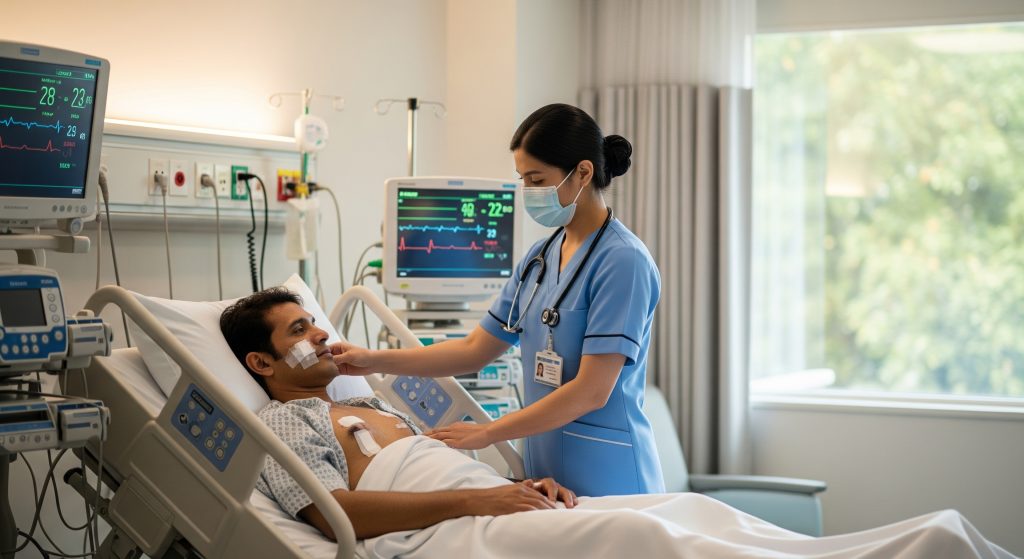
Care begins in the intensive unit with continuous monitoring. Pain control follows a multimodal plan to reduce opioids. Ventilation support is weaned as soon as it is safe. Early sitting and leg exercises start within hours.
Drain management, imaging, and blood tests guide the first night. I review progress with the critical care team each morning. Small gains compound across the first 48 hours. That is the rhythm of recovery.
2. Hospital Discharge Process (2-5 Days)
Discharge criteria include stable vitals, controlled pain, safe mobility, and clear wound care. Pharmacy counselling and anticoagulation plans are finalised before leaving. I check social support and transport arrangements for the first week.
Written instructions include emergency signs and phone numbers. A follow up appointment is scheduled before discharge. The objective is a smooth handover from hospital to home.
3. Early Home Recovery (First 2 Weeks)
I advise short, frequent walks and simple breathing exercises. A daily log of pain scores, temperature, and step counts can help. Wound care remains simple. Keep incisions clean and dry, and avoid tight clothing.
Diet targets protein and hydration. Sleep hygiene matters. Light daytime activity supports night rest. Family roles should allow the patient to focus on recovery, not chores.
4. Return to Normal Activities (3-6 Weeks)
At this point, many patients resume desk work and light travel. I validate readiness at the review visit. Lifting limits still apply for comfort and caution. Driving resumes once reaction time and pain control are adequate.
Structured cardiac rehabilitation begins or intensifies now. The programme addresses endurance, strength, and confidence. It also covers stress control and medication adherence.
5. Long-Term Recovery Expectations
By three months, most patients feel broadly normal with improved stamina. Athletic goals require tailored progression. Valve repairs typically yield durable function when anatomy was suitable.
Follow up imaging confirms results and informs lifestyle plans. Secondary prevention remains central. That includes blood pressure control, lipids, and smoking cessation. The operation fixes anatomy. Daily habits protect it.
Essential Recovery Guidelines and Restrictions
- Walk every day, increasing duration by a few minutes at a time.
- Keep incisions clean, dry, and visible for easy inspection.
- Avoid lifting heavy loads until cleared by the clinical team.
- Use a pillow to support the chest when coughing or sneezing.
- Track medications and never skip anticoagulants without guidance.
- Call immediately for fever, wound redness, or increasing shortness of breath.
- Resume driving only after a formal safety check and pain assessment.
Moving Forward with MICS Surgery
Mics surgery is not a marketing label. It is a disciplined method to achieve cardiac goals with less tissue injury. The selection, the team, and the programme design define results. When those align, recovery is faster and function returns sooner.
If you are evaluating options, ask direct questions about volumes, outcomes, and rehabilitation. Request example cases similar to your anatomy. Examine the plan for conversion if needed. Rigour beats promise.
Mics surgery aims to deliver equivalent or better outcomes with smaller incisions, preserved stability, and a faster return to life.
That is the core proposition. Simple and demanding. It is also, in capable hands, reliably achievable.
Who qualifies for MICS surgery instead of traditional open-heart surgery?
Eligibility depends on the specific disease, anatomy, and overall fitness. I assess target vessels, valve morphology, chest shape, and lung function. Good candidates have lesions accessible through small incisions and a risk profile supportive of limited access. Prior sternotomy, severe calcification, or complex multivessel patterns may favour traditional exposure. The final decision follows imaging and a multidisciplinary review.
How much does MICS surgery cost in India compared to traditional surgery?
Costs vary by city, hospital category, devices, and length of stay. Mics surgery can be comparable to traditional surgery, and sometimes slightly higher due to specialised instruments. Shorter hospitalisation and quicker return to work can offset the difference. Request an itemised estimate that includes theatre time, implants, ICU, and rehabilitation. Transparent costing prevents surprises.
Can elderly patients undergo MICS procedures safely?
Yes, many older patients benefit from smaller incisions and early mobilisation. Frailty, lung reserve, kidney function, and cognitive status matter more than age alone. I often incorporate prehabilitation to improve resilience. A careful plan for pain control and delirium prevention is critical. The objective is stability and independence, not merely discharge.
What is the success rate of MICS surgery?
Success depends on the indication and centre expertise. For straightforward valve repairs and selected bypass targets, outcomes are excellent in experienced hands. I benchmark against national and programme level data to maintain standards. Patients should expect the same quality metrics as traditional surgery, with faster recovery in eligible cases. Ask for current results from the specific team.
How soon can I return to work after MICS surgery?
Desk based roles often resume between four and six weeks. Roles involving lifting or prolonged standing may need eight to twelve weeks. I base clearance on wound healing, pain control, and stamina. A phased return reduces relapse risk. Cardiac rehabilitation helps restore confidence and capacity.
Is MICS surgery covered by health insurance in India?
Most comprehensive policies cover mics surgery when medically indicated. Preauthorisation is usually required, with documentation of diagnosis and planned procedure. I advise confirming room category, device limits, and rehabilitation coverage in writing. Network hospitals may simplify cashless approval. Retain all bills and operative notes for claims.
mics surgery is referenced throughout to maintain clarity and search relevance for minimally invasive cardiac surgery topics.

