






 We do what's right for you...


What Is CRP Full Form? Key Facts About the C-Reactive Protein Test
Dr. Juhee Chandra
What CRP Full Form Means and Types of CRP Tests
The CRP full form is C-Reactive Protein. CRP is a liver-produced protein that rises when systemic inflammation is present. You typically see it described as an inflammation marker, because levels increase when cytokines signal an acute phase response.
- CRP responds quickly, often within 6 to 8 hours after a trigger.
- It roughly doubles every 8 hours early on, then falls as inflammation resolves.
- It is non-specific. The number reflects activity, not the exact cause.
High-Sensitivity CRP (hs-CRP) Test
High-sensitivity CRP measures very low concentrations with precision. You use hs-CRP for cardiovascular risk stratification and low-grade inflammation. Values are often in mg/L with decimals, for example, 0.8 mg/L.
- Risk categories are commonly referenced as: low risk < 1.0 mg/L, average risk 1.0 to 3.0 mg/L, high risk > 3.0 mg/L.
Standard CRP Test
The standard c-reactive protein test focuses on moderate to very high levels. It is useful for suspected infection, post-operative monitoring, and flare assessment in autoimmune disorders.
- Clinically meaningful rises can exceed 100 mg/L during acute bacterial infection.
- Viral infections can raise CRP, but typically not as high as serious bacterial illness.
- Declining values over 24 to 72 hours may indicate treatment response.
Quantitative vs Qualitative CRP Tests
A quantitative crp blood test reports a numeric value in mg/L. You can trend the number over time. A qualitative test may report positive or negative beyond a threshold, which is faster but less informative.
Normal CRP Levels and What Your Results Mean
Normal CRP Range Values
Reference intervals vary by laboratory. Always check the printed reference range on your report.Higher values suggest an inflammatory process. The potential causes include bacterial infection, active autoimmune disease, tissue injury, or post-operative inflammation. Cancer and chronic conditions can also elevate CRP.
- Mild elevation: 5 to 10 mg/L. Consider low-grade inflammation or early infection.
- Moderate elevation: 10 to 40 mg/L. Infection or flare is likely.
- Marked elevation: > 40 mg/L. Serious infection or significant tissue injury is possible.
Factors Affecting CRP Results
CRP is an excellent inflammation marker, yet several factors can alter results. Some are transient. Others are persistent and predictable.
- Acute illness, for example, influenza or gastroenteritis.
- Recent surgery, trauma, or dental procedures.
- Chronic conditions such as obesity or diabetes.
- Medications, for example, statins, NSAIDs, or steroids.
- Pregnancy and the post-partum period.
- Smoking status and alcohol intake.
Repeat testing after recovery from a minor illness often clarifies the baseline. That single step prevents misinterpretation.
When Doctors Order CRP Blood Tests
Diagnosing Infections and Inflammation
Clinicians order CRP when infection is suspected and the presentation is atypical or severe. The c-reactive protein test supports early decision-making, including whether antibiotics are warranted. Serial values then inform response to therapy.
- Rapid rise supports a bacterial process, though not conclusively.
- Falling values often track clinical improvement.
- Persistently high readings prompt a search for an uncontrolled source.
CRP complements, it does not substitute, for examination and cultures. That pairing prevents false reassurance.
Monitoring Chronic Conditions
CRP trends help you monitor inflammatory and autoimmune disorders. Rheumatoid arthritis, inflammatory bowel disease, and polymyalgia rheumatica are common examples. When disease activity rises, CRP typically follows, though not always.
- Use the same laboratory where possible to minimise analytical variation.
- Correlate CRP with symptom diaries and functional scores.
- Adjust therapy based on a bundle of evidence, not a single datapoint.
Clinicians sometimes combine CRP with ESR for a fuller picture. More on that later.
Heart Disease Risk Assessment
Hs-CRP is used for cardiovascular risk refinement, particularly if your standard risk is borderline. Elevated hs-CRP suggests vascular inflammation, which correlates with events. It is not a diagnosis of coronary disease.
- Combine hs-CRP with LDL-C, blood pressure, and smoking status.
- Repeat hs-CRP when well and away from infections by at least 2 weeks.
- Lifestyle changes can lower hs-CRP, including weight loss and activity.
And yet, some people with very low hs-CRP still have events. Risk is probabilistic, not absolute.
Post-Surgery Monitoring
After an operation, CRP commonly rises and then falls as healing progresses. A secondary rise or a plateau may indicate a complication, such as an infection or an abscess. Surgeons often trend CRP on days 1 to 5 post-operatively.
This is where the CRP full form story turns practical. The same protein becomes an early warning signal when the trajectory goes off course.
Autoimmune Disease Detection
CRP supports the diagnostic work-up for autoimmune and inflammatory disease. It sits alongside autoantibodies, imaging, and clinical criteria. Some autoimmune conditions, such as systemic lupus, show lower CRP than expected despite active disease.
A normal CRP does not exclude an autoimmune process. It is one tile in a larger mosaic.
How the C-Reactive Protein Test Works
Test Procedure and Preparation
No special preparation is usually required for a standard CRP blood test. Fasting is not typically necessary. Hydration helps with venous access, especially if veins are small.
- Confirm whether you need hs-CRP or standard CRP based on the clinical question.
- Avoid testing during an obvious cold or after strenuous exercise.
- Share your medications. Steroids and NSAIDs can blunt CRP responses.
Sample Collection Process
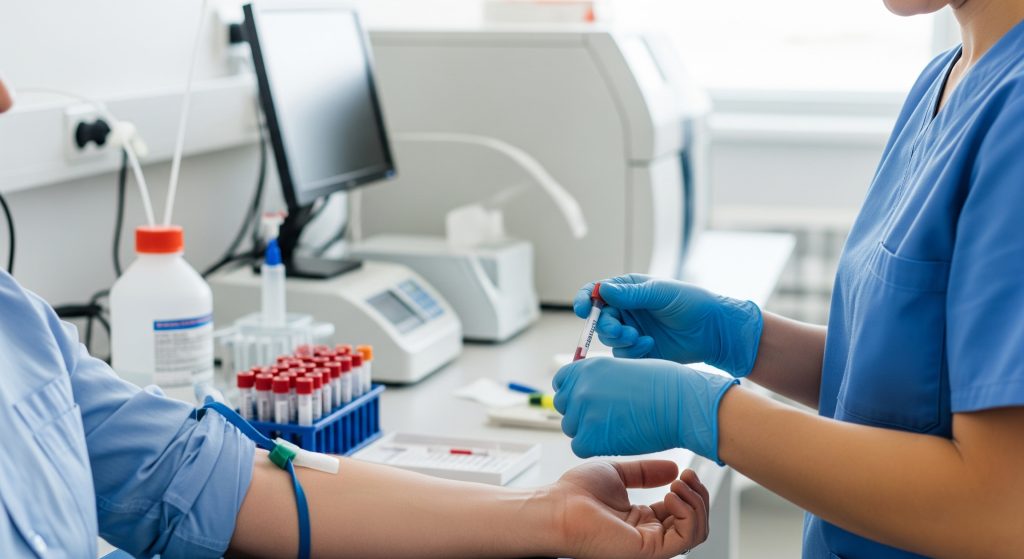
The sample is collected by venepuncture into a serum or plasma tube. A phlebotomist cleans the site, inserts a needle, and fills the tube. Pressure is applied after removal to reduce bruising.
- Collection takes under 5 minutes in most settings.
- Complications are uncommon. Mild bruising can occur.
- Capillary fingerstick methods exist but are less common for CRP in clinics.
For repeated tests, alternate arms if local soreness develops. Simple and practical.
Laboratory Analysis Methods
Laboratories use immunoassay techniques such as immunoturbidimetry or nephelometry. The instrument measures light changes as antibodies bind CRP. The result is calibrated against standards and reported in mg/L.
- Standard CRP focuses on mid to high ranges.
- Hs-CRP uses enhanced sensitivity to resolve low concentrations.
- Inter-assay variation exists. Use the same lab for better comparability.
For clinicians, this is assay performance 101. Sensitivity and specificity drive usefulness, while precision shapes trend analysis.
In practice, the c-reactive protein test slots cleanly into the acute phase toolset. So it earns its place beside FBC, U&E, and cultures.
Turnaround Time and Costs
Turnaround is typically fast. Many hospital laboratories report CRP within 2 to 6 hours. Outpatient providers may return results the same day or by the next business day. Stat requests shorten the timeline.
What causes high CRP levels?
Common causes include bacterial infection, active autoimmune disease, recent surgery, or significant tissue injury. Chronic conditions such as obesity and diabetes are also associated with higher baseline CRP. Certain cancers, dental infections, and smoking can contribute as well. Context narrows the list. Examination and, when indicated, imaging or cultures identify the source.
Can stress increase CRP levels?
Psychological stress alone does not usually spike CRP into high ranges. That said, chronic stress can influence lifestyle, sleep, and cortisol patterns. Those factors may raise CRP modestly, especially alongside central adiposity. As current data suggests, the effect size is generally small compared with infection or autoimmunity.
How often should CRP be tested?
Testing frequency depends on the clinical objective. In acute illness, repeat within 24 to 72 hours to gauge trajectory. In chronic disease monitoring, intervals of weeks to months are common. For hs-CRP risk assessment, take two baseline readings at least 2 weeks apart, then reconsider after major lifestyle or treatment changes.
Is fasting required for CRP blood test?
Fasting is not required for a standard c-reactive protein test. If you have other ordered tests that require fasting, follow that instruction. For isolated CRP, hydration and a routine schedule are sufficient.
What is the difference between CRP and ESR tests?
CRP and ESR both reflect inflammation, but they behave differently. CRP changes quickly, rising within hours and falling as inflammation resolves. ESR changes more slowly and is influenced by anaemia, age, and plasma proteins. In practice, you use CRP to track rapid change and ESR to capture chronic or smouldering activity. Many clinicians use both for a balanced view.

