






 We do what's right for you...


What Is a Stool Test and Why It’s Done
Dr. Juhee Chandra
A tiny sample analysed in a lab might reveal everything from hidden bleeding to parasitic infections that standard blood work completely misses.
Common Types of Stool Tests and Their Purposes
1. Faecal Occult Blood Test (FOBT) for Hidden Blood Detection
The FOBT searches for microscopic amounts of blood that you’d never notice yourself. When the intestinal lining bleeds even slightly – from polyps, ulcers, or tumours – red blood cells mix into the stool. The test uses a chemical reaction to detect haemoglobin, turning positive even when bleeding amounts to just a few millilitres per day. That’s why doctors often recommend avoiding red meat for 72 hours before collection. The myoglobin in beef can trigger false positives.
2. Faecal Immunochemical Test (FIT) for Colorectal Screening
FIT represents the next generation of occult blood testing, using antibodies that specifically target human haemoglobin. Unlike FOBT, dietary restrictions aren’t necessary – the test ignores animal blood completely. NHS bowel cancer screening programmes switched to FIT because it catches 79% of colorectal cancers while producing fewer false alarms. The test arrives as a simple kit through the post. One quick swipe with the collection stick and you’re done.
Studies show FIT detects advanced adenomas (pre-cancerous polyps) in about 30% of cases, giving patients the chance to remove them before they turn malignant.
3. Stool Culture for Bacterial Infections
Laboratory technicians spread your sample across different growth media – special plates containing nutrients that encourage specific bacteria to multiply. After 24-48 hours in an incubator set to body temperature, colonies become visible. Each bacterial species creates distinctive patterns. Salmonella forms black centres on XLD agar. E. coli produces metallic green sheen on EMB plates.
The culture doesn’t just identify the culprit – it also tests which antibiotics work against it through a process called sensitivity testing.
4. Ova and Parasites Test for Intestinal Parasites
Microscopic examination reveals the eggs (ova) and adult forms of intestinal parasites that cause everything from mild discomfort to severe malnutrition. The technician mixes your sample with special stains that make parasite structures glow under the microscope. Giardia cysts look like tiny faces with two nuclei for eyes. Pinworm eggs appear as asymmetrical ovals with one flattened side.
Here’s what drives practitioners mad though – parasites don’t shed eggs consistently. That’s why most labs require three samples collected on different days. Missing just one collection drops detection rates by nearly 40%.
5. Calprotectin Test for Inflammatory Bowel Disease
When intestinal inflammation flares up, white blood cells rush to the scene and release a protein called calprotectin. Normal levels stay below 50 micrograms per gram. Anything above 200 strongly suggests inflammatory bowel disease (IBD) like Crohn’s or ulcerative colitis. The beauty of this test? It distinguishes IBD from irritable bowel syndrome (IBS) with 93% accuracy, potentially saving you from an unnecessary colonoscopy.
6. Elastase Test for Pancreatic Function
Your pancreas produces elastase enzyme to break down proteins. When pancreatic function declines – from chronic pancreatitis, cystic fibrosis, or tumours – elastase levels in stool plummet. Normal readings exceed 200 micrograms per gram. Below 100 indicates severe insufficiency requiring enzyme replacement therapy. The test remains accurate even if you’re already taking pancreatic enzyme supplements, unlike older fat absorption tests.
7. Fat Analysis for Malabsorption Disorders
The 72-hour faecal fat test sounds medieval but remains the gold standard for diagnosing fat malabsorption. You consume 100 grams of fat daily for three days while collecting every bowel movement. Labs then measure total fat content. More than 7 grams per day suggests your small intestine isn’t absorbing fats properly – pointing to conditions like coeliac disease, chronic pancreatitis, or bile acid deficiency.
Medical Conditions Diagnosed Through Stool Testing
Stool analysis provides a window into conditions affecting everything from your stomach to your colon. The tests catch diseases at different stages – some identify active infections happening right now, others detect slow-developing cancers years before symptoms emerge. Understanding what each finding means helps you grasp why your doctor ordered specific tests.
Digestive Disorders and Malabsorption Syndromes
Malabsorption shows up in stool tests through multiple markers. Excessive fat indicates problems with bile production or pancreatic enzymes. Undigested muscle fibres suggest inadequate stomach acid. Alpha-1 antitrypsin, a protein that shouldn’t appear in stool, signals protein-losing enteropathy where the intestinal lining leaks.
Coeliac disease particularly affects fat absorption – untreated patients often have pale, foul-smelling stools that float (steatorrhoea). Short bowel syndrome following surgery produces similar findings plus elevated levels of reducing substances from unabsorbed carbohydrates.
Inflammatory Bowel Conditions
IBD leaves distinct fingerprints in stool samples. Calprotectin and lactoferrin levels soar during flares – sometimes reaching 1000+ micrograms when normal is under 50. White blood cells appear under microscopic examination. Occult blood tests turn positive from mucosal bleeding. These markers help doctors distinguish between IBD flare-ups and infections without repeated colonoscopies.
|
Marker |
Normal Range |
IBD Flare Range |
What It Indicates |
|
Calprotectin |
<50 μg/g |
200-1000+ μg/g |
Neutrophil infiltration |
|
Lactoferrin |
<7.25 μg/g |
100-500 μg/g |
Active inflammation |
|
White blood cells |
None seen |
Moderate to many |
Acute inflammatory response |
Colorectal Cancer and Polyps
Colorectal tumours bleed intermittently – sometimes just a teaspoon spread across several days. FIT testing catches this microscopic bleeding with remarkable sensitivity. A positive result doesn’t mean cancer though. Only 1 in 10 positive FIT tests reveals cancer. The other nine usually find haemorrhoids, polyps, or inflammatory conditions.
Advanced DNA stool tests now detect mutated genes shed by cancer cells, catching 92% of colorectal cancers and 42% of advanced precancerous lesions.
Bacterial, Viral and Parasitic Infections
Different pathogens produce characteristic stool changes. Clostridium difficile causes watery diarrhoea with a distinctive horse-barn smell – labs detect its toxins within hours. Campylobacter creates bloody stools with white blood cells visible under microscopy. Rotavirus turns stool pale and watery. Cryptosporidium produces voluminous watery diarrhoea that special acid-fast stains reveal as bright pink spheres.
What about those travel-related bugs? Entamoeba histolytica from contaminated water shows up as mobile trophozoites containing ingested red blood cells – literally amoebas that have been eating your intestinal lining.
Gastrointestinal Bleeding Sources
The colour and consistency of blood in stool hints at the bleeding location. Fresh red blood coating formed stool suggests haemorrhoids or anal fissures. Dark, tarry stools (melaena) indicate upper GI bleeding – the blood turned black during its journey through the digestive tract. Maroon-coloured loose stools point to rapid bleeding from the small intestine or right colon.
Pancreatic Insufficiency Indicators
When your pancreas fails to produce enough digestive enzymes, telltale signs appear in stool samples. Fat content exceeds 7 grams daily. Elastase drops below 200 micrograms. Under the microscope, undigested meat fibres and fat globules become visible. Stools turn pale, bulky and exceptionally foul-smelling – patients often mention they need to flush multiple times.
How to Collect Stool Sample Properly
Here’s something nobody tells you – improper collection ruins more stool tests than any laboratory error. That pristine sample you carefully collected? Worthless if it touched toilet water. The one you stored overnight on the kitchen counter? Bacterial overgrowth has already corrupted the results. Getting this right matters.
1. Preparation Before Collection
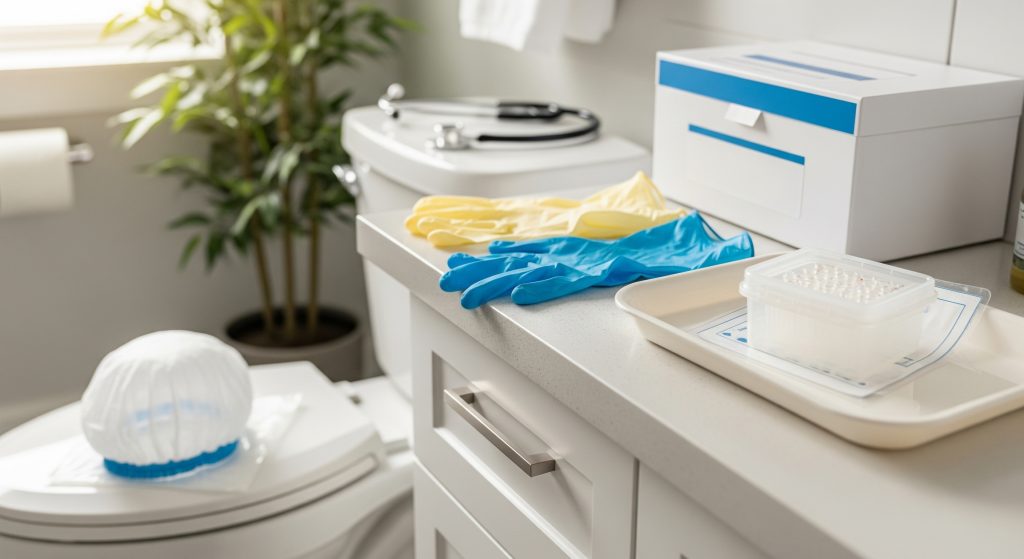
Check your kit contents immediately upon receiving them. Most include a collection container with a small spoon attached to the lid, instruction leaflet, and a biohazard bag. Some tests require special preservative liquids – don’t open these until ready to use. The preservative in parasite tests contains formaldehyde that irritates skin and eyes.
Stop these medications unless your doctor says otherwise:
- Antibiotics – wait 2 weeks after finishing
- Anti-diarrhoeal medicines – 48 hours before
- Barium or bismuth compounds – 1 week
- Iron supplements – 3 days (for occult blood tests)
- NSAIDs like ibuprofen – 48 hours (can cause bleeding)
2. Step-by-Step Collection Process
Line your toilet bowl with cling film or use a clean disposable container to catch the sample – never let it touch toilet water or urine. Some people find using a large clean margarine tub works perfectly (obviously don’t reuse it afterwards). Pass urine first if needed, then position your collection device.
Once you’ve produced a bowel movement, work quickly. Use the spoon attached to your collection container lid to transfer samples. Most tests need just a walnut-sized amount. For parasites, sample from bloody or slimy areas if present – that’s where organisms concentrate. Liquid samples? Fill to the indicated line, usually about 5ml.
Screw the lid tightly and check for leaks. Write your name, date of birth, and collection time on the label. This seems obvious, but labs receive dozens of unlabelled samples daily that get binned.
3. Storage and Transportation Guidelines
Speed matters more than you’d think. Bacteria multiply rapidly at room temperature, white blood cells disintegrate, and parasites die – all corrupting your results. Most samples need refrigeration if you can’t deliver them within 2 hours. Never freeze samples unless specifically instructed. Frozen-thawed specimens show false blood positives and destroyed cellular elements.
How long does it take to get stool test results?
Most standard stool tests return results within 3-5 working days. Occult blood and FIT tests often report within 48 hours. Bacterial cultures need 2-3 days for growth plus sensitivity testing. Parasite examinations typically take 3-5 days, especially if special stains are needed. Complex tests like comprehensive digestive analyses might require 2-3 weeks. Private laboratories sometimes offer 24-hour turnaround for urgent cases, though this costs significantly more.
Can I eat normally before a stool test?
Most stool tests require no dietary changes – eat your usual foods. The major exception is occult blood testing using older guaiac methods, which needs avoiding red meat, vitamin C supplements, and certain vegetables for 3 days prior. FIT tests don’t require dietary restrictions. Fat analysis tests actually require eating 100 grams of fat daily. Your doctor or lab will specify any restrictions when ordering the test.
How accurate is a stool test for colon cancer screening?
FIT testing detects approximately 79% of colorectal cancers – missing about 1 in 5. However, it catches 90% of advanced stage cancers most likely to cause problems soon. For precancerous advanced adenomas, sensitivity drops to 30%. DNA-based stool tests perform better, catching 92% of cancers and 42% of advanced adenomas, though they cost significantly more and produce more false positives requiring follow-up colonoscopy.
What foods should I avoid before stool testing?
For guaiac-based occult blood tests, avoid red meat, raw fruits and vegetables (especially those high in peroxidase like turnips, radishes, broccoli), vitamin C supplements above 250mg, and iron supplements for 72 hours before collection. FIT tests and most other stool analyses require no dietary restrictions. Alcohol and spicy foods might irritate the gut and affect results indirectly. When in doubt, maintain your normal diet unless specifically instructed otherwise.
How often should I have a stool test for parasites?
Routine screening isn’t necessary without symptoms or exposure risks. Test after travelling to areas with poor sanitation if you develop diarrhoea lasting over a week. People with compromised immune systems might need regular screening. If you work in childcare or food service, some employers require annual testing. After treatment for parasites, repeat testing at 2-4 weeks confirms eradication. Otherwise, symptoms guide testing frequency.
Is stool testing painful or uncomfortable?
The test itself causes zero physical discomfort – you’re simply collecting what your body produces naturally. The awkwardness is purely psychological. No invasive procedures, no needles, no fasting required. The most challenging part involves the logistics of collection without contamination. Some find using disposable gloves helps maintain a sense of hygiene during collection. The whole process takes under five minutes.
Can medications affect stool test results?
Absolutely. Antibiotics devastate normal gut bacteria, making cultures unreliable for 2 weeks after stopping. NSAIDs like ibuprofen can cause minor bleeding leading to false-positive occult blood tests. Iron supplements turn stools black and interfere with blood detection. Antacids containing aluminium or magnesium alter stool consistency and pH. Probiotics might affect bacterial culture results. Always list current medications on test request forms – labs adjust interpretation accordingly.

