






 We do what's right for you...


INR Normal Range Explained: What Your INR Test Results Mean
Dr. Juhee Chandra
Most medical professionals tell patients that an INR between 2.0 and 3.0 is the golden standard for warfarin therapy. That’s dangerously oversimplified. The truth is that your ideal INR normal range depends on why you’re taking anticoagulants in the first place – and getting it wrong could mean the difference between a stroke and a bleed.
Think of your INR (International Normalised Ratio) like the speed limit on different roads. A residential street needs 30mph for safety, while a motorway functions at 70mph. Similarly, someone with atrial fibrillation might cruise safely at an INR of 2.5, but a mechanical heart valve patient needs to maintain 3.0 or higher. Miss your target range by even half a point and you’re either risking a clot or a haemorrhage.
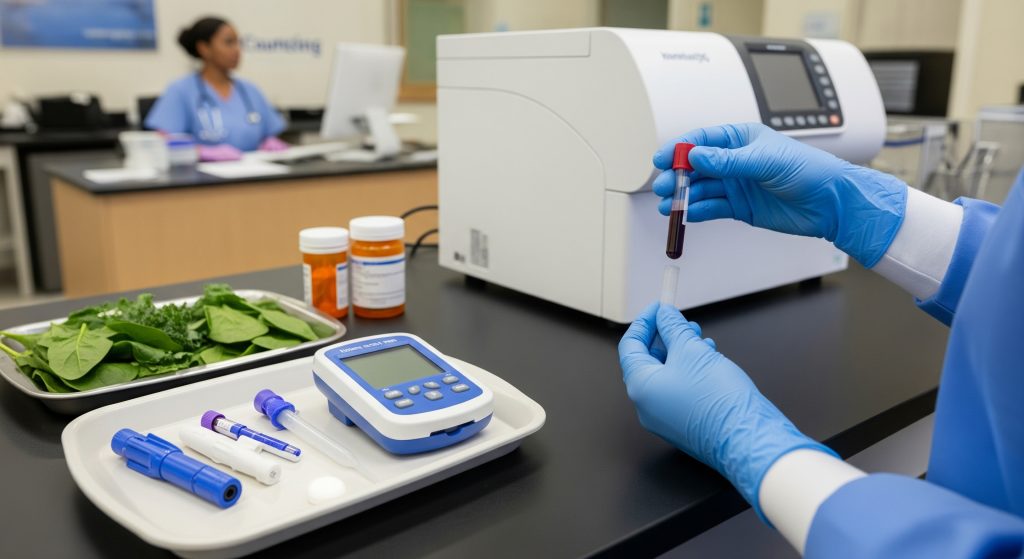
Here’s what makes this particularly maddening: your INR can swing wildly from a simple dietary change or a new medication. That spinach salad you had for lunch? It just dropped your INR. Started taking antibiotics for that chest infection? Your levels just shot through the roof. Yet somehow, most patients leave their clinic with nothing more than a vague instruction to “keep it between 2 and 3” and a prayer that nothing goes wrong.
INR Normal Range Values for Different Patient Groups
Healthy Individuals Not on Anticoagulation
For people not taking any blood thinners, the INR normal range sits between 0.8 and 1.2. This represents your blood’s natural clotting ability without any pharmaceutical interference. Your liver produces clotting factors that keep this balance perfectly steady – unless something disrupts it. Liver disease, vitamin K deficiency, or certain antibiotics can push these numbers higher even without warfarin. Most labs actually report anything below 1.3 as normal for non-anticoagulated patients.
What throws people off is seeing their first INR result before starting warfarin. You might get a reading of 1.0 and think that’s your baseline forever. Not quite. Age, diet, and even altitude can nudge these numbers slightly. The key point? If you’re not on blood thinners and your INR exceeds 1.3, something else needs investigating.
Patients on Warfarin for Atrial Fibrillation
Atrial fibrillation patients typically target an INR range for warfarin between 2.0 and 3.0. This sweet spot reduces stroke risk by about 64% compared to no treatment. But here’s the catch – maintaining this range feels like trying to balance on a tightrope during an earthquake. Studies show that even well-managed patients spend only 60-70% of their time in therapeutic range.
The frustrating reality is that AF patients often need the most frequent monitoring. Your cardiologist might start you with weekly checks, then monthly once stable. Some patients never quite stabilise though. They bounce between 1.8 and 3.2, constantly adjusting doses and wondering why their body won’t cooperate. Sound familiar?
Mechanical Heart Valve Recipients
Mechanical valve patients face the strictest requirements, with target ranges varying by valve position and type:
|
Valve Type |
Target INR Range |
Risk Level |
|
Aortic valve (bileaflet) |
2.0 – 3.0 |
Standard |
|
Mitral valve (any mechanical) |
2.5 – 3.5 |
Higher |
|
Older generation valves |
3.0 – 4.0 |
Highest |
These higher ranges reflect the thrombogenic nature of mechanical valves – basically, your body sees the valve as a foreign invader and desperately wants to clot around it. Missing your target range here isn’t just risky. It’s potentially catastrophic. Valve thrombosis can occur within days of subtherapeutic INR levels.
Deep Vein Thrombosis Treatment Ranges
DVT treatment follows a different timeline than chronic conditions. Initially, you’ll target an INR of 2.0 to 3.0 for at least three months. Some patients stop there. Others continue indefinitely, especially after unprovoked clots or multiple episodes. The decision often comes down to bleeding risk versus clot recurrence – a calculation that keeps haematologists awake at night.
What most patients don’t realise is that DVT treatment ranges might temporarily increase to 2.5-3.5 if you’re also dealing with active cancer or antiphospholipid syndrome. These conditions make your blood extra “sticky,” requiring more aggressive anticoagulation.
Paediatric INR Reference Values
Children present unique challenges for INR management. Their target ranges mirror adult values (2.0-3.0 for most indications), but achieving stability proves nearly impossible. Growing bodies metabolise warfarin differently week to week. A dose that worked perfectly last month suddenly sends the INR soaring after a growth spurt.
Paediatric patients also face additional complications:
- Dietary changes as food preferences evolve
- Frequent infections requiring antibiotics
- Irregular medication compliance (ever tried getting a 6-year-old to take warfarin daily?)
- Activity levels that fluctuate wildly
High-Risk Condition Target Ranges
Certain conditions demand higher INR targets, typically 2.5 to 3.5 or even 3.0 to 4.0. These include:
“Antiphospholipid syndrome with previous thrombosis, certain mechanical valves with additional risk factors, or recurrent thromboembolism despite therapeutic anticoagulation”
Managing these ranges requires almost obsessive attention to detail. Patients often check their INR twice weekly, adjust doses by quarter-tablets, and maintain food diaries to track vitamin K intake. It’s exhausting. Yet the alternative – another clot or stroke – makes the effort worthwhile.
Understanding Your Prothrombin Time Test Results
What INR Numbers Actually Measure
Your INR doesn’t directly measure how thin your blood is (blood doesn’t actually get “thinner” anyway). Instead it calculates how long your blood takes to clot compared to a standardised normal sample. An INR of 2.0 means your blood takes twice as long to clot as someone not on anticoagulants. Simple enough concept. Maddeningly complex in practice.
The prothrombin time test specifically measures the extrinsic clotting pathway – factors II, VII, and X, plus factor V and fibrinogen. Warfarin blocks vitamin K, which these factors need for activation. No vitamin K means no active clotting factors means longer clotting time. The INR standardises this measurement across different laboratories and reagents.
Difference Between PT and INR Values
Prothrombin time (PT) gives you raw seconds – typically 11 to 13.5 seconds for normal blood. But PT results vary between labs based on their reagents’ sensitivity. That’s where INR saves the day. It applies a mathematical correction (using the International Sensitivity Index) to make results comparable worldwide.
Think of it this way: PT is like measuring temperature in Celsius or Fahrenheit – the number changes based on your scale. INR is like using Kelvin – standardised and universal. A patient with a PT of 25 seconds might have an INR of 2.2 at one lab and 2.4 at another if using PT alone. With INR? It’s 2.3 everywhere.
Critical INR Levels Requiring Action
Here’s when you need to act immediately:
|
INR Level |
Risk |
Action Required |
|
Below 1.5 |
High clot risk |
Increase dose, possible bridging therapy |
|
Above 4.0 |
Increased bleeding |
Hold dose, vitamin K if needed |
|
Above 6.0 |
Significant bleeding risk |
Vitamin K (oral or IV), monitor closely |
|
Above 10.0 |
Life-threatening |
Emergency vitamin K, possible plasma/PCC |
But numbers alone don’t tell the whole story. An INR of 5.0 with no bleeding might just need dose adjustment. The same reading with blood in your urine? That’s an emergency.
Factors That Affect Test Accuracy
Laboratory errors account for more INR variability than most people realise. Improper sample handling, delayed processing, or contaminated tubes can skew results by 20% or more. Home monitoring devices need regular calibration – that expensive CoaguChek gathering dust needs checking every six months minimum.
Other accuracy killers include:
- Lupus anticoagulant (causes falsely elevated INR)
- High haematocrit (falsely increases INR)
- Direct thrombin inhibitors contamination
- Improper venipuncture technique
Ever had wildly different INR results just days apart with no medication changes? Probably not your fault.
Frequency of INR Monitoring Requirements
Starting warfarin means frequent blood draws – typically every 2-3 days initially, then weekly once you’re approaching target range. Stable patients might stretch to monthly monitoring after six months of consistent results. But “stable” proves elusive for many. Studies show only 30% of patients maintain truly stable INRs long-term.
Life events demand extra monitoring regardless of stability. Starting new medications? Check weekly for a month. Planning surgery? Daily monitoring the week before. Caught the flu? Your INR just became unpredictable. The monitoring never really ends – it just becomes less frequent if you’re lucky.
Managing INR Levels Within Target Range
Foods That Impact INR Values
Vitamin K is warfarin’s nemesis, and it lurks everywhere. Most patients know about leafy greens, but the complete list proves overwhelming. Kale contains 817 micrograms per cup. Spinach packs 888. Even seemingly innocent foods like blueberries (28 mcg) and olive oil (60 mcg per tablespoon) contribute to your daily intake.
The trick isn’t avoiding vitamin K entirely – that’s impossible and unhealthy. Instead maintain consistency. Eating salad twice weekly works fine. Just don’t suddenly go on a green juice cleanse. Your INR will plummet faster than cryptocurrency in a market crash.
Hidden vitamin K sources that sabotage INR control:
- Nutritional supplements (especially multivitamins)
- Ensure and Boost drinks
- Green tea (moderate amounts)
- Certain cooking oils
- Fermented foods like natto
Warfarin Dosage Adjustment Guidelines
Dose adjustments follow predictable patterns, though individual responses vary wildly. A typical protocol might increase weekly doses by 5-20% for subtherapeutic INRs. But here’s what drives clinicians crazy – some patients need 2mg daily while others require 15mg for the same INR. Genetics, specifically CYP2C9 and VKORC1 variants, explain much of this variation.
“Never adjust doses based on a single abnormal INR unless it’s critically high or you’re actively bleeding. Knee-jerk reactions cause INR rollercoasters.”
Smart dosing strategies include:
- Making small adjustments (10-15% weekly dose changes)
- Using alternating doses for fine-tuning (5mg Monday/Wednesday/Friday, 7.5mg other days)
- Waiting 3-5 days between dose changes to see full effect
- Keeping detailed records of doses and responses
Medications That Interfere with INR
Antibiotics wreak absolute havoc on INR control. Metronidazole and fluconazole can double your INR within days. Even seemingly benign medications like paracetamol (at high doses) increase bleeding risk. The interaction list spans pages, but these prove most problematic:
|
Medication Class |
INR Effect |
Monitoring Needed |
|
Most antibiotics |
Increases INR |
Check 3-5 days after starting |
|
Antifungals |
Significant increase |
Reduce warfarin preemptively |
|
NSAIDs |
Increases bleeding risk |
Avoid if possible |
|
Rifampicin |
Decreases INR |
May need double dose |
Signs of Abnormal INR Levels
Your body sends warning signals before INR disasters strike. Excessive bruising from minor bumps suggests levels creeping too high. But waiting for obvious bleeding means you’ve waited too long. Subtle signs often appear first – pink-tinged urine, longer bleeding from shaving nicks, or unexplained fatigue from slow internal bleeding.
Low INR symptoms prove trickier to spot. You won’t feel your blood getting “thicker.” Instead watch for:
- Leg swelling or pain (possible DVT)
- Sudden shortness of breath
- Chest pain or palpitations
- Vision changes or speech problems
- Unexplained headaches
The real challenge? These symptoms overlap with dozens of other conditions. Is that headache from dehydration or an impending stroke?
Home INR Monitoring Options
Home monitoring devices cost £300-500 upfront but transform INR management for motivated patients. The CoaguChek series dominates the market, delivering lab-comparable results from a finger prick. Weekly home checks catch problems before they escalate. Some patients test twice weekly during unstable periods without the hassle of clinic visits.
But home monitoring isn’t foolproof. Devices need proper technique – inadequate blood samples give error messages or false readings. Quality control checks every few months ensure accuracy. Insurance coverage varies wildly. NHS funding depends on your CCG’s policies and your specific circumstances.
When to Contact Healthcare Provider
Most patients wait too long before calling their anticoagulation clinic. Don’t be a hero. Contact them immediately for:
- Any unusual bleeding lasting over 10 minutes
- Black or bloody stools
- Severe headaches or confusion
- Major falls or head injuries (even without visible bleeding)
- Starting any new medication
- Planned dental work or procedures
Here’s the frustrating truth though – reaching your provider often proves challenging. Anticoagulation clinics have limited hours. A&E visits for simple INR checks waste everyone’s time. This broken system leaves patients making educated guesses about whether that nosebleed warrants concern.
Key Takeaways About INR Normal Values
Understanding your INR normal range isn’t just about memorising numbers between 2.0 and 3.0. Your specific target depends entirely on your condition, with mechanical heart valves requiring higher ranges than atrial fibrillation. Normal INR values for healthy individuals (0.8-1.2) become irrelevant once you start warfarin – you’re aiming for controlled anticoagulation, not normal clotting.
The prothrombin time test measures clotting delay, not blood thickness. Your INR can swing dramatically from foods, medications, illness, or even weather changes. Consistency matters more than perfection – eating the same amount of vitamin K weekly beats eliminating it entirely. Home monitoring empowers you to catch problems early, though it requires proper technique and regular calibration.
Critical levels demand immediate action: below 1.5 risks clots, above 4.0 increases bleeding, and anything over 10.0 becomes life-threatening. Most importantly, successful INR management means accepting that perfect control remains impossible. You’re aiming for time in therapeutic range above 70%, not 100%. Work closely with your anticoagulation team, maintain detailed records, and never adjust doses based on panic or single readings.
Does managing your INR feel like a full-time job sometimes? You’re not alone. But understanding these ranges and taking control of your monitoring makes the difference between living with warfarin and being controlled by it.
What is a dangerously high INR level?
An INR above 4.0 increases bleeding risk significantly, but truly dangerous levels start at 6.0 and become life-threatening above 10.0. However, any INR above your target range with active bleeding requires immediate medical attention, regardless of the number. A patient with an INR of 4.5 and blood in their urine faces more immediate danger than someone at 6.0 with no symptoms.
How quickly can INR levels change?
INR levels can shift within 24-48 hours after dose changes, though full effects take 3-5 days. Dramatic changes happen faster – forgetting doses for two days might drop your INR by half, while certain antibiotics can double it within 72 hours. Food changes affect INR within 24 hours. A vitamin K-rich meal can drop your reading by 0.5-1.0 points by the next day.
Can I check my INR at home?
Yes, portable devices like CoaguChek allow finger-prick testing at home with accuracy comparable to laboratory results. These devices cost £300-500 initially, with ongoing costs for test strips (about £3-5 per test). You’ll still need periodic lab confirmation and proper training on technique. Not everyone qualifies for NHS funding – typically reserved for those with poor venous access or requiring frequent monitoring.
What happens if my INR is below normal range?
Subtherapeutic INR levels (below your target, not below normal) increase clot risk exponentially. For every 0.5 point below target, stroke risk in AF patients roughly doubles. Your provider will likely increase your warfarin dose and might prescribe bridging therapy with injectable anticoagulants if your INR drops below 1.5. Don’t panic and double your dose yourself – that path leads to INR rollercoasters.
How often should INR be checked on warfarin?
New warfarin patients need checking every 2-3 days initially, then weekly as they approach target range. Stable patients can extend to every 4-6 weeks after six months of consistent results. Any medication change, illness, or dietary shift triggers more frequent monitoring. Even stable patients rarely go beyond 12 weeks between checks – too much can change in three months.
Why is my INR different from prothrombin time?
Prothrombin time measures clotting speed in seconds (usually 11-13.5 normally), while INR standardises this measurement across all laboratories using a mathematical calculation. Your PT might be 25 seconds, but the INR calculation (using the lab’s International Sensitivity Index) converts this to 2.3. Think of PT as the raw data and INR as the universal translation everyone understands.

