






 We do what's right for you...


Explainer: Ligament Tear Treatment, Symptoms, and Healing Time
Dr. Rajeev K Sharma
Standard advice often stops at rest and ice. That is a start, not a plan. In this explainer, I outline a complete, evidence-informed approach to ligament tear treatment, the real-world pattern of ACL tear symptoms, and how knee ligament injury recovery time actually plays out in clinic. The aim is straightforward. Help you make clear, confident decisions from day one through to return to sport.
Ligament Tear Treatment Options
1. RICE Protocol for Initial Treatment
I treat the first 48 to 72 hours as a containment phase. The RICE protocol remains a practical entry point for ligament tear treatment because it limits swelling, pain, and secondary injury. Rest prevents further fibre disruption. Ice provides short bouts of vasoconstriction and symptom relief. Compression controls effusion and gives mechanical support. Elevation assists fluid clearance.
Time and dose matter. As NCBI notes, early application within the first 72 hours helps pain and swelling control, and short ice sessions of roughly 15 to 20 minutes, repeated during the day, are sensible. I reassess daily and reduce strict rest once pain and swelling trend down. Early, gentle motion often accelerates recovery when symptoms allow.
-
Stop the aggravating activity and protect the joint.
-
Apply cold in brief, spaced intervals with skin protection.
-
Use an elastic wrap to maintain light, even compression.
-
Elevate the limb above heart level when resting.
RICE is a bridge, not the destination. I transition to progressive loading as soon as it is safe.
2. Non-Surgical Conservative Management
Many partial tears and some isolated ligament injuries stabilise with structured rehabilitation. For ligament tear treatment without surgery, I focus on strength, proprioception, and movement quality. Bracing can assist in early phases for confidence and protection, especially on uneven ground or during commutes.
Outcomes vary by activity demands. A desk-based adult with a stable partial tear may regain full function through targeted therapy and education. A cutting-sport athlete often needs more than that. A progressive plan typically includes closed-chain strength work, neuromuscular drills, and task-specific reloading. Adherence drives results (boring but true).
-
Loading strategy: increase reps or resistance only when soreness settles within 24 hours.
-
Gait and movement cues: soft landings, knee tracking, controlled deceleration.
-
Task progression: flat-ground drills to multiplanar agility to sport skills.
Conservative care has limits. Marked instability during daily tasks usually signals the need to consider surgical consultation.
3. Surgical Repair and Reconstruction
Surgery is appropriate when instability persists or activity goals require robust stability. For ACL reconstruction, graft choice, tunnel placement, and concomitant injury management determine outcomes. These technical details matter because they set the ceiling for rehabilitation. In multi-ligament injuries, staged or combined reconstruction may be indicated to restore function effectively.
Postoperatively, I anchor ligament tear treatment to three pillars: range of motion recovery, early quadriceps activation, and controlled load progression. Range often returns first. Strength symmetry and reactive control take longer. That is expected.
Stability opens the door. Rehabilitation walks you through it.
4. Physical Therapy Programmes
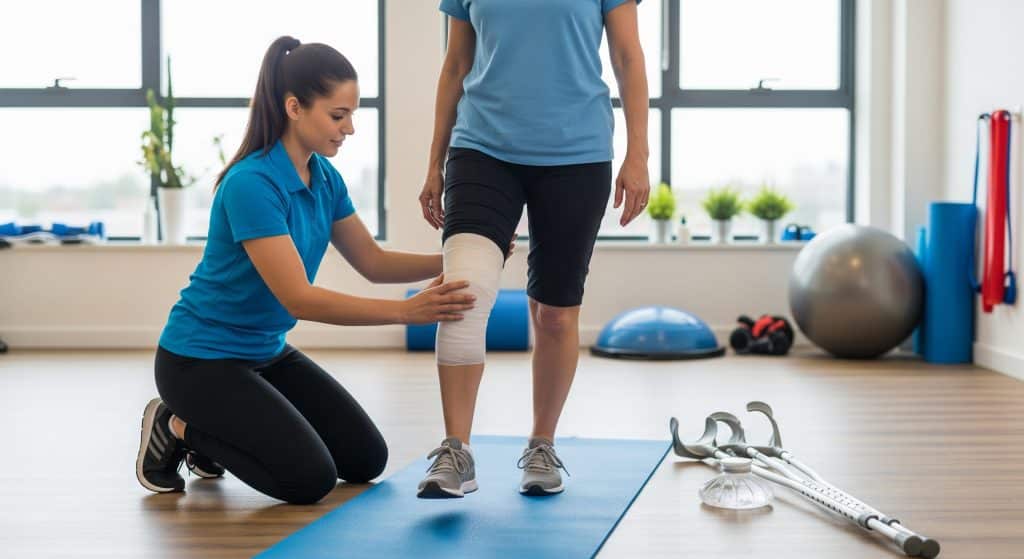
Physiotherapy is the engine room of recovery. I tailor the programme to the ligament involved, tissue irritability, and the person’s goals. An early focus on swelling control and extension range sets a strong base. Then I progress to posterior chain strength, single-leg control, and proprioceptive drills.
A typical phased approach looks like this:
-
Calm and restore: swelling reduction, pain control, passive to active range.
-
Baseline strength: quadriceps sets, bridges, hip work, calf strength.
-
Dynamic control: single-leg stance, step-downs, controlled lunges.
-
Plyometric prep: low amplitude hops, deceleration drills, change of direction.
-
Return to training: sport-specific patterns, progressive intensity, fatigue testing.
Home-based programmes can work if compliance is high and milestones are tracked. Supervised sessions help when form, motivation, or complex progressions are barriers. Either way, the plan must adapt to what the knee shows on the day.
5. Pain Management Strategies
Pain control should support, not replace, sensible loading. I use a stepwise approach: topical analgesics and simple oral agents first, then targeted options if needed. Ice remains useful after higher-load sessions. Bracing and taping can reduce threat perception and allow earlier pattern retraining. I avoid long-term reliance on anti-inflammatories, since load management and strength improvement provide more durable relief.
-
Use pain as feedback, not as a green light to push harder.
-
Introduce load on good days, consolidate on average days, protect on bad days.
6. Alternative Treatment Methods
Adjuncts exist, but their roles differ. Platelet-rich plasma may assist some soft tissue injuries, though protocols and indications still evolve. Emerging biologics, including cell-based strategies, are being studied for tendon and ligament healing. Acupuncture may provide symptom relief for selected patients and can ease the shift away from regular analgesics. Nutrition is a quiet lever in ligament tear treatment. Sufficient protein, vitamin C, and collagen-supportive nutrients help tissue remodelling, and omega-3 sources may modulate inflammation to an extent.
I position these modalities as supportive options. They do not replace progressive loading and technical rehabilitation.
ACL Tear Symptoms and Diagnosis
Immediate Symptoms After Injury
ACL tear symptoms tend to follow a recognisable pattern. Many patients describe a pop, a sudden giving way, and sharp pain. Swelling often develops rapidly over a few hours, and weight-bearing becomes difficult. The knee may feel unstable during simple turns or when stepping off a curb.
My priority in the first assessment is to exclude fractures, assess effusion, and gauge active range. If there is heavy swelling and guarded movement, I begin protection and plan definitive imaging.
Progressive Symptoms Over Time
Without adequate stabilisation and rehabilitation, knee function often declines. Patients report recurrent giving way with pivots, trouble descending stairs, and confidence loss in crowded places. As far as current data suggests, long-term instability can increase the risk of meniscal injury and early osteoarthritis. Activity levels may fall after repeated episodes, and that detrains the system further.
Symptoms evolve. Pain may reduce while instability persists. That mismatch is a red flag for structured reassessment.
Diagnostic Tests and Imaging
Clinical tests guide early decisions. The Lachman and pivot shift assess anterior translation and rotational control. The anterior drawer has reported high sensitivity for ACL tears, supporting its value in skilled hands. As WHO EMRO reported, sensitivity reached 91.43% in one analysis.
I use imaging to confirm and plan. X-rays rule out fracture or avulsion quickly. MRI visualises soft tissue, bone bruising, and associated pathology, which is crucial for tailoring ligament tear treatment and prognosis. Clinical findings plus MRI give the clearest roadmap.
Severity Grades of Ligament Tears
Grading helps set expectations and select interventions:
|
Grade |
Definition |
|---|---|
|
Grade 1 |
Microscopic damage. Minimal fibre disruption. Stable joint with local tenderness. |
|
Grade 2 |
Partial tear. Some laxity, end-point present. Variable swelling and pain. |
|
Grade 3 |
Complete tear. Marked laxity and instability. Often with functional giving way. |
Grades inform the load we prescribe and the likely knee ligament injury recovery time. They do not dictate destiny. Response to rehabilitation matters just as much.
Differentiating Between Ligament Injuries
I screen the stress pattern and mechanism. Valgus force points to MCL. Varus suggests LCL. Hyperextension or posterior tibial translation implicates PCL. Pivoting and deceleration with inward collapse often implicate ACL. Palpation tenderness, stress tests, and specific functional deficits refine the picture.
Imaging fills in the gaps, especially for combined injuries or when swelling limits examination. Misclassification slows recovery. Precise identification accelerates the correct ligament tear treatment.
Knee Ligament Injury Recovery Time
1. Grade 1 Tear Healing Timeline
Grade 1 injuries usually settle quickly. Pain and swelling reduce within days, and movement normalises early. Strength and control return with progressive loading, often allowing a staged return to running drills in a few weeks. I still protect against premature cutting and pivoting until control tests are clean.
The priority is not speed. It is durable recovery with clean mechanics.
2. Grade 2 Tear Recovery Phases
Grade 2 tears require patience and structure. Partial fibre disruption creates sensitivity to load and direction changes. I phase rehabilitation into calm, strengthen, and integrate. Functional bracing can support return to straight-line activities while proprioception improves. Excessive pivoting is restricted during mid-phase loading because it risks setback.
Recovery for many grade 2 injuries lands between several weeks and a few months, depending on sport demands. When patients commit to the plan, knee function often improves steadily.
3. Grade 3 Complete Tear Timeline
Complete tears diverge in course. Some patients compensate well with rigorous therapy and activity modification. Others encounter persistent instability in daily tasks. For ACL and multi-ligament injuries, surgery is frequently the pathway back to high-demand sport. Even with surgery, expect a long runway to performance.
I avoid date chasing. We clear objective criteria at each stage, then progress. That produces safer, more confident returns.
4. Post-Surgery Recovery Stages
After reconstruction, I use staged goals:
-
Weeks 0 to 2: achieve full extension, reduce swelling, and establish quadriceps activation.
-
Weeks 3 to 6: restore flexion range, build early strength, and normalise gait.
-
Weeks 7 to 12: progress single-leg strength, introduce low-level plyometrics, refine balance.
-
Months 4 to 6: advanced plyometrics and controlled change of direction drills.
-
Months 6 plus: return-to-sport testing and graded re-entry to competition.
Timelines shift with tissue response, graft selection, and associated injuries. I will adjust based on objective testing, not calendar pressure.
5. Factors Affecting Healing Speed
Healing speed is not one variable. It is a cluster:
-
Injury specifics: grade, location, and combined damage.
-
Biology: age, health status, sleep, and systemic inflammation.
-
Rehabilitation quality: progression, adherence, and exercise precision.
-
Load context: sport type, surface, and work demands.
-
Psychology: confidence, fear of movement, and pain beliefs.
Control the controllables. Excellent rehabilitation and consistent recovery habits often compress knee ligament injury recovery time.
6. Return to Activity Guidelines
I use criteria, not dates:
-
Swelling minimal and stable over 24 hours after training.
-
Range symmetric or near symmetric compared with the other side.
-
Strength within a small deficit band on isokinetic or validated field tests.
-
Hop and deceleration tests showing clean landings and rapid control.
-
Confidence high during reactive drills and under mild fatigue.
For ACL reconstruction, field-based testing and sport-specific exposure under supervision close the final gap. Clearance is earned, and the body confirms it.
Prevention and Long-Term Management
Strengthening Exercises for Prevention
Strong, well-timed muscles reduce ligament load. I prioritise posterior chain and hip strength to control knee valgus and rotation. Single-leg Romanian deadlifts, step-downs, Copenhagen planks, and controlled hops build real-world resilience. Integrate neuromuscular warm-ups that include landing mechanics, quick footwork, and trunk control.
In sports medicine shorthand, this is NMT, or neuromuscular training. It means strength with coordination and timing, not just bigger quads.
Lifestyle Modifications After Recovery
Prevention extends beyond the gym. I advise incremental return to cutting sports, not weekend surges. Surfaces matter. Rotate footwear and avoid worn soles that twist the knee under load. Sleep and nutrition support tissue turnover and adaptation. It is basically compounding for the body.
Small, repeatable habits beat heroic single sessions every time.
Warning Signs of Re-injury
Watch for recurrent swelling after light activity, new episodes of giving way, or avoidance of pivots. Audible clicks with pain, or a sense of the knee shifting during turns, deserves assessment. If symptoms regress after a training increase, step back promptly and reassess the plan.
Do not wait for a big event. Small warnings are earlier and cheaper to address.
Nutritional Support for Ligament Health
Nutrition does not fix technique, but it supports healing. I prioritise adequate protein spread across the day, vitamin C for collagen synthesis, and foods rich in collagen precursors. Omega-3 sources may help modulate soreness after new loads. Hydration and mineral balance help with training tolerance.
Supplement protocols must fit medical history and overall diet. Food first remains a reliable default.
Conclusion
Effective ligament tear treatment is not a single intervention. It is a sequence: protect early, restore motion, load with precision, and then reintroduce complexity. Diagnosis should be specific and timely, since accurate grading and imaging clarify the path. Rehabilitation, whether after conservative care or surgery, is the decisive factor in knee ligament injury recovery time and long-term joint confidence.
Set clear criteria, progress deliberately, and maintain prevention habits even when symptoms fade. That is how short-term recovery turns into durable performance.
Frequently Asked Questions
Can a torn ligament heal without surgery?
Some partial tears heal with structured rehabilitation, protection, and progressive loading. For stable injuries and lower-demand activities, non-operative ligament tear treatment can restore function. Persistent instability or high-demand sport goals often shift the discussion toward surgery.
What is the difference between a ligament tear and a sprain?
Sprain describes injury severity across a spectrum. A ligament tear is the structural damage within that spectrum. Grade 1 indicates mild sprain with microscopic tearing. Grade 2 is a partial tear. Grade 3 is a complete tear. Treatment scales with the grade and functional goals.
How long should I wait before returning to sports after ACL surgery?
Return is based on criteria, not a fixed date. Strength symmetry, hop testing, landing mechanics, and confidence must meet thresholds first. Many athletes progress through staged programmes over months. As Apollo Spectra outlines, grade-based timeframes range from 4 to 10 weeks for lesser injuries, while post-ACL timelines are longer and criteria led.
What are the signs that a ligament tear is getting worse?
Increasing instability, new giving-way episodes, swelling after light activity, or declining range suggest regression. Pain that spreads or lingers beyond 24 to 48 hours after usual activity also warrants review. These signs mean the current ligament tear treatment plan may need adjustment.
Is complete rest necessary for ligament healing?
Complete rest helps in the first days when pain and swelling rise. After that, early controlled motion and graded loading usually improve outcomes. I use pain and swelling as guides. If they settle within a day after a new load, the plan is on track.
Can physiotherapy alone treat a partial ligament tear?
Yes, for many cases. Physiotherapy centred on strength, proprioception, and movement quality often restores stability and function. Bracing can assist early on. I reassess regularly. If instability persists in daily tasks, I consider additional options to optimise ligament tear treatment.

