






 We do what's right for you...


Dealing with Wrist Pain at Night? A Guide to Help You Sleep Pain-Free
Dr. Rajeev K Sharma
Ice packs and painkillers are the default advice for night-time wrist pain. That helps, but it rarely solves disturbed sleep on its own. I approach wrist pain treatment as a sequence: calm symptoms fast, reduce night triggers, then rebuild capacity. The result is fewer awakenings and better mornings. It is basically a structured plan that respects biology and daily reality.
Immediate Wrist Pain Treatment Options for Better Sleep
1. Neutral Wrist Splinting and Support
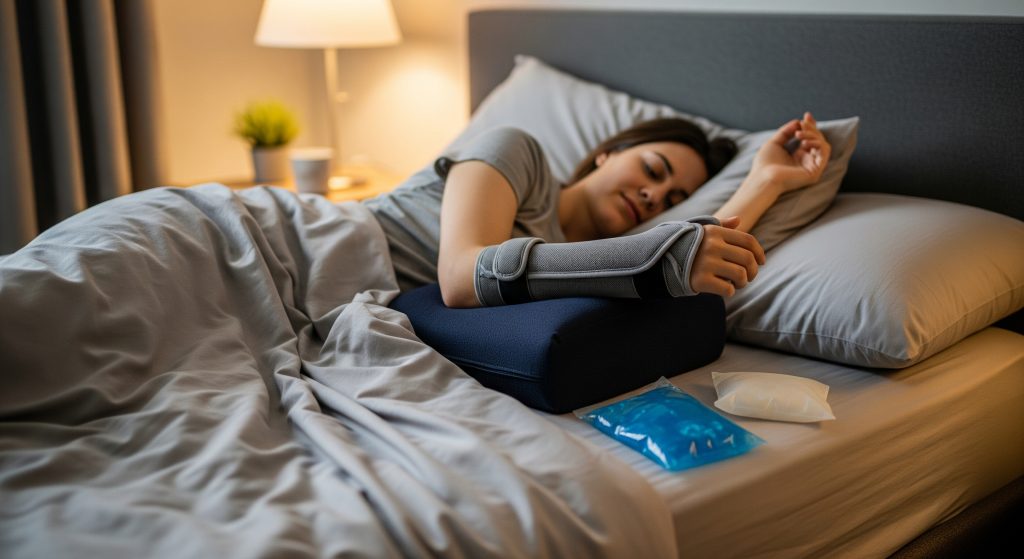
Night splinting is a simple way to keep the wrist in a neutral position. I use it to prevent prolonged flexion or extension that compresses tissues. A neutral wrist reduces nerve tension and soft tissue load while you sleep. That often means fewer nocturnal jolts of pain.
-
Choose a soft, breathable splint with a removable palmar stay, not a rigid cast.
-
Fit it snugly. Avoid tight straps that leave marks or numbness by morning.
-
Wear it for several nights in a row to gauge benefit. Consistency matters.
For many people, this is the most reliable first-line wrist pain treatment at night. I see improvements within a week, sometimes within days.
2. Cold and Heat Therapy Application
Thermal care works when matched to the phase of irritation. Cold reduces swelling and dulls pain early on. Heat improves tissue flexibility and comfort once the acute phase settles. As Mayo Clinic details, cold compresses are best applied for 15 to 20 minutes at intervals in acute tendon irritation, while heat is reserved for later to ease stiffness and promote blood flow.
-
Cold first for acute flare ups. Use a wrapped gel pack. Never directly on skin.
-
Switch to gentle heat when swelling subsides. A warm pack or bath works.
-
Alternate only if symptoms are mixed and the response is unclear.
Avoid extremes. Very hot or very cold sources can irritate sensitive skin or aggravate symptoms. Precision helps here, and it is part of measured wrist pain treatment rather than guesswork.
3. Over-the-Counter Pain Relief Methods
Over-the-counter analgesics can complement physical strategies. Nonsteroidal anti-inflammatory drugs reduce inflammatory pain. Paracetamol helps with general pain where inflammation is not dominant. For short night-time use, I advise the lowest effective dose, and only as part of a broader wrist pain treatment plan.
-
Consider timing a dose 30 to 60 minutes before sleep if pain peaks at night.
-
Avoid combining multiple NSAIDs. Monitor stomach and blood pressure issues.
-
Discuss interactions if using anticoagulants or have renal concerns.
Medication should create a window for rest and healing. Not a crutch. I also pair this with positioning changes to reduce the need for repeat dosing.
4. Optimal Sleep Positions for Wrist Pain
Alignment protects irritated tissues from sustained stress. I prioritise positions that keep the wrist straight and the arm relaxed. Back sleeping with arms resting at the sides works well. Side sleepers can succeed too with small adjustments that maintain neutral wrists and reduce compression.
-
Back sleeping: place forearms on pillows to keep wrists straight and relaxed.
-
Side sleeping: hug a pillow so the wrist stays neutral, not tucked under the head.
-
Avoid stomach sleeping. It twists wrists and loads the base of the palm.
Small tweaks add up. Neutral alignment plus a splint is often potent. This dual approach anchors immediate wrist pain relief during sleep.
5. Pillow Support Techniques
Pillows are not just for the neck. Thoughtful support can unload the wrist and forearm throughout the night. Elevating the forearm slightly reduces pressure and can ease throbbing sensations that build with swelling. For side sleepers, a compact pillow between forearm and torso keeps the wrist from drifting into flexion.
-
Use a thin pillow under the forearm so the wrist stays level with the elbow.
-
Hug a medium pillow to avoid tucking hands under the face or body.
-
For post-injury nights, try mild elevation to reduce dependent swelling.
I view pillows as adjustable splints. They quietly enforce neutral positions. Practical, low cost, and effective for night-time wrist pain relief.
6. Compression Wraps and Bandaging
Light compression can dampen swelling and provide reassuring support. I prefer soft elastic wraps for short night use. Excessive compression risks finger numbness or tingling by morning. Apply in a smooth spiral from mid palm to below the elbow. Keep it breathable and easy to remove.
-
If wearing a splint, use either splint or wrap at night, not both tightly together.
-
Check capillary refill in the fingers. Discontinue if fingers feel cold or look pale.
-
Reassess daily. Compression is a temporary adjunct, not a permanent solution.
As with all immediate steps, compression belongs inside a coherent wrist pain treatment plan. The aim is comfort that accelerates recovery, not just a tighter bandage.
Understanding Night-time Wrist Pain Causes
Carpal Tunnel Syndrome Symptoms at Night
Night symptoms often suggest median nerve irritation. Numbness in the thumb, index, and middle finger is common. Tingling that improves when shaking the hand is another clue. In clinic, I see frequent nocturnal wakings caused by wrist flexion compressing the carpal tunnel. This does not prove carpal tunnel syndrome, but it increases suspicion.
-
Test gently for Tinel sign by tapping over the carpal tunnel. Tingling suggests nerve irritability.
-
Splinting in neutral often reduces nocturnal paraesthesia within days.
An early, structured wrist pain treatment approach can limit escalation. Delay tends to entrench sensitivity.
Repetitive Strain Injuries
Cumulative load from keyboards, tools, or racquet sports can sensitise tendons and their sheaths. Symptoms often spike late evening as tissue fatigue accumulates. Night pain reflects low grade inflammation plus habitual sleep positions that fold the wrist. Here is what this means. Day patterns and night positions are linked, so I treat both.
-
Reduce repetitive load by 20 to 30 percent for one to two weeks.
-
Match workload with short mobility breaks every 45 to 60 minutes.
With this recalibration, night comfort usually improves. Not instantly, but noticeably within a fortnight.
Arthritis and Joint Inflammation
Osteoarthritis and inflammatory arthritis present differently at night. Osteoarthritis brings stiffness and deep ache after overuse. Inflammatory arthritis may cause morning stiffness and episodic night throbbing. Both conditions benefit from neutral positioning plus heat during non acute phases. I add gentle joint mobility to preserve function and reduce pain spikes.
For an arthritis dominated pattern, a tailored wrist pain treatment includes medication review, activity pacing, and splinting on high load days. Precision reduces flares and protects sleep.
Tendinitis and Overuse Injuries
Tendon irritation near the wrist is sensitive to compression and stretch at night. People often sleep with the wrist flexed and the thumb tucked in. That combination aggravates tendon friction. The fix is boring but effective. Neutral splinting, brief cold therapy in the acute stage, and controlled reloading once pain calms.
Progression matters. I reintroduce gripping tasks in short sets with long rests. This avoids the spike and crash cycle that prolongs symptoms.
Nerve Compression During Sleep
Nerves dislike prolonged end range positioning. Wrist flexion increases pressure within the carpal tunnel. Ulnar nerve symptoms can also flare if the elbow remains deeply bent. Night-time control of joint angles reduces neural irritability and helps restore normal sensation. A light splint and a hugging pillow keep angles sensible without conscious effort.
In short, many wrist pain causes interact. The night-time setting amplifies small alignment errors. Good sleep mechanics are part of effective wrist pain treatment, not an optional extra.
Wrist Pain Exercises for Prevention and Relief
1. Gentle Stretching Before Bedtime
I recommend a short pre sleep routine. It calms the system and reduces stiffness that triggers night pain. Keep intensity low and duration modest. The point is to soothe, not strain.
-
Shake out hands lightly for 10 seconds to relax forearm muscles.
-
Hold a neutral wrist prayer stretch for 15 seconds. No forcing.
-
Finish with slow circles at the wrist. Small range, smooth control.
This routine is a simple, repeatable wrist pain treatment step. It pairs well with splinting on symptom heavy nights.
2. Wrist Flexor and Extensor Stretches
Flexor and extensor balance protects the joint from overload. I use gentle, sustained positions with relaxed breathing. No bounce, no sharp angles.
-
Flexor stretch: elbow straight, palm up, gently pull fingers back with the other hand.
-
Extensor stretch: elbow straight, palm down, gently flex the wrist with the other hand.
-
Hold each for 20 to 30 seconds. Repeat two times per side.
These are classic wrist pain exercises. Simple, scalable, and usually well tolerated. They help restore length and reduce protective guarding.
3. Nerve Gliding Exercises
Nerve glides aim to move the nerve without aggressive stretch. This reduces sensitivity and improves tolerance to daily tasks. In shorthand, think gentle movement plus slack, not maximal range.
-
Median nerve glide: shoulder down, elbow bent, wrist neutral, slowly extend fingers then release.
-
Ulnar nerve glide: elbow bent near 90 degrees, wrist neutral, gently move fingers to a loose OK sign, then relax.
Perform five to eight slow reps per nerve. Stop if tingling persists after finishing. These are targeted wrist pain exercises, not general stretches. Precision matters here.
4. Strengthening Exercises for Wrist Stability
Strength brings resilience. I start with isometrics to calm pain and then progress to light isotonic work. The goal is endurance for daily tasks, not maximal load.
-
Isometric extension: press the back of the hand into a table for 5 seconds. Repeat 8 to 10 times.
-
Isometric flexion: press the palm down into the table for 5 seconds. Repeat 8 to 10 times.
-
Progress to light dumbbell curls and extensions with 0.5 to 1 kg.
Two to three sessions per week are sufficient. I integrate these with mobility work to support durable wrist pain relief over time.
5. Finger and Thumb Mobility Work
Finger dexterity and thumb glide influence wrist load. When digits move well, the wrist does less compensatory work. I add short, tidy drills that fit into daily pauses.
-
Tendon glides: straight hand, hook fist, full fist, tabletop, straight fist. Hold each for 3 seconds.
-
Thumb opposition: touch thumb to each fingertip slowly, then reach to the base of the little finger.
-
Rubber band abduction: place a band around the fingers, open against light resistance.
These drills are modest but meaningful. Over weeks, they smooth motion and reduce night provocation.
Long-term Management Strategies
Ergonomic Adjustments for Daily Activities
Day habits dictate night comfort. I audit workstations and common tools for joint angles and grip force. The wrist prefers neutral and the shoulder prefers a relaxed, supported position. A few changes deliver compounding gains.
-
Set keyboard height so wrists stay level with forearms. Avoid wrist extension on the desk edge.
-
Use a light touch on keys and mouse. Reduce click force and scrolling friction.
-
For tools, add cushioned grips and rotate tasks to reduce sustained hold times.
I also track micro breaks. A 60 second rest every hour maintains tissue perfusion and reduces end of day stiffness. That is upstream wrist pain treatment that protects sleep downstream.
Lifestyle Modifications for Wrist Health
Sleep is more stable when systemic inflammation is lower and load is predictable. Hydration, regular light activity, and adequate protein intake support tissue repair. I also address recovery basics. Caffeine timing, evening screen exposure, and stress spikes often worsen night pain sensitivity.
-
Finish heavy gripping or gym work at least 3 hours before bedtime.
-
Use a warm shower in the evening to relax forearm tone if heat suits your symptoms.
-
Track symptom triggers for two weeks. Patterns guide targeted choices.
Small behaviours shape outcomes. A steady routine pairs well with structured wrist pain treatment to deliver sustained wrist pain relief.
When to Seek Medical Treatment
There is a clear threshold for escalation. As University of Utah Health advises, seek medical review if pain persists beyond 7 to 10 days of home care, worsens at rest, or follows visible deformity or suspected infection. Early evaluation reduces the risk of entrenched nerve symptoms or missed fractures.
-
Progressive numbness or weakness requires timely assessment.
-
Night pain that resists splinting and positioning changes deserves a diagnostic plan.
-
Consider imaging or nerve studies if function declines or symptoms cluster in a nerve distribution.
I maintain a low threshold for referral when clinical features point to carpal tunnel syndrome with motor involvement. Function matters most.
Alternative Therapies and Remedies
Some adjuncts can be helpful as part of a balanced plan. I have seen good responses to targeted manual therapy for stiff carpal bones. Topical analgesics can reduce superficial pain without systemic effects. Acupuncture can modulate pain perception for some individuals, though responses vary. The key is integration. Any adjunct should support, not replace, a structured wrist pain treatment strategy.
-
Trial a modality for two to three weeks with clear outcome measures.
-
Stop what does not help. Double down on what moves the needle.
Be selective and pragmatic. The best modality is the one you can sustain and that helps you sleep reliably.
Conclusion
Night-time wrist pain improves fastest when managed with a clear plan. I stabilise the joint, match heat or cold to the phase, and set smart sleep positions. Then I train mobility and strength with restrained progressions that respect sensitivity. Finally, I fix the daytime inputs that are feeding the problem. That is comprehensive wrist pain treatment, not a single hack. The outcome is calm nights and confident days.
One last thought. Relief is rarely about one tool. It is about alignment and load and habit and simple, repeated actions. That is how sleep returns.
Frequently Asked Questions
Why does my wrist hurt more at night than during the day?
Wrist positions drift during sleep, often into flexion that increases tissue and nerve pressure. Day activity also accumulates micro irritation that peaks later. Reduced movement at night allows fluid to pool, which can heighten stiffness and pain. A neutral splint and pillow support reduce these triggers. This is a core part of night focused wrist pain treatment.
Can sleeping position cause wrist pain?
Yes, to an extent. Stomach or curled positions commonly force the wrist into flexion or ulnar deviation. That can compress the median nerve and irritate tendons. Back or side positions with neutral wrists reduce stress. Small adjustments make a noticeable difference over a few nights.
How long should I wear a wrist splint at night?
I usually recommend a consistent two to three week trial. That allows tissues to settle and habits to reset. If symptoms ease, taper use to high risk nights. If there is no change after a fair trial, review the fit and consider alternative steps within your wrist pain treatment plan.
What are the warning signs that wrist pain needs medical attention?
Seek assessment for worsening numbness, weakness, visible deformity, or suspected infection. Also seek help if pain persists despite neutral splinting, positioning, and appropriate medication. A review is prudent for those with repeated night wakings despite structured care. These features may signal carpal tunnel syndrome or other specific wrist pain causes that merit testing.
Can wrist pain at night be a sign of carpal tunnel syndrome?
It can. Nocturnal tingling in the thumb, index, and middle fingers, and relief with hand shaking, are classic. A neutral night splint often reduces symptoms. If weakness develops or symptoms persist, seek a formal evaluation. Early wrist pain treatment tends to produce better outcomes in carpal tunnel syndrome.
Are there specific pillows that help with wrist pain relief?
There is no single brand that fits all. Look for pillows that let the forearm rest without forcing wrist flexion. A medium firmness hugging pillow helps side sleepers maintain neutral wrists. A thin forearm pillow reduces compression for back sleepers. The best choice is the one that maintains alignment all night.

