






 We do what's right for you...


What Is Cerebral Aneurysm Treatment? Understanding Your Options
Dr. Arunav Sharma
Standard advice still suggests there is one best way to fix any aneurysm. That idea no longer holds. I approach cerebral aneurysm treatment as a spectrum of precise tools, matched to anatomy, timing, and risk. The right choice depends on rupture status, size, shape, and the entire clinical picture. It is basically about balancing durable occlusion with the least collateral harm. In what follows, I explain the main options, how clinicians decide, what recovery involves, and what outcomes look like over time.
Comprehensive Cerebral Aneurysm Treatment Options Available Today
I select cerebral aneurysm treatment by asking a simple question first. What closes the aneurysm safely with the least physiological cost. Technique follows the goal, not the other way around.
1. Endovascular Coiling for Minimally Invasive Treatment
For many saccular aneurysms, I favour coiling delivered through a microcatheter. Platinum coils pack the aneurysm sac to promote thrombosis and exclude it from circulation. This approach avoids a craniotomy and typically shortens recovery. It suits narrow-neck aneurysms and urgent scenarios where speed matters.
-
Strengths: no skull opening, shorter anaesthesia, repeatable if needed.
-
Limitations: recurrence risk in wide-neck or large sacs, need for imaging follow-up.
In practice, I pair coiling with adjuncts when neck geometry is hostile. More on that shortly. As a rule, I consider coiling first for posterior circulation aneurysms, given operative corridors there are unforgiving.
2. Surgical Clipping for Direct Aneurysm Repair
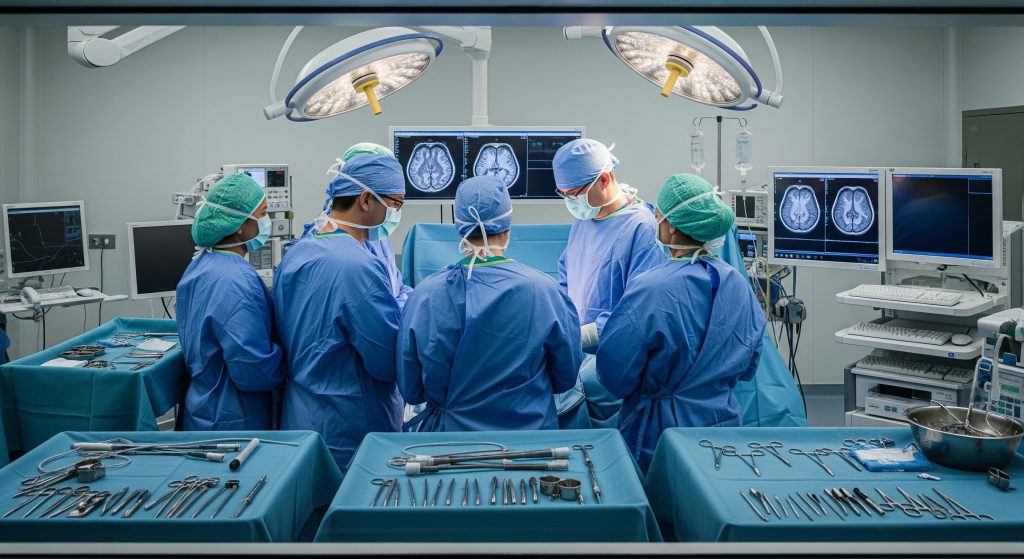
Clipping remains a definitive option when I need to see and control the neck directly. It involves a planned craniotomy, gentle brain retraction, dissection to the aneurysm, and placement of a titanium clip across the neck. This isolates the sac from blood flow and aims for complete exclusion. It is meticulous work, and highly effective in the right hands.
For suitable cases, clipping provides high occlusion rates and reduces the likelihood of re-treatment. As Mayo Clinic notes, multidisciplinary selection based on size, location, and patient status underpins the decision to clip.
-
Best for: middle cerebral artery bifurcation aneurysms, complex necks, or when endovascular access is unfavourable.
-
Considerations: craniotomy risks, longer recovery than coiling in many cases.
Direct visual control can offer decisive certainty when neck anatomy is intricate or branches arise from the sac.
3. Flow Diversion Stents for Complex Aneurysms
When I face large, fusiform, or wide-neck aneurysms on the internal carotid artery, flow diversion is often my primary cerebral aneurysm treatment. A low-porosity stent is placed across the neck to redirect blood along the parent vessel. The sac depressurises over time and typically thromboses.
-
Strengths: addresses geometry that defeats coils, preserves side branches in many cases.
-
Limitations: requires dual antiplatelet therapy, delayed occlusion timeline, cautious use in rupture.
I weigh this option carefully in ruptured cases due to antiplatelet demands. For selected unruptured aneurysms, especially blister-like lesions, it can be transformative.
4. Intrasaccular Flow Disruption Devices
For wide-neck bifurcation aneurysms, I may use intrasaccular devices that sit within the sac at the neck. They combine the logic of a scaffold and a plug. The concept is elegant. Reduce inflow jets, break the vortex, and let biology finish the job.
-
Use cases: bifurcation aneurysms at MCA, ACom, or basilar apex with awkward necks.
-
Advantages: often avoids permanent intraluminal stents and long antiplatelet courses.
These devices fit a narrow but important niche. They are part of a modern endovascular toolkit that has expanded what cerebral aneurysm treatment can safely achieve.
5. Balloon-Assisted Coiling Techniques
Balloon remodelling helps when the neck is too wide for stable coil placement. I temporarily inflate a compliant balloon across the neck during coil deployment. The balloon creates a momentary wall so coils stay where they should.
-
Benefits: preserves the parent artery, enables dense packing in challenging necks.
-
Trade-offs: temporary flow arrest, experienced hands required for timing and control.
When the anatomy cooperates, this technique avoids a permanent implant. That matters for patients with bleeding risk or complex antiplatelet histories.
6. Bypass Surgery for Giant Aneurysms
For giant, fusiform, or dissecting aneurysms not suitable for endovascular therapy, I consider bypass with parent vessel occlusion or reconstruction. The idea is straightforward. Reroute reliable blood flow, then exclude the diseased segment.
-
Types: low-flow STA-MCA bypass for cortical territories; high-flow grafts for larger demand.
-
Indications: complex posterior circulation lesions, flow-limiting stenosis with aneurysmal dilation.
This is demanding surgery and highly individualised. But when chosen judiciously, it can stabilise anatomy that otherwise resists durable repair.
|
Treatment |
Best suited scenario |
|---|---|
|
Endovascular coiling |
Narrow-neck saccular aneurysms, rapid stabilisation needs |
|
Surgical clipping |
MCA bifurcations, complex necks, durable single-stage repair |
|
Flow diversion |
Large or wide-neck ICA aneurysms, blister variants |
|
Intrasaccular disruption |
Wide-neck bifurcation aneurysms without stenting |
|
Balloon-assisted coiling |
Neck remodelling during coiling without permanent implants |
|
Bypass surgery |
Giant or fusiform lesions resisting other methods |
Determining the Right Treatment Approach for Your Condition
Good outcomes start with precise triage. I match the cerebral aneurysm treatment to rupture status, size, location, and the patient’s overall resilience.
Managing Ruptured vs Unruptured Aneurysms
Ruptured aneurysms present as subarachnoid haemorrhage, often with sudden severe headache and neurological decline. Here, I prioritise rapid aneurysm securing to prevent rebleeding. Coiling is often favoured when feasible, as it avoids a craniotomy in a swollen brain.
-
Ruptured: secure early, manage vasospasm risk, monitor hydrocephalus.
-
Unruptured: weigh rupture risk against procedural risk, consider age and comorbidities.
Unruptured lesions require a different calculus. If the predicted rupture risk is low, careful surveillance with CTA or MRA can be a responsible choice.
Size and Location Factors in Treatment Selection
Aneurysm size influences both rupture risk and technical fit. Location shapes surgical corridors and endovascular access. I consider neck width, dome-to-neck ratio, and branch involvement. These details drive the plan.
-
Anterior circulation aneurysms often have multiple viable options.
-
Posterior circulation lesions push me toward endovascular strategies.
When two treatments appear equivalent, I choose the one with fewer downstream constraints. Simpler is safer, provided occlusion durability is not compromised.
Hunt and Hess Grading Scale for Treatment Decisions
I use the Hunt and Hess grade to frame severity after subarachnoid haemorrhage. Higher grades correlate with worse initial status and increased complication risk. The scale guides urgency and the intensity of critical care.
-
Grades I-II: alert, minimal deficit. Proceed to early aneurysm securing.
-
Grades III-IV: somnolence or deficit. Stabilise, then treat with careful haemodynamic goals.
-
Grade V: deep coma. Decisions become highly individual, family centred, and time sensitive.
Severity does not preclude benefit, though not without exceptions. It sharpens the discussion about goals, trajectory, and thresholds for intervention.
Multidisciplinary Team Assessment Process
Every complex case goes to a neurovascular conference. I want neuroradiology, neurosurgery, neuroanaesthesia, and stroke medicine at the table. Each perspective improves the plan. This is true collaboration, not ceremony.
-
Imaging review: CTA, MRA, and DSA for definitive anatomy.
-
Risk mapping: antiplatelet tolerance, airway, cardiac status, renal function.
-
Pathway: ICU capacity, vasospasm monitoring, and rehabilitation planning.
The outcome is a documented plan that aligns technique, timing, and aftercare. A clear plan prevents drift when urgency rises.
Understanding Brain Aneurysm Surgery Procedures and Recovery
I counsel patients in practical terms. What will happen, how long it takes, and what recovery looks like day to day. Clarity reduces fear, and it improves preparation.
Pre-surgical Evaluation and Preparation Requirements
Pre-operative workup covers imaging, bloods, and meticulous anaesthetic assessment. I confirm antiplatelet strategy if stents are involved. For clipping, I discuss incision sites, positioning, and neurophysiological monitoring. It is exacting, and it matters.
-
Key tests: full blood count, crossmatch, coagulation, ECG, and any needed echo.
-
Imaging: high-resolution CTA or DSA to verify neck geometry and branches.
Good preparation is half the operation. That maxim holds in brain aneurysm surgery where margins are thin.
Hospital Stay Duration and Intensive Care Monitoring
After ruptured aneurysms, I typically plan ICU care for vasospasm surveillance and hydrocephalus watch. Continuous neuro checks are standard. For unruptured elective cases, high dependency overnight observation is often sufficient.
-
Monitors: arterial line, strict fluid balance, nimodipine protocols for SAH.
-
Imaging: early post-procedure CTA or DSA when indicated to confirm occlusion.
Length of stay varies. It depends on rupture status, complications, and the baseline functional reserve. Recovery speed is uneven, and that is normal.
Post-operative Complications and Management
Complications cluster into predictable groups. Ischaemic events from vasospasm, hydrocephalus needing CSF diversion, and access-site issues for endovascular cases. I also watch for seizures, electrolyte shifts, and pulmonary risks from prolonged bedrest.
-
Prevention: goal-directed blood pressure, nimodipine, DVT prophylaxis, and early mobilisation.
-
Detection: regimented neuro exams and a low threshold for repeat imaging.
Most issues yield to early action. The principle is straightforward. Spot change early and act before momentum builds.
Rehabilitation and Recovery Timeline
Recovery after cerebral aneurysm treatment is a process, not an event. Cognitive fatigue, headaches, and light sensitivity can linger. I plan graded activity, sleep hygiene, and focused neurorehabilitation when deficits remain. Fatigue improves with pacing and honest planning.
-
Therapies: physiotherapy, occupational therapy, speech and cognitive therapy as needed.
-
Milestones: wound healing by weeks, stamina by months, confidence along the way.
Return to driving or work is individual. It follows objective recovery, and in some countries, legal notification rules. Better safe than rushed.
Brain Aneurysm Survival Rate and Long-term Outcomes
Outcomes depend on rupture status at presentation, speed of securing the aneurysm, and early complication control. The brain tolerates a lot, and yet it remembers injury.
Survival Statistics for Ruptured Aneurysms
Survival after rupture varies by registry and initial neurological grade. Early aneurysm securing reduces the risk of rebleeding, which strongly influences survival. Critical care quality also shapes outcomes. Roughly speaking, earlier intervention and structured SAH protocols improve trajectories.
-
Determinants: initial grade, rebleeding prevention, vasospasm management, and comorbidity burden.
-
Systems factor: centres with volume and protocols often deliver steadier results.
I revisit these points with families because clarity guides realistic hope. It also supports consistent decisions during a tense period.
Factors Affecting Survival and Recovery
Age, hypertension control, smoking status, and aneurysm morphology all matter. So do delays to care and the presence of intraparenchymal haematoma. I treat the aneurysm and the physiology together. It is an integrated plan, not a single procedure.
-
Favourable: lower Hunt and Hess grade, prompt definitive treatment, limited comorbidity.
-
Challenging: high-grade SAH, large haematoma, refractory vasospasm, or delayed access.
I also review cerebral aneurysm causes where relevant, including genetic predispositions and vessel wall disease. Understanding cause guides follow-up for the entire family.
Long-term Neurological Outcomes
Cognitive effects can outlast the admission even when scans look reassuring. Executive function, mood, and processing speed may lag. I recommend structured neuropsychology review when complaints persist beyond early recovery.
-
Support: staged return to work with adjustments and regular checkpoints.
-
Follow-up: interval imaging for treated aneurysms depending on the technique used.
Outcome is not binary. Small gains compound when rehabilitation is consistent and realistic.
Quality of Life After Treatment
Quality of life depends on independence, pain control, and the return of routine. Sleep and gentle exercise help reset stamina. Social support accelerates confidence. When uncertainty rises, a clear plan reduces stress.
-
Practice: simple routines for hydration, nutrition, and graded activity.
-
Review: scheduled clinic checks and open access for concerning changes.
Here is the point. The best cerebral aneurysm treatment does more than close a sac. It supports a life rebuilt.
Conclusion
There is no single best technique for every aneurysm. I choose cerebral aneurysm treatment by matching risk, anatomy, and patient goals with tools that deliver durable occlusion and minimal harm. Sometimes that is endovascular coiling. Sometimes clipping, flow diversion, intrasaccular devices, balloon remodelling, or bypass. When the plan is team based and data led, patients get safer care and steadier recovery. That is the aim, and the standard.
Frequently Asked Questions
What percentage of brain aneurysms require immediate surgery?
There is no fixed percentage that fits every cohort. Immediate treatment is indicated for ruptured aneurysms and selected high-risk unruptured aneurysms. I base urgency on size, location, morphological risk markers, and the patient’s clinical status. It is a clinical decision rather than an automatic threshold.
How long does endovascular coiling procedure typically take?
Procedure time varies with anatomy and access. Straightforward cases may complete within a few hours including anaesthesia time. Complex wide-neck aneurysms, or those needing adjuncts, take longer. I budget extra time for careful angiographic confirmation before leaving the angiography suite.
Can small unruptured aneurysms be monitored without treatment?
Yes, in many circumstances. If rupture risk appears low, I recommend surveillance with interval CTA or MRA and risk factor control. Shared decision making is critical. I tailor imaging intervals to size, location, and any observed growth over time.
What lifestyle changes help prevent aneurysm rupture?
Control blood pressure, stop smoking, and moderate alcohol. Maintain regular sleep and aerobic activity within clinical guidance. These measures support vessel health and reduce triggers for haemodynamic spikes. They also enhance recovery if treatment becomes necessary.
Is brain aneurysm treatment more effective now than 10 years ago?
Yes, to an extent. Device design, imaging fidelity, and perioperative care have advanced. Flow diversion and intrasaccular devices expanded options that did not exist or were limited a decade ago. Outcomes benefit from better systems of care and more refined protocols.
This article discusses cerebral aneurysm treatment, brain aneurysm surgery, cerebral aneurysm causes, and brain aneurysm survival rate.

