






 We do what's right for you...


What Is a Pituitary Macroadenoma? Understanding the Condition
Dr. Arunav Sharma
Common advice says brain tumours are either harmless or catastrophic. That binary thinking collapses when you look at Pituitary Macroadenoma. It sits in a critical space, behaves in varied ways, and demands precise, patient-specific decisions. If you understand how size, hormone activity, and local invasion work together, you can plan care with confidence.
Types and Classification of Pituitary Macroadenomas
Functioning vs Non-Functioning Pituitary Adenomas
At the highest level, pituitary tumours are grouped by hormone activity. As Diagnosis and Management of Pituitary Adenomas notes, functioning tumours secrete hormones, while non-functioning tumours do not. You will hear prolactinomas, somatotropinomas, and corticotropinomas listed as the main functioning types. Each drives a distinct clinical syndrome.
The 2022 WHO update refined this split using immunohistochemistry markers, which sharpen subtype identification for therapy planning. In practice, that helps you match medication or surgery to biology rather than guesswork. As Overview of the 2022 WHO Classification of Pituitary Tumors outlines, non-functioning tumours often stay silent hormonally. Symptoms then arise from pressure effects as the tumour grows.
Roughly speaking, 30 to 50 percent of pituitary tumours are non-functioning. As Advances in understanding pituitary tumors reports, these can still cause significant morbidity through local compression. That is why a Pituitary Macroadenoma can be clinically loud despite being endocrinologically quiet. Size and location matter as much as secretion.
Size Classifications and Growth Patterns
Size guides both diagnosis and risk. As Pituitary Adenoma – StatPearls – NCBI Bookshelf – NIH sets out, microadenomas measure under 10 mm and macroadenomas exceed 10 mm. Giant tumours cross 40 mm and bring a higher chance of surgical complexity.
Some teams argue for more pragmatic thresholds. In a reappraisal, Size Matters: Rethinking of the Sizing Classification of Pituitary Adenomas proposes a 20 mm cut-off to trigger earlier intervention in selected cases. That reflects reality in theatre and clinic. Bigger tumours often extend into the cavernous sinus or suprasellar space, which changes your options.
|
Term |
Definition |
|---|---|
|
Microadenoma |
Less than 10 mm diameter |
|
Pituitary Macroadenoma |
10 mm or larger |
|
Giant adenoma |
40 mm or larger |
|
Extrasellar extension |
Growth beyond the sella into nearby compartments |
Clinic series of resected tumours skew towards macroadenomas. As Comprehensive Classification of Surgically Resected Pituitary Neuroendocrine Tumors observes, that predominance reflects when symptoms finally push people to imaging. The growth pattern is slow for many, but pressure effects accumulate. Early detection limits collateral damage.
Common Hormone-Secreting Macroadenomas
Functioning macroadenomas most often produce prolactin or growth hormone. As Pituitary Adenoma – StatPearls summarises, these two groups dominate clinical practice. A GH-secreting Pituitary Macroadenoma causes acromegaly, with soft tissue enlargement and metabolic stress.
Within GH tumours, granulation patterns correlate with behaviour. As Clinicopathological features of growth hormone-producing pituitary adenomas details, sparsely granulated tumours skew younger, present more often as macroadenomas, and invade more. Surgical control is harder. This is where subtype awareness improves counselling.
There is clinical heterogeneity even within acromegaly. In a structural and outcomes framework, A structural and functional acromegaly classification describes groups with differing aggressiveness and long-term responses. Some respond well to initial therapy and some do not. The implication is simple. One label does not describe one disease.
Electron microscopy still has a role in select centres to differentiate somatotroph subtypes. As Growth hormone-producing pituitary adenomas notes, this variation can guide prognosis and next steps after first-line therapy.
Invasive vs Non-Invasive Pituitary Gland Tumors
Invasion refers to growth into dura, bone, or cavernous sinus. As Pathology of invasive pituitary tumors with special reference to functional classification described, infiltration can be found radiologically, during surgery, or on histology. Reported invasion approaches 35% across types, with GH and prolactin tumours often implicated.
The latest WHO framework focuses attention on morphology and clinically aggressive features. As The 2022 WHO classification of tumors of the pituitary gland highlights, up to roughly 40% of pituitary neuroendocrine tumours are locally invasive and not always cured with surgery. That shifts the strategy towards combined modalities.
Some adenomas act aggressively without metastasis. As Refractory pituitary adenoma: a novel classification for pituitary tumors argues, these refractory tumours may show high Ki-67, rapid regrowth, and treatment resistance. Early identification matters because the playbook changes. You plan for adjuvant therapy sooner.
Invasive tumours tend to be macroadenomas and carry worse outcomes. As Pituitary Adenoma – StatPearls – NCBI Bookshelf – NIH notes, surgery becomes more challenging and recurrence risks rise. The lesson for a Pituitary Macroadenoma is pragmatic. Assess invasion early and set expectations clearly.
Signs, Symptoms, and Complications
Vision Problems and Optic Nerve Compression
Visual compromise is the commonest mass effect in a Pituitary Macroadenoma. Compression at the optic chiasm produces bitemporal visual loss. As Compressive Optic Neuropathy explains, vision loss can appear gradually or suddenly and may be bilateral.
Optic pathway anatomy dictates the visual field pattern. In clinical practice, patients often notice traffic-side near misses, not blur. As Optic Nerve Compression Causes, Symptoms, and Treatment points out, glasses do not fix this because the cause is structural pressure, not refraction.
Bitemporal hemianopia is the classic finding. As Symptomatic compression of the optic nerve by the carotid artery notes in a related compression model, MRI confirms anatomy and field loss reflects nerve fibre injury. Another issue is diplopia when cavernous sinus cranial nerves are involved, as Visual Problems Due to Pituitary Tumors describes.
Hormonal Imbalance Symptoms
Hormones can be excessive or deficient. A functioning Pituitary Macroadenoma may overproduce prolactin or growth hormone. As Pituitary Macroadenoma explains, mass effect on the normal gland also causes deficits in cortisol, thyroid, or gonadal axes. That mix complicates presentation.
You may see irregular periods, low libido, fatigue, weight changes, or heat and cold intolerance. As Management of hormone-secreting pituitary adenomas sets out, benign does not mean trivial in endocrine terms. The systemic impact is broad and sometimes subtle, then obvious. Small clues add up.
Headaches and Neurological Effects
Headache is frequent and variable. As Headache in pituitary adenomas: frequency, characteristics … reports, migraine-like patterns are common, and improvement often follows surgery. Mechanisms include dural stretch, sinus invasion, and CSF dynamics. Neurological effects may include cranial neuropathies or fatigue from endocrine deficits.
Pituitary Apoplexy and Emergency Signs
Pituitary apoplexy is an acute bleed or infarction within a tumour. It is a medical emergency. As Pituitary Apoplexy details, expect sudden severe headache, visual disturbance, and altered consciousness. Adrenal insufficiency may follow fast. High dose steroids are first-line while arranging imaging.
Classical descriptions remain instructive. As Pituitary apoplexy summarises, presentations include meningeal signs and even bilateral blindness in severe cases. An isolated third nerve palsy can be the only clue, as Emergency department presentation of pituitary apoplexy notes.
Apoplexy demands speed. Delay risks irreversible visual and hormonal damage.
For a Pituitary Macroadenoma, apoplexy risk is small but meaningful. As Pituitary Apoplexy – StatPearls – NCBI Bookshelf – NIH emphasises, urgent imaging and timely decompression are crucial when vision or consciousness is compromised.
Diagnosis and Testing Methods
MRI and Imaging Studies
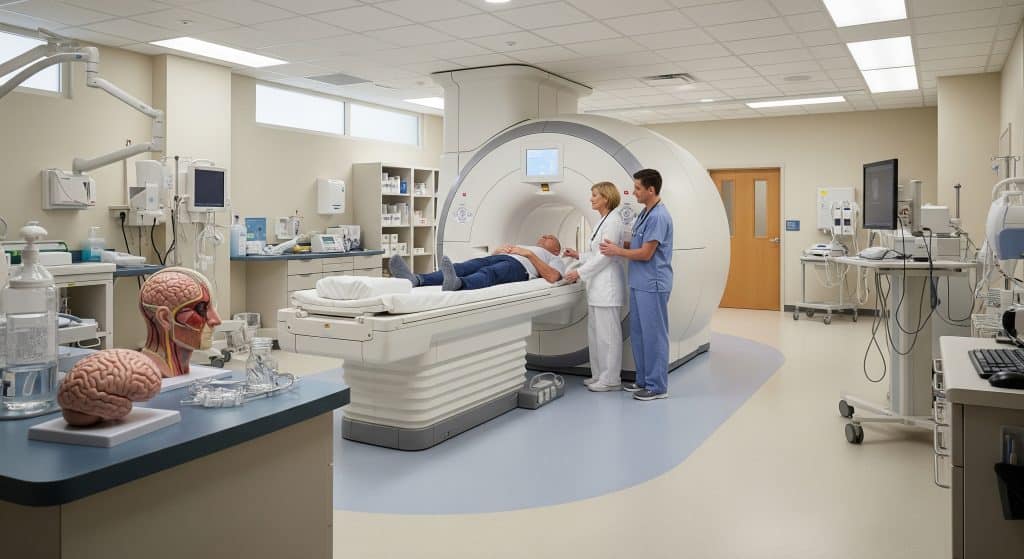
MRI is the workhorse for sellar assessment. Contrast-enhanced imaging maps tumour boundaries and optic chiasm contact. There is also work on optimising protocols. As Rethinking MRI Protocols for Pituitary Microadenomas notes, certain non-contrast sequences can monitor selected cases and reduce gadolinium exposure over time.
Imaging is not just pictures. It is prognosis and planning. As The current state of MRI-based radiomics in pituitary describes, radiomics may soon help predict recurrence after surgery by analysing texture and shape features. This could refine follow-up intervals for Pituitary Macroadenoma care.
Hormone Level Blood Tests
Laboratory testing anchors endocrine assessment. It requires discipline. As Abbreviated Tests of Endocrine Function – Clinical Methods explains, timing, physiological states, and assay methodology affect results. Radioimmunoassay methods enable very low concentration measurements, but interpretation still needs context.
Pitfalls exist. As Interpretation of common endocrine laboratory tests warns, hook effects and medication interferences can produce deceptive values. Two-step testing strategies and lab consultation reduce risk. For male hypogonadism, for instance, Use of Hormone Testing for the Diagnosis and Evaluation of Male Hypogonadism and Monitoring of Testosterone Therapy advises confirming testosterone on at least two occasions and checking gonadotropins to localise the defect.
Visual Field Testing
Formal visual fields quantify functional compromise. As Detection of Visual Field Loss in Pituitary Disease shows, peripheral kinetic perimetry often outperforms central static testing for chiasmal disease. Bitemporal hemianopia remains the hallmark in a Pituitary Macroadenoma affecting the chiasm.
Neuro ophthalmic evaluation complements imaging. As Neuro-ophthalmic Evaluation and Management of Pituitary Disease notes, junctional scotomas and diverse defects require careful baseline testing and post-treatment monitoring. A clear baseline helps you judge recovery after decompression.
Differential Diagnosis Considerations
Not every sellar mass is a pituitary adenoma. As Pituitary Macroadenomas Differential Diagnoses summarises, granulomatous diseases, lymphocytic hypophysitis, metastases, germinomas, and aneurysms can mimic adenomas. Pituitary hyperplasia also enters the list in primary endocrine disorders.
Clues matter when the picture is atypical. As Mimickers of pituitary tumors reminds, rapid progression, systemic inflammation, or unusual enhancement should prompt a rethink. Ophthalmic cues still guide many referrals; Ophthalmic Presentations of Pituitary Adenoma emphasises the value of comprehensive ocular examination.
Pituitary Adenoma Treatment Options
Transsphenoidal Surgery Approach
Transsphenoidal surgery is the standard operative route for most macroadenomas. You reach the sella through the nasal corridor and sphenoid sinus. The approach limits brain retraction and shortens recovery compared with craniotomy. Surgical goals are decompression of the optic apparatus, removal of tumour, and preservation of pituitary function.
In practice, cavernous sinus invasion limits complete resection. A staged strategy is common: maximal safe resection, then targeted adjuvant therapy. Surgeons assess intraoperative anatomy and CSF leak risk. ENT and neurosurgery work as one team. That interprofessional setup improves outcomes and reduces complications.
-
Best candidates: macroadenomas with chiasmal compression, discrete borders, minimal lateral invasion.
-
Primary aims: visual improvement, endocrine normalisation or stability, and durable local control.
-
Expected course: short hospital stay, early endocrinology review, and structured follow-up.
Radiation Therapy Methods
Radiation provides durable control for residual or recurrent disease. As Modern Radiation Therapy for Pituitary Adenoma reports, conventional external beam achieves over 90% long term local control. Typical dosing is 45 to 50.4 Gy in 25 to 28 fractions. Stereotactic radiosurgery delivers 12 to 20 Gy in a single fraction to a tight target.
Late effects deserve careful attention. Radiation therapy for pituitary adenoma: treatment outcome and prognostic factors found high rates of hypopituitarism over time, which underscores long-term hormone monitoring. Precision techniques continue to evolve. As Radiotherapeutic Strategies and Advances in the Management of Pituitary Adenomas notes, proton therapy and advanced stereotaxy can spare nearby structures better.
Strategy is often adjuvant and measured. As Radiotherapy for Pituitary Tumors – Endotext explains, radiation is selected when residual tumour threatens growth or hormones remain uncontrolled. Stabilisation of hormones may take years, as Pituitary Adenoma Treatment | Targeting Cancer AU & NZ observes, so expectations should be explicit from the start. For tumours abutting critical structures, Radiation Therapy for Pituitary Tumors highlights the role of postoperative radiation to secure control. Modern proton series show local control around 95% at five years, as Long-term outcomes of modern radiation therapy for pituitary adenoma reports.
Medical Management with Medications
Medical therapy is frontline for prolactinomas and an adjunct for others. Dopamine agonists reduce prolactin and shrink many prolactin-secreting tumours. For acromegaly, somatostatin analogues and GH receptor antagonists normalise IGF-1 in a substantial share. Medical therapy also buys time while vision and surgery timing are considered for a Pituitary Macroadenoma affecting the chiasm.
Endocrinologists track biochemical control with assay aware interpretation. Side effects are managed proactively. Realistically, some patients remain on long term therapy, while others transition off after tumour control. It is case by case.
Post-Treatment Monitoring and Follow-up
Follow-up is not optional. It is the second half of treatment. As Congress of Neurological Surgeons Systematic Review advises, structured programmes use MRI and hormonal evaluations to track tumour status and pituitary function. Delayed hypopituitarism can emerge years later, especially after radiation.
Risk stratification guides intensity. As Optimal management of non-functioning pituitary adenomas outlines, watchful waiting suits low-risk resections, while high-risk residuals benefit from early adjuvant radiation. Postoperative recovery includes screening for diabetes insipidus and ACTH deficiency, as Pituitary Adenoma – StatPearls notes.
Aggressive tumours require closer surveillance and sometimes re operation. As Management of aggressive pituitary adenomas observes, recurrence is common and warrants early intervention planning. Practical recovery advice matters too; Current best practice in the management of patients after pituitary surgery recommends tailored hormone testing and imaging, while Life After Pituitary Tumor Treatment emphasises symptom tracking. For day to day recovery, Understanding Pituitary Tumor Surgery Recovery underscores pacing activity and keeping early follow-up.
Treatment Selection Factors
Treatment choice depends on four anchors: symptoms, size and extension, hormone profile, and patient preference. Visual compromise and apoplexy drive urgent surgery. Functioning tumours with medical sensitivity may start with drugs. Invasive lateral extension reduces the odds of complete resection and increases reliance on radiation or medication.
Two practical filters help. First, what changes if you act now versus later. Second, what is the likelihood of durable control with acceptable risk. Balance those, then decide. And be ready to adapt as new data arrives.
Living with a Pituitary Macroadenoma
Life after diagnosis is a marathon. Not a sprint. You will balance clinic visits, imaging, hormone checks, and everyday routines. A Pituitary Macroadenoma can be controlled to a large extent, though not without ongoing care.
-
Build a calendar for tests, medications, and follow-up scans.
-
Track symptoms in a simple log. Vision, headaches, energy, sleep, and libido.
-
Agree on targets with your team. Hormones, vision thresholds, and scan intervals.
-
Ask early about fertility, pregnancy safety, and travel plans.
One final note. Advocate for yourself, and invite a partner or friend to key appointments. Extra ears help when details are dense.
Frequently Asked Questions
Can pituitary macroadenomas become cancerous?
Malignant transformation to pituitary carcinoma is rare. Most Pituitary Macroadenoma cases are benign but can behave aggressively locally. Invasion and recurrence do not equal cancer; they do raise the need for combined therapy and close follow-up.
What is the difference between microadenoma and macroadenoma?
Size. Microadenomas are under 10 mm. A Pituitary Macroadenoma is 10 mm or larger. Giant adenomas exceed 40 mm and often pose surgical challenges due to extension into critical spaces.
How successful is pituitary adenoma treatment?
Success depends on tumour type, size, and invasion. Visual outcomes are often excellent after timely decompression. Hormone control is very likely in prolactinomas with medication and reasonably likely in acromegaly with combined therapy. Recurrence risk persists in invasive disease, so monitoring remains essential.
Can pituitary tumours grow back after treatment?
Yes, especially when invasion prevents complete resection. A Pituitary Macroadenoma may regrow slowly over years. Regular MRI and hormone testing detect changes early, and radiosurgery or medication helps maintain control.
What causes pituitary adenomas to develop?
Most are sporadic. A minority link to genetic syndromes such as MEN1. Environmental triggers remain uncertain, and current data does not support a single cause. Biology varies by hormone cell lineage and tumour genetics.
How long is recovery after pituitary surgery?
Hospital stay is typically short. Many return to light activity within two weeks and more normal routines by six weeks. Full endocrine stabilisation and nasal healing can take longer. Your team will pace follow-up testing to match recovery.

