






 We do what's right for you...


What Are the Main Causes of Double Vision?
Dr. Krishna Vaitheeswaran
Most advice on double vision starts with symptoms. I prefer to start with mechanisms. When the image from each eye does not align on the same point of the retina, the brain receives two competing signals. That misalignment or signal mismatch sits at the heart of double vision causes. I will map the typical sources, then outline practical care options that actually help.
Common Causes of Double Vision
1. Eye Muscle Problems
Weak, restricted, or poorly coordinated extraocular muscles can pull the eyes out of alignment. I often see this in long-standing squints and post-surgical scarring. The result is binocular diplopia that eases when either eye is closed.
2. Nerve Damage
Damage to cranial nerves III, IV, or VI disrupts eye muscle signals. The pattern of double vision usually points to the affected nerve. For instance, a sixth nerve palsy often causes horizontal separation that worsens on distance viewing.
3. Brain-Related Conditions
Strokes, tumours, multiple sclerosis, and head injuries can impair the pathways that coordinate eye movements. I look for associated signs such as imbalance, facial weakness, or new headaches. The broader neurological context often clarifies the likely origin.
4. Thyroid Eye Disease
Inflammation and fibrosis around the extraocular muscles can restrict movement. Patients may report double vision on upward or outward gaze first. Swelling behind the eye can also create exposure symptoms, compounding blur and discomfort.
5. Cataracts
Irregularities in the natural lens scatter light, sometimes creating monocular double vision in one eye. Covering either eye distinguishes types. If the doubling persists with one eye covered, the source is usually optical, not alignment.
6. Corneal Irregularities
Scars, keratoconus, and post-surgical surface changes alter how light focuses. Ghosting, halos, and multiple images in one eye are typical. A pinhole test or a rigid contact lens trial can temporarily neutralise the irregularity and confirm the diagnosis.
7. Diabetes Complications
Microvascular damage can cause transient nerve palsies, especially of the sixth nerve. The double vision may fluctuate with blood glucose control. I also screen for diabetic retinopathy when history suggests chronic disease.
8. Myasthenia Gravis
Neuromuscular junction fatigue produces variable, fatigable eye misalignment. The pattern can shift through the day, which can be misleading. An ice test or fatigability assessment helps when clinical signs are subtle.
Double Vision Treatment Options
Management depends on the specific diagnosis. That said, common pathways exist. Here is how I organise double vision treatment in practice.
Corrective Lenses and Prisms
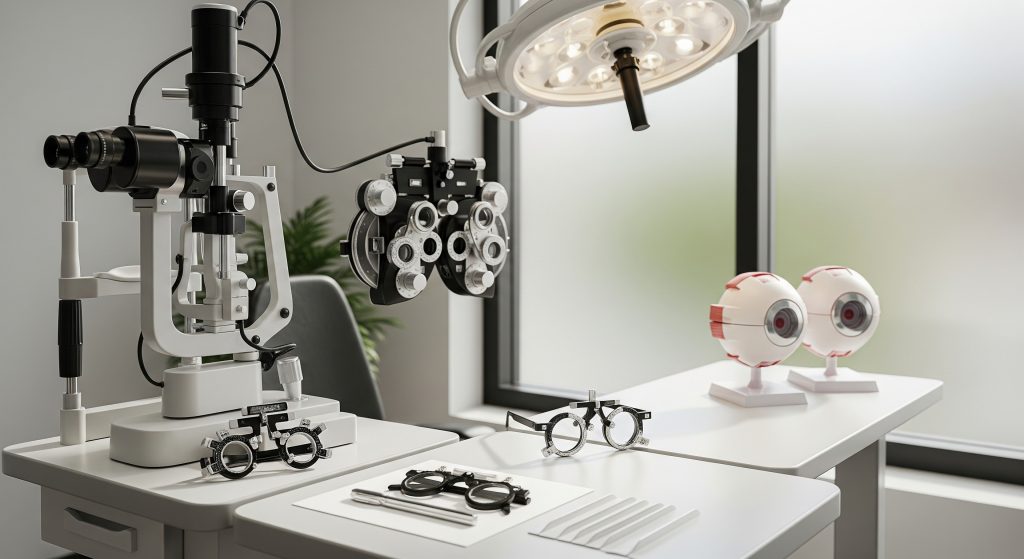
Prism lenses bend light so images realign on the retina. They reduce diplopia without changing anatomy. I use trial frames to find the minimum prism that restores comfortable single vision for key tasks.
Eye Muscle Surgery
Strabismus surgery rebalances muscle forces by recessing or resecting specific muscles. It is most helpful when the deviation is stable and measurable. I still explain that small residual prisms may be needed for fine work.
Medication Management
Corticosteroids or immunomodulators can reduce inflammation in thyroid eye disease and related conditions. In myasthenia gravis, agents such as pyridostigmine improve neuromuscular transmission. Side effects and monitoring plans must be explicit and shared.
Vision Therapy Exercises
Targeted orthoptic exercises strengthen fusional reserves and reduce symptoms in selected cases. Convergence insufficiency responds well to structured, measurable routines. I set short, clear goals and review progress at defined intervals.
Treating Underlying Conditions
The root problem often dictates the timeline. Examples include:
-
Glycaemic control for diabetic cranial neuropathies.
-
Cataract surgery when monocular doubling affects safety or work.
-
Surface rehabilitation for corneal disease using lubricants or specialty lenses.
Addressing these drivers narrows the field of double vision causes and usually speeds recovery.
Understanding Your Double Vision
Diagnosis begins with one simple split: monocular versus binocular. If closing either eye clears the doubling, it is binocular and usually alignment based. If the doubling persists in one eye, the optics are to blame. From there, I map onset, gaze dependence, fatigue, pain, and systemic clues. This structured history consistently differentiates the main double vision causes without wasted testing.
Two practical checks help at home (as a starting point, not a substitute). Cover each eye to classify the type. Then note which gaze direction worsens the split. These details accelerate accurate care and reduce avoidable scans.
Frequently Asked Questions
Can double vision go away on its own?
Yes, in selected cases. Microvascular nerve palsies linked to diabetes or hypertension often improve over weeks to months. Temporary prisms and task adjustments can maintain function while healing occurs.
Is sudden double vision an emergency?
Yes, when accompanied by new neurological symptoms, severe headache, or head injury. Urgent assessment is warranted. Rapid onset with pain or pupil changes also requires immediate review.
What type of doctor treats double vision?
Ophthalmologists and orthoptists coordinate most care. Neurologists contribute when central pathways are implicated. Optometrists assist with diagnostics, prisms, and optical causes.
Can stress cause double vision?
Stress does not directly cause ocular misalignment, but it can unmask latent issues by increasing fatigue. Myasthenia gravis and convergence insufficiency may worsen under strain.
Does double vision mean I have a brain tumour?
Usually not. Many double vision causes are ocular or microvascular and resolve. Imaging is considered when red flags exist or when the clinical pattern suggests a central origin.

