






 We do what's right for you...


Understanding Motor Neuron Disease Causes and Early Warning Signs
Dr. Arunav Sharma
The belief that motor neuron disease strikes randomly, without warning, has persisted for decades. It’s a comforting myth, really. The truth is far more nuanced and, frankly, more useful. Understanding motor neuron disease causes means recognising patterns – genetic vulnerabilities, environmental exposures, and those subtle early signals that the body sends before anything truly catastrophic happens. This isn’t about predicting the unpredictable. It’s about paying attention to the things most people miss.
Primary Causes and Early Warning Signs of Motor Neuron Disease
Motor neuron disease (MND) doesn’t announce itself with a single, dramatic moment. Instead, it creeps in through a combination of factors that scientists are still working to untangle. Think of it like a lock with multiple keys – genetics might be one key, environmental exposure another, and perhaps lifestyle a third. Sometimes only one key turns the lock. Sometimes it takes all of them working together. This is what makes identifying motor neuron disease causes so challenging and so essential.
Genetic Factors in MND Development
Roughly 5-10% of MND cases are classified as familial, meaning they run in families. The rest? Sporadic. But here’s where it gets interesting: even sporadic cases may involve genetic susceptibilities that haven’t been identified yet. The C9orf72 gene mutation is the most common genetic culprit, accounting for about 40% of familial cases. SOD1 mutations come in second. These aren’t destiny – they’re risk factors. Having the mutation doesn’t guarantee disease development, but it significantly raises the odds.
What frustrates researchers (and patients) is that genetic testing only tells part of the story. Two siblings with identical mutations might have completely different outcomes. One develops symptoms at forty. The other never does. The interplay between genes and everything else remains maddeningly unclear.
Environmental Triggers and Risk Factors
Environmental factors may play a significant role in MND development, particularly exposure to certain toxins. Mayo Clinic highlights that heavy metals, pesticides, and other chemicals could increase amyotrophic lateral sclerosis causes. But “could” is doing a lot of work in that sentence. Research hasn’t pinpointed a definitive environmental trigger the way smoking has been linked to lung cancer.
The MND Research Blog notes potential connections between strenuous exercise and MND, though findings remain inconsistent. Military veterans show higher rates than civilians. Former professional athletes, particularly footballers and rugby players, appear more vulnerable. Is it the physical trauma? The repetitive head injuries? Exposure to field chemicals? Probably some combination. The honest answer is: nobody knows for certain yet.
What seems clear is that genetic predispositions combined with environmental exposure create a dangerous cocktail. Someone with no genetic risk might tolerate years of pesticide exposure. Someone with a high-risk gene profile might not.
Initial Physical Symptoms to Watch
Motor neurone disease symptoms often begin so subtly that people dismiss them entirely. That’s the cruel irony. Early detection matters enormously, but the early signs are easy to write off as ageing, stress, or overwork.
The MND Association identifies these initial indicators:
-
Unexplained muscle weakness, particularly in hands or feet
-
Difficulty with fine motor tasks like buttoning shirts or turning keys
-
Pronounced fatigue that doesn’t resolve with rest
-
Muscle twitches (fasciculations) in arms, legs, or tongue
-
Muscle cramps that seem disproportionate to activity level
Initial signs can also include tripping frequently due to leg weakness and experiencing difficulty gripping objects. Stiff or weak hands often appear first. Climbing stairs becomes harder than it should be. The thing is, most people assume they’re just tired or out of shape. They wait months before seeing a doctor. Sometimes longer.
Early Speech and Swallowing Changes
Bulbar-onset MND – which affects the muscles controlling speech and swallowing first – presents differently from limb-onset forms. The voice might become slightly slurred, particularly when tired. Words start to stick. Swallowing becomes a conscious effort rather than an automatic reflex. Drinks might cause unexpected coughing fits.
These symptoms often get attributed to other causes entirely. A patient might be told they have a throat infection, acid reflux, or stress-related voice changes. The single most frustrating part of this is how long accurate diagnosis can take. Months of appointments with ear, nose, and throat specialists before anyone thinks to test for MND.
Early speech changes to watch include:
-
Increased vocal fatigue after speaking for extended periods
-
Slight slurring that worsens when tired
-
Difficulty pronouncing certain consonants
-
Nasal-sounding speech
-
Episodes of choking on liquids or saliva
Progressive Muscle Weakness Patterns
MND doesn’t attack all muscles simultaneously. It has patterns. In the early stages, muscle weakness and stiffness typically concentrate in a single body region before spreading. Arms first, then legs. Or vice versa. Sometimes the pattern starts distally (hands and feet) and moves proximally (shoulders and hips). Sometimes it’s the reverse.
The progression follows motor neuron pathways. Upper motor neurons control voluntary movement. Lower motor neurons connect the spinal cord to muscles directly. When both are affected – as in classic ALS – symptoms include both spasticity (stiffness from upper neuron damage) and wasting (from lower neuron damage). When only one type is initially affected, the presentation looks different.
As MND advances, it leads to significant muscle atrophy impacting mobility, speech, and swallowing. Simple tasks become herculean efforts. Picking up a coffee cup. Getting out of a chair. Walking to the bathroom. The disease doesn’t take breaks. It doesn’t plateau for long. Understanding this progression pattern helps families prepare and adapt.
Types of Motor Neuron Disease and Their Distinct Features
MND isn’t a single disease. It’s an umbrella term covering several distinct conditions, each with its own characteristics, progression rates, and motor neurone disease prognosis. Lumping them together does patients a disservice. The differences matter enormously for treatment planning and expectation setting.
1. Amyotrophic Lateral Sclerosis (ALS)
ALS is the most common form, accounting for roughly 60-70% of all MND cases. It affects both upper and lower motor neurons, causing the characteristic combination of spasticity and muscle wasting. Stephen Hawking lived with it for over fifty years – an extreme outlier. Most patients survive two to five years from symptom onset.
The “amyotrophic” refers to muscle atrophy (wasting away). “Lateral sclerosis” describes the hardening of the lateral columns of the spinal cord where damaged neurons leave scar tissue. It’s a clinically descriptive name, which is about as comforting as it sounds.
|
Feature |
ALS Characteristics |
|---|---|
|
Neurons Affected |
Both upper and lower motor neurons |
|
Initial Symptoms |
Limb weakness, spasticity, fasciculations |
|
Progression Rate |
Variable, typically 2-5 years |
|
Cognitive Impact |
Up to 50% show some cognitive changes |
2. Progressive Bulbar Palsy (PBP)
PBP specifically targets the bulbar muscles – those controlling speech, chewing, and swallowing. It accounts for approximately 20% of MND cases and often carries a more challenging prognosis because respiratory and feeding difficulties emerge earlier.
The first symptoms are typically speech-related. Slurring. Nasal quality. Difficulty with specific sounds. Then swallowing becomes problematic. Aspiration pneumonia becomes a serious risk. Many PBP patients eventually develop limb symptoms as well, at which point the diagnosis may shift to ALS with bulbar onset.
3. Progressive Muscular Atrophy (PMA)
PMA affects only lower motor neurons, resulting in muscle wasting and weakness without the spasticity seen in ALS. Fasciculations are prominent. Reflexes diminish rather than becoming hyperactive. It accounts for about 5-8% of MND cases.
Here’s the thing about PMA: it generally progresses more slowly than ALS. Some patients live ten years or more from diagnosis. But – and this is a significant but – a portion of PMA patients eventually develop upper motor neuron signs, effectively converting to ALS. Nobody can predict who will convert and who won’t. That uncertainty is its own burden.
4. Primary Lateral Sclerosis (PLS)
PLS affects only upper motor neurons, causing progressive spasticity and difficulty with movement without the muscle wasting characteristic of lower motor neuron involvement. It’s the rarest form, comprising about 2-5% of MND cases.
PLS generally progresses most slowly among all MND types. Survival of ten to twenty years is not uncommon. The trade-off is severe spasticity and progressive disability, even without the dramatic muscle wasting. As with PMA, some PLS patients eventually develop lower motor neuron signs and are reclassified as having ALS.
The boundaries between MND types aren’t always clear-cut. A diagnosis that starts as PMA might become ALS. PBP often overlaps with other forms. The classification helps guide treatment and set expectations, but the disease doesn’t always read the textbook.
Diagnosis Process and Prognosis Factors
Getting an MND diagnosis is rarely straightforward. The average time from first symptoms to confirmed diagnosis is about twelve months. Twelve months of uncertainty, tests, and often misdiagnosis. The disease mimics other conditions. There’s no single definitive test. Diagnosis happens through elimination – ruling out everything else until MND is what remains.
Neurological Examinations and Tests
The diagnostic journey typically begins with a comprehensive neurological examination. The doctor tests muscle strength, reflexes, sensation, and coordination. They look for the specific combination of upper and lower motor neuron signs that characterise different MND forms. Brisk reflexes alongside muscle wasting raises immediate red flags.
Blood tests rule out other conditions. Thyroid dysfunction. Vitamin deficiencies. Autoimmune disorders. Infections. None of these directly diagnose MND, but they eliminate alternatives. MRI scans examine the brain and spinal cord, primarily to exclude structural problems like tumours or cervical spondylosis that might cause similar symptoms.
Lumbar puncture (a spinal tap) may be performed to analyse cerebrospinal fluid. Again, this rules out other conditions rather than confirming MND. The whole process feels backwards to patients – test after test after test, all coming back normal or inconclusive, before eventually receiving the diagnosis nobody wanted.
Electromyography and Nerve Studies
EMG – electromyography – is the closest thing to a definitive diagnostic test for MND. It measures electrical activity in muscles. In MND, the characteristic findings include fibrillations (spontaneous muscle fibre activity) and fasciculations (muscle twitching) alongside changes in motor unit recruitment patterns.
Nerve conduction studies (NCS) typically accompany EMG. These measure how quickly electrical signals travel along nerves. In MND, motor nerve conduction might slow slightly, but sensory nerves remain unaffected. This helps distinguish MND from peripheral neuropathies where both motor and sensory nerves show abnormalities.
The week after my colleague underwent EMG testing, I remember her describing the experience. The electrodes inserted into various muscles. The crackling sounds of electrical activity played through speakers. The technician’s carefully neutral expression while reading results in real time. It’s not a comfortable procedure, but it provides crucial information.
Factors Affecting Disease Progression
Amyotrophic lateral sclerosis causes progressive deterioration, but the speed varies dramatically between individuals. Several factors influence how quickly the disease advances:
-
Age at onset: Younger patients often have slower progression
-
Site of onset: Bulbar-onset cases typically progress faster
-
Diagnostic delay: Longer delays correlate with poorer outcomes (possibly because they indicate slower initial progression)
-
Respiratory function at diagnosis: Better breathing capacity predicts longer survival
-
Nutritional status: Maintaining weight correlates with better outcomes
-
Genetic factors: Certain mutations (like SOD1 A4V) carry particularly aggressive courses
But here’s what drives clinicians crazy: individual variation overwhelms all predictive models. Two patients with apparently identical presentations might have completely different trajectories. One progresses rapidly over eighteen months. The other remains relatively stable for five years. The models identify trends in populations, not fates for individuals.
Life Expectancy Variations
Motor neurone disease prognosis depends heavily on the specific type and individual factors. General survival statistics:
|
MND Type |
Typical Survival from Diagnosis |
|---|---|
|
ALS |
2-5 years (10% survive 10+ years) |
|
PBP |
2-3 years |
|
PMA |
5-10 years or longer |
|
PLS |
10-20 years |
These numbers represent averages across populations. They shouldn’t be treated as individual predictions. Some patients significantly outlive their prognosis. Others don’t reach median survival. The statistics inform planning but don’t determine outcomes.
Living with Motor Neuron Disease
A diagnosis of MND changes everything and nothing. The person remains the same. Their goals, relationships, and identity don’t evaporate. But practical realities shift dramatically. Living well with MND requires adaptation, support, and proactive planning. It demands accepting help when every instinct screams for independence.
Multidisciplinary Care Approach
The gold standard for MND care involves coordinated teams – neurologists and specialist nurses and physiotherapists and occupational therapists and speech therapists and dietitians and respiratory specialists and psychologists and social workers. It sounds overwhelming because it is. But the alternative – fragmented care with each specialist operating in isolation – produces worse outcomes.
MDT care (that’s multidisciplinary team) means everyone communicates. The physiotherapist knows what the speech therapist is working on. The dietitian coordinates with the respiratory team on feeding interventions. The neurologist stays informed about functional status between appointments. This coordination doesn’t happen automatically. It requires advocacy, usually from patients and families.
Specialised MND clinics offer the best access to coordinated care. Not everyone lives near one. Telehealth has expanded access somewhat, but geographical inequalities persist. The postcode lottery of healthcare hits MND patients particularly hard.
Assistive Technologies and Adaptations
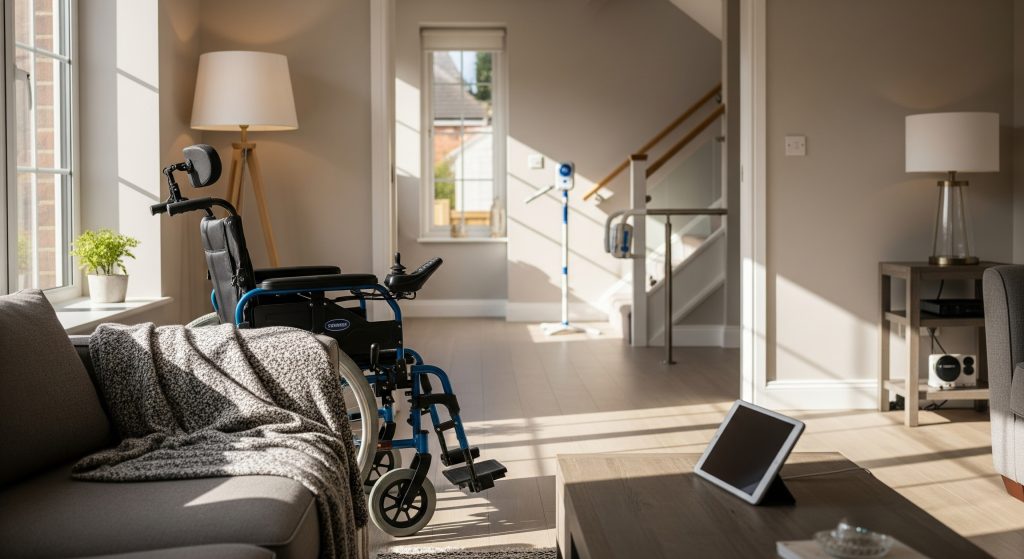
Technology has transformed what’s possible for people living with MND. Eye-tracking systems allow communication when speech fails. Voice banking preserves the patient’s own voice for later synthetic speech. Powered wheelchairs with sophisticated controls maintain mobility far longer than previous generations could imagine.
Home adaptations might include:
-
Stair lifts or through-floor lifts
-
Wet rooms replacing inaccessible bathrooms
-
Hospital beds with pressure-relieving mattresses
-
Ceiling track hoists for transfers
-
Environmental control systems for lights, doors, and entertainment
Early planning matters enormously. Getting adaptations in place before they become urgent reduces stress and improves outcomes. Waiting until crisis point leaves families scrambling. Yet many people resist – the adaptations make the disease feel more real, more permanent. That psychological barrier is understandable but ultimately counterproductive.
Nutritional Support Strategies
Weight loss in MND isn’t just about aesthetics or comfort. It’s a prognostic indicator. Patients who maintain weight survive longer than those who don’t. The challenge is that swallowing difficulties, fatigue, and increased metabolic demands from the disease all work against maintaining adequate nutrition.
Strategies include:
-
Modified food textures – soft, moist foods that are easier to swallow
-
High-calorie supplements between meals
-
Small, frequent meals rather than three large ones
-
Careful positioning during eating to reduce aspiration risk
-
Gastrostomy (PEG/RIG tube) when oral intake becomes insufficient
The decision about feeding tubes generates significant anxiety. Many patients view them as giving up or accelerating decline. The evidence suggests the opposite – early tube placement, while the patient is still relatively well, produces better outcomes than waiting until crisis. But “evidence” feels abstract when facing the actual procedure.
Communication Aid Options
When speech fails, communication needn’t end. The technology available today would have seemed like science fiction twenty years ago. Options include:
-
Low-tech aids: Alphabet boards, picture boards, eye-pointing frames
-
Mid-tech aids: Simple voice output devices, apps on tablets
-
High-tech aids: Computer-based systems with eye-tracking, brain-computer interfaces (emerging technology)
Voice banking deserves special mention. Patients record their own voice – hundreds of phrases and sounds – while speech is still clear. Software then creates a synthetic voice that sounds like them rather than a generic computer voice. It’s time-consuming but profoundly worthwhile. Hearing messages in a familiar voice rather than a robotic substitute matters to families.
Speech and language therapists guide the selection and training process. What works depends on cognitive status, physical abilities, and personal preferences. There’s no one-size-fits-all solution. Getting this right requires patience and willingness to try different approaches.
Understanding MND for Early Detection and Better Management
Awareness of motor neuron disease causes and motor neurone disease symptoms serves one primary purpose: earlier detection. The disease can’t currently be prevented. It can’t be cured. But early diagnosis enables earlier intervention, better planning, and access to multidisciplinary care from the outset rather than months into decline.
Recognising the early warning signs – persistent muscle weakness, unexplained fasciculations, subtle speech changes, swallowing difficulties – and seeking prompt medical attention makes a material difference. Not in preventing the disease, but in living as well as possible with it.
Research continues. Clinical trials test new approaches. Gene therapy shows promise for specific genetic forms. Understanding the disease at molecular levels improves constantly. The prognosis for patients diagnosed today differs from those diagnosed a decade ago, and will differ again from those diagnosed a decade hence.
For now, the best response to MND remains proactive management: building support networks, accessing appropriate care, making informed decisions, and maintaining quality of life as long as possible. It’s not the answer anyone wants. But it’s the honest one.
Frequently Asked Questions
Can motor neuron disease be inherited from parents?
About 5-10% of MND cases are familial, meaning they run in families and involve inherited genetic mutations. The most common is the C9orf72 gene mutation. However, having a family member with MND doesn’t guarantee inheritance, and most cases occur sporadically without any family history. Genetic counselling can help assess individual risk for those with affected relatives.
What age group is most commonly affected by MND?
MND most commonly affects people between 55 and 75 years old, with the average age at diagnosis being around 60. However, it can occur at any adult age. Younger-onset cases (under 40) are less common but do occur, and these patients often have slower disease progression. Men are slightly more likely to develop MND than women.
How quickly does motor neuron disease typically progress?
Progression varies significantly between individuals and MND types. ALS typically progresses over 2-5 years, while PLS may progress over 10-20 years. Bulbar-onset cases often progress faster than limb-onset. Individual factors including age, respiratory function, and nutritional status all influence speed of progression. No two patients follow identical trajectories.
Are there any preventive measures for motor neuron disease?
Currently, no proven preventive measures exist for MND. While research suggests potential links to environmental exposures and lifestyle factors, no specific intervention has been shown to prevent the disease. General health measures – avoiding toxin exposure, maintaining fitness, eating well – represent sensible approaches without specific evidence they prevent MND.
What is the difference between MND and multiple sclerosis?
MND and MS are distinct conditions. MND affects motor neurons specifically, causing muscle weakness and wasting without sensory involvement. MS is an autoimmune condition affecting myelin throughout the central nervous system, causing both motor and sensory symptoms. MS typically follows a relapsing-remitting course, while MND is progressive. MS has effective disease-modifying treatments; MND currently doesn’t.
Can stress or trauma trigger motor neuron disease?
No direct causal link has been established between psychological stress and MND. Physical trauma, particularly repetitive head injuries, shows some association with increased risk in research studies, though the relationship isn’t fully understood. Many patients recall a stressful period before diagnosis, but this may reflect recall bias or the stress of early unrecognised symptoms rather than causation.

