






 We do what's right for you...


The Best Ways to Get Immediate Relief from Cough Across All Ages
Dr. Kunal Luthra
Most cough advice starts with a single remedy. That is rarely enough. I approach immediate relief from cough as a set of small, precise actions that work together. The aim is simple: soothe the airway, reduce triggers, and help rest. I will outline practical options for infants, children, adults, and older adults, with clear guardrails. For night-time care, I also address how to stop coughing at night with quiet, repeatable routines. Practical, safe, and focused.
Immediate Relief Methods for Every Age Group
I group fast-acting options into simple, low-risk steps. This is how I think about immediate relief from cough across ages, from quick kitchen remedies to set-and-forget environment tweaks.
1. Honey and Warm Water
For children over one year and adults, a teaspoon (about 5 ml) of honey in warm water can calm a tickly cough. The viscous layer eases throat irritation and reduces the urge to cough. I use it as a first-line option in the evening. Do not give honey to infants under one year.
2. Steam Inhalation Therapy
Gentle steam loosens mucus and moistens dry airways. A warm shower or a bowl of hot water with a towel over the head works well. Keep faces well above the water for safety. Ten minutes is usually enough for immediate relief from cough symptoms linked to dryness.
3. Throat Lozenges and Pastilles
Soothing lozenges reduce throat scratch and suppress the cough reflex for short periods. I prefer sugar-free options with menthol or herbal demulcents. Avoid lozenges in young children due to choking risk. For adults, they are a useful pocket fix. Always check that lozenges are approved by the Drug Controller General of India (DCGI) and follow the recommended dosage on the pack.
4. Saltwater Gargles
Warm saltwater reduces throat swelling and clears residual mucus. Gargle for 20 to 30 seconds, then repeat. Use about half a teaspoon (2.5 g) of salt in a glass (200 ml) of warm water. It is simple and low cost. I find it effective after a long day of speaking when irritation, not infection, drives the cough.
5. Hydration and Warm Fluids
Consistent fluids thin secretions and reduce cough intensity. Warm teas, clear broths, and plain water are all suitable. Small, frequent sips (30–50 ml at a time) support immediate relief from cough by preventing dryness. Cold, fizzy, or very acidic drinks may aggravate symptoms.
6. Elevating Head Position
A slightly raised head and upper back reduce post-nasal drip and reflux-induced cough. I recommend two supportive pillows or a wedge (about 15–20 cm elevation). This adjustment is subtle yet powerful, especially for adults with reflux or sinus congestion.
7. Cool Mist Humidifiers
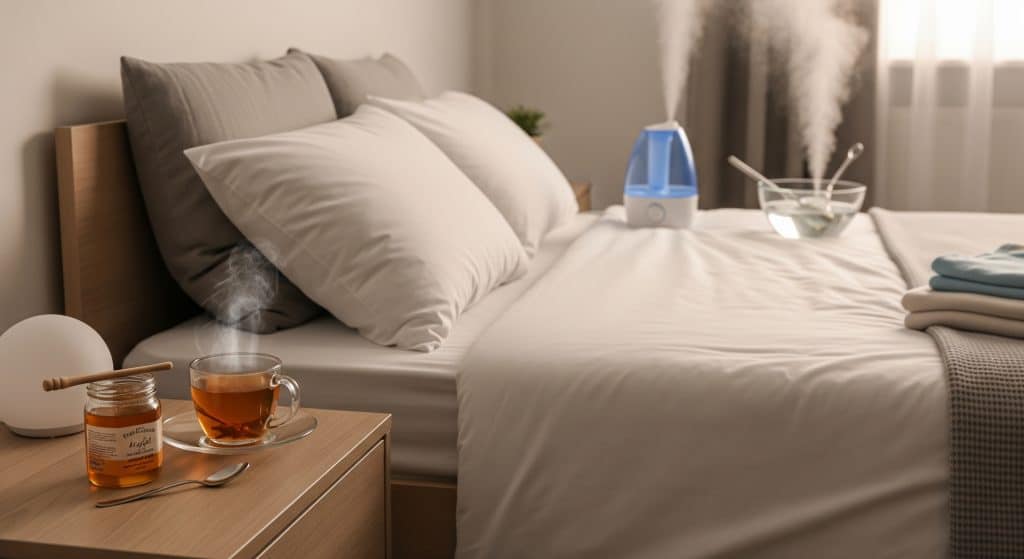
A cool mist humidifier maintains stable indoor humidity, which calms sensitive airways. Aim for a moderate level, not a damp room. Clean the unit daily to prevent mould or bacterial growth. Used well, it supports immediate relief from cough through the night.
How to Stop Coughing at Night
Night cough has specific triggers: dry air, post-nasal drip, reflux, and residual irritants. I target each, then layer simple routines. The goal is restful sleep and fewer wakings.
Bedroom Environment Adjustments
- Keep the room slightly cool and use a cool mist humidifier for steady humidity.
- Elevate the head of the bed or use a wedge to limit reflux.
- Wash bedding weekly and vacuum carpets to reduce dust triggers.
- Stop scented candles and aerosols, which often irritate the airway.
This setup addresses how to stop coughing at night by removing common stimuli. Small changes compound.
Pre-Sleep Remedies
- Rinse the nose with saline to reduce drip before bed.
- Gargle with warm saltwater to settle the throat.
- Take warm fluids and, if suitable, honey for throat coating.
- Use prescribed inhalers or nasal sprays exactly as directed.
I sequence these steps 45 minutes before sleep. It is basically a wind-down for the airway. Reliable and calm.
Age-Specific Night Relief Techniques
|
Age group |
Practical night tactic |
|
Infants |
Cool mist humidifier, gentle nasal saline, slight cot incline. No honey, no lozenges. |
|
Children |
Honey in warm water, saline rinse, room humidity control, allergen reduction. |
|
Adults |
Head elevation, reflux-friendly supper, warm fluids, prescribed inhalers if indicated. |
|
Older adults |
Hydration plan, humidifier hygiene, medication review for cough side effects. |
This structured approach often produces immediate relief from cough at night and steadier sleep quality.
Conclusion
Effective cough relief is rarely a single trick. It is a set of small, sensible measures that reduce irritation and support recovery. Start with hydration, throat soothing, and steam for daytime comfort. Then upgrade the bedroom environment and pre-sleep routine to master how to stop coughing at night. If symptoms persist, escalate to clinical review. Precision first, then persistence.
What stops a cough instantly?
There is no universal instant fix, but targeted measures help quickly. Try warm fluids, a soothing lozenge, and steam inhalation. Honey in warm water can settle a tickly cough in minutes for those over one year. For reflux triggers, head elevation is the fastest adjustment.
Is honey safe for toddlers with cough?
Honey is safe for children over one year. Do not give honey to infants under one year due to botulism risk. For toddlers, a small spoonful in warm water before bed can reduce throat irritation.
When should I see a doctor for persistent cough?
Seek medical advice if a cough lasts longer than three weeks, is severe, or is paired with red flags. These include chest pain, breathing difficulty, coughing blood, high fever, or unexplained weight loss. Immunocompromised individuals should act sooner.
Can I give cough medicine to my 3-year-old?
Over-the-counter cough suppressants are generally not recommended for young children. Use non-drug measures first, such as honey, saline, and humidity control. Consult a clinician before giving any medicine to a child.
Why does coughing get worse at night?
Night coughing often worsens due to post-nasal drip, reflux, and dry indoor air. Lying flat increases throat irritation and triggers cough reflex sensitivity. Head elevation, humidity control, and a pre-sleep routine address these drivers.

