






 We do what's right for you...


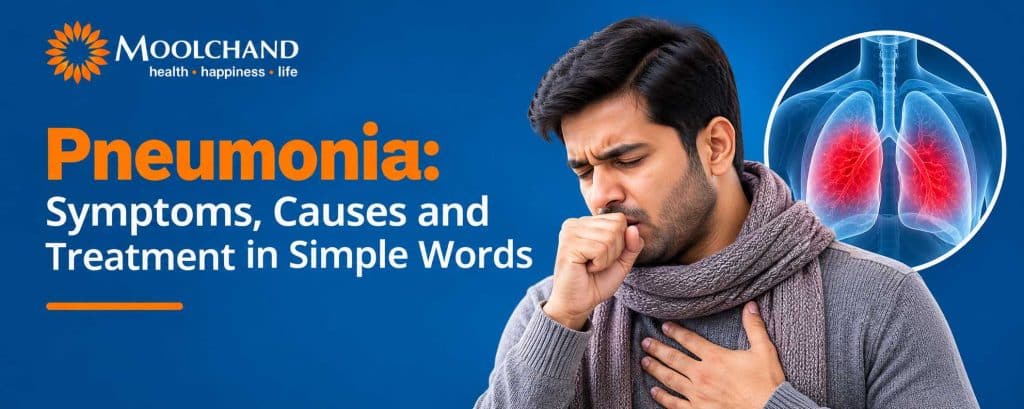
Pneumonia: Symptoms, Causes and Treatment in Simple Words
Dr. Kunal Luthra
Pneumonia is a lung infection. Many people catch it after a cold or flu. It can affect anyone. Young children, older adults and smokers face the highest risk. The good news is that most people recover well with timely care. This guide explains pneumonia in plain language. You will learn what it is, why it happens, how to spot it and how doctors treat it.
What Is Pneumonia?
If you ask what is pneumonia, the short answer is an infection of the lungs. The lungs contain millions of tiny air sacs. Doctors call these sacs alveoli. Normally, healthy alveoli fill with air. During pneumonia, they fill with fluid or pus instead. This makes breathing harder. Oxygen also reaches the blood more slowly.
Pneumonia can affect one lung or both. Doctors consider it serious. Yet most cases respond well to treatment. Early action makes a real difference.
Related: World Pneumonia Day 2026: Causes, Symptoms, Prevention
Common Causes of Pneumonia
Germs cause most cases of pneumonia. Bacteria, viruses and fungi can all trigger it. Each type behaves differently. That is why identifying the cause matters for treatment.
Bacterial pneumonia is common. Streptococcus pneumoniae is the most frequent bacterial cause. It can strike suddenly, often with high fever.
Viral pneumonia often follows a cold or flu. Influenza, RSV and COVID-19 can all lead to it. Viral cases may start mildly and then worsen over several days.
Fungal pneumonia is less common. It mostly affects people with weak immune systems.
Sometimes food, drink or vomit slips into the lungs. Doctors call this aspiration pneumonia. It can happen after a stroke, or in people who have trouble swallowing.
Several factors raise the risk of these pneumonia causes:
- Smoking, which damages the airways
- Chronic lung disease such as COPD
- Weak immunity from illness or medicines
- Recent hospital stays or surgery
Regular COPD treatment helps protect the lungs. Good control of the condition lowers the chance of serious infections.
Pneumonia Symptoms to Watch For
Pneumonia symptoms often build up over a few days. Sometimes they appear suddenly. Watch for these common signs:
- A cough that may bring up yellow, green or bloody mucus
- Fever, chills and sweating
- Shortness of breath, especially during activity
- Chest pain that worsens when you breathe deeply or cough
- Tiredness and weakness that do not improve with rest
- Confusion, mainly in older adults
- Nausea, vomiting or loss of appetite
Children may show different signs. They may breathe very fast. Their chest may pull in with each breath. They may refuse feeds or seem unusually sleepy. Seek medical help quickly if you notice these changes.
Who Is at Higher Risk?
Some groups face greater danger from pneumonia:
- Children under five years old
- Adults over 65 years old
- Smokers and people who live with smokers
- People with diabetes, asthma, COPD or heart disease
- Anyone with a weak immune system
Delhi’s winter smog also raises the risk for many residents. Smog irritates the airways. Irritated airways make infections easier to catch. People who already have lung problems should take extra care during the smog season.
Related: Pneumonia Management Explained: Symptoms, Risks
How Doctors Diagnose Pneumonia
Your doctor starts with a physical examination. They listen to your chest with a stethoscope. Crackling sounds or reduced breath sounds can point to pneumonia. Your doctor then orders tests to confirm the diagnosis.
Your doctor starts with a physical examination. They listen to your chest with a stethoscope. Crackling sounds or reduced breath sounds can point to pneumonia. Your doctor then orders tests to confirm the diagnosis.
Common tests include:
- Chest X-ray: shows the infected area of the lung
- Blood tests: check infection levels and overall health
- Sputum test: identifies the germ causing the infection
- Pulse oximetry: measures oxygen levels in the blood
- CT scan: used in complex or unclear cases
Pneumonia Treatment Options
Pneumonia treatment depends on the cause, age and severity. Doctors choose medicines based on test results. Common pneumonia treatment includes:
- Antibiotics for bacterial pneumonia. Finish the full course, even when you feel better.
- Antiviral medicines for some viral infections, such as influenza.
- Oxygen therapy if your oxygen levels drop.
- Fluids and rest to support recovery.
- Hospital care with intravenous medicines for severe cases.
Antibiotics do not work against viruses. Taking them without a prescription can also lead to resistance. Mild cases often recover at home under medical guidance. Severe cases need hospital care, sometimes in an intensive care unit.
Home Care During Recovery
Good home care supports healing. Try these steps:
- Drink plenty of water and warm fluids.
- Rest well and avoid heavy physical work.
- Sleep propped up on pillows to ease breathing.
- Breathe in warm steam if it feels comfortable.
- Avoid smoke, dust and heavy smog.
- Take fever medicines only as your doctor advises.
Recovery takes time. Most people feel better within one to three weeks. Tiredness can last longer, especially in older adults. Return to your doctor if symptoms get worse instead of better.
Prevention: How to Lower Your Risk
Prevention protects you and your family. Simple habits make a big difference:
- Get a flu vaccine every year.
- Ask your doctor about the pneumococcal vaccine, especially for older adults and young children.
- Stop smoking, and avoid second-hand smoke.
- Wash your hands often with soap and water.
- Cover your mouth and nose when you cough or sneeze.
- Control chronic conditions such as diabetes and COPD.
- Eat a balanced diet and sleep well to keep immunity strong.
When to Go to Hospital Immediately
Do not wait if you notice any of these warning signs:
- Severe breathlessness or very fast breathing
- Bluish lips or face
- Chest pain that does not ease
- High fever that does not respond to medicine
- Confusion or extreme drowsiness
- Inability to keep fluids down
These signs can mean the infection is spreading or affecting your oxygen levels. Quick care can prevent serious complications.
Related: निमोनिया क्या है? लक्षण, कारण, इलाज और बचाव के उपाय
Lung Care in Delhi: Where to Get Help
Many patients search for a chest hospital in Delhi when breathing problems begin. Others look for a lungs hospital in Delhi after a long cough does not go away. A good lung specialist can make diagnosis faster and recovery smoother.
Patients looking for the best lungs hospital in Delhi often want experienced specialists under one roof. Moolchand Hospital at Lajpat Nagar offers lung care through its pulmonology team. Our chest specialists assess pneumonia, COPD and other lung conditions.
If you need a chest specialist in Delhi, a doctor can review your symptoms and tests. Patients searching for the best pulmonologist in Delhi can book a consultation to discuss their concerns. Do not wait until symptoms become severe.
Final Word
Pneumonia is serious, but timely care helps most people recover well. Do not ignore a persistent cough, fever or breathlessness. Book a consultation at Moolchand Hospital, Lajpat Nagar, if symptoms continue.
Frequently Asked Questions
Is pneumonia contagious?
Some types of pneumonia spread easily. Germs travel through coughs, sneezes and touched surfaces. Wash your hands often and cover your cough to reduce the risk.
What is the difference between pneumonia and a bad cold?
A cold affects the nose and throat. Pneumonia infects the lungs. Pneumonia usually causes higher fever, a deeper cough and breathlessness.
How long does pneumonia last?
Most people improve within one to three weeks. Tiredness may last longer. Older adults often need more time to recover fully.
Can pneumonia be treated at home?
Mild cases can recover at home under a doctor’s guidance. Severe cases need hospital care. Never start antibiotics without a prescription.
Do antibiotics work for every type of pneumonia?
No. Antibiotics treat bacterial pneumonia only. Viral pneumonia needs different care. Your doctor will test to identify the cause.
Can pneumonia come back?
It can. People with weak immunity, smoking habits or chronic lung disease face a higher risk. Vaccines and healthy habits help lower that risk.
What foods help during pneumonia recovery?
Choose light, nutritious meals. Soups, fruits, vegetables, dal and rice are good options. Drink fluids often through the day.
Is pneumonia dangerous for children?
It can be. Young children may develop breathing trouble quickly. Seek care at once if a child breathes fast or refuses feeds.
Which doctor treats pneumonia?
A general physician often starts treatment. A pulmonologist, also called a chest specialist, treats complex or repeated lung infections.
Can people with COPD get pneumonia more easily?
Yes. COPD damages the airways and weakens lung defences. Regular COPD treatment in Delhi helps reduce flare-ups and infections. Vaccines also protect these patients.