






 We do what's right for you...


Pleural Effusion Symptoms: What to Watch For
Dr. Pawan Kumar Mangla
Conventional advice says you will know when there is fluid around the lungs. The reality is more nuanced. Pleural Effusion Symptoms can creep in quietly, masquerading as routine breathlessness or a stubborn cough. Spotting the pattern early helps you act while the problem is still manageable. This guide explains what to watch for, how symptoms evolve, the major pleural effusion causes, and the practical options for pleural effusion treatment.
Main Pleural Effusion Symptoms
Shortness of Breath and Breathing Difficulties
Shortness of breath is the hallmark feature. As Cleveland Clinic notes, mechanical pressure from fluid restricts lung expansion, so you cannot take a satisfying breath. The physiology is layered. As Physiology of breathlessness associated with pleural effusions explains, impaired gas exchange and chest wall mechanics reduce oxygen delivery, not just simple lung compression.
Drainage often helps, but not always. As Practical Management of Pleural Effusions observes, breathlessness may persist after fluid removal if diaphragm movement or underlying lung disease remains limited. You may notice exertional breathlessness first. Climbing one flight of stairs feels harder than last month. Lying flat can also worsen symptoms because the diaphragm works against extra pressure.
-
Common descriptors: air hunger, chest tightness, needing to pause mid-sentence.
-
Typical triggers: walking uphill, carrying shopping, or hurried conversations.
-
Context: if you are researching shortness of breath causes, add pleural effusion to the list.
In practice, Pleural Effusion Symptoms vary with volume and speed of fluid build-up. A slow, small effusion may cause mild breathlessness only on exertion. A larger one can limit ordinary daily activity. Sometimes dramatically so.
Chest Pain and Discomfort
Chest pain is usually sharp and pleuritic. As StatPearls summarises, irritation of the parietal pleura makes pain worse with deep breathing, coughing, and certain movements. This pattern helps distinguish pleural pain from dull, pressure-like cardiac discomfort. As Pleural effusion: diagnosis, treatment, and management reports, pleural disease commonly presents with dyspnoea and pleuritic pain, which warrants thorough evaluation.
Inflammation matters. As Mayo Clinic describes, pleurisy can both cause sharp pain and lead to effusions, compounding symptoms. Pain may localise to the affected side or radiate to the shoulder. It often eases when you splint the ribs with a hand or lie on the painful side. Not always, but often.
Persistent Dry Cough
A dry, irritating cough is a frequent companion. As Pleural effusion: diagnosis, treatment, and management notes, many patients present with dry cough alongside breathlessness and chest pain. The cough reflects reduced lung expansion and pleural irritation rather than airway mucus. In selected scenarios, symptoms improve after drainage. As a case report on chylous effusion details, cough may ease markedly once the pleural space is decompressed.
Here is why this matters. A persistent cough without significant phlegm, particularly with exertional breathlessness, should prompt clinical review. Especially if other Pleural Effusion Symptoms are present.
Reduced Chest Expansion
Clinicians often notice asymmetric chest rise. As research on respiratory function explains, fluid alters the elastic properties of the lungs and chest wall and limits expansion. The outcome is a restrictive breathing pattern that feels shallow and unsatisfying. As StatPearls notes, fluid accumulation hinders lung inflation and contributes to shortness of breath and discomfort.
You might recognise this in the mirror. One side of the chest moves less while breathing. Clothes can feel tighter across the affected hemithorax. Small signs, but telling.
Fever and Night Sweats
Fever and night sweats suggest inflammation or infection. As National Jewish Health highlights, these systemic features often accompany parapneumonic effusions or tuberculosis. Case reports echo the pattern. As a metagenomic study describes, viral pleurisy can present with night sweats and pleural fluid, though such causes are less common.
Absence of fever does not exclude infection. A subset of patients with effusions after pneumonia lack fever at presentation, as several clinical reports suggest. The trend still raises suspicion when paired with Pleural Effusion Symptoms.
Early Warning Signs and Progressive Symptoms
Initial Mild Symptoms Often Overlooked
Early Pleural Effusion Symptoms are often subtle. A slight uptick in breathlessness on hills. A dry cough that arrives at night. Mild chest tightness on deep inspiration. These are easy to attribute to fitness, weather, or a recent cold. They persist. Gradually they crowd daily tasks. That persistence is the clue.
-
Look for patterns lasting longer than 2 to 3 weeks.
-
Notice positional changes, such as worsening when you lie on one side.
-
Track exertional thresholds, like stairs or brisk walks that now require pauses.
Early recognition allows timely imaging and management. Small interventions beat late rescues.
How Symptoms Worsen Over Time
Symptoms usually intensify as fluid accumulates. As StatPearls notes, breathlessness and chest discomfort can insidiously progress and limit activity. As Cleveland Clinic also reports, unchecked accumulation may culminate in respiratory distress requiring urgent treatment.
Clinical timelines vary. Rapid effusions from infection or trauma escalate over days. Slower processes, like heart failure or cancer, may evolve over weeks. The arc is similar. Less exercise tolerance, then breathlessness on minimal exertion, then dyspnoea at rest. And then sleep is affected.
Differences Between Small and Large Effusions
Size matters for symptoms and decisions. As StatPearls explains, small effusions may be well tolerated, while large effusions compress lung tissue and impair gas exchange. In intensive care cohorts, larger symptomatic effusions track with worse outcomes. As a critical care review notes, early drainage can improve oxygenation in significant cases.
|
Feature |
Small Effusion |
Large Effusion |
|---|---|---|
|
Breathlessness |
Mild, exertional only |
Marked, may occur at rest |
|
Chest pain |
Occasional, pleuritic |
Frequent, pleuritic with pressure |
|
Oxygen levels |
Usually normal |
May drop with exertion |
|
Typical management |
Observe, treat cause |
Often drainage plus cause therapy |
One more point. Differentiation is clinical and imaging based. It guides whether to drain now or manage conservatively.
Emergency Warning Signs Requiring Immediate Care
Seek urgent assessment if any of the following occur:
-
Severe breathlessness at rest.
-
Confusion, new agitation, or fainting.
-
Blue lips or fingertips, or oxygen readings falling below 92 percent.
-
Crushing chest pain or signs of shock, such as cold clammy skin.
These signals indicate physiological stress. As a hospital study on warning signs indicates, abnormal respiratory rates and mental status changes often precede serious deterioration. Do not wait for daylight. Call emergency services.
Common Pleural Effusion Causes and Risk Factors
Heart Failure Related Effusions
Heart failure is a leading cause. As a CHF review notes, raised capillary pressures push fluid into lung tissue and the pleural space. Effusions are often bilateral, and on the right if unilateral. Natriuretic peptide tests, including NT-proBNP, help confirm cardiac origin when the cause is unclear. Loop diuretics are first line, with drainage required for large symptomatic cases.
The burden is sizeable. As a narrative review reports, cardiac effusions, especially when bilateral and transudative, carry high mortality. When diuresis fails, thoracentesis or an indwelling catheter may be necessary for relief. Pleural Effusion Symptoms in this group often mirror fluid overload elsewhere, such as swollen ankles.
Infections and Pneumonia
Pneumonia commonly produces parapneumonic effusions. As StatPearls outlines, infection is a major driver of exudative fluid in the pleural space. In children with complicated community-acquired pneumonia, hypoxia and effusions are more frequent, as paediatric research shows. Adult data tell a similar story. Empyema can follow if bacteria invade the pleural space directly.
Here is the practical detail. Antibiotics treat the lung infection, but fluid often needs drainage if loculated or purulent. Pleural Effusion Symptoms will not settle fully until both processes are addressed.
Cancer Related Fluid Build-up
Malignant pleural effusion signals advanced disease in many cancers. As recent data indicates, malignant effusions affect a large patient population annually and associate with poorer survival, particularly in lung and ovarian cancer. Management aims to reduce breathlessness and maintain function. Not just to move numbers.
Options include repeated drainage, pleurodesis, or an indwelling catheter. Oncology treatment of the primary cancer is central. Pleural Effusion Symptoms here can dominate daily life, so symptom control is a core outcome alongside tumour response.
Kidney and Liver Disease Connections
Systemic fluid shifts also matter. As StatPearls explains, kidney disease can cause volume overload or uremic pleuritis, while cirrhosis raises portal pressures and drives fluid into the chest. As a comprehensive review notes, these are usually transudative effusions, though exceptions occur.
In cirrhosis, hepatic hydrothorax may occur even without obvious ascites. That surprises many patients. Managing salt and water balance, optimising diuretics, and addressing portal hypertension are central. Drainage helps symptoms when breathlessness dominates.
Traumatic Injury and Surgery Complications
Trauma and surgery can disrupt lymphatic or pleural integrity. As reports of chylothorax show, thoracic injuries or procedures may trigger milky pleural fluid due to thoracic duct leaks. Post cardiac surgery effusions are also common and require careful follow up. As surgical series demonstrate, previous heart conditions increase risk and may prolong recovery.
Practical takeaway. New Pleural Effusion Symptoms after thoracic or cardiac procedures should prompt a low threshold for imaging and early specialist input.
Pleural Effusion Treatment and Management
Diagnostic Tests and Procedures
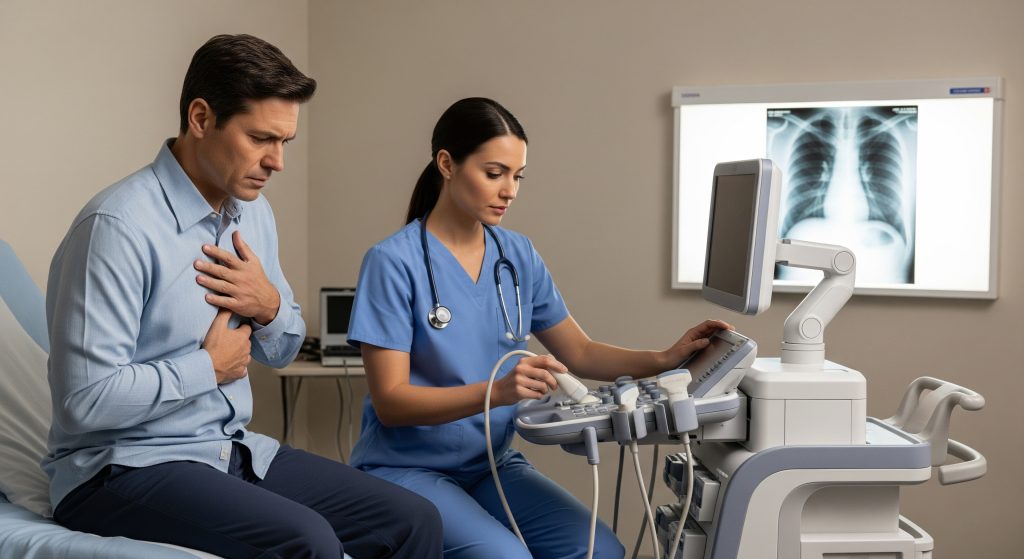
Diagnosis begins with chest imaging and clinical assessment. As a review on malignant effusions notes, chest X-ray, ultrasound, and CT define size and complexity. Ultrasound guidance improves safety for procedures. Diagnostic thoracentesis is pivotal when the cause is unclear.
Laboratory analysis classifies fluid as transudate or exudate. As an open-access review highlights, fluid protein and LDH help distinguish categories and direct therapy. As AAFP guidance advises, new unilateral effusions usually warrant aspiration unless a clear explanation exists. This is where avoiding delay pays off.
Thoracic ultrasound is the clinician’s stethoscope for pleural disease. It reduces complications and increases diagnostic yield.
Thoracentesis and Fluid Drainage
Thoracentesis removes fluid for analysis and symptom relief. As StatPearls on thoracentesis details, the procedure uses local anaesthesia, often under ultrasound guidance, to lower risk and improve accuracy. Risks include pneumothorax and bleeding, though complication rates are low in experienced hands.
When you have significant breathlessness, drainage can provide immediate relief. As a management review notes, thoracentesis is also indicated in suspected infection or malignancy to guide urgent decisions. Pleural Effusion Symptoms often improve within minutes to hours after drainage.
Medication Options
Drug therapy targets the cause. As StatPearls summarises, diuretics help heart failure related effusions, while antibiotics treat parapneumonic fluid. As a clinical review notes, some inflammatory causes respond to steroids, though this is condition specific. For complicated infectious effusions, intrapleural fibrinolytics can facilitate drainage. As optimisation studies suggest, this approach can reduce the need for surgery in selected cases.
Two reminders. Always pair medication with appropriate imaging follow up. And treat the lungs and the cause together. Not either or.
Long-term Management Strategies
Recurrent effusions need durable solutions. As Cochrane reviews indicate, pleurodesis or indwelling pleural catheters provide effective symptom control for malignant effusions. Choice depends on performance status, expected survival, and whether the lung fully re-expands after drainage.
Nonmalignant recurrent effusions also benefit from structured plans. As UpToDate notes, repeated thoracentesis or pleurodesis may be required when causes are not quickly reversible. Pulmonary rehabilitation and graded activity can support function. As respiratory research suggests, increasing moderate activity after discharge likely improves quality of life.
-
Agree a personalised plan for monitoring symptoms and oxygen levels.
-
Optimise disease control for heart, kidney, liver, or oncologic conditions.
-
Use home drainage strategies when appropriate and safe.
When to Contact Your Healthcare Provider
Seek prompt advice if:
-
Breathlessness increases or limits daily activities.
-
Chest pain worsens or becomes continuous.
-
New fever, night sweats, or weight loss appears.
-
You detect reduced chest expansion or a new cough that persists beyond 2 weeks.
Contact urgent care immediately if you experience severe breathlessness at rest, confusion, cyanosis, or fainting. These could reflect rapid fluid accumulation or a separate emergency. Pleural Effusion Symptoms can change quickly, so err on the side of caution.
Recognising Pleural Effusion Symptoms Early
Early recognition hinges on patterns. Breathlessness out of proportion to exertion. A dry cough that lingers. Sharp pain on deep breaths. These cues often appear before a large volume builds. Keep a short symptom log with dates and triggers. It is basically a clinical breadcrumb trail that accelerates diagnosis.
Two practical tips. First, if you are comparing fluid in lungs symptoms with common chest infections, note positional breathlessness and pleuritic pain. Second, if you are exploring shortness of breath causes, include heart failure, pneumonia, cancer, renal and liver disease, and previous thoracic surgery in your thinking. Pleural Effusion Symptoms overlap, yet the combination usually tells a coherent story.
Finally, act early. Call your clinician, request an examination and chest imaging, and ask about pleural ultrasound if symptoms persist. The aim is simple. Less fluid and more air where it counts.
Frequently Asked Questions
Can pleural effusion symptoms come and go?
Yes, to an extent. Symptoms can fluctuate with body position, daily fluid balance, and activity level. Small effusions may cause intermittent discomfort, then settle at rest. Malignant or heart failure related effusions often wax and wane as fluid reaccumulates. If Pleural Effusion Symptoms vary over days, you still need assessment. Variability does not rule out a significant problem.
How quickly do fluid in lungs symptoms develop?
Timing depends on the cause. Infectious or traumatic effusions can develop over 24 to 72 hours. Heart failure, cancer, or liver related effusions may appear over weeks. Roughly speaking, faster onset correlates with more pronounced breathlessness and chest pain. Slow growth may produce subtle exertional limits first. Either pattern warrants evaluation.
What’s the difference between pleural effusion and pneumonia symptoms?
Pneumonia typically presents with fever, productive cough, and pleuritic pain. Pleural effusion adds mechanical restriction and breathlessness that may feel out of proportion to the cough. You can have both conditions together. Imaging clarifies whether fluid has accumulated and whether drainage is needed alongside antibiotics.
Can children experience different symptoms than adults?
Children often show faster breathing, poor feeding, irritability, and hypoxia with complicated pneumonia. They may not describe chest pain as clearly. Consider pleural effusion if recovery from pneumonia stalls or oxygen needs rise. Prompt paediatric assessment is essential because progression can be quick.
Are pleural effusion symptoms worse when lying down?
They can be. Lying flat reduces diaphragmatic efficiency and can worsen breathlessness. Some patients feel better propped up or lying on the affected side. If orthopnoea or nocturnal breathlessness emerges, seek review. This may indicate increasing fluid or concomitant heart strain.
How long does shortness of breath last with pleural effusion?
Duration depends on cause, size, and treatment. Breathlessness may ease soon after drainage if the lung re-expands well. If underlying disease persists or the lung is stiff, improvement is partial. Ongoing pleural effusion treatment targets both fluid and the driver condition. Expect follow up until symptoms stabilise.
Quick reference
|
Core term |
Pleural Effusion Symptoms |
|
Typical first clue |
Exertional breathlessness |
|
Common overlap |
Dry cough, pleuritic pain |
|
Key causes |
Heart failure, pneumonia, cancer, kidney and liver disease |
|
First-line test |
Chest X-ray and ultrasound |
|
Definitive step |
Thoracentesis for diagnosis and relief |
|
When to call urgently |
Severe breathlessness, confusion, blue lips, fainting |
Editorial note: Pleural effusion causes are diverse, and no single symptom makes the diagnosis. Taken together, patterns point the way. Maybe that is the point. Recognise the pattern early, and you give treatment the best chance to work.

