






 We do what's right for you...


Parkinson’s Disease: 10 Early Warning Signs, Symptoms and When to See a Doctor
Dr. Shishir Pandey
Why Early Signs Matter
Parkinson’s disease affects the brain. It slowly reduces control over body movement. Parkinson’s disease symptoms often start small and grow over years. Many people think these changes are normal aging. Early signs of Parkinson’s disease can appear long before a clear diagnosis. First signs of Parkinson’s disease are often easy to miss. This guide explains ten early warning signs. It also covers causes, tests, treatment and when to see a doctor. Read it calmly. Share it with family members who may notice changes first.
1. Tremor at Rest
Shaking is the best-known sign. The hand may tremble while it rests on a knee. The shaking often eases during movement. Some people notice a thumb rubbing against the fingers. Doctors call this a pill-rolling tremor. Parkinson’s disease tremors often start on one side of the body. Stress and tiredness can make the shaking worse. A tremor alone does not confirm the disease. Many other conditions can also cause shaking.
2. Slow Movement
Doctors call this bradykinesia. Simple tasks take longer than before. Buttoning a shirt may feel slow and clumsy. Walking may lose its normal speed. Facial expressions may look less lively. Family members often notice this before the patient does. Slowness that lasts for weeks needs a medical check. Write down when the slowing started.
3. Stiff Muscles
Muscles may feel tight or rigid. Stiffness can affect the arms, legs or neck. It may cause aches in the shoulder. Some people feel pain they cannot explain. The stiffness may be worse on one side. Gentle stretching can bring comfort. Stiffness alone does not prove the condition. A doctor should check the cause.
4. Loss of Smell
Many people lose some sense of smell. Coffee or spices may seem bland. Smell loss can start years before movement signs. It is easy to miss at first. Test yourself with a familiar scent, such as lemon or clove. Tell your doctor if smell changes last for months. This sign alone does not mean you have the disease.
5. Small or Cramped Handwriting
Handwriting may become small and cramped. Doctors call this micrographia. Words may crowd together on the page. Your signature may look smaller than before. Some people struggle to write neatly. Compare old letters or notes with recent ones. A clear change in handwriting deserves a medical review.
6. Soft or Quiet Voice
The voice may become soft or hoarse. Speech may sound flat or monotone. Some people speak more slowly than before. Family members may ask them to speak up. Voice changes are easy to overlook. Speech therapy can help with volume and clarity. Report steady changes to your doctor.
7. Balance Problems
Balance may feel weaker than before. Standing up from a chair may feel hard. Turning around may need extra small steps. Some people feel unsteady when they walk. Falls become more likely over time. Use handrails at home. Ask your doctor about physiotherapy for balance. Any fall needs prompt medical attention.
8. Stooped Posture and Shuffling Walk
The body may lean forward. The head may tilt downward. Steps may become short and shuffling. Arms may swing less while walking. Posture changes often build up slowly. Stretching and exercise can ease stiffness. Regular physiotherapy supports better posture. Seek advice if posture changes quickly.
9. Sleep Problems and Acting Out Dreams
Sleep may become broken or restless. Some people act out dreams during sleep. They may punch, kick or shout at night. Doctors call this REM sleep behaviour disorder. Partners often notice it first. Sleep changes can appear years before movement signs. Tell your doctor about any dream acting. Keep the bedroom safe to prevent injury.
10. Mood and Thinking Changes
Mood may shift toward low spirits or worry. Some people lose interest in daily life. Thinking may slow down or feel foggy. Memory may fade in small ways. Constipation can also appear early. Depression is common and treatable. Mention mood changes during your visit. Support from family helps a lot.
Parkinson’s Disease Causes and Risk Factors
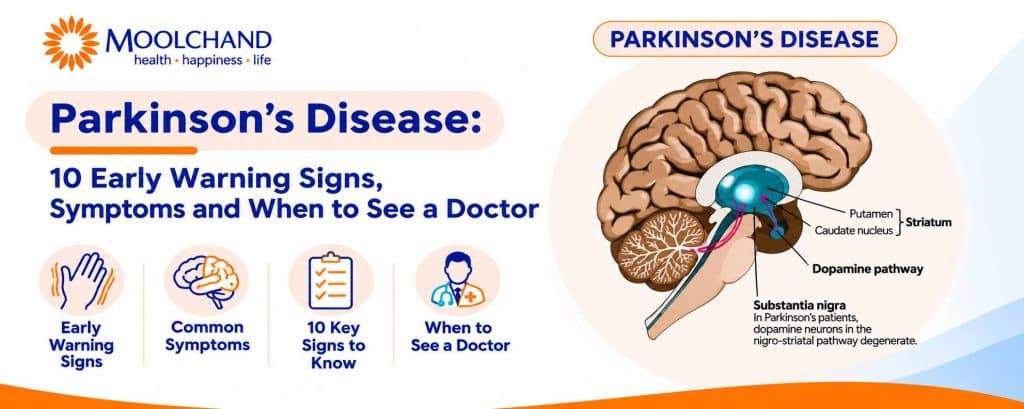
Parkinson’s disease causes remain only partly understood. The disease starts when brain cells lose dopamine. Dopamine helps control smooth movement. Parkinson’s disease risk factors include age and family history. Genes may play a role in some people. Men are affected slightly more often than women. Exposure to some pesticides may raise the risk. Serious head injuries may also increase the chance.
Symptoms in Men, Women and Elderly People
Symptoms can differ from person to person. Parkinson’s disease symptoms in men often start with tremor or stiffness. Parkinson’s disease symptoms in women may include pain or mood changes first. Parkinson’s disease symptoms in elderly people can mix with other age-related problems. Balance problems may cause fractures in older adults. Recovery after a fall may take longer. A specialist can help sort the causes. Every person needs an individual care plan.
How Parkinson’s Disease Is Diagnosed
No single blood test confirms the disease. Doctors take a careful medical history first. They examine movement, balance and reflexes. Parkinson’s disease diagnosis relies on clinical examination. A response to a trial medicine can support the picture. Brain scans may rule out other causes. Blood tests check for other conditions. A neurologist makes the final decision. Early review leads to better planning.
Parkinson’s Disease Stages and Progression
Doctors often use the Hoehn and Yahr scale. It groups the disease into five stages. Parkinson’s disease stages help guide treatment choices. Early stages cause mild symptoms, often on one side. Later stages may affect balance and walking. Progression varies widely between people. Some remain independent for many years. Regular follow-up tracks changes over time. Your plan will change as symptoms change.
Parkinson’s Disease Treatment Options
Parkinson’s disease treatment focuses on controlling symptoms. Medicines can improve movement and reduce stiffness. Levodopa is the most commonly used medicine. Other drugs may help tremor or sleep problems. Physiotherapy keeps muscles strong and flexible. Speech and occupational therapy support daily living. Surgery may be an option for some patients. Treatment plans need regular neurologist review.
Is Parkinson’s Disease Curable?
Is Parkinson’s disease curable? At present, the answer is no. There is no known cure yet. Treatment focuses on symptom control. Good care can keep many people active. Research on new therapies continues worldwide. Claims of a quick cure should raise doubt. Ask your doctor about approved options. Trust evidence-based guidance.
Parkinson’s Disease Life Expectancy
Many people with the disease live a long life. Parkinson’s disease life expectancy depends on age and overall health. Early care can improve daily quality of life. Falls and infections are key risks in later years. Regular exercise supports heart and muscle health. Good nutrition also supports recovery. Keep follow-up visits on schedule.
Parkinson’s Disease Prevention Steps
Parkinson’s disease prevention is not fully certain. No proven method stops the disease. Regular exercise may support brain health. A diet rich in vegetables and fruits helps overall health. Avoid pesticide exposure where possible. Protect the head during sports and cycling. Control blood pressure and blood sugar. Stop smoking if you smoke. These steps support general wellness.
Parkinson’s Disease vs Essential Tremor
Parkinson’s disease vs essential tremor is a common comparison. Both conditions can cause shaking. Essential tremor often shakes during action. Parkinson’s tremor often shakes at rest. Essential tremor may run in families. Parkinson’s disease also slows movement and affects balance. Essential tremor usually does not cause stiffness. A specialist can tell them apart. Do not self-diagnose from online videos.
When to See a Doctor
See a doctor if you notice several signs together. Seek help if shaking or slowness lasts for weeks. Falls or sudden balance loss need prompt review. Sudden confusion or weakness is an emergency. Call emergency services for stroke-like symptoms. Bring a written list of symptoms to the visit. Note when each sign began.
Choosing Neuro Care in Delhi
Many families search for neuro hospital Delhi options. Look for a team with neurologists and physiotherapists. Some patients also look for the best neurologist in Delhi. Others compare the best neurology hospital in Delhi before deciding. Some consider a Private Hospital in Delhi for faster access. Others check the best hospital in Delhi for brain and nerve care. Ask about follow-up and rehabilitation services. Ask whether a movement disorder specialist is available. A second opinion is always reasonable.
Frequently Asked Questions
What are the first signs of Parkinson’s disease?
Early signs include hand tremor, slow movement, stiffness and smell loss. Many people notice small changes first.
Is Parkinson’s disease curable?
No cure exists yet. Treatment controls symptoms and improves daily life.
What causes Parkinson’s disease?
Loss of dopamine-producing brain cells causes the disease. The exact trigger is still unclear.
Can young people get Parkinson’s disease?
It is less common before age 50. Young-onset cases do occur, so see a doctor.
How long can people live with Parkinson’s disease?
Many people live for many years with good care. Life expectancy depends on age and general health.
Is Parkinson’s disease the same as essential tremor?
No, they differ. Parkinson’s tremor is usually at rest, while essential tremor happens during action.
Which doctor treats Parkinson’s disease?
A neurologist usually leads care. A movement disorder specialist may also help.
Does exercise help Parkinson’s disease?
Yes, regular exercise helps balance and mobility. Ask your doctor before starting a new routine.
Can diet prevent Parkinson’s disease?
No diet guarantees prevention. A healthy diet supports overall brain and body health.
When is Parkinson’s disease an emergency?
Sudden confusion, weakness or a serious fall needs urgent care. Call emergency services right away.