




 We do what's right for you...


World Stroke Day 2026: Know the Signs, Act Fast, Save a Life
Dr. Shishir Pandey
Picture a quiet evening at home. Your mother is making chai and humming. Suddenly the cup slips from her hand. Her smile droops to one side. Her words come out slurred. What would you do next?
Those first minutes decide almost everything. A stroke can steal speech, movement and memory very fast. Quick action can save the brain, and sometimes a life.
That is why World Stroke Day 2026 matters to every family. It asks us to learn the signs before an emergency arrives. We wrote this guide the way we would talk to a friend. No heavy medical words. Just clear steps, honest answers and a little hope.
Why This Day Matters to Every Family
The World Stroke Organization began this awareness day in 2006. Its goal is simple. It wants everyone to know that stroke is common, serious and often treatable.
Many families do not know the date. The october 29 special day in india is not a festival with sweets and lights. It is a quiet day to learn. That one lesson could save a parent, spouse or friend. Schools and offices often call it the 29th october day and hold short health talks.
Brain stroke awareness is not about fear. It is about speed. Most people wait too long. They hope the symptoms will pass. They try a home remedy, or they sleep it off. Every minute of waiting costs brain cells.
What a Stroke Really Is
Think of your brain as a busy city. Blood is the traffic that brings oxygen and food to every street. In a stroke, that traffic suddenly stops. Or a road breaks, and blood spills out. Brain cells begin to die within minutes. That is why doctors say time is brain.
Doctors describe three main types:
- Ischaemic stroke: a clot blocks an artery. Most strokes are of this kind.
- Haemorrhagic stroke: a weak vessel bursts and bleeds inside the brain.
- Mini-stroke (TIA): a short blockage that clears alone. Treat it as a warning and see a doctor the same day.
Warning Signs: Remember FAST
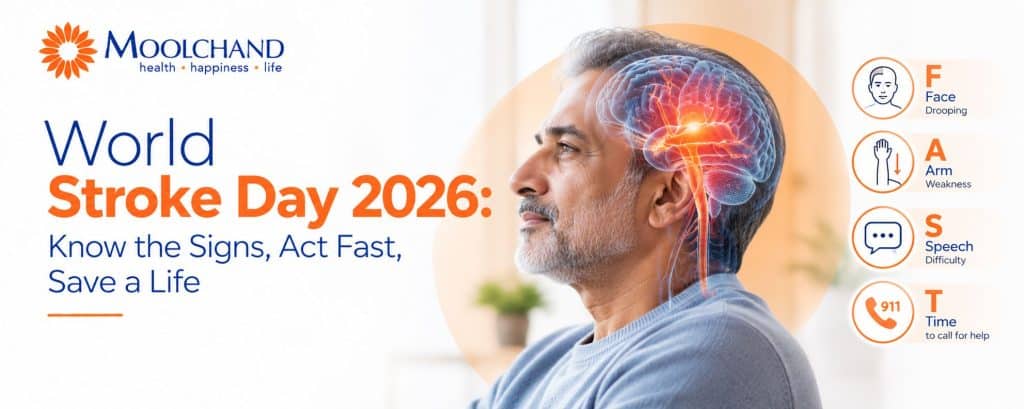
Brain stroke symptoms often arrive without any pain. That is why they are so easy to miss. Use the word FAST to remember them.
- F for Face: one side droops when the person smiles.
- A for Arm: one arm or leg feels weak, heavy or numb.
- S for Speech: words sound slurred, odd or confused.
- T for Time: call for emergency help right now.
Other signs can show up too. Watch for sudden blurred or double vision, dizziness and loss of balance. A very severe, sudden headache is also a red flag.
Please do not wait to see if it passes. Even if the signs fade, get checked the same day. Your caution may save a life.
Why Strokes Happen
Strokes rarely appear from nowhere. Most grow slowly from everyday habits and silent health problems.
- High blood pressure is the biggest risk. It wears down blood vessels quietly.
- Diabetes and high cholesterol clog the arteries over the years.
- Atrial fibrillation, an uneven heartbeat, can send clots to the brain.
- Smoking, tobacco and heavy drinking raise the risk sharply.
- Stress, extra weight and little exercise add to the danger.
- Age, family history and narrow neck arteries also play a part.
Stroke is not only an older person’s illness now. Doctors see it in people in their thirties and forties. With these risks, a neurology hospital in Delhi can check your brain early.
The Theme and the Message
Every year the World Stroke Organization chooses a stroke day theme. Past themes include #GreaterThanStroke in 2024 and “Every Minute Counts” in 2025.
[Insert the official 2026 theme here after checking the World Stroke Organization website]
Themes change, but the message stays the same. Learn the signs. Act fast. Reach the right hospital. Families, schools and offices can use it in talks, posters and WhatsApp groups.
What to Do in the First Minutes
Stay calm. Your steady voice helps the patient feel safe. Then move step by step.
- Note the time the signs began. Doctors need it to choose treatment.
- Call an ambulance or the emergency number at once.
- Do not give food, water or tablets. Swallowing may be unsafe.
- Lay the person on one side. Loosen tight clothes.
- Do not drive yourself. Wait for trained help.
- Choose a hospital with a stroke team and round-the-clock scans.
Do not wait for the person to feel better. Do not try home remedies. Go straight to hospital.
How Doctors Treat a Stroke
Brain stroke treatment begins with a fast scan. A CT or MRI shows the type of stroke. The team then picks the best plan.
For a blocked artery:
- Clot-dissolving medicine can reopen the artery. It works best in the first few hours.
- Thrombectomy removes a large clot with a thin tube. A specialist guides it through an artery.
For bleeding in the brain:
- Doctors bring blood pressure down and stop the bleeding.
- A neurosurgeon in Delhi may operate to remove blood or repair a burst vessel.
Next, the patient moves to a neuro-ICU for close care. Rehabilitation starts early. Physiotherapy, speech therapy and family support all help.
Choosing the Right Hospital in Delhi
When fear is high, choosing a hospital feels hard. Here is a simple checklist.
- A stroke team ready day and night
- CT, CT angiography and MRI scans on site
- Clot-dissolving and thrombectomy facilities
- A neuro-ICU with neurosurgery backup
- Rehabilitation and follow-up care
A good neuro hospital Delhi families trust will tick every box. People often ask which is the Best Hospital in Delhi for stroke. The honest answer is simple. Pick the one that reaches you fastest, with a full stroke team.
Moolchand in Lajpat Nagar is a Private Hospital in Delhi with a 24×7 stroke programme. Neurologists, neuroradiologists and neurosurgeons work together there. In an emergency, call the Emergency Lifeline on 4200 0102.
Simple Habits That Protect Your Brain
You cannot change your age or family history. But you can change a lot else.
- Check your blood pressure every month. Follow the range your doctor advises.
- Test blood sugar and cholesterol regularly.
- Walk for 30 minutes on most days. Dance, garden or climb stairs.
- Eat more vegetables, fruit and whole grains. Cut down on salt.
- Quit tobacco and limit alcohol.
- Take your medicines daily, even when you feel fine.
- Sleep well and make time to relax.
If your numbers run high, see the best neurologist in Delhi soon.
Life After Stroke: Slow Steps, Real Hope
Recovery takes time, and some days will feel heavy. But hope is real. Many survivors regain movement and speech with steady therapy. Early rehabilitation gives the best results.
Family patience matters as much as medicine. Sit beside your loved one. Celebrate every small win. A first step, a first word and a first smile all count.
Feeling low or anxious after a stroke is common. Please ask for help. That takes strength. A good brain hospital in Delhi supports mood and mind, not only the body.
Words to Share and Remember
Share these world stroke day quotes with friends and family on 29 October.
- “Know the signs today, so you can save a life tomorrow.”
- “Every minute you save is a memory you protect.”
- “Stroke may strike fast, but awareness can strike faster.”
- “Brave recovery begins with one small step.”
Small Ways You Can Help
You do not need to be a doctor to help. Try these small steps:
- Share the FAST signs on WhatsApp.
- Check the blood pressure of elders at home.
- Talk to neighbours, colleagues and household helpers about stroke.
- Join a local health talk or screening camp.
- Promise yourself to call for help at the first sign.
On 29 October, tell one person what you learned today. That single chat may protect someone’s future.
When is World Stroke Day 2026?
It falls on Thursday, 29 October 2026. It returns on the same date every year.
Who started this awareness day?
The World Stroke Organization started it in 2006. It now leads a global campaign each year.
What are the early brain stroke symptoms?
Look for a drooping face, a weak arm or leg and slurred speech. Sudden vision loss, dizziness and severe headache are also warnings.
What is brain stroke treatment?
It depends on the type. A blocked artery needs clot-dissolving medicine or thrombectomy. Bleeding needs pressure control and sometimes surgery.
How fast should treatment start?
As soon as possible. Clot-dissolving medicine works best in the first few hours. Every minute counts.
Can a stroke be prevented?
Often, yes. Control blood pressure, sugar and cholesterol. Stay active, eat well and avoid tobacco.
Can young people get a stroke?
Yes. It is rarer, but it happens. Stress, smoking, heart problems and clotting disorders can play a part.
Which doctor treats a stroke?
A neurologist leads stroke care. A neuroradiologist removes clots. A neurosurgeon operates when needed. Rehabilitation experts help recovery.
How do I reach Moolchand for stroke care?
Call +91 1142000000 for appointments. For a stroke emergency, call the Emergency Lifeline on 4200 0102.