






 We do what's right for you...


How a Carpal Tunnel Syndrome Splint Can Reduce Median Nerve Pressure
Dr. Arunav Sharma
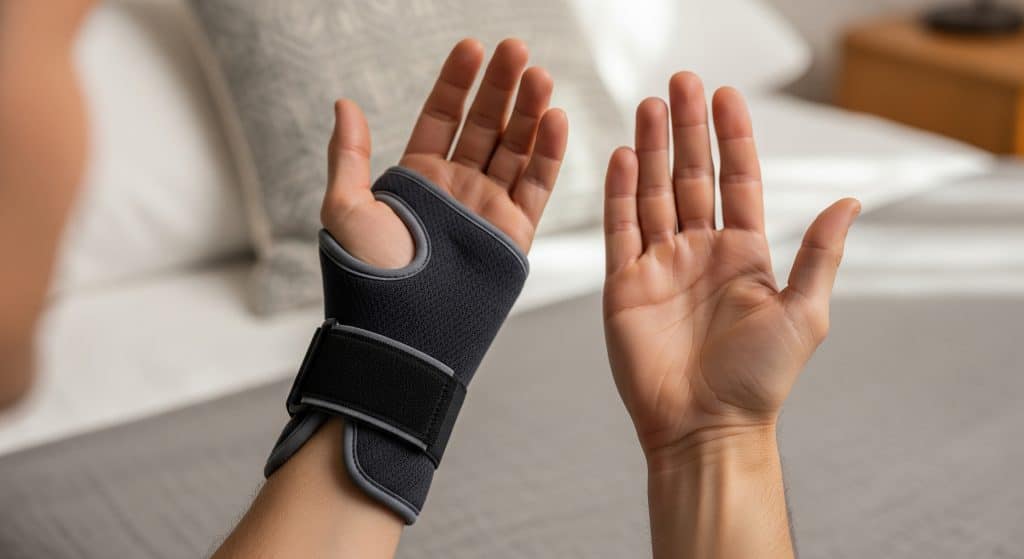
Standard advice says to keep moving and stretch more. For many with carpal tunnel symptoms, that strategy aggravates pain. A Carpal Tunnel Syndrome Splint that holds the wrist in neutral is a quieter, more effective intervention. It stabilises position, reduces strain on the median nerve, and buys you time to heal whilst you keep working. Here is how to select and use one with clinical precision.
Types of Carpal Tunnel Syndrome Splints That Reduce Median Nerve Pressure
1. Neutral Position Night Splints
Night splints prioritise a neutral wrist angle and consistent comfort so you can sleep without prolonged flexion. In practice, nocturnal neutral positioning interrupts the common pattern of wrist curling that spikes symptoms before dawn. You will feel less tingling on waking. A neutral splint also limits the micro movements that repeatedly load the carpal tunnel for hours.
-
Primary goal: hold 0 to 15 degrees of extension with minimal bulk.
-
Best use: nightly for at least four weeks, then reassess severity.
-
Benefit: symptom control without daytime dexterity trade-offs.
Think of it as a seatbelt for your wrist during sleep. Quiet, reliable, and protective.
2. Rigid Immobilisation Splints
Rigid designs offer firm stays on the palmar or dorsal side to stop unintended bending that compresses the tunnel. As The use of orthoses in the treatment of carpal tunnel syndrome notes, immobilisation that holds neutral or slight extension is a cost effective first line option with good tolerance. Evidence is mixed on immediate pain change, though longer use shows functional gains in many cohorts.
Some reviews are cautious about short term benefit. As Splinting for carpal tunnel syndrome explains, early symptom changes can be small, yet night wear reduces flare ups from sleep flexion. Consumer guidance aligns with this position focus. As The best wrist braces for carpal tunnel syndrome of 2025 reports, limiting bending to within about 15 degrees is central to unloading the median nerve.
-
Choose a brace with a moulded stay and low profile straps.
-
Prioritise neutral alignment over tight compression.
Rigid control matters. But overly tight straps do not help and can irritate.
3. Semi-Flexible Support Splints
Semi flexible braces use softer stays and elastic shells for activity tolerance. They dampen extremes of flexion and extension during typing or lifting. As The effect of wearing a flexible wrist splint on carpal tunnel pressure during repetitive hand activity indicates, flexible splints limit motion, though pressure reduction may be modest compared with rigid models. Their value is comfort and adherence during the day.
Use them as your daytime option if rigid braces feel intrusive. Swap to a firmer device at night.
4. Cock-Up Wrist Splints
Cock up formats place a stay under the palm, holding slight extension. As The use of orthoses in the treatment of carpal tunnel… summarises, this approach performs well as initial conservative care, with common guidance to wear overnight and during flares. Several retail lines highlight the same principle of immobilisation for healing and symptom control, as Cock-Up Splints | Wrist, Hand & Forearm Immobilizer Braces emphasises.
For many, a simple cock up splint delivers predictable relief at a modest cost. Reliable, not fancy.
5. Custom-Moulded Thermoplastic Splints
Thermoplastic splints are moulded to your forearm and palm, then remoulded as symptoms evolve. As Splinting for carpal tunnel syndrome – PMC – PubMed Central notes, evidence suggests short term relief, especially in neutral night wear, with benefits varying by design and patient need. Custom work shines when anatomy is atypical or off the shelf options rub bony points.
Customisation also supports adjustment during rehabilitation. As Everything You Need To Know About Custom Splinting explains, tailoring improves alignment and reduces pressure on sensitive zones, which maintains comfort and adherence.
Consider custom if standard braces fail within a week, or if neuropathic pain wakes you nightly.
How Each Splint Type Decompresses the Median Nerve
Mechanically, all useful models aim for the same outcome: maintain a neutral wrist to reduce tunnel pressure and friction. As Effectiveness of surgical versus conservative treatment for … outlines, splints relieve symptoms by minimising median nerve load. Night wear matters because many sleep in flexed positions. As Carpal tunnel syndrome: Learn More – Wrist splints and hand exercises explains, neutral alignment during sleep prevents pressure spikes that trigger numbness.
Stabilising the wrist reduces incidental movements that irritate the nerve. As Wrist Splint for Carpal Tunnel Syndrome Information notes, splints minimise provocative positions and thus decrease pain. Some evidence suggests bracing that also moderates finger motion can further reduce discomfort in selected cases, as Carpal Tunnel Syndrome Treatment: The Impact of Wrist … highlights.
The rule is simple. Hold neutral, reduce repetition, and symptoms are likely to ease.
Key Features to Look for in Effective Wrist Splints for Carpal Tunnel
Optimal Wrist Angle Positioning
Angle drives pressure. Neutral to slight extension remains the target zone for a Carpal Tunnel Syndrome Splint. Ergonomic context matters too. As Occupational Carpal Tunnel Syndrome: a scoping review of causes, mechanisms, diagnosis, and intervention strategies shows, positioning interacts with anatomy and physiology, which determines how much relief splinting can achieve. Clinical guidance converges here. As Splinting in Carpal Tunnel Syndrome: The Optimal Duration reports, neutral or slight extension typically lowers pressure best.
In practical selection, seek a stabiliser that locks this angle without bulky strapping. As Wrist Braces for Carpal Tunnel: What to Wear and When notes, angle control is the critical feature that addresses median nerve compression directly.
|
Feature |
Why it matters |
|---|---|
|
Neutral 0 to 15 degrees |
Reduces tunnel pressure during rest and tasks. |
|
Palmar or dorsal stay |
Prevents drift into flexion that aggravates symptoms. |
Adjustable Compression Levels
Compression is supportive, not curative. Use just enough to stabilise without occluding blood flow. As Splinting for carpal tunnel syndrome – PMC – PubMed Central explains, adjustable features allow you to fine tune immobilisation and comfort, which improves night adherence. Ergonomics research echoes the tailoring argument. As Ergonomic positioning or equipment for treating carpal tunnel … indicates, user specific adjustment drives compliance and overall success.
Clinical buyers should test strap elasticity and micro adjustment. As The 4 Best Carpal Tunnel Braces, According to Orthopedists notes, adjustable compression helps control pain and numbness whilst preserving function across a full day.
Breathable Materials and Comfort Design
Comfort determines whether you wear the brace for the prescribed hours. Breathable mesh, perforated neoprene, or cotton blends reduce moisture and skin irritation. As Carpal tunnel syndrome: Learn More – Wrist splints and hand … notes, lightweight adjustable builds enhance daily wearability. Material choice matters all summer, too. As Breathable Splints and Braces for Summer points out, moisture wicking panels keep skin cool and dry.
Newer composites can outperform older plaster based builds on comfort and moisture management, as Plaster versus Ortho-Glass suggests. Practical translation. Choose breathable materials and you will wear the brace longer with less irritation.
Palm and Thumb Support Configuration
Thumb support is situational. For pure CTS, a standard volar wrist splint is usually sufficient. When De Quervain features or basal joint pain coexist, a thumb spica configuration helps. As Wrist Splint – StatPearls – NCBI Bookshelf – NIH explains, volar, thumb spica, and sugar tong splints address distinct needs. Some commercial hybrids stabilise both wrist and thumb whilst keeping fingers free for typing, as All-in-One Thumb Brace with Palm & Wrist Stabilizer illustrates.
Match the brace to your symptom map. Over bracing restricts function without additional nerve benefit.
Carpal Tunnel Syndrome Exercises to Enhance Splint Effectiveness
1. Nerve Gliding Exercises
Nerve glides aim to improve median nerve excursion relative to surrounding tissues. Evidence is mixed but trending practical. As Effectiveness of Tendon and Nerve Gliding Exercises in… reports, glides did not outperform splinting alone over six weeks in mild cases, though both improved symptoms. Clinical practice still uses neurodynamic work widely. A therapist survey reflects this shift, as Noninvasive management of carpal tunnel syndrome and… notes.
There is also supportive evidence for pain and function changes when glides accompany conservative care, as Effectiveness of Nerve Gliding Exercises on Carpal Tunnel… suggests. Mayo guidance concurs on potential symptomatic benefit, as Carpal tunnel exercises: Can they relieve symptoms? advises. Method matters. Slow, pain free range, and consistent dosing.
Move the nerve, not force the joint. Gentle tension, never sharp pain.
2. Tendon Gliding Movements
Tendon glides move the FDS and FDP through set hand shapes to reduce adhesions and improve tracking. A controlled trial found both splinting and glides improved symptoms, with grip and pinch gains in the exercise group, as Effectiveness of Tendon and Nerve Gliding Exercises in the Treatment of Patients With Mild Idiopathic Carpal Tunnel Syndrome reports. Other data suggest comparable outcomes whether you add a splint or not for mild to moderate cases, as Evaluation of Splint and Exercise Interventions for Carpal Tunnel Syndrome indicates.
-
Sequence: straight hand, hook, fist, tabletop, straight fist.
-
Dose: 5 to 10 reps per position, one to two sessions daily.
Consistency beats intensity. Small gains compound over weeks.
3. Wrist Flexor Stretches
Flexor stretches reduce forearm tightness that can add to tunnel load. Technique is simple and effective. As Best Exercises for Carpal Tunnel describes, extend the arm, palm up, gently draw the fingers back, and hold 10 to 30 seconds for several reps. A public health guide echoes gradual loading and variations for palms up and down, as Carpal Tunnel Syndrome: Exercises outlines.
Stretch daily within comfort. As How to Do a Wrist Flexor Stretch: Tips and Variations notes, regular practice improves flexibility and wrist function. Adjust tension to your tolerance to avoid post stretch soreness, as WRIST STRETCHES – Physical Therapy in Pueblo advises.
4. Median Nerve Mobilisation Techniques
Formal neurodynamic mobilisation blends positioning of the shoulder, elbow, wrist, and fingers to tension and slacken the nerve. In a controlled study, women with mild to moderate CTS saw significant pain and function gains at 5 and 10 weeks, as The effectiveness of the median nerve neurodynamic mobilisation techniques reports. Evidence quality varies across reviews, yet clinical application remains common practice.
Protocols use stepwise hand shapes and elbow extension to glide the nerve within tolerable limits, as Carpal Tunnel Median Nerve Gliding Exercises explains. If symptoms spike during a glide, stop. Regress the position and retry later.
When to Perform Exercises Whilst Using Splints
Timing is pragmatic. Use your Carpal Tunnel Syndrome Splint at night and during aggravating tasks. Perform glides during the day when symptoms are calmer. Studies show both splint plus exercise and exercise alone can improve mild to moderate cases, as Evaluation of Splint and Exercise Interventions for Carpal Tunnel Syndrome suggests. A separate trial reports meaningful gains when combining glides with splinting in mild CTS, as Effectiveness of Tendon and Nerve Gliding Exercises in Patients With Mild Idiopathic Carpal Tunnel Syndrome notes.
Work within comfort. As Carpal Tunnel Exercises: Can They Relieve Symptoms? advises, stop if pain appears. A structured home programme over 3 to 4 weeks with graded progressions is sensible, as Therapeutic Exercise Program for Carpal Tunnel Syndrome outlines.
One simple rule. Splint for protection, mobilise for glide, and do both consistently.
Best Practices for Using Your Carpal Tunnel Splint
Proper Fitting and Adjustment Guidelines
A good fit aligns the wrist, protects the nerve, and avoids circulatory compromise. As Splinting – StatPearls – NCBI Bookshelf – NIH details, keep neutral alignment, ensure the device is not too tight, and monitor neurovascular status. Select a contour that matches your anatomy, especially around the thenar eminence.
Angle stability is the priority. As Wrist Braces for Carpal Tunnel: What to Wear and When notes, snug yet comfortable fit improves effectiveness. Patient guidance echoes comfort as a compliance driver, as Wrist splints for carpal tunnel syndrome – a guide for patients advises. Adjustable designs also increase wear time, as Best Carpal Tunnel Braces Day vs Night 2025 Guide suggests.
-
Position the hand flat, fingers relaxed, and slide into the splint.
-
Align the wrist straight with forearm; avoid ulnar deviation.
-
Fasten from distal to proximal with light, even tension.
-
Check capillary refill and sensation after two minutes.
Day vs Night Wearing Schedules
Night wear is non negotiable for most patients with nocturnal symptoms. As Splinting for carpal tunnel syndrome – PMC – PubMed Central notes, night splinting can triple the odds of early improvement compared with no treatment. Patients with night only symptoms often experience substantial relief within three months, as Splinting is effective for night-only symptomatic carpal reports.
Daytime use is targeted. Wear during repetitive or provocative tasks such as prolonged typing, assembly, or driving. Avoid continuous day wear to reduce stiffness risk, as Night vs. Daytime Wrist Braces for Carpal Tunnel cautions. A combined schedule during flares is reasonable, as Finding Relief from Carpal Tunnel Syndrome suggests.
Protect at night. Be strategic by day.
Signs Your Splint Needs Replacement
A brace is a tool with a service life. Replace it if the stay bends, straps no longer hold tension, or padding compresses and irritates the skin. If your wrist drifts into flexion despite fastening, the device is no longer protective. Another indicator is persistent odour or moisture damage that resists cleaning, which undermines skin health and adherence.
-
Loss of neutral position control.
-
Frayed straps or peeling hook and loop sections.
-
Pressure marks that persist beyond 20 minutes after removal.
When in doubt, replace promptly. A compromised brace can worsen symptoms.
Common Mistakes to Avoid
Two errors dominate: over tightening and under wearing. Over tightening risks swelling and paraesthesia. Under wearing means you lose the night protection that delivers results. As Splinting for carpal tunnel syndrome – PMC – PubMed Central notes, night adherence drives early improvement even when evidence for specific designs varies. Realistic expectations are necessary. As Splinting for carpal tunnel syndrome points out, short term pain changes can be modest and results vary.
Design matters too. As The use of orthoses in the treatment of carpal tunnel syndrome. highlights, devices that maintain neutral alignment improve tolerance and symptoms. Pair bracing with ergonomic changes to your workstation. As Carpal tunnel syndrome – Mayo Clinic advises, combine splints with posture, keyboard, and mouse adjustments for additive benefit. Small changes, large effect.
Maximising Relief Through Strategic Splint Use
Strategy beats intensity. Use a Carpal Tunnel Syndrome Splint to control posture at night and during high risk tasks. Layer in carpal tunnel syndrome exercises for glide and flexibility, and keep loads predictable through basic ergonomics. If symptoms persist beyond six to eight weeks, escalate to clinical review for diagnostics and potential injections or surgery. That is the pathway.
Two practical scenarios illustrate the approach. A data analyst with nocturnal numbness wears a neutral night brace and adjusts keyboard height. Symptoms reduce within two weeks. A line worker uses a semi flexible brace during repetitive assembly and a rigid brace at night. Tendon glides are added at breaks. Function stabilises, and surgery is deferred. These are not outliers. They are achievable with disciplined use.
For buyers seeking value, shortlist devices that hold neutral, feature breathable materials, and have adjustable compression. If you need the best wrist braces for carpal tunnel for heavy night symptoms, choose a rigid stay with low bulk. For daytime tasks, a semi flexible profile keeps dexterity intact. Keep it simple. Protect the nerve and stay consistent.
Frequently Asked Questions
How long should I wear my carpal tunnel syndrome splint each day?
Most patients benefit from wearing a Carpal Tunnel Syndrome Splint all night and during provocative tasks by day. Start with 6 to 8 hours overnight and add 1 to 3 hours in task specific blocks. Avoid continuous daytime wear to prevent stiffness. Reassess every two weeks and taper only after symptoms stabilise.
Can I type or work whilst wearing a wrist splint for carpal tunnel?
Yes, with the right brace. A semi flexible design supports neutral alignment while allowing functional typing and mouse use. If dexterity drops, consider a lower profile brace during the day and a rigid model at night. Maintain a neutral forearm, keep elbows near 90 degrees, and use a soft palm rest to reduce extension moments.
Which is better: rigid or flexible splints for median nerve pressure?
Rigid splints control angle more reliably, so they often reduce median nerve load more effectively during sleep. Flexible options trade some control for comfort and usability. Many patients use a rigid night brace and a semi flexible day brace. The right choice depends on symptom severity, tolerance, and task demands.
Should I wear splints on both wrists even if only one has symptoms?
Usually, brace the symptomatic side first. Consider bilateral splints if your tasks are symmetrical or if the second wrist shows intermittent tingling or night symptoms. Avoid prophylactic overuse without signs. Monitor both sides weekly and escalate care if symptoms spread.
How quickly will a splint reduce my carpal tunnel pain?
Night wear often improves nocturnal numbness within one to two weeks. Pain and weakness may take 3 to 6 weeks to settle, depending on workload and adherence. Roughly speaking, earlier cases respond faster. Long standing severe cases may need additional interventions.
Can children and teenagers safely use carpal tunnel splints?
Paediatric use is uncommon but can be appropriate with clinical assessment. If prescribed, select adjustable, breathable models and review fit frequently as growth alters alignment. Prioritise gentle compression and neutral angle control. Always pair bracing with activity modification and supervised technique changes.

