






 We do what's right for you...


What Is a Duplex Scan? A Simple Explainer for All Ages
Dr. Hriday Kumar Chopra
Disclaimer: The content shared here is for informational purposes only. Always consult a specialist doctor before attempting any treatment, procedure, or taking any medication independently. Treatment costs and pricing may vary depending on the patient’s condition, medical requirements, hospital, and other factors.
The usual advice says scanning is simple. Feed paper, press start, archive. That guidance ignores a crucial detail. A duplex scan changes the entire workflow by capturing both sides of a page in one go. I will explain how it works, which devices do it well, and where the real gains appear. The aim is practical clarity. Not hype. Not jargon for its own sake.
Types of Duplex Scanners and How They Work
When I say duplex scan, I mean scanning both sides of a sheet within a single job. The method depends on the scanner class and the mechanics inside the chassis. Different designs suit different volumes, paper types, and budgets. The choice is not cosmetic. It shapes daily productivity and error rates.
Flatbed Duplex Scanners
A flatbed unit uses a glass platen and a hinged lid. It supports books, passports, and fragile items. Many flatbeds achieve a duplex scan through an integrated duplexing path or a lid sensor array. I place the sheet, align to the guide, and let the mechanism handle both sides. It is slower than a sheet feeder. It is also more forgiving with odd sizes and delicate originals.
-
Best for bound materials and mixed media.
-
Lower jam risk with thick or curled pages.
-
Usually lower throughput per hour.
The trade off is speed. A patient duplex scan on a flatbed is preferable to a fast failure on a feeder.
Sheet-Fed Duplex Scanners
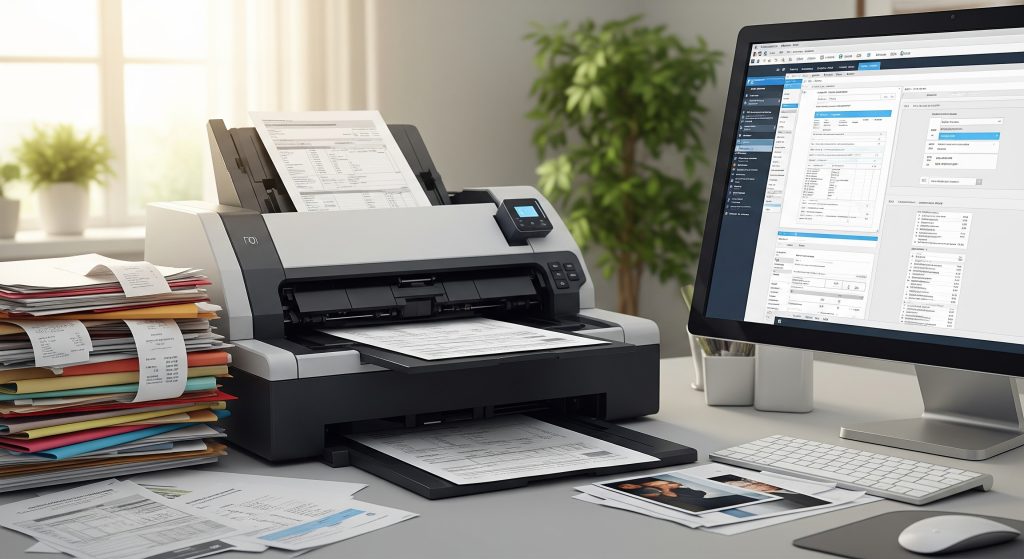
Sheet-fed devices are built for stacks. The document stack sits in an input tray and moves through rollers. A duplex scan here is routine rather than special. Many models include two sensors facing each other, which allows simultaneous capture. Others flip the page internally and run a second pass. I consider them essential for routine office batches.
-
Higher duty cycles and daily volume capacity.
-
Compact footprint compared with large flatbeds.
-
Sensitive to paper quality and staples left behind.
Paper prep matters. A careful staple check prevents a ruined duplex scan and a service call.
Portable Duplex Scanners
Portable units fit a bag and run over USB or battery. A duplex scan on these devices is either single pass with two sensors or a clever reverse feed. They suit travel, field audits, and small desks. I accept lower speeds for mobility. The key is reliability when there is no second chance with a client file.
-
Lightweight and bus powered options.
-
Short paper path reduces misfeeds in tight spaces.
-
Limited daily duty compared with office units.
In practice, portability beats peak speed. A completed duplex scan in a meeting is often the real win.
All-in-One Duplex Scanners
Multifunction printers often include duplex scanning within the ADF. The benefit is a single footprint for print, copy, and scan. I advise checking the duplex path before purchase. Some devices only offer manual flip. True duplex matters when volumes increase and deadlines shrink.
-
Good generalist device for small teams.
-
Cost efficient if printing is already required.
-
May lack advanced image controls found in dedicated units.
For routine office tasks, an all in one that supports a reliable duplex scan is enough. Specialists should still consider dedicated gear.
How Automatic Document Feeders Enable Duplex Scanning
An Automatic Document Feeder, or ADF, moves pages through imaging sensors at speed. It aligns the sheet, controls skew, and times exposure. The ADF enables a duplex scan by either presenting both sides to separate sensors or by flipping the sheet internally. It is basically a controlled conveyor. Minor, but crucial.
-
Pickup rollers separate each page from the stack.
-
Registration rollers align edges to reduce skew.
-
Sensors capture images while the page moves.
-
Either a second sensor or a flip path completes the duplex scan.
Quality hinges on roller condition and clean sensor glass. Maintenance is not optional. It is the safeguard for consistent output.
Single-Pass vs Two-Pass Duplex Scanning Technology
Single pass uses two sensors to capture both sides in one motion. It offers higher speed and lower wear on paper. Two pass uses one sensor and flips the sheet for the second side. It is slower and slightly increases jam risk, though it reduces hardware cost. I select single pass for daily production volumes.
|
Approach |
Practical Implication |
|---|---|
|
Single pass |
Faster duplex scan, less paper handling, higher upfront price. |
|
Two pass |
Lower cost, more moving parts, slower throughput on large batches. |
Speed is obvious. Paper preservation is subtler. Fewer turns mean fewer corner creases and fewer tears.
Essential Duplex Scanner Features and Capabilities
Not all devices are equal. Certain functions determine whether a duplex scan produces clean, searchable files or a folder of problems. These are the practical items I assess during procurement. They form the backbone of dependable operation.
Automatic Page Flipping Mechanisms
In two pass designs, an internal duplexer flips the page mechanically. The mechanism must control timing and grip to avoid misalignment. I look for reverse rollers and sensors that confirm orientation. If that control fails, a duplex scan shows staggered lines and clipped margins. Robust hardware saves rework.
-
Reliable reversing clutch reduces double feeds.
-
Anti skew gates keep edges square to the sensor.
-
Serviceable rollers prolong consistent flips.
This is mundane engineering. It decides whether the tenth sheet looks like the first.
Resolution Settings for Double-Sided Documents
Resolution settings govern detail and file size. For text, 300 dpi is the standard baseline. For fine diagrams, 400 dpi or 600 dpi improves clarity. I use mixed modes that apply lower dpi to the back when it is blank or lightly marked. The duplex scan remains sharp without ballooning storage.
-
300 dpi for routine text and forms.
-
400 to 600 dpi for detailed drawings.
-
Lower dpi on near blank backs to reduce size.
Choose resolution by purpose. Archival editions justify higher dpi. Everyday routing does not.
Paper Size Compatibility
Paper handling defines real utility. A productive duplex scan supports A4, A5, and long receipts, plus legal length where needed. Check minimum size too. Tiny slips can jam or slip through unscanned. I value adjustable guides with firm stops and a clear size map on the tray.
|
Minimum size |
Smallest ticket or slip the unit can feed reliably. |
|
Maximum size |
Longest page length without manual intervention. |
|
Thickness range |
Supported gsm and cover stock tolerance. |
A broad range prevents awkward workarounds. It also keeps the duplex scan consistent across mixed batches.
Speed Specifications for Duplex Scanning
Vendors list ppm or ipm. For duplex, ipm is more honest, since it counts both sides. I test with real documents, not ideal pages. A duplex scan should sustain its rated speed on common paper without babying the stack. Consistency beats burst speed for most teams.
-
Look for sustained ipm under typical loads.
-
Note warm up and recovery times between jobs.
-
Assess ADF capacity versus your batch size.
Throughput is an end to end story. The slow part is often not the motors. It is refeeding and naming files.
Image Enhancement Technologies
Modern devices clean the image on the fly. Key tools include background smoothing, despeckle, punch hole removal, and bleed through suppression. With thin paper, the back side can ghost onto the front. A well tuned duplex scan suppresses that bleed while keeping text crisp.
-
Blank page detection for back sides.
-
Auto colour detect to reduce file size.
-
Edge cleanup for neat margins.
These tools reduce operator edits. Less editing means faster delivery and fewer mistakes later.
Batch Processing Capabilities
Batch controls govern naming, separation, and routing. I use barcodes, patch sheets, or fixed page counts to segment files. A disciplined duplex scan batch becomes searchable PDFs with correct labels in the right folder. That is the difference between order and noise.
-
Define separation rules that match document patterns.
-
Apply consistent file naming templates.
-
Route by content type or department mailbox.
The goal is touch once. Scan and finish. Not scan and fix later.
Duplex Scanning Software and Digital Management
Hardware captures pages. Software decides whether those pages become useful records. The best duplex scan pipeline pairs reliable drivers with thoughtful workflow steps. I prefer predictable over flashy.
Built-in Scanner Software Options
Vendor suites handle setup, presets, and quick profiles. I create profiles for invoices, contracts, and IDs. Each preset sets dpi, colour, and duplex on or off. A consistent duplex scan profile removes decision fatigue for staff. Fewer clicks, fewer errors.
-
One button profiles for common tasks.
-
Admin locks for default settings.
-
Simple export to PDF or TIFF.
Built in tools are enough for many offices. They keep the learning curve short.
Third-Party Duplex Scanning Applications
Some workflows need advanced capture, indexing, and validation. Third party tools offer zonal OCR, barcode routing, and rules based quality checks. I deploy them for compliance heavy teams. The duplex scan enters as an image and exits as a verified record with metadata.
-
Template based extraction for forms.
-
Automated error queues for operator review.
-
APIs for line of business systems.
Added complexity is justified when the data matters more than the image.
PDF Creation and Organisation Tools
PDF remains the standard container. I assemble, rearrange, and redact within PDF editors. A solid duplex scan should land in the editor already in reading order. I then apply bookmarks and page labels for quick navigation. Simple, but powerful for audits and renewals.
-
Set document properties and permissions.
-
Add bookmarks by section or party name.
-
Use page labels for exhibits and annexes.
In practice, organisation is where hours are lost or saved. Structure it up front.
OCR Integration for Searchable Documents
Optical Character Recognition converts images to searchable text. I run OCR on every duplex scan by default. Even blank backs benefit from auto detection. Accuracy depends on dpi, contrast, and fonts. Clean originals and steady feeds raise recognition rates.
-
Choose OCR languages to match content.
-
Enable text over image for faithful layout.
-
Validate critical fields with spot checks.
Searchable files change behaviour. People find information faster and trust the archive more.
Cloud Storage Connectivity
Cloud connectors send scans straight to shared drives or DMS platforms. I restrict write locations and enforce folder templates. The duplex scan lands in the correct path with consistent permissions. Sync status and version history reduce guesswork during reviews.
-
Map profiles to specific cloud folders.
-
Apply retention tags on ingest.
-
Log uploader identity for traceability.
Governance scales confidence. It also reduces accidental exposure of sensitive files.
Mobile App Integration
Mobile apps can trigger jobs, preview pages, and collect signatures. I use them to check a duplex scan while away from the desk. It prevents rescans after leaving the room. Mobile capture has its place, but a feeder remains more reliable for stacks.
-
Remote start and status monitoring.
-
Quick approvals for urgent bundles.
-
Limited editing to avoid accidental changes.
Use mobile for oversight. Use hardware for production. Separation keeps quality consistent.
Practical Applications and Benefits of Duplex Scanning
Real value comes from concrete use cases. A duplex scan is not a feature to admire. It is a tool that clears backlogs, improves access, and tightens compliance. Here is how it plays out across common scenarios.
Office Document Digitisation
In an office, paper comes in pairs. Contracts, forms, and correspondence include printed backs. A duplex scan eliminates manual flipping and missed pages. I standardise presets by document type, then route to the right team folder. Staff time shifts from scanning to resolving issues.
-
Consistent file names and dates in every bundle.
-
Reduced rescans due to missed backs.
-
Improved audit trails through OCR and metadata.
The quiet gain is fewer disputes later. The record is complete the first time.
Home Organisation Projects
At home, a duplex scan handles bank statements, school letters, and warranties. I group by month and year, then archive to a cloud folder with clear labels. It takes discipline for a week. After that, the inbox shrinks and searching becomes trivial.
-
Statements turned into searchable PDFs by month.
-
Receipts grouped for expense claims.
-
IDs scanned with backs included for travel checks.
The benefit is peace and time. That is enough justification for most households.
Educational Material Archiving
Teachers and students manage worksheets with notes on the reverse. A duplex scan preserves both sides for revision. I recommend 300 dpi grayscale for notes and diagrams. Colour only when highlights matter. File size remains modest, and clarity stays high.
-
Modules grouped by term and topic.
-
Bookmarks for chapters and handouts.
-
OCR for rapid topic search before exams.
Revision changes when material is searchable. Stress falls, and preparation quality rises.
Legal Document Management
Legal teams work under strict discovery rules. A duplex scan captures exhibits, endorsements, and fine print on backs. I add Bates numbering through the PDF stage. Chain of custody relies on consistent process and detailed logs. The system must be boring and exact.
-
Automatic Bates stamps on export.
-
Role based access to sensitive files.
-
Sealed documents tagged and segregated.
Precision here avoids sanctions and protects credibility during proceedings.
Photo Album Preservation
Old albums often include notes on the reverse of photos. A duplex scan keeps the story and the image together. I scan the front at 600 dpi colour and the back at 300 dpi grayscale. Then I pair the two pages within one PDF or link filenames. It is simple archival hygiene.
-
Colour correction for faded prints where needed.
-
Gentle handling with sleeves or carriers.
-
Document both image and inscription.
Memories fade slower when context travels with the photo.
Cost and Time Savings Analysis
Savings flow from two sources. Reduced handling and fewer errors. A duplex scan halves passes through the feeder and lowers chances of missing content. Staff can review output, not babysit the machine. The budget line improves, slowly at first, then noticeably as volumes scale.
|
Factor |
Effect on Cost |
|---|---|
|
Passes per document |
Single pass duplex cuts handling time. |
|
Rescan rate |
Fewer missed backs, less rework. |
|
File corrections |
Cleaner images reduce editing labour. |
|
Storage footprint |
Smart dpi and compression manage size. |
The gains are cumulative. They compound with better naming, routing, and training.
Making the Most of Duplex Scanning Technology
To extract full value, process design matters as much as hardware. A smart duplex scan is the result of preparation, settings, and checks. I follow a simple routine that keeps quality high and throughput stable. It is not glamorous. It works.
-
Prepare documents. Remove staples, repair tears, and sort by size.
-
Choose the right preset. Lock dpi, colour, and duplex on or off.
-
Run a small pilot. Check alignment, bleed, and OCR on sample pages.
-
Scan in batches. Keep stacks within ADF limits to avoid misfeeds.
-
Verify output. Spot check page order and completeness.
-
Publish and protect. Apply permissions and retention in the target repository.
Two additional points make a visible difference. First, clean the rollers and glass weekly. Dust and residue drift into every feed path. Second, train staff with a five minute checklist. The duplex scan becomes a standard habit rather than a tricky exception.
There is also software hygiene. I standardise drivers across devices and keep firmware aligned. Differences in defaults create subtle mistakes. A contract scanned on one floor should match a contract scanned on another. Uniformity is a form of quality control.
A brief comment on jargon. People reference TWAIN and WIA in passing. TWAIN and WIA are driver models for imaging devices. They affect how applications talk to scanners. I test both because behaviour can vary across suites. The aim is reliability, not loyalty to a stack.
Finally, a practical reminder. A duplex scan is not required for everything. Single page notes, posters, or heavy stock may scan better one side at a time. Use judgement. The right method is the method that preserves the record and respects the clock.
Frequently Asked Questions
Can any scanner perform duplex scanning?
No. Only devices with a duplexing path or dual sensors can perform a duplex scan. Flatbeds without a reversing unit cannot do it automatically. Some software simulates the workflow by asking for a manual flip. That is still two passes for the operator. It slows throughput and increases the error risk.
What’s the difference between simplex and duplex scanning?
Simplex captures one side of the sheet per pass. A duplex scan captures both sides within the same job. Single pass duplex uses two sensors to do this in one motion. Two pass duplex flips the page inside the device and scans again. The output should be identical in content when settings match.
How much faster is automatic duplex scanning compared to manual?
Roughly speaking, automatic methods are several times faster over a full batch. Manual flipping introduces alignment errors and breaks rhythm. A single pass duplex scan also reduces wear on paper. The time saved compounds when documents number in the hundreds. It is a clear operational advantage.
Do duplex scanners work with thick or glossy paper?
Many do, to an extent. Check the supported gsm range and the roller design. Glossy stock can slip under smooth rollers. A careful duplex scan on glossy paper may require slower feed settings or a carrier sheet. Flatbeds remain the safer choice for very thick items.
Can duplex scanning software fix skewed pages automatically?
Yes. Most suites include auto deskew, edge detection, and crop. These tools correct minor misalignment from the feeder. They will not fix extreme curl or torn corners. The best duplex scan still starts with tidy, prepared stacks. Software then cleans the last few degrees of error.
Is duplex scanning quality different from single-sided scanning?
Quality should be equivalent when resolution and colour settings match. Differences arise from paper handling, not the concept. A well aligned duplex scan will look identical to two simplex images combined. If the back side looks soft, raise dpi or adjust bleed through suppression. Test and lock the preset once dialled in.

