






 We do what's right for you...


Tuberculosis Management: How India Is Tackling the Challenge
Dr. Kunal Luthra
Conventional advice suggests that eliminating tuberculosis is only about more drugs and more clinics. That view misses half the work. In practice, tuberculosis management demands crisp surveillance, reliable supply chains, community incentives, and disciplined clinical protocols. I focus on how India is combining these pieces into a system that can scale and hold.
Current State of India’s National Tuberculosis Elimination Programme
NTEP’s Achievements from 2015 to 2025
Since 2015, I have seen the programme shift from incremental reform to systems thinking. Tuberculosis management now spans active case finding, presumptive testing, universal drug susceptibility testing, and direct benefit transfers. The public health stack matured. The private sector engages through notification requirements and digital rails. Diagnostic access expanded with molecular tests and portable radiology units. Community support has deepened through local partnerships and targeted adherence support.
Three achievements stand out:
-
Scaled surveillance that links case finding, lab confirmation, and treatment records in one national registry.
-
Routine drug susceptibility testing that shortens the path to the right regimen.
-
Incentive aligned funding that connects patients, providers, and supply chains without friction.
This is tuberculosis management as a continuous loop. Detect, confirm, treat, support, and audit. Then repeat at district scale.
Progress Report on TB Incidence and Mortality Reduction
National incidence has moved in the right direction. As WHO reported, incidence declined from 237 per 100,000 in 2015 to 195 per 100,000 in 2023. That trajectory reflects stronger case detection and steadier treatment adherence. District experiences also illustrate practical gains. As Estimate of TB incidence and a critical analysis of programmatic data of TB score from Sub national Certification survey… noted, Niwari increased notifications from 59.6% to 83.3% while HIV screening reached 97% by 2022. India reported about 2.8 million TB cases in 2023 with roughly 89% treatment coverage in the same analysis. Roughly speaking, reductions emerge where case finding and prompt initiation are routine.
Global share matters for planning. As WHO Results Report highlighted, around 2.82 million new cases were reported in 2022, about 27% of global incidence, with an estimated 16% decline since 2015. Those numbers shape procurement and district targets. They also set expectations for tuberculosis management outcomes by cohort.
Treatment Success Rates Across Public and Private Sectors
Treatment success has improved with better diagnostics and unified reporting. As MoHFW recorded, the treatment success rate reached about 87.6% in 2023, supported by earlier detection and stronger case management. Peer literature has noted sustained success above 80% with incremental gains as private sector data integrate, though definitions vary by cohort and drug resistance profile. Public private integration is no longer a pilot. It is part of everyday tuberculosis management.
In practice, three levers drive success:
-
Baseline drug susceptibility results before regimen initiation.
-
Digital adherence tools with scheduled follow ups and quick retrieval plans.
-
Nutritional and social support that reduces default risk, especially in labour migrants.
The private sector contributes reach and speed. The public sector contributes continuity and pharmacovigilance. Both are required.
Critical Gaps Preventing 2025 Elimination Target
Despite progress, structural gaps persist. I see four issues that slow tuberculosis management:
-
Missed subclinical disease and delayed diagnosis in hard to reach groups.
-
Drug resistance detection still uneven in peripheral settings.
-
Adherence drop offs during migration or seasonal work cycles.
-
Incomplete integration of social protection with clinical milestones.
Another point is, diagnostic quality varies across facilities. It affects case classification and regimen accuracy. The final mile is not only medicines. It is reliable follow up, documentation, and local problem solving.
Government Strategies and Digital Innovations in TB Management
Nikshay Portal and Real-time Disease Surveillance
Nikshay is the backbone. I use it as a running ledger of case notification, diagnostics, regimens, adherence, and outcomes. Real time flows support decision making at facility and district level. Dashboards flag delays, stock risks, and defaulter lists. This is tuberculosis management turned into operations, not occasional reviews.
Key functions that matter daily:
-
Patient centric records tied to unique IDs for continuity.
-
Lab result ingestion from molecular platforms with minimal manual entry.
-
Automated reminders for follow up visits and sample collection.
Data quality is the limiting factor. Clean inputs produce reliable signals. Garbage produces noise.
Pradhan Mantri TB Mukt Bharat Abhiyaan Impact
The Abhiyaan aligns political will with execution. It mobilises private providers, civil society, and local bodies around patient support. In tuberculosis management terms, it converts high level ambition into daily checklists. That includes adoption drives, support packages, and fast lane diagnostics for vulnerable groups. Outcomes vary by district capacity. The intent is consistent: no patient should lose contact with care.
AI-enabled Diagnostic Technologies and Portable X-ray Units
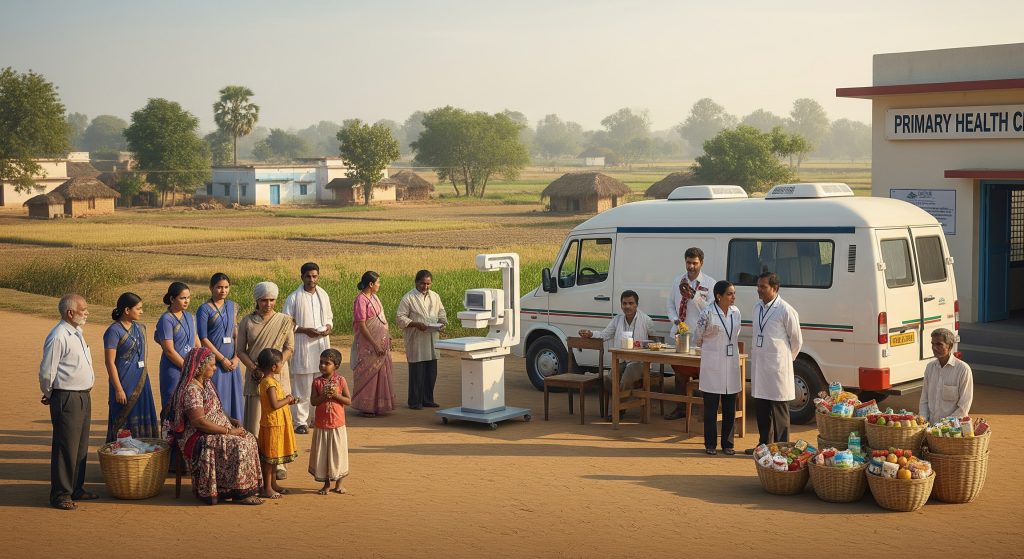
AI assisted chest X ray triage and portable units improve pre test probability in the field. They shorten time to confirmatory testing with CBNAAT or other molecular tools. This helps when sputum is scarce or symptoms are atypical. Sensitivity still depends on the workflow and the operating environment. But coverage improves, especially in outreach camps and prisons.
A practical point. AI flags candidates and the team moves samples the same day. Fewer missed cases. Fewer late starts.
Direct Benefit Transfer Under Nikshay Poshan Yojana
Nutrition support through direct benefit transfer reduces catastrophic costs and stabilises adherence. Payments linked to treatment months encourage clinic touchpoints and refill discipline. In tuberculosis management, small financial buffers change behaviour. Patients choose refills over missing work for a day. That is the difference between completion and default in many districts.
Operationally, two safeguards help:
-
Bank account verification before initiation to prevent delays.
-
Monthly reconciliation that flags missed transfers and triggers outreach.
Community Support Through Nikshay Mitra Programme
Nikshay Mitra pairs patients or cohorts with donors who provide food kits, hygiene supplies, or livelihood support. It fills non medical gaps that affect adherence. For tuberculosis management, community sponsorship adds stability during long regimens. It also brings social accountability. People notice when the village shares responsibility for recovery.
The model is simple. Standardised support baskets. Scheduled deliveries. Documented outcomes.
Clinical Management: Recognition, Diagnosis and Treatment Protocols
Early Warning Signs and TB Symptoms Across Age Groups
Early recognition reduces transmission and drug resistance risk. Typical tuberculosis symptoms include persistent cough beyond two weeks, fever, night sweats, and weight loss. Children may present with poor weight gain, prolonged fever, and reduced playfulness. Older adults may have muted respiratory complaints with predominant fatigue. I look for clusters, not isolated complaints, and then test promptly.
-
High suspicion if there is a household contact with recent disease.
-
Test immediately if cough coexists with fever and weight loss.
-
Do not dismiss atypical patterns in diabetes or HIV coinfection.
Pulmonary vs Extrapulmonary TB Presentations
Pulmonary disease drives transmission and warrants fast triage. Extrapulmonary disease affects nodes, pleura, spine, CNS, or genitourinary sites. Presentations vary. Lymph node disease may show persistent, painless swelling. Spinal disease often shows back pain with constitutional features. CNS disease requires urgent evaluation. In tuberculosis management, site determines sampling strategy and regimen adjustments.
Imaging and site directed sampling complement molecular tests. Repeat sampling is justified when pre test suspicion is high.
Drug-resistant TB Management Guidelines
Drug resistance requires structured care. I start with baseline drug susceptibility testing for first line and key second line agents. Regimens should follow national guidelines, with clear modules for longer or shorter courses, depending on eligibility. Safety monitoring covers QT intervals, renal function, and hepatic enzymes. Pharmacovigilance is not optional. It prevents silent harm.
Two guardrails reduce failure risk:
-
Early switch when resistance patterns emerge or culture remains positive.
-
Adherence technologies plus weekly clinical contact in the first month.
Differentiated Care Model for High-risk Patients
Not all patients need the same cadence of care. High risk groups need more touchpoints. I prioritise frequent follow up for people with undernutrition, HIV, diabetes, pregnancy, or severe anaemia. The model assigns a risk score and an outreach schedule. This is tuberculosis management tuned to context, not a one size regimen.
Two examples clarify the approach:
-
A migrant worker receives biweekly calls and refill packs that cover travel gaps.
-
A pregnant patient receives obstetric coordination and nutrition support from week one.
TB Preventive Treatment Implementation
Preventive treatment cuts future cases in household contacts and other high risk groups. I begin with symptom screening and targeted testing. Eligible contacts start shorter regimens where possible. Adherence improves when visits align with family schedules and school calendars. In tuberculosis management, prevention is the cheapest win that holds year after year.
Track three metrics: initiation rate among eligible contacts, completion rate, and any adverse events. The trio gives a true picture of programme quality.
Vaccination Strategies and Prevention Measures
Adult BCG Vaccination Study Through TB-WIN Platform
BCG for adults is under active study. The TB WIN platform explores feasibility, safety, and immune response signals in defined groups. Evidence remains early. I track protocols closely, because adult strategies could reshape tuberculosis management for high exposure occupations. For now, adult use should remain within research or defined risk policies.
Neonatal BCG Coverage and Effectiveness
Neonatal BCG remains standard, with benefits strongest against severe childhood forms like miliary disease and TB meningitis. Coverage is generally high in public facilities. Gaps persist in home births or settings with access challenges. Delivery room readiness matters. Stock, consent, and documentation must be routine. It is basic, yet it prevents tragic severe disease.
Future TB Vaccine Candidates M72/AS01E Development
M72 AS01E is the candidate most often discussed in technical circles. Early trials suggested protection in infected adults with no active disease. Larger phase studies are planned or underway in multiple regions. As far as current data suggests, timelines depend on enrolment speed and event accrual. If efficacy holds, tuberculosis management may gain a powerful prevention tool for adults.
Policy adoption will require cold chain planning, target group definition, and financing structures. The science is only the first half.
Contact Tracing in Vulnerable Populations
Contact investigation drives early detection. I prioritise households, dormitories, hostels, worksites, and shelters. The method is straightforward. List contacts, screen for tuberculosis symptoms, test promptly, and initiate preventive therapy where indicated. Outreach succeeds when it is convenient. Evening visits help daily wage workers. School sessions capture children efficiently.
Privacy and consent are non negotiable. Trust fuels disclosure. Disclosure fuels control.
Addressing TB Risk Factors and Comorbidities
Effective tuberculosis management addresses the causes behind the cases. Common tuberculosis risk factors include undernutrition, diabetes, HIV, tobacco exposure, and indoor air pollution. Alcohol use and overcrowding also matter to an extent. I use brief screening tools and triage referrals. Treating diabetes aggressively reduces relapse risk. Nutrition support improves energy and adherence.
One operational tactic helps. Integrate TB and NCD clinics one afternoon a week. Patients prefer one visit. Teams coordinate better.
The Road Ahead for TB Elimination in India
Elimination will require relentless basics and selective bets on technology. The basics are unglamorous. Early testing, complete drug susceptibility testing, the right regimen on day one, and documented adherence. The selective bets are targeted. AI supported triage where radiology is scarce, digital adherence tools with behavioural nudges, and preventive treatment at household scale.
What this means for daily tuberculosis management is simple. Keep the loop tight and the records clean. Identify high risk patients early and offer differentiated support. Use direct benefit transfers and community backing to shield against default. And yet, progress is fragile if migration or stockouts disrupt continuity. Resilience depends on district level planning and calm execution.
Two priorities deserve immediate attention:
-
Universal baseline DST with rapid reporting integrated into Nikshay within 48 hours.
-
End to end patient support that spans diagnostics, nutrition, travel, and counselling.
Maybe that is the crux. Tuberculosis management is not a single intervention. It is a system that learns fast and does not blink.
Frequently Asked Questions
What are the most common tuberculosis symptoms requiring immediate medical attention?
Seek care for persistent cough beyond two weeks, fever, night sweats, or rapid weight loss. Cough with blood, chest pain, or breathlessness also warrants urgent testing. In children, poor weight gain with prolonged fever raises suspicion. I advise prompt evaluation when tuberculosis symptoms appear in a household with recent TB.
How effective is the BCG tuberculosis vaccination for adults in India?
BCG is primarily recommended at birth. Adult use remains investigational or policy limited. The TB WIN platform and other studies are assessing adult dosing in select groups. Until stronger evidence emerges, routine adult BCG is not advised. For adults, priority remains early diagnosis, treatment, and preventive therapy for eligible contacts rather than tuberculosis vaccination.
What tuberculosis risk factors are most prevalent in Indian populations?
Undernutrition, diabetes, tobacco exposure, indoor air pollution, overcrowding, and alcohol use feature prominently. HIV coinfection increases risk and severity. Addressing these tuberculosis risk factors through nutrition support, smoking cessation, diabetes control, and ventilation improvements strengthens tuberculosis management end to end.
How has India reduced TB incidence by 21% since 2015?
The decline reflects better case finding, wider molecular testing, treatment adherence support, and integration of private sector notifications. As WHO outlined, incidence moved from 237 to 195 per 100,000 between 2015 and 2023. The programme focus on surveillance, patient support, and timely drug susceptibility results underpins sustained tuberculosis management gains.
What financial support is available through Nikshay Poshan Yojana for TB patients?
Nikshay Poshan Yojana provides monthly nutrition support via direct benefit transfer during treatment. Funds are linked to active treatment months and verified through the Nikshay platform. This buffer helps patients maintain adherence by offsetting food and incidental costs. It is a practical lever inside tuberculosis management, especially for low income households.

