






 We do what's right for you...


Lung Fluid Removal Explained: Causes, Diagnosis, and Prognosis of Pleural Effusion
Dr. Kunal Luthra
Standard advice claims that pleural effusion care begins and ends with a single tap. That is rarely true. Effective care hinges on diagnosing the driver of the fluid, timing the intervention, and choosing the least invasive option that still achieves durable relief. In this guide, I explain how clinicians approach removing fluid from lungs, what pleural effusion causes to consider, how diagnosis proceeds, and what patients can expect afterwards.
Primary Methods for Removing Fluid from Lungs
1. Thoracentesis Procedure
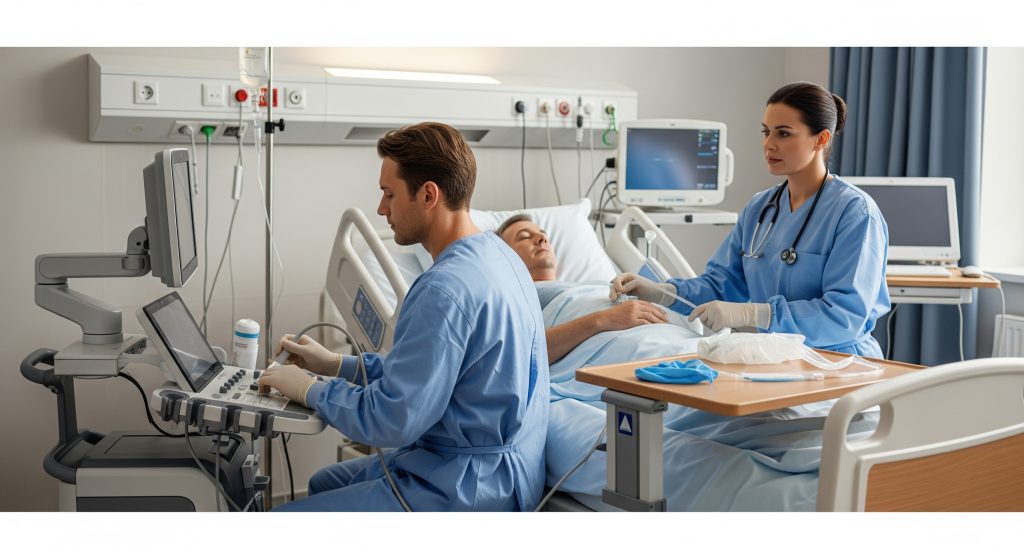
Thoracentesis is the frontline technique for removing fluid from lungs when the goal is rapid relief and diagnostic clarity. I insert a fine needle or a soft catheter through the chest wall into the pleural space to drain the fluid. The thoracentesis procedure is usually done under local anaesthetic with ultrasound guidance for precision and safety. The entire process typically lasts about 15 minutes, as Cleveland Clinic outlines.
In practice, thoracentesis serves two aims. It relieves breathlessness by lowering pressure on the lung. It also provides a fluid sample to characterise the effusion and guide the next decision. I limit the initial volume removed if lung re-expansion risk is high. That judgement depends on symptoms, imaging, and experience.
-
Best for: first presentation, uncertain diagnosis, moderate fluid with significant symptoms.
-
Advantages: quick, minimally invasive, diagnostic and therapeutic in one step.
-
Limitations: fluid may reaccumulate if the cause persists.
2. Chest Tube Drainage
A chest tube provides continuous drainage when a one-off tap is insufficient. I place a small-bore tube between the ribs into the pleural space and connect it to a drainage system. This approach is appropriate for thick, infected, or loculated fluid, and when daily removal is required. It is a stronger option for empyema, complicated pneumonia, or haemothorax.
For many patients, a small-bore tube offers adequate flow with less discomfort than larger tubes. Pain control, tube position, and careful nursing checks matter. Removing fluid from lungs with a chest tube continues until the output drops and the lung remains expanded.
-
Best for: empyema, post-surgical collections, persistent or large effusions.
-
Advantages: sustained drainage, can handle viscous fluid with adjuncts.
-
Limitations: hospital stay, infection risk, need for secure fixation and monitoring.
3. Pleurodesis Treatment
Pleurodesis is designed to prevent recurrence by closing the pleural space. After draining the fluid, I instill a sclerosing agent such as sterile talc through a chest tube or during thoracoscopy. The scar formation fuses the lung to the chest wall and removes the space where fluid collects.
This is not usually the first step for removing fluid from lungs. It is considered when the effusion recurs and when the lung re-expands. Pain control and pre-procedure imaging are important. The effect can be durable if the underlying process is controlled.
-
Best for: recurrent malignant effusions with expandable lung.
-
Advantages: reduces recurrence, can improve quality of life.
-
Limitations: requires good lung expansion, potential fever and pain after instillation.
4. Video-Assisted Thoracoscopic Surgery
Video-assisted thoracoscopic surgery (VATS) allows direct visual access to the pleural space. I use small ports and a camera to break loculations, decorticate peel, obtain biopsies, and achieve pleurodesis. VATS is precise and versatile, though it is more invasive than a bedside tap.
In practice, I reserve VATS for trapped lung, complex empyema, or when pleural biopsy is essential. It also allows thorough removal of thick fibrin that blocks drainage. For selected patients, VATS offers faster resolution and a lower chance of recurrence.
-
Best for: trapped lung, multiloculated effusions, need for pleural biopsies.
-
Advantages: direct visual control, combined interventions in one session.
-
Limitations: general anaesthesia, theatre time, short hospital admission.
5. Indwelling Pleural Catheter
An indwelling pleural catheter (IPC) is a soft tunnelled tube left in place for intermittent drainage at home. I consider it for malignant effusions that recur quickly or when pleurodesis is not feasible. Patients or carers drain at regular intervals using vacuum bottles after brief training.
For many, an IPC reduces hospital visits and puts control back in daily life. Removing fluid from lungs at home helps manage breathlessness and maintains activity. Spontaneous pleurodesis may occur over time as drainage continues.
-
Best for: recurrent malignant effusions, patients prioritising outpatient control.
-
Advantages: symptom control at home, fewer inpatient days, flexible schedule.
-
Limitations: catheter care burden, small infection and blockage risks.
When Each Procedure Is Recommended
Choice depends on the cause, the rate of reaccumulation, lung expandability, and patient preference. For a first episode with diagnostic uncertainty, thoracentesis is my initial step. For thick or infected fluid, I escalate to chest tube drainage with appropriate antibiotics. For recurrent malignant effusion with expandable lung, both IPC and pleurodesis are appropriate, as the guideline panel from ATS/STS/STR recommends.
If the lung is trapped, pleurodesis will not succeed. In that case, an IPC or VATS decortication is more suitable. Patient values matter. Some prefer fewer procedures. Others prefer avoiding a long-term catheter. Removing fluid from lungs is not a single pathway. It is a tailored plan.
Success Rates and Effectiveness
Thoracentesis provides immediate symptom relief in a large majority of cases. Chest tubes resolve complicated effusions when supported by targeted therapy and, if needed, fibrinolytics. Pleurodesis can prevent recurrence in many malignant effusions if the lung expands well. IPCs deliver reliable outpatient control with acceptable complication rates.
Effectiveness is not only technical. It is also clinical. The best outcome aligns drainage with the disease course and the patient’s goals. When the cause is controlled, removing fluid from lungs is faster, safer, and more durable.
|
Method |
Typical Use Case |
Setting |
|---|---|---|
|
Thoracentesis |
Initial relief and diagnosis |
Bedside, day case |
|
Chest Tube |
Empyema, large or persistent effusions |
Ward or ICU |
|
Pleurodesis |
Recurrent malignant effusion with expandable lung |
Ward or theatre |
|
VATS |
Trapped lung, loculations, biopsy needs |
Operating theatre |
|
IPC |
Outpatient control of recurrent effusion |
Home-based after insertion |
Understanding Pleural Effusion Causes and Risk Factors
Common Medical Conditions Leading to Pleural Effusion
Most effusions arise from heart failure, malignancy, pneumonia, pulmonary embolism, or liver and kidney diseases. Autoimmune conditions and pancreatitis feature less often. Certain drugs can contribute. The pathway differs, but the result is the same. Fluid collects in the pleural space and compresses the lung.
Determining pleural effusion causes matters because treatment hinges on the mechanism. Diuretic therapy may resolve a transudate from heart failure. Antibiotics and drainage are needed for empyema. Cancer related effusions demand oncological planning. Removing fluid from lungs without addressing the driver will not hold for long.
Transudative vs Exudative Effusions
I divide effusions into transudates and exudates using Light’s criteria. This is a classic diagnostic set in respiratory medicine. Transudates stem from systemic pressure or protein shifts, often heart or liver disease. Exudates reflect local inflammation, infection, malignancy, or pulmonary embolism.
-
Transudate: typically low protein, low LDH relative to serum.
-
Exudate: higher protein or LDH, cellular content more prominent.
This distinction guides next steps. It directs the search for pleural effusion causes and predicts recurrence risk. It also shapes whether removing fluid from lungs alone will be sufficient.
Age-Specific Risk Factors
Children most often develop effusions due to pneumonia and parapneumonic processes. Older adults experience higher rates linked to malignancy and heart failure. Malignant pleural effusions carry a higher mortality risk in older adults, as PubMed reports.
Across ages, comorbidity counts. Frailty increases procedure risk and recovery time. My threshold for hospital observation is lower in the very young and the very old. Removing fluid from lungs is adjusted accordingly.
Environmental and Lifestyle Factors
Smoking increases lung and pleural disease risk and may complicate recovery. Occupational exposures such as asbestos raise the chance of pleural pathology. High salt intake can worsen fluid retention in heart failure. Alcohol misuse is linked with pancreatitis and liver disease, both associated with effusions.
These factors do not act in isolation. They amplify existing vulnerabilities. Addressing them reduces the need for repeated removing fluid from lungs and improves long-term stability.
Identifying Early Warning Signs
Shortness of breath on exertion is common. Chest tightness, reduced exercise tolerance, and a dry cough often follow. Some describe shoulder tip pain from diaphragmatic irritation. Fever suggests infection. Unintentional weight loss points toward malignancy.
Early recognition matters. Quick assessment can prevent large collections that demand more invasive steps. It also improves the odds that removing fluid from lungs achieves durable relief.
Diagnostic Process and Treatment Timeline
Recognising Pleural Effusion Symptoms
I look for pleural effusion symptoms that match the history and the risk factors. Breathlessness that worsens when lying flat suggests significant volume. Chest pain that is sharp and pleuritic points to inflammation. Fatigue and reduced stamina are common. Night sweats and fever shift probability toward infection.
These symptoms are not unique to effusions. They prompt a structured workup. Removing fluid from lungs only follows once the diagnosis is clear.
Physical Examination Findings
On the affected side, percussion is dull, breath sounds are reduced, and vocal resonance is diminished. With large volumes, the trachea may shift. The chest wall can show reduced expansion. In heart failure, peripheral oedema and raised jugular venous pressure may coexist.
These signs guide urgency and initial imaging. They also help estimate the safest site for a tap. I still confirm with ultrasound before removing fluid from lungs.
Imaging Tests for Diagnosis
A chest radiograph detects moderate to large effusions with classic meniscus signs. Ultrasound confirms presence, maps the safe window, and identifies septations. CT scan clarifies complexity, assesses pleura, and searches for associated lung lesions. I avoid delaying care with excessive imaging if symptoms are severe.
Ultrasound is now routine before a needle insertion. It improves precision and reduces complications. That is not opinion. It is practice shaped by repeated evidence and real-world outcomes.
Laboratory Analysis of Pleural Fluid
Once a sample is obtained, I analyse protein, LDH, glucose, pH, cytology, cell count, and cultures. I may add amylase, triglycerides, ADA, or microbiology panels based on suspicion. This is where Light’s criteria classify transudates and exudates.
Cytology helps identify malignant cells. Low glucose and low pH suggest infection or malignancy. High triglycerides point toward chylothorax. These data refine the plan for removing fluid from lungs and for treating the cause.
Treatment Decision Pathway
The decision pathway follows a simple structure that masks complex judgment. First, define urgency and severity. Second, identify likely aetiology. Third, choose the least invasive step that solves the problem today and does not worsen tomorrow.
-
Stable, small, transudative effusion: treat the cause first, monitor closely.
-
Moderate symptomatic effusion: perform thoracentesis for relief and diagnosis.
-
Complicated or loculated effusion: place a chest tube and escalate care.
-
Recurrent malignant effusion with expandable lung: pleurodesis or IPC.
-
Trapped lung or diagnostic uncertainty: consider VATS and pleural biopsy.
This is the scaffolding. Within it, I adjust to patient priorities, comorbidities, and response to therapy. Removing fluid from lungs is part of a broader, iterative plan.
Expected Timeline from Diagnosis to Recovery
For an uncomplicated thoracentesis, assessment, procedure, and discharge can occur within a day. For chest tubes, several days are typical while the lung re-expands and infection is treated. Pleurodesis requires a short admission and careful analgesia for several days. IPC insertion is usually a day-case with trained home drainage thereafter.
Recovery is not identical across cases. It depends on cause control and baseline function. Roughly speaking, symptom relief is immediate with fluid removal, while stamina returns over days. When the cause remains active, recurrence is likely, and the timeline extends.
Recovery and Long-term Prognosis
Immediate Post-Procedure Care
After thoracentesis, I observe for cough, chest discomfort, and oxygen changes. A brief chest film may be obtained depending on risk. I advise relative rest for 24 hours and hydration within usual limits. After chest tube or pleurodesis, nursing checks focus on drainage, air leaks, pain control, and early mobilisation.
Clear instructions help. Patients should know how to position for comfort, how to support a cough, and when to alert the team. Removing fluid from lungs is only step one. Safe recovery is step two.
Managing Potential Complications
Complications include pneumothorax, bleeding, infection, and re-expansion pulmonary oedema. Indwelling catheters require ongoing care to prevent blockage and infection, as Physiopedia warns. Education and routine checks lower these risks, and they shorten hospital stay.
If breathlessness worsens or the drain suddenly stops, I reassess for tube displacement or lung injury. Fever or purulent output prompts cultures and targeted antibiotics. With pleurodesis, I assess for respiratory distress and visceral pain and escalate analgesia.
-
Secure all connections and dressings.
-
Record drainage volume and character daily.
-
Escalate promptly if oxygen levels fall or pain is uncontrolled.
When managed proactively, the overall complication burden remains acceptable. The trade-off is clear. Persistent effusion harms quality of life more than the measured risks of removing fluid from lungs.
Factors Affecting Prognosis
Prognosis reflects the underlying disease. Heart failure related effusions often improve with optimal therapy. Malignant effusions signal advanced disease to an extent, yet symptom control can still be excellent. Nutritional status, mobility, and pulmonary reserve also influence outcomes.
Timely diagnosis improves survival where infection or embolism is the cause. Recurrent need for removing fluid from lungs may indicate inadequate control of the driver. That is a signal to revisit the treatment plan, not a sign to give up.
Follow-up Monitoring Schedule
I schedule early follow-up within one to two weeks to review symptoms, drainage changes, and imaging if indicated. Home IPC patients need a defined plan for drain frequency and aseptic technique. Consistent monitoring after thoracentesis reduces the chance of missed complications, as Cleveland Clinic stresses.
Subsequent reviews track cause control. For heart failure, that means medication optimisation and salt guidance. For malignancy, it means coordination with oncology and palliative teams. The goal is stable breathing, fewer procedures, and better activity levels.
Lifestyle Modifications for Prevention
Lifestyle does not replace medical therapy, yet it supports it. I counsel salt restriction for fluid-prone conditions, weight management, and smoking cessation. Hydration should be appropriate for cardiac or renal status, and activity should be resumed as tolerated.
-
Reduce dietary salt to limit fluid retention.
-
Maintain adequate but not excessive hydration based on clinician advice.
-
Resume light physical activity to improve lung mechanics.
These measures align with practical guidance from National Jewish Health. They reduce recurrence pressure and support recovery after removing fluid from lungs.
When to Seek Emergency Care
Immediate care is required for severe breathlessness at rest, chest pain, new confusion, cyanosis, or rapid swelling at the drain site. High fever with rigors warrants urgent review. Catheter blockage with rising breathlessness needs prompt intervention.
Practical rule of thumb. If symptoms escalate faster than usual, seek help. Removing fluid from lungs is meant to reduce breathlessness, not cause it.
Conclusion
Effective management of pleural effusion depends on matching the intervention to the cause, the lung mechanics, and the patient’s priorities. Thoracentesis offers quick relief and diagnostic clarity. Chest tubes and VATS solve complex cases. Pleurodesis and IPCs prevent or manage recurrences. Across all options, removing fluid from lungs achieves its promise when the underlying driver is treated and when aftercare is deliberate. That is the point. Good breathing, fewer procedures, and a plan that holds.
Frequently Asked Questions
How painful is the thoracentesis procedure?
Most patients describe pressure and brief discomfort rather than sharp pain. Local anaesthetic numbs the skin and deeper tissues. Ultrasound guidance helps avoid sensitive structures and shortens the time required. Removing fluid from lungs with gentle technique reduces discomfort further.
Can pleural effusion recur after treatment?
Yes. If the cause persists, fluid can return. Pleurodesis or an IPC lowers recurrence in malignant effusions, provided the lung expands. For transudates, optimising heart or liver care reduces the chance of repeated removing fluid from lungs.
What are the risks of leaving fluid in the lungs untreated?
Persistent fluid can cause disabling breathlessness, infection, trapped lung, and reduced exercise capacity. Infected effusions may form empyema and require surgery. Delays make later procedures more complex. Early evaluation limits those risks.
How long does recovery take after fluid removal?
After a straightforward thoracentesis, many feel better within hours and resume light activity within a day. Chest tube or pleurodesis recovery extends over several days due to pain and drainage needs. Return to baseline activity depends on cause control and fitness.
Is pleural effusion always a sign of serious illness?
Not always. Heart failure related transudates often respond to medical therapy. That said, new unilateral effusions in adults warrant careful evaluation. The priority is to define the cause, then plan removing fluid from lungs appropriately.
Can children develop pleural effusion differently than adults?
Children more often develop effusions from pneumonia and parapneumonic infection. Management favours antibiotics, image-guided drainage when needed, and close observation. Recovery is usually brisk when infection is treated promptly and drainage is effective.

