






 We do what's right for you...


Stroke Rehabilitation at Home: 7 Steps to a Faster Recovery
Dr. Ali Haider Khan
Conventional advice suggests waiting for clinic sessions to drive progress. That approach wastes precious time. Home-based stroke rehabilitation, delivered with structure and consistency, can accelerate gains and protect hard-won function. I will outline a precise plan that respects clinical principles and uses everyday tools. It is practical. It is safe when supervised. And it is designed to help recovery continue between appointments.
7 Essential Steps for Effective Home-Based Stroke Rehabilitation
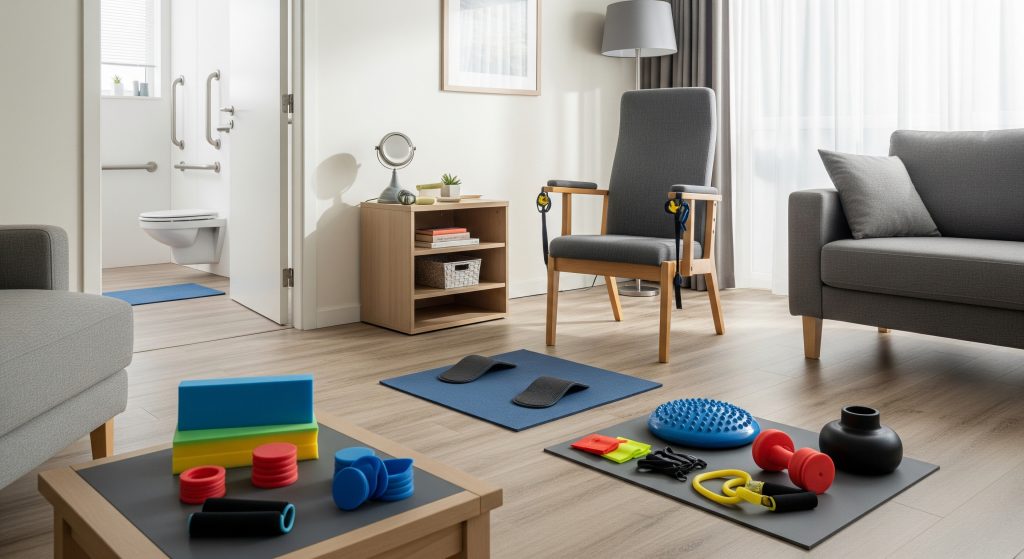
1. Set Up a Safe and Accessible Home Environment
I start by removing friction and risk. A well-prepared space enables frequent, high-quality practice, which stroke rehabilitation depends on. Focus on clear walkways, secure handholds, and predictable surfaces.
-
Declutter corridors and rooms. Cords and rugs create unnecessary trip risks.
-
Install grab rails near the toilet and in the shower. Add a non-slip mat.
-
Adjust lighting to reduce shadows. A brighter bathroom often prevents slips.
-
Set chair height so standing is manageable. Aim for knees just below hip level.
-
Keep frequently used items at waist height. Avoid bending and reaching overhead.
I often suggest a simple home safety table to prioritise actions.
|
Area |
Primary Fix |
|---|---|
|
Bathroom |
Grab rails, shower chair, non-slip mat |
|
Bedroom |
Bed rail, clear path to toilet, night light |
|
Stairs |
Two handrails, contrasting step edges |
|
Kitchen |
Frequently used items at mid-shelf height |
2. Establish a Daily Exercise Routine with Repetitive Practice
Repetition drives neuroplastic change. I prescribe small, frequent sets rather than one long session. This pattern supports motor relearning without excessive fatigue.
-
Choose three to five core movements. For example, sit to stand, heel raises, and shoulder flexion.
-
Perform short sets, two to three times per day. Keep notes in a simple log.
-
Use metronome pacing when form drifts. Consistent rhythm improves coordination.
-
Progress using the 2 by 2 rule. If two extra repetitions are comfortable twice, increase the target.
This is the bedrock of stroke rehabilitation at home. Consistency matters more than intensity early on.
3. Focus on Task-Oriented Training for Real-World Activities
Task specificity speeds transfer to daily life. I anchor practice around activities that matter. Dressing, stair climbing, and safe kitchen tasks are common priorities.
-
Practice sit to stand from your usual chair. Then add reach, pivot, and walk.
-
Rehearse step-ups using a single step. Start with rails, then reduce support.
-
Simulate meal preparation. Work on safe reaching and item transport.
Each drill should resemble the real context. That is how stroke rehabilitation converts practice into independence.
4. Implement Passive Range-of-Motion Exercises for Paralyzed Limbs
Where active movement is limited, I protect joints with gentle passive range-of-motion. This preserves tissue length, reduces pain, and prepares the limb for later strength work.
-
Shoulder: flexion, external rotation, and abduction within pain-free range.
-
Elbow and wrist: slow flexion-extension with supported forearm.
-
Fingers: open and close the hand, one finger at a time, then together.
-
Ankle: dorsiflexion with knee bent and straight to target different structures.
Two to three sets daily is usually appropriate. Move slowly. Stop if pain or spasticity increases. This is foundational stroke rehabilitation during the early phase.
5. Incorporate Mirror Therapy and Fine Motor Skill Training
Mirror therapy uses visual feedback to stimulate motor areas. I position a mirror at midline, hide the affected limb, and move the healthy limb while watching the reflection.
-
Start with simple open and close movements. Progress to wrist and forearm tasks.
-
Limit sessions to 10 to 15 minutes to manage fatigue and maintain focus.
Pair this with fine motor drills. Peg boards, coins, and button hooks build dexterity. Short, focused practice works best. Over time, these stroke rehabilitation techniques can unlock meaningful hand function.
6. Use Appropriate Stroke Rehabilitation Equipment
Equipment should serve a clear purpose. I prioritise items that improve safety, increase repetitions, or provide measurable feedback.
-
TheraBands for graded resistance and controlled strengthening.
-
Ankle weights for targeted lower limb loading during sit to stand.
-
Foam balance pads to challenge proprioception safely.
-
Hand therapy putty and grip trainers for graded hand work.
-
Active pedal exercisers for low-impact endurance training.
Choose simple, durable pieces first. The right stroke rehabilitation equipment can raise training volume without adding clinical risk.
7. Build a Strong Support Network with Caregiver Involvement
Caregivers amplify consistency. I brief them on safe assistance, cueing methods, and what to avoid. Clear boundaries protect everyone.
-
Agree on a daily schedule and a short checklist. Keep it visible.
-
Use calm, single-step cues. Demonstrate once, then guide lightly.
-
Monitor fatigue, mood, and pain. Adjust workload when needed.
Stroke rehabilitation succeeds when the plan survives real life. A reliable support network makes that possible.
Comprehensive Stroke Rehabilitation Physiotherapy Programmes
Upper Limb Exercises for Arm and Hand Recovery
For the upper limb, I combine proximal control with distal precision. Start with scapular setting, shoulder flexion, and supported reaching. Add forearm rotation and wrist control as form stabilises.
-
Table slides with a cloth to reduce friction and enable longer reaches.
-
Supported shoulder external rotation using a light band.
-
Wrist extension holds with light putty squeezes between sets.
-
Finger opposition drills and coin translation across a table.
Integrate bilateral tasks to enhance symmetry. This style of stroke rehabilitation physiotherapy maintains structure while encouraging natural movement.
Lower Limb Strengthening for Walking and Balance
Walking quality depends on strength, timing, and confidence. I address all three with a simple progression.
-
Sit to stand from a standard chair. Increase repetitions and reduce hand use.
-
Marching in place with support. Emphasise hip lift and trunk control.
-
Heel raises at the counter. Add a hold at the top for control.
-
Step-ups to a 10 cm platform. Focus on knee alignment and slow descent.
Add balance challenges on a stable surface. Narrow stance, eyes forward, and soft knees. This integrates safely into daily stroke rehabilitation.
Core Stability Training for Better Posture and Movement
Efficient movement requires a steady base. I train core stability with low-risk, high-control drills.
-
Seated pelvic tilts with breath control. Ten slow repetitions.
-
Bridging with a hold, if safe. Start with both feet, then staggered stance.
-
Side sitting transitions for trunk rotation and weight shift.
Better posture reduces energy cost and frees the limbs. Stroke rehabilitation benefits directly from this foundation.
Speech and Cognitive Rehabilitation Exercises
Motor gains stall if communication and cognition are ignored. I encourage daily speech practice and short cognitive blocks.
-
Reading aloud for diction and breath control. Short paragraphs are sufficient.
-
Word-finding grids and category naming for lexical retrieval.
-
Dual-task drills, such as counting steps while walking safely with support.
Sessions should remain brief and focused. This keeps overall stroke rehabilitation balanced and sustainable.
Essential Equipment and Adaptive Tools for Home Recovery
Mobility Aids and Gait Training Devices
Choose the lightest device that ensures safe gait. I often begin with a frame, then progress to a stick as control improves.
-
Wheeled frames reduce lifting and support continuous stepping.
-
Quad sticks provide stable support with a smaller footprint.
-
Ankle-foot orthoses control foot drop and improve toe clearance.
Fit and instruction matter more than brand. Appropriate equipment expands the range of stroke rehabilitation tasks possible at home.
Hand and Finger Rehabilitation Tools
Hand recovery requires graded resistance and precise feedback. I select simple tools first.
-
Therapy putty with two resistance levels to allow progression.
-
Spring-loaded grippers for measurable squeeze practice.
-
Finger extension bands to balance flexor dominance.
A structured kit supports daily stroke rehabilitation techniques without overwhelming the user.
Daily Living Aids for Independence
Adaptive devices reduce effort and create safe practice opportunities. This supports both confidence and capacity.
-
Button hooks and zipper pulls for dressing with one hand.
-
Non-slip mats and raised edges on trays to stabilise items.
-
Long-handled reachers for floor and shelf retrieval.
-
Kettle tippers and plate guards for safer meal preparation.
Each aid should solve a specific barrier. Integrated wisely, these tools reinforce stroke rehabilitation during routine tasks.
Technology-Based Solutions and Apps
Technology can extend therapy beyond the session. I use it for reminders, feedback, and motivation.
-
Metronome and timer apps to structure repetitions and rest periods.
-
Home exercise apps with video prompts for correct technique.
-
Wearable step counters to support simple activity targets.
Do not overcomplicate the stack. A small toolkit supports consistent stroke rehabilitation without distraction.
Maximising Recovery Through Evidence-Based Techniques
Understanding Neuroplasticity and Brain Rewiring
Neuroplasticity describes the brain’s ability to reorganise and form new connections. It underpins meaningful recovery.
Neuroplastic change is experience dependent. Repetition, attention, and task relevance drive the strongest signals.
I design practice that is frequent, focused, and personally relevant. This is how stroke rehabilitation turns effort into measurable change.
Optimal Frequency and Duration of Exercise Sessions
Short, frequent sessions outperform infrequent marathons. I favour 20 to 30 minute blocks, two or three times daily, with rest.
-
Warm up for five minutes. Gentle range and posture setting.
-
Targeted practice for ten to fifteen minutes. One or two priorities only.
-
Cool down and log progress. Note pain, fatigue, and confidence.
Intensity must match capacity. Progress the workload by small increments. This rhythm sustains stroke rehabilitation over months.
Tracking Progress and Adjusting Treatment Plans
What gets measured improves. I use simple metrics and brief tests to guide progression.
-
Repetition counts for key tasks, such as sit to stand.
-
Timed Up and Go, recorded monthly, if safe and appropriate.
-
Grip strength using a hand dynamometer, where available.
Trends matter more than single scores. When progress stalls, I change one variable at a time. Stroke rehabilitation is iterative by design.
Managing Post-Stroke Depression and Motivation
Mood affects adherence, effort, and outcomes. I integrate support from the start.
-
Set modest, specific goals. For example, stand and prepare tea safely.
-
Use visual logs to show gains. Small wins reduce frustration.
-
Schedule rest and enjoyment. Recovery is a marathon, not a sprint.
Clinical support may be necessary to manage depression. This is part of responsible stroke rehabilitation, not an optional extra.
Taking Control of Your Stroke Recovery Journey
Control emerges from clarity and routine. I recommend a weekly rhythm that balances practice, rest, and review. Keep the home environment safe, use concise checklists, and prioritise meaningful tasks. Invest in a small set of tools that unlock more repetitions. Protect joint health while building strength and skill. Track what changes and adjust calmly.
Stroke rehabilitation is cumulative work. It is basically consistent practice, smart progression, and a reliable support network. With that trio in place, recovery moves from chance to choice.
Frequently Asked Questions
How many hours per day should I dedicate to stroke rehabilitation exercises at home?
I advise two to three focused blocks of 20 to 30 minutes. Add short task rehearsals during daily activities. Quality beats volume. This structure supports durable stroke rehabilitation without excessive fatigue.
Can stroke survivors recover movement after 6 months of rehabilitation?
Yes, improvement can continue beyond six months. Gains are often slower, but targeted practice still helps. The key is specific goals and steady workload. Stroke rehabilitation remains effective with consistent effort.
What is the most effective equipment for hand rehabilitation after stroke?
A two-level putty set, a spring gripper, and finger extension bands cover most needs. Add a peg board for dexterity. This simple kit supports structured stroke rehabilitation equipment use at home.
When should I involve an occupational therapist in home rehabilitation?
Involve an occupational therapist early when daily tasks feel unsafe or inefficient. They optimise home setups and train practical skills. Their input strengthens task-specific stroke rehabilitation.
How can caregivers prevent burnout whilst supporting stroke recovery?
Agree on clear roles, limits, and respite time. Use checklists to streamline tasks. Share updates with clinicians to avoid uncertainty. Sustainable caregiving protects both the person and the stroke rehabilitation plan.
Is task-oriented training better than traditional repetitive exercises?
Both are necessary. Repetition shapes movement quality. Task-oriented practice ensures transfer to real life. I blend the two so stroke rehabilitation builds capacity and independence together.
What safety modifications are essential for stroke rehabilitation at home?
Install grab rails and non-slip mats, improve lighting, and clear walkways. Fit stable chairs and ensure accessible storage. These changes create a reliable base for stroke rehabilitation and daily function.

