






 We do what's right for you...


Signs, Symptoms, and Poisoning Treatment: A Family Health Explainer
Dr. Rajesh Kumar Mishra
Old advice focuses on waiting for symptoms to declare themselves. That delay costs precious minutes. I take a different view. Early recognition, decisive poisoning first aid, and a clear plan for poisoning treatment prevent avoidable harm. This guide sets out warning signs, immediate actions, and hospital pathways, so a household or carer can respond with calm precision.
Common Types of Poisoning and Their Warning Signs
1. Food Poisoning Symptoms
Foodborne illness presents across a spectrum. I look first for gastrointestinal upset, dehydration risk, and fever. As Mayo Clinic notes, symptoms span upset stomach, loose stools, vomiting, and they can start within hours or days after exposure. Timing guides suspicion. A rapid onset after a picnic sandwich points one way. A 24 to 48 hour delay after a restaurant meal points another.
Specific pathogens create distinct patterns. Salmonella often drives diarrhoea with fever. E. coli can add severe cramps. Listeria may appear milder at first, then worsen in vulnerable people. For very fast onset with severe vomiting, I consider Staphylococcus aureus toxins. As Food Poisoning and Staphylococcus aureus Enterotoxins reports, symptoms typically appear in 1 to 6 hours with abrupt nausea and cramps.
-
Red flags: blood in stool, signs of dehydration, persistent high fever.
-
Household pattern: several people ill after the same meal increases likelihood.
-
Vulnerable groups: pregnancy, infants, older adults, and those immunocompromised.
For mild cases, hydration and rest may suffice. But still, severe pain or neurological symptoms demand urgent poisoning treatment. A stool culture may be warranted if symptoms persist or if there is high risk.
2. Chemical Poisoning Indicators
Chemical exposures vary by route and toxin. Inhalation may cause cough, breathlessness, or dizziness. Ingestion often causes nausea and abdominal pain. Skin contact can cause burns or rashes. Neurotoxins add confusion or seizures. As WHO sets out, chronic lead exposure in children can slow growth and impair learning, with abdominal pain and irritability as common signs.
Here is how I triage in practice:
-
Airway and breathing first. Any wheeze or stridor suggests inhalation risk.
-
Odour on clothes or hair suggests volatile solvents or pesticides.
-
Delayed headaches after fuel use point to combustion gases.
Some chemicals require immediate specialist input. Cyanide, strong acids, alkalis, or hydrocarbons fit this category. I initiate poisoning first aid and seek emergency care at once. Early poisoning treatment improves outcomes when a specific antidote exists.
3. Medication Overdose Signs
Medication overdose ranges from accidental double dosing to deliberate ingestion. Pattern recognition helps. Sedatives and opioids cause drowsiness, slow breathing, and pinpoint pupils. Paracetamol may appear benign early, then damage the liver. Anticholinergics cause dry mouth, dilated pupils, and agitation. Beta blockers may drop pulse and blood pressure.
-
Red flags: reduced consciousness, breathing under 8 per minute, seizures.
-
Clues: empty blisters, time of ingestion, and pill counts.
-
Devices: wearables or smart pill boxes can confirm dose timing.
I escalate quickly if there is uncertainty. Early blood tests and targeted poisoning treatment reduce complications. For unknown tablets, a photo of the packaging often accelerates care.
4. Alcohol Poisoning Symptoms
Severe alcohol exposure depresses the central nervous system. I look for slow breathing, vomiting, hypothermia, and unresponsiveness. Cool skin and low glucose also occur. Blue lips or pauses in breathing require urgent help. Confusion that deepens to stupor is another warning sign.
-
Breathing rate below 8 per minute is dangerous.
-
Repeated vomiting risks aspiration and pneumonia.
-
Concomitant drugs increase sedation and cardiac risk.
Alcohol poisoning treatment focuses on airway protection, glucose checks, warming, and IV fluids. I also consider mixed ingestion. Carbon monoxide from poorly ventilated heaters can mimic alcohol effects and worsen outcomes. Precision matters here.
5. Carbon Monoxide Poisoning
Carbon monoxide binds haemoglobin and blocks oxygen delivery. Headache, dizziness, and nausea come first. Then confusion and collapse. Symptoms ease outdoors. Multiple people ill in the same room is a strong clue.
-
Key checks: heater use, indoor charcoal, car in garage, faulty flues.
-
Pulse oximetry can be misleading. A CO monitor or carboxyhaemoglobin test is needed.
-
Children and pregnant people are more susceptible.
Initial poisoning treatment is 100 percent oxygen by mask. I then assess for hyperbaric therapy depending on severity. Timely identification prevents delayed neurological injury.
6. Plant and Mushroom Poisoning
Plants and fungi cause diverse effects. Some bring early vomiting. Others cause delayed liver failure. Amanita species can present after a quiet period, then escalate abruptly. Decorative plants may irritate skin or mouth.
-
Collect a sample or photo, if safe. Identification guides management.
-
Onset after foraging requires urgent medical advice.
-
Children may chew leaves or berries. Small amounts can still harm.
When uncertain, I advise conservative care and monitoring. Specialist advice supports targeted poisoning treatment. Early labs help detect evolving organ injury.
Immediate Poisoning First Aid Steps
Critical Actions Within First 5 Minutes
The first five minutes shape the outcome. I follow a clear sequence.
-
Ensure safety. Remove the person from exposure. Open windows for fumes.
-
Check response, airway, breathing, and circulation. Call emergency services if compromised.
-
Rinse skin or eyes with cool running water for at least 15 minutes if exposed.
-
Remove contaminated clothing and bag it. Avoid self exposure.
-
Do not give food or drink unless advised. Keep the person still and warm.
This is the core of poisoning first aid. It buys time. It also sets up definitive poisoning treatment.
What NOT to Do During Poisoning
-
Do not induce vomiting. This increases aspiration risk and caustic injury.
-
Do not neutralise acids with alkalis, or the reverse. Heat and gas can worsen harm.
-
Do not apply ointments to chemical burns before irrigation.
-
Do not wait for symptoms of poisoning to worsen before seeking advice.
-
Do not assume alcohol clears toxins. It can increase sedation and risk.
These safeguards limit secondary harm. They also avoid delays to appropriate poisoning treatment.
Gathering Essential Information for Medical Help
Clinicians work faster with clear input. I capture concise facts while staying calm.
|
Item |
Details to provide |
|---|---|
|
Substance |
Name, strength, and form. Photo of label or plant if possible. |
|
Amount |
Estimated dose or volume. Count remaining tablets or measure missing fluid. |
|
Time |
Clock time of exposure. Note onset and progression of symptoms. |
|
Route |
Ingestion, inhalation, skin, or eye. |
|
Person |
Age, weight, medical conditions, medicines, allergies. |
|
Interventions |
Actions already taken. For example, irrigation or removing clothing. |
This snapshot shortens triage and directs poisoning treatment. It is basically the case note a toxicologist wants to see.
When to Call Emergency Services
I call immediately if any of the following apply.
-
Breathing difficulty, blue lips, or noisy breathing.
-
Unconsciousness or repeated seizures.
-
Ingestion of a known high risk toxin or unknown quantity.
-
Children, pregnancy, or significant comorbidity with exposure.
-
Deliberate self harm or suspected mixed substances.
Early transfer enables airway support, antidotes, and monitoring. That is effective poisoning treatment in motion.
Specific Poisoning Treatment Methods
Oral Poisoning Treatment Protocols
For ingested toxins, I prioritise airway protection and haemodynamic stability. Then I consider decontamination and antidotes. The choice depends on timing and substance.
-
Activated charcoal: useful within one hour for many drugs. Not for caustics or hydrocarbons.
-
Gastric lavage: rarely indicated. Consider only in specialist settings.
-
Whole bowel irrigation: for sustained release tablets or body packers.
Antidotes matter when available. N acetylcysteine treats paracetamol toxicity. Naloxone reverses opioids. Atropine and pralidoxime treat organophosphates. I use checklists to avoid delay. A short example helps. A teenager presents two hours after 30 paracetamol tablets. I order urgent paracetamol levels, start N acetylcysteine, monitor liver tests, and arrange observation. That is targeted poisoning treatment.
I also monitor for complications. Hypoglycaemia, arrhythmia, and aspiration pneumonia can evolve. An ECG and serial bloods are routine. It is essentially structured vigilance.
Inhaled Poison Response Procedures
For inhaled toxins, oxygen and ventilation come first. Removal from exposure is immediate. I provide high flow oxygen via mask. Bronchodilators help if there is bronchospasm. Nebulised saline may soothe irritation.
-
Consider carbon monoxide, cyanide, and chlorine in fires.
-
Use a CO monitor if available. Do not trust standard pulse oximetry.
-
Cyanide kits exist in specialist settings. Timing is critical.
Imaging may reveal inhalation injury after fires. Airway oedema can be delayed. I watch for hoarseness and stridor. Poisoning treatment here is supportive and anticipatory.
Skin Contact Poison Management
Chemical skin exposure benefits from speed. I irrigate with copious water for at least 15 minutes. Remove jewellery and contaminated garments. Check hidden skin folds.
-
For alkalis and acids, irrigation outweighs any neutralisation attempt.
-
For phenol or hydrocarbons, follow local protocols. Water may spread some agents.
-
For pesticides, thorough washing lowers systemic absorption.
After irrigation, I document burn depth and area. Blistering implies significant contact. Tetanus status needs review. Analgesia supports comfort. If systemic symptoms appear, escalate poisoning treatment without delay.
Eye Exposure Treatment Steps
Ocular exposures demand uninterrupted irrigation. I start immediately with isotonic solution or tap water. I aim for at least 15 minutes. For alkali burns, I continue longer and recheck pH if equipment exists.
-
Remove contact lenses after the first flush. Do not delay irrigation to search for them.
-
Avoid topical neutralisers. They are unsafe.
-
Urgent ophthalmology input for persistent pain, blurred vision, or corneal hazing.
This is disciplined poisoning treatment for eyes. Speed, volume, and reassessment determine outcomes.
Hospital Treatment Approaches
Hospital care follows the ABC approach. Airway, breathing, and circulation are reassessed. I use monitors for SpO2, ECG, and blood pressure. Blood tests include electrolytes, ABG, and targeted levels. For severe cases, ICU review is prudent.
-
Enhanced elimination: haemodialysis or haemoperfusion for select toxins.
-
Antidotes: stocked on site or accessed via regional networks.
-
Observation: minimum 6 to 24 hours depending on risk.
Documentation supports safety and learning. I record estimated dose, clinical course, and response. Psychological assessment follows deliberate self harm. Alcohol poisoning treatment may include thiamine, glucose checks, and warming. Poisoning treatment is medical care plus prevention of recurrence.
Prevention and Safety Measures for Different Age Groups
Childproofing Against Accidental Poisoning
Children explore by taste and touch. Homes must anticipate that behaviour. I recommend layered defences.
-
Locked storage at adult height for medicines and chemicals.
-
Original containers with child resistant caps always closed.
-
Clear labels. Never decant chemicals into drink bottles.
-
Battery safety. Secure devices and store spares out of reach.
-
Plant awareness. Avoid toxic ornamentals in play areas.
Routine habits matter. I run a monthly sweep of expiry dates, loose tablets, and cleaners. This reduces the need for emergency poisoning treatment later.
Teen and Young Adult Risk Factors
This group faces different hazards. There is experimentation, exam stress, and social pressure. Over the counter medicines can be misused. Energy drinks and alcohol sometimes combine with pills. I emphasise education and safe boundaries.
-
Discuss dose limits and interactions, especially with paracetamol and antihistamines.
-
Encourage one person to hold medications during group trips.
-
Promote no questions asked calls for help. Minutes matter.
For parties, a sober buddy rule helps. Alcohol poisoning treatment starts with early recognition and calling for help. That culture saves lives, to an extent.
Senior Safety Considerations
Older adults face polypharmacy and memory challenges. Vision or dexterity issues increase dosing errors. I design systems that reduce reliance on recall.
-
Pharmacy prepared blister packs reduce confusion.
-
Large print labels and colour coded boxes help.
-
Dispose of duplicates after regimen changes. Avoid stockpiles.
Home checks look for cleaning agents near food, unlocked garages, and old garden chemicals. Early intervention prevents the need for complex poisoning treatment later.
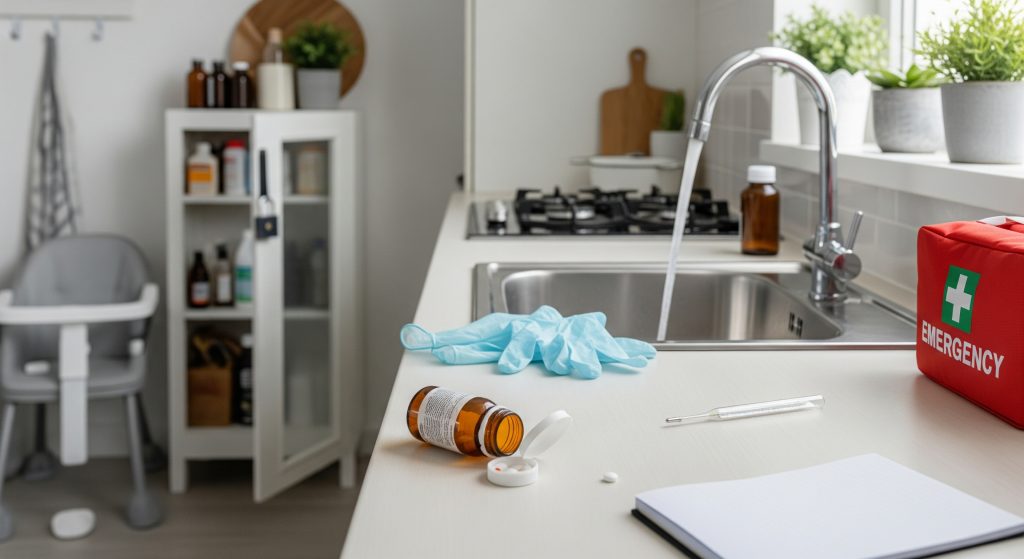
Emergency Kit Essentials
A compact kit streamlines response. I keep it simple and focused.
-
Single use gloves and a CPR face shield.
-
Eye wash pods and saline. A small squeeze bottle works too.
-
Thermometer and pulse oximeter for quick checks.
-
Paper notepad with pens for timestamps and details.
-
A laminated local emergency and poison centre number.
Notice what is absent. No universal antidote, no home syrups to induce emesis. Realistic tools support safe poisoning first aid and timely poisoning treatment.
Conclusion
Poisoning emergencies reward preparation and clear thinking. Recognise patterns quickly, stabilise first, and escalate without hesitation. That rhythm underpins effective poisoning first aid. From there, targeted poisoning treatment focuses on the substance, the route, and the person in front of us. Families that plan ahead handle these moments with less panic and better outcomes. Maybe that is the point. Planning beats improvisation when minutes carry weight.
Frequently Asked Questions
How quickly do poisoning symptoms typically appear?
Onset varies by agent and route. Foodborne illness may start within hours or take a day. As Food Poisoning and Staphylococcus aureus Enterotoxins indicates, some toxins trigger vomiting within 1 to 6 hours. Chemical inhalation can act within minutes. Delayed effects occur with some plants and metals. If in doubt, seek advice early and initiate cautious poisoning treatment.
Should I induce vomiting if someone has been poisoned?
No. Induced vomiting increases aspiration and caustic injury. It also delays proper care. Use irrigation for skin or eyes, ensure airway safety, and contact professionals. Then proceed with appropriate poisoning treatment as advised.
What information should I provide when calling poison control?
Provide substance, amount, time, route, person details, and actions taken. Photos of labels help. This precise snapshot accelerates tailored poisoning treatment. It also reduces unnecessary transfers.
Can activated charcoal treat all types of poisoning?
No. Activated charcoal binds many drugs, but not all. It does not work for alcohols, metals, strong acids, or alkalis. It is most useful within one hour of ingestion. Use it only when advised, as part of structured poisoning treatment.
What are the long-term effects of severe poisoning?
Effects depend on the toxin and the delay to care. There may be liver or kidney injury, persistent neurological symptoms, or mood changes. Carbon monoxide can cause delayed cognitive issues. Early assessment and follow up reduce long term impact. Rehabilitation is part of comprehensive poisoning treatment.
How can I identify alcohol poisoning versus intoxication?
Intoxication involves impaired judgement and coordination. Alcohol poisoning adds slow or irregular breathing, cool skin, confusion that deepens, and unresponsiveness. Vomiting while semi conscious is another signal. If uncertain, err on safety and request help. Early alcohol poisoning treatment prevents aspiration and hypothermia.

