






 We do what's right for you...


Emergency Medical Services in India: What Every Age Group Should Know
Dr. Rajesh Kumar Mishra
Most advice about emergency medical services focuses on memorising a single number. Dial it when trouble strikes. Wait for help. That logic sounds reasonable until someone actually collapses in front of you and you realise the number you memorised connects to a call centre hundreds of kilometres away with no clue about local hospitals. The truth is that a scattered approach to emergency preparedness – one phone number, one hope, no plan – fails families every single day across India.
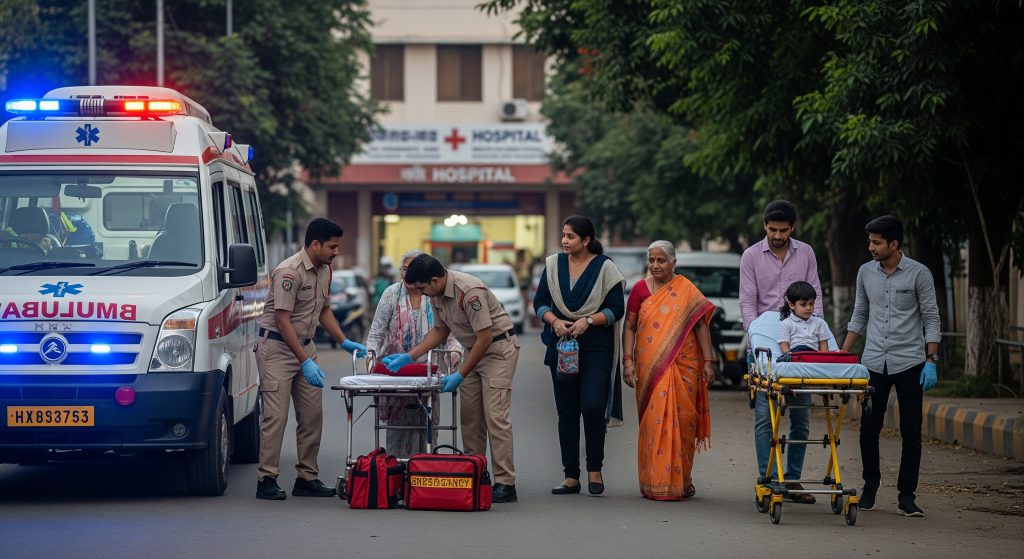
Emergency medical services in India have grown dramatically over the past decade, yet a significant gap persists between available resources and public awareness. Whether someone is a parent worried about a toddler’s sudden fever, a young professional navigating a city alone, or a senior citizen managing chronic conditions, understanding how ambulance services actually work – and what they cost – can mean the difference between a close call and a tragedy. This guide breaks down what every age group genuinely needs to know about paramedic services, response times, insurance coverage, and the practical steps that save lives.
Essential Emergency Helpline Numbers Every Indian Must Know
112 – India’s Unified Emergency Helpline
Think of 112 as the front door to all emergency services. The Emergency Response Support System, or ERSS, consolidates police, fire, and health services into a single access point. Calling 112 is free across India – even when network reception is weak. According to 112.gov.in, requests can be made via phone calls, SMS, emails, or through a dedicated mobile app. The system includes a panic button activation on smartphones, designed with women’s safety in mind.
The service operates through dedicated Emergency Response Centres that coordinate responses across agencies. In Chandigarh alone, the ERSS has handled over 1.76 million emergency calls since launch, as noted by Indian Express. Local language support enhances accessibility for diverse populations.
But here’s the frustrating part. Response times vary wildly. A report from Times of India found the average response time clocks in at 24.14 minutes. That number hides enormous regional disparities – rural areas often wait far longer due to infrastructure challenges. Twenty-four minutes can feel like an eternity during a cardiac event.
108 – Free Government Ambulance Service
The 108 service functions as India’s primary emergency response system for trauma, accidents, and critical care situations. It operates 24/7 across 35 states and union territories, covering approximately 75% of the population. In Assam, this service has saved over 2.12 lakh lives across 16 years of operation.
Awareness remains a problem, though. A study on public awareness in Maharashtra revealed only 76.2% of participants knew about the 108 service. That leaves nearly a quarter of the population unaware of their primary free ambulance option during emergencies.
102 – Pregnancy and Infant Emergency Transport
Pregnant women and infants require specialised transport, and 102 fills that gap. This service focuses specifically on maternal and neonatal emergencies, providing dedicated vehicles equipped for safe transport during labour complications, premature births, or infant health crises. Unlike the broader 108 service, 102 operates with equipment and training tailored to obstetric and paediatric emergencies.
1066 – Apollo Emergency Response Service
Apollo Hospitals runs a dedicated emergency line at 1066. This private service connects callers directly to Apollo’s network of hospitals and ambulances. For those living near Apollo facilities, this number provides a direct line to known infrastructure rather than routing through a centralised government system. Response times often prove faster for urban residents within Apollo’s coverage area.
Private Ambulance Service Numbers by City
Private ambulance services fill crucial gaps, particularly in metro cities where government services face overwhelming demand. Knowing local providers matters.
|
City |
Provider |
Contact |
Notes |
|---|---|---|---|
|
Mumbai |
Ziqitza Healthcare |
Starting Rs. 999 |
BLS, ALS, Neonatal ambulances; 24/7 |
|
Mumbai |
WellCare Ambulance |
Website booking |
Rapid response, advanced equipment |
|
Mumbai |
Aashayein Ambulance |
07490823282 |
4.9 rating, Dombivli East |
|
Hyderabad |
MedCab |
App-based |
Transparent pricing, BLS/ALS fleet |
|
Bangalore |
Prakash Rai Ambulance |
Website |
24/7, emergency and non-emergency |
Save at least two private numbers for your city. Government lines get overwhelmed during festivals, accidents, and disasters. Having a backup isn’t paranoia – it’s practical.
Types of Emergency Medical Services Available in India
Basic Life Support Ambulances
BLS ambulances – the workhorses of emergency transport – cater to patients who aren’t in immediately critical condition. Staffed by Emergency Medical Technicians, these vehicles handle stabilisation and essential care. Non-invasive procedures, basic wound care, and patient monitoring fall within their scope. Think of BLS as the reliable first responder for medical emergencies that need swift transport without intensive intervention.
Advanced Life Support Ambulances
When the situation turns critical, ALS ambulances step in. These vehicles carry defibrillators, transport ventilators, and trained paramedic personnel capable of invasive procedures. Intubation, advanced medication administration, cardiac monitoring – all happen en route to the hospital. For cardiac arrests, severe respiratory distress, or major trauma, ALS ambulances provide the difference between arrival alive and arrival too late.
ICU-Equipped Ambulances
Mobile intensive care units represent the highest level of pre-hospital care. Companies like Red Health provide ICU ambulance services spanning over 550 cities across India. These vehicles feature advanced airway management, continuous cardiac monitoring, and trauma stabilisation capabilities. Critical care teams staff these ambulances, maintaining care continuity from home or hospital to the receiving facility.
What drives me slightly mad is how few families know these options exist. I’ve watched people assume that an ambulance is an ambulance. It’s not. Requesting an ICU ambulance for a critically ill patient being transferred between hospitals can genuinely save a life that a standard BLS vehicle might lose during transit.
Air Ambulance Services
Distance and time create deadly combinations. Air ambulances solve problems that ground transport simply cannot – reaching remote areas, crossing flooded regions, or covering hundreds of kilometres in under an hour. Costs run high (often lakhs of rupees per trip), but for stroke patients or severe trauma cases where the nearest capable hospital sits hours away by road, air ambulances represent the only viable option.
Neonatal and Paediatric Ambulances
Newborns and children require equipment scaled to their size. Neonatal ambulances carry incubators, paediatric ventilators, and monitoring equipment calibrated for tiny bodies. The medical team understands that a newborn’s physiology differs fundamentally from an adult’s. These specialised vehicles handle premature infants, birth complications, and paediatric emergencies that standard ambulances aren’t equipped to manage safely.
Boat Ambulances for Remote Areas
India’s geography includes riverine communities, backwaters, and island populations where roads don’t exist. Boat ambulances serve these areas, providing water-based emergency transport. Kerala’s backwaters, the Sundarbans, and several northeastern regions rely on these services. They’re slow compared to road ambulances, but they’re infinitely faster than trying to reach a hospital that requires crossing a river.
How to Access Emergency Medical Services Near Me
Government vs Private Ambulance Services
The choice between government and private ambulance services involves trade-offs. Government services (108, 102) cost nothing but may have longer response times and less predictable availability. Private services respond faster in urban areas and offer guaranteed vehicle types, but bills arrive afterwards.
Honestly, the only strategy that consistently works is calling both. Dial 108 first, then immediately call a private provider. Take whichever arrives first. Cancel the other. During a genuine emergency, nobody will fault you for hedging your bets.
Response Times in Urban vs Rural Areas
Urban residents typically see ambulances within 10-20 minutes. Rural areas? The wait extends dramatically – sometimes 45 minutes to over an hour. Infrastructure gaps, distance between ambulance stations, and road conditions all contribute. If someone lives in a rural area, pre-planning matters even more. Know the nearest hospital. Have transport options beyond ambulances. Build relationships with neighbours who have vehicles.
Hospital Emergency Department Services
Emergency departments, or EDs, function as the receiving point for ambulance patients and walk-ins alike. Triage systems prioritise based on severity – a cardiac arrest gets immediate attention while a sprained ankle waits. Understanding this helps manage expectations. Arriving by ambulance doesn’t guarantee faster treatment; it means paramedic services have assessed and stabilised the patient en route.
Mobile Apps for Emergency Booking
Apps have transformed ambulance access. Platforms like MedCab, Red Health, and Ziqitza offer app-based booking with transparent pricing and vehicle selection. The interface shows available ambulances, estimated arrival times, and costs upfront. For non-critical but urgent transport, these apps often outperform phone calls in speed and convenience.
GPS Tracking and Real-Time Updates
Modern ambulance services provide GPS tracking. Family members can watch the ambulance approach on a map. Real-time updates reduce anxiety and allow preparation at the receiving end. This feature matters particularly for patient transfers between hospitals, where the receiving team needs accurate arrival estimates.
Insurance Coverage and Costs for Emergency Services
Health Insurance Ambulance Coverage Limits
Most health insurance policies in India include ambulance coverage, but limits vary widely. Some policies cap ambulance reimbursement at Rs. 2,000-5,000 per incident. Others provide unlimited ambulance coverage for emergencies. Read the fine print. A policy that covers hospitalisation but caps ambulance costs at a nominal amount leaves you paying the difference for ALS or ICU ambulances that cost Rs. 10,000 or more per trip.
Typical Emergency Service Costs Without Insurance
Without insurance, emergency service costs add up quickly:
-
BLS ambulance: Rs. 1,000-3,000 for short distances
-
ALS ambulance: Rs. 3,000-8,000 depending on equipment used
-
ICU ambulance: Rs. 8,000-25,000+ for inter-city transfers
-
Air ambulance: Rs. 2-15 lakhs depending on distance
-
Emergency room visit: Rs. 500-5,000 for consultation; procedures extra
Cashless vs Reimbursement Claims Process
Cashless treatment at network hospitals means the insurer pays directly. The patient shows their insurance card, completes paperwork, and avoids upfront payment for covered expenses. Reimbursement requires paying first and claiming later – a process that takes weeks and demands meticulous documentation.
For ambulance costs specifically, most services require upfront payment. Reimbursement claims follow. Keep every receipt, every bill, every prescription from the emergency period. Missing documentation becomes grounds for claim rejection.
Emergency Room Visit Coverage
Emergency room visits fall under hospitalisation coverage when they lead to admission. Outpatient ER visits – where the patient receives treatment and goes home – might not be covered under basic policies. Some policies explicitly include emergency room consultations regardless of admission. Others exclude them. Check your policy before an emergency makes checking impossible.
Pre and Post-Hospitalisation Expenses
Emergency situations don’t end at hospital discharge. Pre-hospitalisation coverage handles diagnostic tests and consultations up to 30 days before admission. Post-hospitalisation coverage extends to follow-up treatments and consultations after discharge – typically 30-60 days depending on the policy, as explained by SBI General Insurance.
These covers matter enormously for emergency patients who require rehabilitation, medication adjustments, or specialist follow-ups. Review your policy’s specific terms – some insurers set limits on types of qualifying expenses.
Age-Specific Emergency Preparedness Guide
Emergency Cards for School Children
Children can’t remember phone numbers under stress. An emergency card solves this. Laminate a card with:
-
Parent/guardian contact numbers
-
Alternate emergency contact
-
Home address
-
Blood group
-
Known allergies
-
Any medical conditions
Place one in the child’s school bag, one with the school administration, and one at home for babysitters or relatives. Teach children to show this card to any adult helping them during an emergency.
Teaching Teenagers Emergency Numbers
Teenagers need more than numbers – they need context. Role-play scenarios. Ask what they’d do if a friend collapsed at a party. Walk through calling 112, describing the situation, and providing the location. Ensure they understand the difference between 108 and 102. Practice giving clear addresses under simulated stress. A teenager who freezes during an actual emergency hasn’t been trained; they’ve only been informed.
Young Adults Managing Medical Emergencies
Young adults often live independently, away from family support networks. Basic life support training – CPR, first aid – becomes essential. Recognising warning signs matters: difficulty breathing, severe chest pain, sudden dizziness, uncontrolled bleeding, confusion. The Indian Red Cross offers first aid training courses that cover wound care, shock management, and emergency assessment.
Stock a basic first-aid kit. Know the nearest hospital’s emergency department. Save ambulance numbers in your phone with labels like “EMERGENCY – 108” so they’re findable under pressure. What does this actually look like in practice? Picture someone collapsing at a house party. The person trained in CPR keeps blood flowing until paramedics arrive. The person who merely knows the theory stands frozen, watching.
Emergency Plans for Mature Adults
Adults managing families need coordinated plans. Who picks up the children if a parent is hospitalised? Which hospital does the family prefer? Where are insurance documents stored? These questions deserve written answers stored in accessible locations – not locked in a safe nobody else can open.
A family emergency document should include:
-
Insurance policy numbers and company contacts
-
Preferred hospital names and addresses
-
List of regular medications for each family member
-
Doctor contact information
-
Neighbours who can help in emergencies
Senior Citizens Emergency Response Systems
Older adults face heightened risks during emergencies. Living alone, relying on electricity-dependent medical equipment, and having limited mobility all create barriers to effective emergency response. Studies indicate that older adults living alone show lower preparedness levels regarding food, water, and evacuation plans.
Medical alert systems designed for seniors now include fall detection, GPS tracking, and one-button emergency calling. Bluetooth SOS tags allow hands-free access to help. For seniors with chronic conditions, these devices provide peace of mind for both the individual and their family.
Government initiatives now mandate priority treatment for senior citizens at hospitals. Still, having a designated family member or neighbour who can reach the senior quickly during emergencies remains the most reliable safety net. Technology helps. Human relationships help more.
Conclusion
Emergency preparedness isn’t a one-time task. It’s an ongoing practice that evolves with age, location, and family circumstances. Knowing emergency medical services exist matters less than knowing exactly how to access them when every second counts. Save the numbers. Understand the ambulance types. Review your insurance. Build age-appropriate plans for every family member.
The difference between families who navigate emergencies successfully and those who don’t often comes down to preparation done long before crisis strikes. Make the calls easier. Make the decisions simpler. Make survival more likely by acting today on what most people defer until it’s too late.
Frequently Asked Questions
What is the difference between 108 and 102 ambulance services in India?
The 108 service handles all emergency medical situations – trauma, accidents, cardiac events, and critical care. The 102 service focuses specifically on pregnant women and infants, providing maternal and neonatal emergency transport. Both are free government services, but 102 carries specialised equipment for obstetric and paediatric emergencies.
How much do private ambulance services typically cost in metro cities?
BLS ambulances start around Rs. 1,000-3,000 for short distances. ALS ambulances range from Rs. 3,000-8,000. ICU ambulances for inter-city transfers can cost Rs. 8,000-25,000 or more. Prices vary by provider, distance, and equipment used.
Can I get emergency medical services without insurance in India?
Absolutely. Government services like 108 and 102 are free regardless of insurance status. Private ambulances require payment, and hospitals must provide emergency stabilisation treatment under the Clinical Establishments Act before discussing payment. Insurance makes costs manageable, but lack of insurance shouldn’t prevent anyone from calling for emergency help.
What information should I provide when calling for an ambulance?
State the emergency type clearly – cardiac, trauma, breathing difficulty, childbirth. Give the exact address with landmarks. Provide your phone number. Mention the patient’s approximate age, consciousness level, and any known medical conditions. Stay on the line until the dispatcher confirms dispatch.
Are air ambulance services covered under regular health insurance?
Standard health insurance policies rarely cover air ambulances. Some premium policies include limited air ambulance coverage. Corporate policies sometimes offer this benefit. Check your specific policy document or contact your insurer directly – don’t assume coverage exists.
How can senior citizens access emergency services quickly?
Medical alert systems with one-button calling and fall detection provide the fastest access. Keep emergency numbers on speed dial. Have a designated family member or neighbour who can respond. Some seniors benefit from GPS-enabled devices that share location automatically when an SOS is triggered.
What paramedic services are available during ambulance transport?
BLS ambulances provide basic stabilisation, wound care, and patient monitoring. ALS ambulances offer advanced interventions including cardiac monitoring, defibrillation, intubation, and IV medication administration. ICU ambulances provide continuous intensive care with ventilator support and critical care team supervision throughout transport.

