






 We do what's right for you...


Night Blindness Symptoms Explained: Causes, Diagnosis & Treatment
Dr. Krishna Vaitheeswaran
Most advice frames poor night vision as a trivial annoyance. That view overlooks patterns that signal disease. I focus on the specific night blindness symptoms that actually change decisions about driving, work, and clinical follow up. The aim is simple. Recognise the signs early and match them to likely mechanisms, then choose a practical next step.
Key Night Blindness Symptoms You Should Recognise
Difficulty Seeing in Dim Light
I start with the most common complaint. Struggling to read a menu in a candlelit restaurant or to recognise faces on a poorly lit street is typical of night blindness symptoms. This difficulty often reflects impaired rod photoreceptor function or media opacities that reduce retinal light. In practice, patients describe vague shapes, washed out contrast, and a constant need to move closer to light. It is not just inconvenience. It is a functional limitation that hints at pathology.
Problems Driving at Night
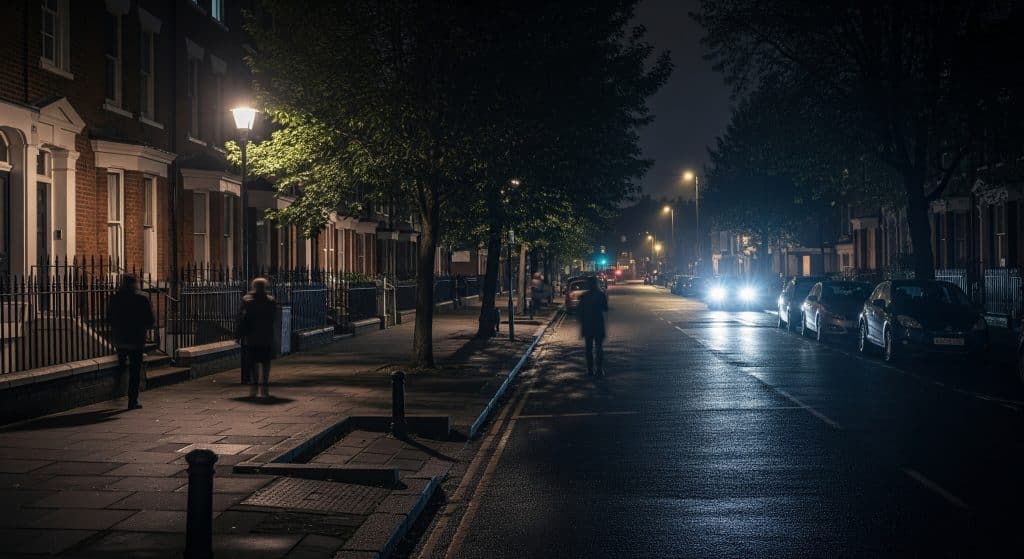
Headlights, wet roads, and variable street lighting amplify night blindness symptoms. I hear repeat patterns: glare from oncoming traffic, missed turns, and anxiety on unlit motorways. The problem is part acuity, part contrast sensitivity, and part delayed recovery after bright lights. A short example makes it clear. Turning into a dim side street after a lit junction takes longer to feel safe. That delay matters behind the wheel.
Slow Dark Adaptation
Healthy eyes adapt to darkness within minutes. With night blindness symptoms, that shift feels sluggish. Entering a cinema after daylight can leave a person disoriented well into the previews. Pathways involved include visual pigment regeneration and retinal signal gain. The practical cue is simple. If others see normally while you wait for the world to appear, adaptation is slow.
Difficulty Navigating Dark Rooms
Furniture, kerbs, and low steps become hazards when night blindness symptoms progress. People report bruised shins and near falls at home. The pattern is worst in unfamiliar spaces with mixed lighting. It is basically low light plus low contrast plus reduced peripheral cues. A quick self check helps. Walk a familiar hallway with the lights dimmed. If touch and memory do most of the work, vision is underperforming.
Increased Light Sensitivity
Paradoxically, bright lights can feel harsher when night blindness symptoms are present. Glare and haloing around point sources make recovery time longer. The eyes struggle to reset after a headlight flash or a phone screen in the dark. It is a resilience problem. The visual system overreacts to the bright spikes and underdelivers in the gaps.
Peripheral Vision Changes
Narrowing side vision compounds night blindness symptoms because peripheral cues guide navigation in low light. Tunnel like vision forces head turns and slows walking speed. As Patient experience in retinitis pigmentosa and Choroideremia reported, over 50% of participants struggled with peripheral vision, which directly impaired mobility. That figure tracks with what I see clinically in progressive retinal disease. Early recognition leads to better adaptations at home and at work.
|
Symptom |
Everyday example |
|---|---|
|
Difficulty seeing in dim light |
Cannot spot a friend across a pub with low lighting |
|
Problems driving at night |
Misses an exit after glare from oncoming headlights |
|
Slow dark adaptation |
Needs several minutes to adjust on entering a dark cinema |
|
Difficulty navigating dark rooms |
Clips furniture or misjudges steps at home |
|
Increased light sensitivity |
Halos around lights and discomfort with phone screens in the dark |
|
Peripheral vision changes |
Side bumps in crowded spaces and frequent head turning |
Night blindness symptoms rarely arrive alone. The pattern across low light, glare, and peripheral cues tells the real story.
Common Causes of Night Blindness
Vitamin A Deficiency
Vitamin A supports rhodopsin, the visual pigment rods use for low light vision. Deficiency reduces pigment availability and produces night blindness symptoms early in the course. At risk groups include those with malabsorption, restrictive diets, or liver disease. The good news is straightforward. When the deficiency is identified promptly, vision under dim light often improves with repletion. Food first and targeted supplementation under clinical guidance is the standard approach.
Retinitis Pigmentosa Symptoms
Retinitis pigmentosa is a group of inherited retinal dystrophies. The earliest retinitis pigmentosa symptoms usually include night blindness symptoms and delayed dark adaptation. Over time, peripheral vision narrows and can lead to tunnel vision. The diagnosis sits in genetics and electrophysiology, but the lived experience is consistent. Dim streets feel unsafe and unfamiliar paths feel risky. Family history and age of onset matter for prognosis.
Cataracts and Clouded Vision
Lens opacities scatter light, reduce contrast, and increase glare. The result is classic night blindness symptoms that track with cataract density and location. People describe fog, haloed headlights, and a need for much brighter task lighting. Surgical removal often restores contrast and night function. Timing depends on functional impact, not just lens appearance.
Glaucoma Related Vision Loss
Glaucoma damages retinal ganglion cells and reduces the visual field. In darker settings, that field loss erodes orientation and hazard detection. Night blindness symptoms can surface as delayed reactions to movement at the edges. Pressure control preserves remaining vision, but the lost field does not return. Early detection is decisive.
Diabetic Retinopathy
Microvascular damage impairs retinal oxygenation and function. The effect on night blindness symptoms is predictable. Contrast sensitivity falls, glare worsens, and adaptation slows. Glycaemic control, retinal screening, and timely laser or injections protect sight. The principle is simple. Stabilise the retina to stabilise night vision.
Congenital Stationary Night Blindness
This inherited condition presents in childhood with stable, lifelong night blindness symptoms. Daytime acuity may be near normal. The defect lies in photoreceptor to bipolar cell signalling. Families often notice children who freeze in dim corridors or avoid dark playgrounds. It is stationary, so education, lighting, and mobility strategies carry most of the benefit.
Medication Side Effects
Some drugs alter retinal signalling or lens clarity. Examples include certain isotretinoin formulations and antimalarials. If night blindness symptoms appear after a medication change, I review drug history promptly. Dose adjustment or substitution can prevent permanent effects. Never stop a prescribed medicine without discussing alternatives with the prescriber.
Night Blindness Diagnosis Methods
Comprehensive Eye Examination
I start with a structured history. Onset, symmetry, glare, adaptation time, and driving confidence reveal the pattern of night blindness symptoms. Examination includes visual acuity, slit lamp biomicroscopy, intraocular pressure, and dilated fundus evaluation. I look for cataract, vitreous haze, optic pallor, vessel attenuation, and peripheral pigment changes. It is a whole eye assessment with a focus on low light function.
Electroretinography Testing
Electroretinography (ERG) measures retinal electrical responses to light. A rod predominant abnormality fits night blindness symptoms where dim vision fails first. Cone changes alter colour and daytime tasks. ERG clarifies whether the issue sits in photoreceptors or downstream pathways. It also assists with prognosis and trial eligibility.
Visual Field Testing
Automated perimetry maps sensitivity across the field. I pay close attention to mid and peripheral defects when night blindness symptoms include navigation problems. Serial tests show rate of change. That matters for driving advice and occupational adjustments. When fatigue affects results, scheduling and shorter protocols help.
Dark Adaptometry
Dark adaptometry quantifies the time the eye takes to regain sensitivity after a bright flash. Prolonged rod thresholds align closely with reported night blindness symptoms. The curve shape also distinguishes vitamin A related delay from photoreceptor dystrophy patterns. I use this test when history and examination leave ambiguity.
Blood Tests for Vitamin Levels
Targeted blood tests assess vitamin A status and, where appropriate, zinc and liver function. When night blindness symptoms have a nutritional or malabsorptive basis, results inform a precise supplementation plan. Testing should accompany clinical judgement because serum values can lag tissue function. The context guides interpretation.
Genetic Testing Options
When family history or phenotype suggests inherited disease, I discuss genetic testing. Panels can identify pathogenic variants that explain night blindness symptoms and refine counselling. The benefits extend to eligibility for trials and family planning. Consent and pre test discussion remain essential, given incidental findings and variant uncertainty.
Treatment for Night Blindness
Vitamin A Supplementation
For confirmed deficiency, vitamin A repletion improves night blindness symptoms in a predictable arc. I set dose and duration individually, accounting for age, liver status, and pregnancy. Food sources support maintenance: liver occasionally, orange vegetables, and dark leafy greens. Oversupplementation risks toxicity, so clinical oversight is critical.
Corrective Eyewear Solutions
Uncorrected refractive error can worsen night blindness symptoms by reducing acuity and contrast. Updated spectacles or contact lenses tighten focus. Anti reflective coatings reduce glare, which helps with night driving. For mild contrast issues, high quality lenses with clean, scratch free surfaces make a visible difference.
Cataract Surgery Options
When cataract drives the problem, surgery restores clarity and contrast. Many patients report a marked reduction in night blindness symptoms within weeks. Lens choice depends on ocular comorbidity and task profile. I counsel carefully on premium lenses if glare or halos would undermine night driving.
Managing Underlying Conditions
Diabetes, glaucoma, and inflammatory eye disease require condition specific management. Stabilising these reduces secondary night blindness symptoms. That can mean pressure lowering therapy, anti VEGF injections, or tailored systemic treatment. The shared objective is retinal health and preserved function.
Lifestyle Adjustments
Simple changes ease daily strain. I recommend:
-
Brighter, even lighting at home with warm white LEDs.
-
Task lights for cooking, reading, and hobby work.
-
Anti glare strategies while driving, including clean windscreens and slower speeds.
-
Rest breaks to allow recovery from glare.
-
High contrast cues on stairs and edges using tape or paint.
These reduce the practical burden of night blindness symptoms and buy time for medical interventions to work.
Low Vision Aids
Low vision services provide filters, magnifiers, and mobility training. Amber filters can cut glare while preserving contrast under some conditions. Electronic magnifiers assist with labels and menus in dim settings. Orientation and mobility training reduces falls. These tools complement, not replace, medical care.
Preventive Measures
Prevention is not one action but a set of habits. I advise routine eye examinations, diabetes control, blood pressure management, and protective eyewear in hazardous work. Nutritionally, balanced intake supports retinal health. For families with inherited disease, early evaluation and lighting adaptations help children avoid accidents and maintain confidence.
Managing Night Blindness Effectively
Management succeeds when clinical care and daily practice align. I recommend a simple framework.
-
Identify the driver. Is it optical, retinal, nutritional, or neurological? The pattern of night blindness symptoms will usually point the way.
-
Stabilise the cause. Treat cataract, replete vitamin A, control diabetes, or manage glaucoma. Do the obvious thing first.
-
Adapt the environment. Improve lighting, increase contrast, and reduce glare sources at home and work.
-
Plan for mobility. Review driving, consider public transport, and use reflective clothing for evening walks.
-
Monitor change. Re test fields or adaptometry when symptoms shift. Escalate early if function declines.
Critics sometimes argue that lifestyle changes are marginal. They underestimate the compound effect of lighting, contrast, and training on safety and confidence. The right combination adds up. And yet, none of it replaces timely medical treatment. Both are needed.
Frequently Asked Questions
Can night blindness be completely cured?
It depends on the cause. If deficiency of vitamin A drives the problem, resolution of night blindness symptoms is likely after correction. Cataract surgery also restores night function for many. In inherited retinal disease, the focus shifts to preservation, adaptation, and maximising remaining vision. Cure is uncommon there, though not impossible as research evolves.
How quickly does vitamin A improve night vision?
Improvement can begin within days to weeks after guided supplementation. Full benefit may take longer, depending on baseline status and comorbidities. I reassess symptoms and function over several weeks. Sustainable diet changes help maintain gains once night blindness symptoms improve.
Is night blindness hereditary?
Night blindness can be hereditary when linked to conditions such as retinitis pigmentosa or congenital stationary night blindness. In these cases, night blindness symptoms often start early and progress at variable rates. Genetic counselling clarifies risk to relatives and supports planning.
What foods help improve night vision?
Foods rich in vitamin A and carotenoids support retinal function. Examples include liver, eggs, dairy, carrots, sweet potatoes, and dark leafy greens. Zinc rich foods may assist vitamin A metabolism. Diet supports physiology, but it should not delay clinical assessment when night blindness symptoms are present.
Should children with night blindness symptoms see a specialist immediately?
Yes. Early assessment clarifies whether the issue is nutritional, structural, or inherited. Prompt evaluation protects safety and learning. If night blindness symptoms include falls, fear of dark spaces, or trouble in evening activities, refer without delay. Timely interventions improve confidence and independence.
Can night blindness develop suddenly?
Sudden change is less common but possible. Acute cataract swelling, certain medications, or retinal events can accelerate symptoms. A rapid rise in night blindness symptoms warrants urgent examination. Sudden onset demands a same week review to exclude serious causes.
Are there special driving restrictions for people with night blindness?
Driving fitness depends on acuity, visual field, glare recovery, and adaptation. When night blindness symptoms impair these, temporary cessation of night driving is prudent. Many return to safe driving after treatment or adjustments. Clinicians can document functional status for occupational and licensing discussions where appropriate.
Final thought: early recognition changes outcomes. Identify the pattern of night blindness symptoms, map it to the likely cause, and act methodically. That is the most reliable path to safer nights.

