






 We do what's right for you...


Is PTCA the Right Heart Treatment? Understanding the Risks and Success
Dr. Hriday Kumar Chopra
Disclaimer: The content shared here is for informational purposes only. Always consult a specialist doctor before attempting any treatment, procedure, or taking any medication independently.
Most advice about coronary treatment jumps straight to stents or surgery. That shortcut hides a better question. Which option delivers the right outcome for the specific artery, the specific patient, and the specific risk window? I address that directly, and I keep the ptca full form medical clear at every step, so clinical terms do not get in the way of decision quality.
Top Heart Treatment Options: Comparing PTCA with Alternative Procedures
1. PTCA (Percutaneous Transluminal Coronary Angioplasty): Minimally Invasive Balloon Treatment
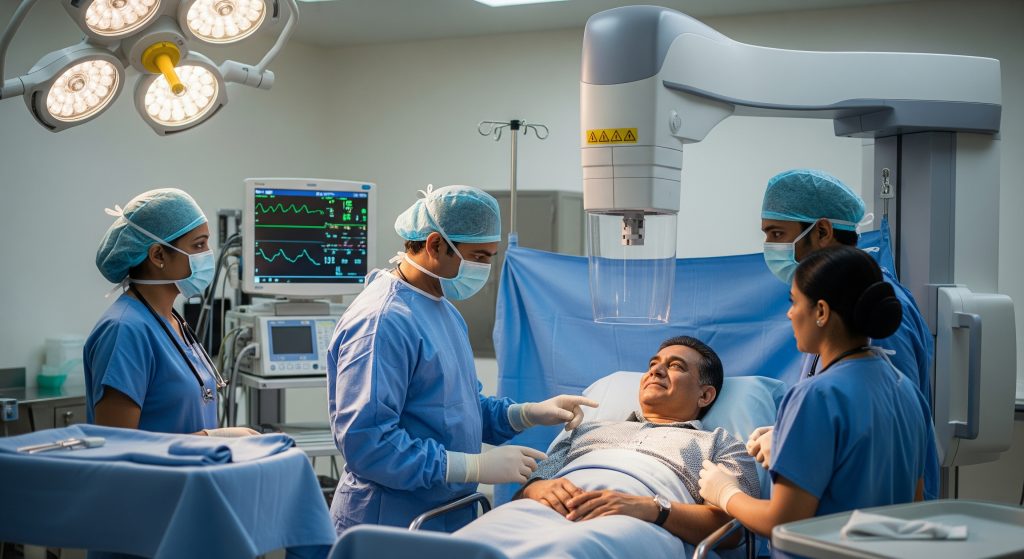
The ptca full form medical is Percutaneous Transluminal Coronary Angioplasty. In practice, I insert a balloon catheter to open a narrowed artery and usually deploy a stent to keep it open. The approach is minimally invasive and targeted. It suits focal blockages, symptom relief, and urgent flow restoration.
Evidence over two decades suggests PTCA reduces angina and shortens recovery compared with surgery. As the Cochrane Database of Systematic Reviews notes, bypass surgery tends to reduce repeat procedures for multivessel disease, while PTCA remains effective for symptom control and acute events.
-
Strengths: small access site, shorter hospital stay, fast ambulation.
-
Limits: higher chance of needing a repeat procedure in complex disease.
-
Best fit: single or discrete lesions, and acute occlusions where rapid reperfusion matters.
For clarity, ptca full form medical refers to the core balloon technique. When I add a stent, the method sits under the wider term percutaneous coronary intervention.
2. CABG (Coronary Artery Bypass Grafting): Surgical Bypass for Multiple Blockages
Coronary bypass creates a new route around blockages using veins or arteries. It is a whole-vessel solution rather than a spot fix. CABG often suits diffuse, multivessel disease or left main disease. That is because it addresses a longer segment of disease in one operation.
Long-term outcome reviews weigh durability highly. In multivessel cases, several analyses favour bypass for fewer major events over years when compared with PTCA. That aligns with patient stories I see in clinic. One operation and a longer, steadier runway. It is basically durability over speed.
-
Strengths: durable relief in complex multi-vessel disease.
-
Trade-offs: larger incision, longer recovery, and surgical risk.
-
Best fit: extensive calcification, left main disease, or diabetes with diffuse plaques.
When weighing CABG against balloon strategies, I keep the ptca full form medical distinction explicit to avoid conflating quick relief with long-horizon control.
3. Medical Therapy: Conservative Management with Medications
Optimal medical therapy can stabilise plaque, reduce clotting risk, and relieve symptoms. For stable disease with good heart function, medications may match invasive approaches on survival, at least in the medium term. That is not universal, but it holds for many patients with stable angina and controlled risk factors.
-
Who benefits: stable symptoms, good exercise tolerance, manageable risk profile.
-
Core agents: antiplatelets, statins, beta blockers, ACE inhibitors (with tailored dosing).
-
Review cadence: structured follow-up with trigger points for escalation.
When symptoms persist or risk escalates, I revisit the PTCA path. Here the ptca full form medical definition makes it easier to discuss a focused intervention alongside drug optimisation.
4. Drug-Eluting Stents vs Bare-Metal Stents in PTCA Procedures
Stents changed PTCA from a temporary stretch into a more durable repair. Drug-eluting stents (DES) release medication to curb tissue regrowth. Bare-metal stents (BMS) do not. For many lesion types, DES reduce the need for another procedure compared with BMS over follow-up.
In patients with prior bare-metal in-stent restenosis, one large study reported fewer major events with DES and a lower need for repeat treatment, over roughly three years of observation. As Drug-Eluting Stents versus Bare-Metal Stents for Treatment… notes, DES showed a markedly lower primary endpoint rate than BMS in that cohort.
-
DES: preferred for most lesions; require longer dual antiplatelet therapy.
-
BMS: niche use where bleeding risk or adherence is a concern.
-
Clinical nuance: vessel size, lesion length, diabetes, and bleeding risk shape choice.
Stent decisions sit inside the same frame. Keep the ptca full form medical in view, then layer stent type, vessel anatomy, and adherence feasibility.
5. Rotational Atherectomy for Complex Calcified Lesions
Heavy calcification can prevent balloon expansion or proper stent seating. Rotational atherectomy modifies the plaque, allowing PTCA to proceed. I reserve it for resistant lesions where balloons fail or imaging shows rigid calcium arcs. The technique adds time and complexity, but it can be decisive.
-
When used: concentric calcium, underexpanded stent, ostial lesions.
-
Risks: slow flow, vessel injury, need for meticulous technique.
-
Support: intravascular imaging to confirm adequate preparation.
Even here, the ptca full form medical still applies. Atherectomy is a supporting act to enable a successful balloon-and-stent result.
Success Rate Comparison Between PTCA and CABG for Multivessel Disease
Success means different things by time frame. PTCA delivers rapid symptom relief and vessel patency. CABG often delivers fewer repeat procedures and fewer events over several years in complex disease. As far as current data suggests, this difference reflects breadth of treatment: spot repair versus route replacement.
When counselling patients with three-vessel disease, I present both paths. The ptca full form medical route prioritises minimal invasiveness. The surgical route prioritises durability. The right answer depends on anatomy, comorbidities, and goals.
Understanding PTCA Risks and Complications: What Indian Patients Should Know
Common Complications During Percutaneous Coronary Intervention
The main intra-procedural concerns include vessel dissection, side-branch loss, and slow flow. Most are manageable with prompt techniques. Bleeding at the access site and rhythm changes can occur. Intravascular imaging and pressure wires reduce guesswork and improve control.
-
Access risks: bleeding, haematoma, rare pseudoaneurysm.
-
Coronary risks: dissection, perforation, no-reflow.
-
Systemic risks: allergic reactions, arrhythmias, stroke (rare).
I explain these plainly. The ptca full form medical procedure is safe in experienced hands, yet no procedure is risk free.
Long-term Risk of Restenosis After PTCA Treatment
Restenosis is tissue regrowth inside the treated segment. DES technology has lowered this risk for many patients. Small vessels, long lesions, and diabetes increase the chance of recurrence. Follow-up plans should reflect that profile.
When restenosis occurs, I consider repeat stenting, drug-coated balloons, or surgery. The ptca full form medical toolkit has expanded, so a thoughtful re-intervention strategy is possible without rushing to bypass.
High-Risk Patient Groups: Diabetes, Elderly, and Kidney Disease
Diabetes accelerates atherosclerosis and can blunt healing. The elderly may have frailty and diffuse disease. Kidney disease increases contrast-related risk. These groups can still benefit from PTCA, but they require tailored strategies and tighter monitoring.
-
Diabetes: prefer DES, optimise glucose, ensure strict secondary prevention.
-
Elderly: aim for radial access, minimise contrast, early mobilisation.
-
Kidneys: hydrate carefully, consider contrast-sparing techniques.
In these settings, keeping the ptca full form medical clear helps avoid underestimating procedure scope and aftercare needs.
Emergency Surgery Requirements and In-Hospital Mortality Rates
Unplanned transfer to surgery is uncommon in modern practice. Mortality during hospitalisation after PTCA is low for elective cases and higher for emergency cases. That gradient reflects clinical urgency more than the technique itself.
Risk is not one number. It is a profile. The ptca full form medical framing makes that easier to discuss without euphemism or alarm.
Preventing Blood Clots and Stent Thrombosis
Dual antiplatelet therapy reduces stent thrombosis risk. Adherence is non-negotiable. Premature discontinuation is the most common avoidable cause of acute thrombosis. I select stent type and therapy length based on bleeding risk and procedure complexity.
-
Adherence: confirm tolerance and affordability before discharge.
-
Bleeding plan: choose shorter or longer therapy per risk profile.
-
Checkpoints: early follow-up to adjust dosing and reinforce education.
This is where the ptca full form medical conversation meets real life. Medicines and behaviour protect the stent as much as technique.
Managing Contrast Dye Reactions and Kidney Protection
Allergic-type reactions to contrast are uncommon and manageable with premedication in at-risk patients. Kidney protection relies on hydration, limiting contrast load, and avoiding nephrotoxic drugs around the procedure. For high risk kidneys, I consider staged procedures to spread contrast exposure.
Such adjustments do not change the ptca full form medical definition. They refine safety for Indian patients with constrained renal reserve.
Who Qualifies for PTCA: Patient Selection Criteria and Contraindications
Primary Indications for Percutaneous Coronary Intervention
Indications include limiting angina with objective ischaemia, high-risk stress test findings, and lesions with clear correlation to symptoms. Anatomy must be amenable to safe stenting. If clinical gain is likely, I proceed.
-
Objective evidence: ECG changes, imaging, or positive fractional flow reserve.
-
Symptom burden: lifestyle-limiting angina despite medication.
-
Lesion profile: accessible, with acceptable complication risk.
Throughout assessment, I restate the ptca full form medical meaning to align expectations before consent.
Emergency PTCA for STEMI and Acute Heart Attack
For ST-elevation myocardial infarction, time to reperfusion drives outcomes. Primary PTCA opens the artery and limits muscle loss. Cath lab readiness and rapid transfer pathways matter as much as operator skill.
I base decisions on access time and haemodynamic status. The ptca full form medical intervention here is life-saving, not elective.
Unstable Angina Requiring Immediate Treatment
Unstable angina with dynamic ECG changes warrants urgent evaluation. If a culprit lesion is present, PTCA can stabilise the situation. Early treatment reduces risk of progression to infarction.
In these cases, I prioritise safety, perfusion, and a stent choice that supports adherence. Again, I use the ptca full form medical terminology to keep consent focused and precise.
Failed Medical Management Cases
When optimal therapy fails to control symptoms or risk markers, intervention is reasonable. I confirm ischaemia and lesion physiology before proceeding. Over-treating non-significant lesions helps no one.
-
Reassess: medication adherence, dosage, and side effects.
-
Reimage: coronary anatomy with physiology if needed.
-
Reframe: align goals and realistic improvement windows.
This is usually where the ptca full form medical option provides tangible, quick relief with a defined risk profile.
Contraindications: When PTCA Should Be Avoided
True contraindications are uncommon but real. Diffuse disease without a focal target, severe left main disease without protection, and inability to take antiplatelets are key examples. I also avoid PTCA where benefit is doubtful, such as minimal stenosis without ischaemia.
Decision hygiene matters. Using ptca full form medical correctly avoids casual overuse of the term for cases that merit surgery or ongoing medical care.
Pre-procedure Testing Requirements and Patient Assessment
Assessment includes history, risk stratification, blood work, ECG, and imaging. I verify kidney function, bleeding risk, and platelet strategy. When necessary, I use coronary physiology to confirm lesion significance.
-
Preparation: fasting, medication review, allergy check, renal plan.
-
Consent: goals, alternatives, risks, and recovery expectations.
-
Plan B: bailout strategy if complexity rises in the lab.
These steps frame the ptca full form medical procedure as a deliberate, audited decision.
PTCA Success Rates and Recovery Timeline in Indian Hospitals
Current PTCA Success Statistics in Major Indian Cities
Procedural success in high-volume Indian centres is strong for elective cases. Acute cases vary by presentation time and complexity. Outcomes improve with radial access, DES use, and guideline-directed therapy.
Local experience matters. The ptca full form medical technique is consistent, but operator judgement and system speed change results.
Hospital Stay Duration and Immediate Post-Procedure Care
Most elective cases allow discharge within a short window after observation. Radial access supports early mobilisation and fewer access-site issues. Nursing protocols, hydration, and rhythm monitoring cover the first 24 hours.
-
Ambulation: typically on the same day for radial access.
-
Monitoring: puncture site, vitals, hydration, and ECG rhythm.
-
Medicines: dual antiplatelets, statin, beta blocker, plus gastroprotection if needed.
I summarise all this during consent. Using ptca full form medical language keeps the plan unambiguous across teams.
Return to Normal Activities: Week-by-Week Recovery Guide
Week 1: light walking, wound care, and medication stabilisation. Avoid heavy lifting. Focus on sleep and hydration. Symptoms guide pace.
Week 2 to 3: increase walking, resume desk work if stable, and start gentle cardio. Discuss driving timelines with the cardiologist.
Week 4 and beyond: cardiac rehabilitation, targeted strength, and progressive aerobic work. Reassess blood tests and blood pressure control.
-
Warning signs: chest pain, breathlessness, black stools, or severe dizziness.
-
Checkpoints: follow-up to review adherence and adjust therapy.
-
Lifestyle: nutrition quality, regular activity, and stress hygiene.
Recovery is not a race. The ptca full form medical clarity helps align the expected tempo with the actual clinical course.
Cost of PTCA Treatment Across Indian Healthcare Facilities
Costs vary by city, hospital tier, stent type, and length of stay. Insurance coverage and government schemes can offset a significant share. The right way to approach cost is to ask for an itemised estimate before the procedure.
-
Direct items: cath lab time, stent type, consumables, and bed class.
-
Indirect items: extra imaging, additional balloons, prolonged monitoring.
-
Post-discharge: medicines, rehab, and follow-up tests.
I fold these variables into the recommendation. That keeps the ptca full form medical decision financially transparent from day one.
Long-term Outcomes: Five-Year and Ten-Year Survival Data
Long-term survival depends on the entire package: anatomy, risk control, and adherence. CABG often shows fewer repeat procedures in diffuse disease, whereas PTCA offers less invasiveness with strong relief for focal disease. Both approaches succeed when secondary prevention is serious and sustained.
Numbers vary across studies and centres. What matters is strategy integrity over time. The ptca full form medical pathway demands that same discipline after discharge.
Factors Affecting Treatment Success and Patient Prognosis
Outcomes swing on four levers: anatomy, timing, technique, and adherence. Anatomy sets the ceiling. Timing saves myocardium. Technique opens and protects the vessel. Adherence preserves the win.
-
Anatomy: lesion complexity, vessel size, and calcium burden.
-
Timing: rapid reperfusion in acute settings stabilises the course.
-
Technique: imaging-guided stenting and complete lesion preparation.
-
Adherence: antiplatelets, statin intensity, and lifestyle reform.
This is why I insist that ptca full form medical not be treated as a single act. It is a continuum from consent to long-term follow-up.
Making the Right Choice: Is PTCA Your Best Heart Treatment Option?
Here is the practical filter I use:
-
If disease is focal and symptoms persist, PTCA is reasonable and efficient.
-
If disease is diffuse or involves the left main, bypass often carries the long-term edge.
-
If symptoms are stable and low risk, medical therapy may suffice with careful review.
Now the editorial view. Choose the option that best matches anatomy, risk, and life constraints. The ptca full form medical route is superb for the right lesion and the right context. But it must not be a reflex where surgery or medical therapy is the better long game.
One last note. Earlier, the Cochrane Database of Systematic Reviews comparison highlighted fewer repeat procedures with bypass in complex disease. That echoes daily practice. It is the strategic backdrop to any stent-first plan.
Frequently Asked Questions
How long does a typical PTCA procedure take in Indian hospitals?
Most elective cases complete within a few hours including preparation and recovery. Complex lesions or multiple vessels can extend the schedule. The ptca full form medical procedure time is mainly driven by lesion difficulty and imaging steps.
Can PTCA be repeated if arteries become blocked again?
Yes. Options include repeat stenting, drug-coated balloons, or referral to surgery for diffuse recurrence. I decide based on vessel size, stent type, and restenosis pattern. Keeping the ptca full form medical framework clear helps explain why a second procedure may differ from the first.
What is the difference between PTCA and PCI in medical terms?
PTCA refers to balloon angioplasty. PCI, or percutaneous coronary intervention, is the broader category that includes PTCA, stents, atherectomy, and adjunct devices. In short, PTCA sits inside PCI. The ptca full form medical is precise; PCI is the umbrella.
Is PTCA safer than bypass surgery for diabetic patients?
Safety depends on anatomy and overall risk. Diabetics with multivessel disease often achieve more durable outcomes with bypass. For focal disease, PTCA remains appropriate. I advise on a case-by-case basis to align risk and reward.
How much does PTCA cost compared to CABG in India?
PTCA typically involves lower upfront costs than CABG, though medication expenses continue after discharge. Exact figures vary by city, hospital, and stent type. Request an itemised estimate and confirm coverage. That keeps the ptca full form medical decision financially sound.
What lifestyle changes are necessary after PTCA treatment?
Secondary prevention is non-negotiable. Focus on statin adherence, blood pressure control, and consistent activity. Favour fibre-rich meals, sleep stability, and stress reduction. The ptca full form medical intervention opens the artery. Daily habits keep it open.

