






 We do what's right for you...


How to Strengthen Foot Muscles: Easy Daily Routine
Dr. Ali Haider Khan
Stretching alone will not rebuild weak feet. Strength requires deliberate loading and control. I use a simple framework: short daily foot exercises to build intrinsic strength, mobilise the ankle complex, and retrain balance. The aim is practical. Fewer flare ups, better propulsion, and less reliance on braces or bulky shoes. The routine below scales from sore-mornings to strong-miles, and it folds cleanly into everyday life.
Essential Foot Strengthening Exercises for Daily Practice
1. Toe Curls and Marble Pickups
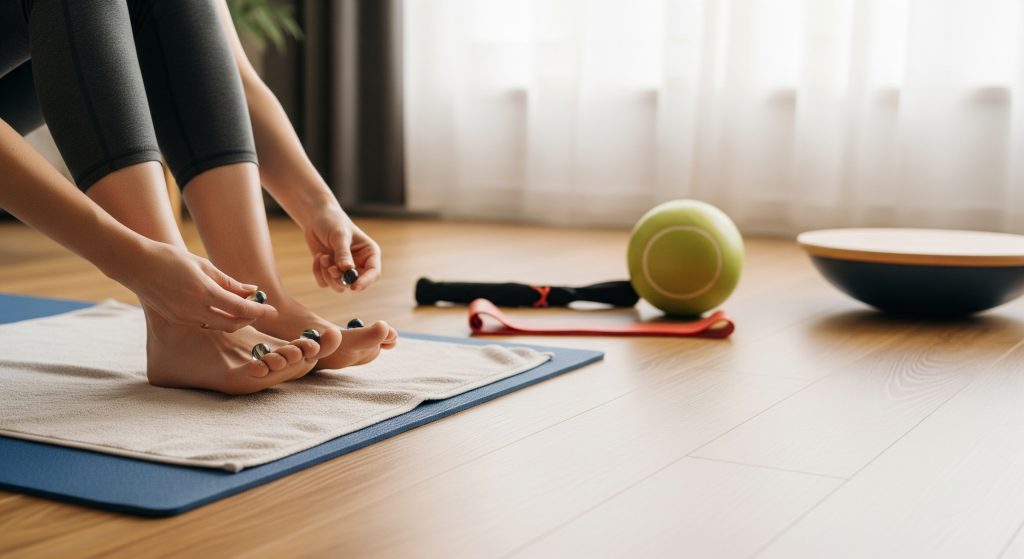
I start with precise work for the intrinsic foot muscles. Toe curls and marble pickups train the small stabilisers that hold the arch and guide toe-off. These are quiet drills, but they do a disproportionate amount of good for load sharing across the midfoot. They also suit a busy day. Minimal equipment. High payoff.
Set up seated with a towel on a smooth floor. Keep heels grounded. Curl the toes to drag the towel toward the midfoot, then release slowly. For marble pickups, scatter 10 small objects and lift them into a bowl using the toes. Focus on slow control rather than speed. It is basically strength work for tiny levers.
-
Tempo: one second curl, two seconds hold, two seconds release.
-
Sets: 2 to 3 per foot, 8 to 12 controlled reps.
-
Cue: keep the ankle still and the arch light, not clenched.
These drills fit neatly into plantar fasciitis exercises and general foot strengthening exercises. I see improved toe dexterity, steadier balance, and a calmer arch under longer walks. Small input. Solid output.
2. Heel Raises and Calf Stretches
Stronger calves protect the plantar fascia and the Achilles. Heel raises are the cornerstone, and they scale well from two legs to one. Start on two legs to learn path and rhythm. Then move to single-leg once mechanics are clean. Dorsiflexion control matters as much as strength.
Use a step for range. Rise through the big toe line, pause briefly at the top, and lower with control below level. Keep the knee straight for the gastrocnemius. Repeat with a soft knee for the soleus. As Capital Podiatry notes, a typical early progression is 8 to 15 repetitions per set before adding frequency or moving to single-leg work.
Calf stretching reduces morning stiffness and supports recovery between strength days. As Healthline indicates, holding a calf stretch for at least 30 seconds several times per day can help ease plantar load during flare ups. I prefer wall calf stretches and a towel stretch before long sitting. Short and consistent beats a single long pull.
-
Heels up: 2 to 3 sets, quality over speed.
-
Stretch: 2 to 3 holds per position, gentle and steady.
-
Progression: bodyweight to backpack load, then to single-leg.
Result. Stronger push-off and calmer heels under volume. Not glamorous, but effective.
3. Arch Lifts and Doming
Arch lifts, also called short-foot or doming, teach the foot to support itself from within. I cue this as a subtle shortening of the foot between the heel and the ball. The toes stay long. The metatarsal heads stay grounded. No scrunching.
Stand or sit with feet hip width. Without curling the toes, gently draw the ball of the foot toward the heel to create a small dome under the arch. Hold for three to five seconds, then relax. Expect mild fatigue through the medial arch and deep foot muscles. This is foundational control, like core work for the foot.
-
Reps: 8 to 12 holds per foot.
-
Progression: from sitting to standing, then to single-leg.
-
Integration: use between sets of heel raises to reinforce alignment.
The drill helps with overpronation to an extent, but I do not oversell that idea. It builds awareness and baseline strength. That is the point.
4. Resistance Band Flexions
Resistance bands create joint friendly load for the ankle and toes. I use three patterns: plantarflexion, dorsiflexion, and great toe flexion with the band anchored. The goal is smooth tension, not jerky pulls. Control beats brute force here.
For plantarflexion, loop a light band around the forefoot. Keep the knee straight. Point the foot against tension and return slowly. For dorsiflexion, anchor the band and pull the foot toward the shin. For the great toe, loop the band around the big toe and press down with a steady arc. Keep the midfoot quiet.
-
Dosage: 2 sets of 12 to 15 per pattern.
-
Tempo: 2 seconds up, 2 seconds down.
-
Stop if joints click or grip. Reset alignment and try lighter resistance.
Band work pairs well with foot exercises on balance days, especially for those building back from layoffs. The outcome is better control and less wobble when fatigue arrives late in the day.
5. Towel Scrunches
Towel scrunches are simple, portable, and reliable. I position them as a bridge between toe curls and doming. They strengthen the arch without loading the Achilles heavily, which is useful during sore phases.
Place a towel under the forefoot. Keep the heel planted. Draw the towel inch by inch with the toes, then reset. Avoid cramping by easing off grip at the first sign of fatigue. I prefer two blocks of work with a minute of rest between them.
-
Sets and reps: 2 sets, 8 to 12 slow scrunches per foot.
-
Quality cues: long toes, quiet ankles, steady breathing.
-
Progression: wet towel for more resistance or add a small weight at the edge.
These are classic foot strengthening exercises, and they slot cleanly into heel pain relief exercises on lighter training days. Consistency matters more than intensity here.
6. Balance Board Exercises
Balance defines how strength shows up in real movement. A balance board safely challenges ankle strategy, midfoot control, and proprioception. Start with two feet on the board. Find a quiet stance. Then expand to small shifts, single-leg holds, and controlled squats as confidence grows.
Keep sessions short and focused. Two to five minutes is plenty early on. Let the foot feel the micro adjustments rather than chasing long fatigue. The aim is organised movement, not wobble for its own sake.
-
Entry drill: 3 rounds of 30 to 45 seconds steady stance.
-
Next step: single-leg holds, 2 rounds per side.
-
Optional: shallow board squats with rails nearby for safety.
Better balance reduces stumbles and spreads load more evenly through gait. Stronger feet are useful. Smarter feet are protective.
Targeted Exercises for Plantar Fasciitis and Heel Pain Relief
Morning Stretching Sequence
Morning steps feel worst for many with plantar fascia irritation. I use a three-part sequence before standing. Gentle ankle pumps, a towel plantar fascia stretch, and a calf stretch against the wall. The goal is to warm and lengthen the system before load returns.
-
Ankle pumps: 20 slow cycles to increase blood flow.
-
Towel stretch: loop around the forefoot, pull to a mild stretch, hold and breathe.
-
Wall calf stretch: straight knee then soft knee to cover both calf heads.
This sequence blends well with plantar fasciitis exercises later in the day. Relief is not instant for everyone. But regular practice trims the sharpness of those first ten steps.
Tennis Ball Rolling Technique
Self massage with a tennis ball is inexpensive and effective for many. I prescribe light to moderate pressure through the arch and heel, rolling slowly to explore tender bands. Pause on hot spots and breathe. Keep the knee relaxed to avoid guarding.
-
Dosage: 2 to 3 minutes per foot, once or twice daily.
-
Pressure: mild discomfort is acceptable, pain is not.
-
Timing: post workday or after standing spells often works best.
This technique is easy to sustain. It complements the rest of the foot exercises by easing tone before strength work. It also trains body awareness, which carries into gait.
Frozen Bottle Massage
Cold massage reduces sensitivity and tames inflammation after long days. Freeze a small water bottle. Roll it under the arch from heel to forefoot with gentle pressure. As Verywell Health explains, a practical window is 10 to 20 minutes, which both cools tissue and gently stretches the fascia.
-
Use a thin sock if the chill is sharp.
-
Keep the foot moving slowly to avoid numb spots.
-
Pair with a light calf stretch once the skin rewarms.
It is a simple lever. Cold buys comfort. Comfort enables better loading patterns during the next session.
Achilles Tendon Stretches
The Achilles tendon shares load with the plantar fascia. Stiffness there often reflects into the heel. I favour a progression from wall stretches to gentle eccentric lowers on a step as symptoms settle. Pay attention to heel alignment. Keep the arch supported without gripping the toes.
-
Wall stretch, knee straight: 2 holds of 30 seconds.
-
Wall stretch, knee bent: 2 holds of 30 seconds.
-
Later: slow step drops, 2 sets of 8, pain below 3 out of 10.
These are classic heel pain relief exercises that play well with short-foot drills. Together they reduce tug on the plantar tissues through the day.
Progressive Loading Exercises
Pain settles when tissue tolerates load again. Progressive loading moves beyond stretching into planned strength. I build from isometrics to slow concentric-eccentric work, then to heavier or single-leg efforts. This sequence gives the fascia a clear signal to adapt.
Example block for a stable week:
-
Days 1 to 2: seated calf raises, 3 sets of 12, slow tempo.
-
Days 3 to 4: standing heel raises, 3 sets of 10, full range.
-
Day 5: short-foot holds between sets, 8 to 10 reps.
On a flare week, hold the line with isometrics and gentle range. Then climb back. Recovery is rarely linear. But steady progressive work brings capacity back.
Building Your 15-Minute Daily Foot Exercise Routine
Morning Activation Exercises
Fifteen minutes is enough when focus is sharp. My morning plan uses four blocks. Two strength, one control, one range. It makes foot exercises practical before the day gathers speed.
-
Toe curls or towel scrunches: 2 sets, 8 to 10 reps per foot.
-
Heel raises: 2 sets of 10, controlled up and slow down.
-
Arch doming: 8 holds of 5 seconds per foot.
-
Wall calf stretch: 2 gentle holds per position.
This covers most needs. It prepares the fascia for load and steadies the arch for walking. On heavy training days, I trim volume and keep the control work.
Midday Desk Exercises
Long sitting dulls the ankle and stiffens the arch. A two minute reset helps. I use ankle circles, short-foot holds, and a quick ball roll under the desk. Shoes off if possible. If not, still do the circles and the arch holds.
-
Ankle circles: 10 each way per foot.
-
Short-foot: 6 holds of 3 seconds.
-
Light rolling: one minute if a ball is handy.
Small resets protect afternoon steps. They also keep foot exercises from becoming an evening-only chore.
Evening Recovery Stretches
Evening work is about recovery. I combine a gentle calf stretch, a towel stretch for the plantar fascia, and a brief frozen bottle roll if the day ran long. Breathe through each stretch. Finish with two easy heel raises to remind the system it is strong.
-
Calf stretch: 2 holds per side.
-
Towel stretch: 2 steady holds, mild tension only.
-
Optional: cold roll for 5 minutes if sore.
Recovery is training. Treat it with the same calm intent.
Weekend Intensive Sessions
Weekends are ideal for a slightly longer session. I use a 25 minute circuit with higher load and more balance. It advances capacity without daily pressure.
-
Single-leg heel raises on a step: 3 sets of 8 per side.
-
Band plantarflexion and dorsiflexion: 2 sets of 12 each.
-
Balance board single-leg holds: 3 rounds of 30 seconds.
-
Finish: arch doming resets, 8 holds per side.
This is where foot strengthening exercises move from maintenance to meaningful change. Stronger output on Monday is the quiet proof.
Advanced Techniques and Long-Term Foot Health
Barefoot Training Benefits
Barefoot time can sharpen proprioception and strengthen intrinsic muscles. I am cautious with dosing. Surfaces and tissues matter. Start on clean indoor floors for short periods. Use controlled drills, not long runs. Think of it as skills practice for the foot and ankle.
-
Begin with 5 minutes of barefoot balance and arch doming.
-
Add short walking drills focusing on quiet, even steps.
-
Progress only if the heel and calf stay calm the next day.
There is a contrarian view that shoes always protect best. Sometimes they do. But foot skills still need practice.
Proper Footwear Selection
Footwear should support training goals, not mask deficits. I look for adequate toe box width, stable heel counters, and midsoles that match the current load tolerance. Stiff rockers help during painful phases. More flexible soles help when strength grows. Rotate pairs to vary stimulus.
-
Match shoe to task: recovery walks versus hill sessions.
-
Prioritise fit around the forefoot to reduce toe tension.
-
Reassess shoes when training volume or terrain changes.
Good shoes reduce friction. Strong feet carry the day.
Signs of Progress
Progress should be visible and felt. I track a few clear markers. Not exhaustive, just practical. Enough to guide the next block.
|
Marker |
What to Expect |
|---|---|
|
Morning steps |
Less sharpness in the first minute out of bed. |
|
Single-leg balance |
Steadier 30 second hold without toe gripping. |
|
Heel raises |
Smoother top pause and deeper controlled lower. |
|
Walk tolerance |
Longer distance before heel or arch fatigue. |
One more cue. The feet should feel worked, not wrecked. That line is worth protecting.
Common Mistakes to Avoid
-
Rushing load. Skip the base and the fascia complains.
-
Toe gripping. It looks strong and feels tight, but it is inefficient.
-
Only stretching. Strength and balance complete the picture.
-
Ignoring footwear. Fit and rotation still matter.
-
Inconsistent practice. Small daily work beats sporadic heroic sessions.
Avoid these and progress usually follows. Slowly at first. Then steadily.
Conclusion
The strongest results come from calm, repeatable practice. A short daily block of foot exercises, supported by smart footwear and measured progressions, restores capacity and reduces flare ups. Add targeted plantar fasciitis exercises during sore weeks. Use heel pain relief exercises when steps feel sharp. Keep the balance work in play year round. The aim is durable feet that move well in daily life and under training stress. Build them with intent and patience. That combination rarely fails.
Frequently Asked Questions
How long before I see results from foot strengthening exercises?
Early changes often appear within three to four weeks, mainly in control and reduced morning stiffness. Strength gains usually take six to eight weeks to feel dependable. Tissue tolerance continues to build with steady loading over months.
Can foot exercises help with flat feet?
They can improve arch support and control, especially through doming and toe strength work. Structure will not transform, but function often does. Better control reduces fatigue and improves gait efficiency.
Should I exercise if my feet hurt?
Yes, provided pain stays mild and settles within 24 hours. Use range and isometrics on flare days, then reintroduce load slowly. Persistent or escalating pain warrants professional assessment.
How often should seniors perform foot exercises?
Five to six brief sessions per week work well, with one lighter day. Emphasise balance and gentle strength. Keep volume modest and focus on quality of movement.
Are these exercises safe for children?
They are generally safe when kept playful and light. Prioritise balance, toe dexterity, and short-foot holds over heavy loading. Seek guidance if there is pain, limping, or a recent injury.

