






 We do what's right for you...


Frozen Shoulder Home Remedies: Simple Ways to Soothe Pain
Dr. Ali Haider Khan


Conventional advice says a painful shoulder should simply be rested until it settles. That approach often prolongs stiffness and sleep disturbance. I prefer targeted, evidence-aware steps that reduce pain while protecting motion. In this guide, I set out a structured approach to frozen shoulder home remedies, the practical shoulder pain relief exercises that actually help, how to sleep with frozen shoulder without constant waking, and the realistic arc of recovery. It is clear, methodical, and doable at home.
Best Home Remedies for Frozen Shoulder Pain Relief
Heat Therapy Applications
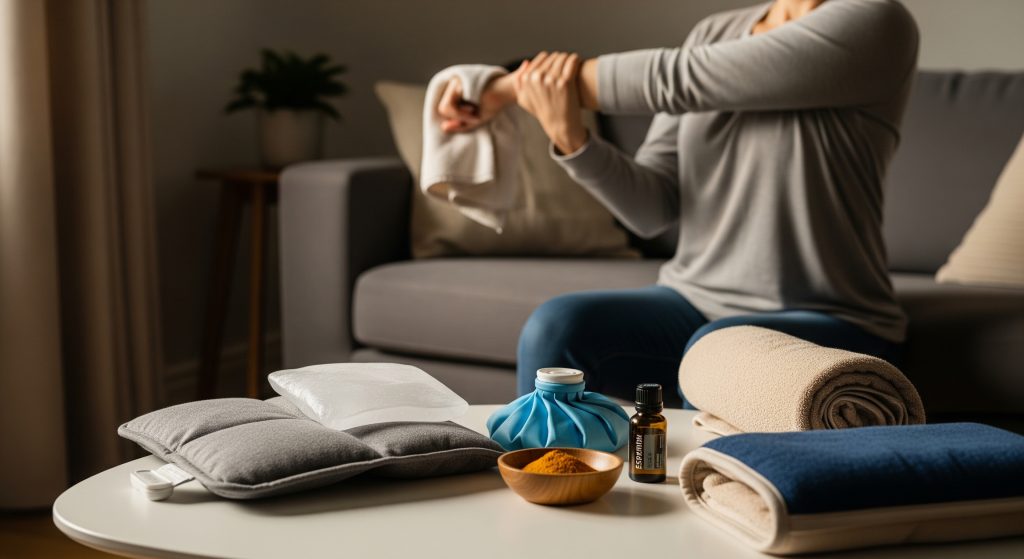
I start with heat because it prepares tissues for movement. Gentle moist heat relaxes the capsule and upper back muscles, so the subsequent stretches feel safer. A warm towel, a microwaveable wheat bag, or a low setting on a heating pad works well. Apply for 10 to 15 minutes until the area feels supple rather than hot.
Two practical rules guide me. First, use heat before mobility work to ease stiffness. Second, if an activity session leaves the joint irritable, cool it down afterwards. This sequence supports blood flow for mobility and then calms reactive soreness. As Mayo Clinic outlines, heat promotes circulation while cold reduces inflammation, so pairing them around exercise can reduce symptoms.
For those with deeper discomfort across the front of the shoulder, a slightly heavier heat pack that drapes around the deltoid can be more effective. It allows the neck and chest muscles to relax as well, which often reduces guarding. I keep the temperature moderate. If the skin turns red or feels prickly, it is too hot.
One more point. Heat is not a cure on its own. It is a primer. Use it to make the essential movements more comfortable and to reduce the fear of moving a painful joint. Small gains add up.
Cold Compress Techniques
Cold is best used as a pain-modulating tool, especially when the shoulder flares after activity. A simple gel pack wrapped in a thin towel prevents skin irritation. Short, regular bouts work better than one long session. As Mayo Clinic advises, apply ice for 15 to 20 minutes every few hours in the early phase to reduce pain and swelling.
I avoid icing immediately before stretching because it can stiffen tissues. I prefer the cool-down use. If cold increases stiffness or creates a deep ache, switch to brief heat or contrast therapy instead.
Here is a practical method that patients tolerate well:
-
Wrap the ice pack in a thin tea towel.
-
Place it over the most tender region, usually the front or outer shoulder.
-
Set a timer for 15 minutes. Remove if numbness or sharp pain occurs.
-
Repeat later that day after exercise or chores that demand arm use.
Gentle Stretching Routines
Mobility returns gradually. The safest plan uses short, frequent drills that respect pain. I aim for two or three brief sessions daily instead of one long, exhausting block. Movements should produce no more than mild discomfort that eases quickly when the stretch is released.
A typical micro-sequence looks like this:
-
Two minutes of heat.
-
Pendulum swings to relax the joint.
-
Wall slides or finger walks for elevation.
-
Cross-body reach to reduce the tight band across the back of the shoulder.
-
Light isometric holds to maintain muscle tone without provoking pain.
Each stretch lasts 10 to 20 seconds, with slow breaths. I keep the range honest. Forcing the end range often backfires and spikes night pain.
Comfortable motion performed consistently beats aggressive stretching performed sporadically.
Turmeric and Anti-inflammatory Foods
Diet will not free a stiff capsule. It can, however, lower background inflammation and improve pain thresholds. Turmeric is a reasonable inclusion within this strategy. The active compound curcumin shows anti-inflammatory and antioxidant activity across multiple models and clinical contexts, supporting a role in symptom management. I take a pragmatic view here. Use turmeric in food or consider a standardised supplement if there are no contraindications, and evaluate benefit over several weeks.
An anti-inflammatory plate is not complicated. I prioritise:
-
Colourful vegetables and fruit for polyphenols.
-
Oily fish or flax for omega-3s.
-
Whole grains and legumes for fibre.
-
Herbs and spices, including turmeric and ginger.
Hydration, reduced ultra-processed snacks, and adequate protein support recovery. It is basically a long-term play. Nothing dramatic, just steady inputs that reduce overall irritability.
Essential Oil Massage Methods
Light self-massage reduces shoulder guarding and improves awareness of safe movement. A few drops of diluted lavender or peppermint oil in a neutral carrier can enhance the relaxing effect. Technique matters more than product. I use slow, broad strokes along the upper back, the side of the shoulder, and the chest, not just the sore spot. That pattern settles the whole region.
Two cautions. First, keep pressure gentle to avoid flares. Second, avoid essential oils if there is any skin sensitivity. A simple fragrance-free lotion is perfectly acceptable.
Epsom Salt Bath Treatment
Warm baths help many people sleep better during the stiff phase. Epsom salts add a familiar ritual and pleasant feel. The primary benefit is the heat and the sense of whole-body relaxation rather than a specific chemical effect on the joint. I recommend a short bath in the evening followed by the most comfortable sleep position. If bathing is not feasible, a warm shower before bed is sufficient.
For hygiene and safety, keep soak times moderate and water warm, not hot. Stand up slowly. Pain that eases after a bath is a good sign that the nervous system is calming around the joint. That matters for progress.
Shoulder Pain Relief Exercises for Frozen Shoulder
1. Pendulum Exercises
Pendulums are deceptively helpful. They reduce muscle co-contraction and encourage gentle joint play. I lean forward with the unaffected hand supported on a table. The sore arm hangs relaxed. Small clockwise and anticlockwise circles follow. I keep the movement small and slow. Pain is a guide. If it spikes, the circles are too big.
-
30 to 60 seconds per direction.
-
One to three sets, two or three times per day.
These are low effort and easy to maintain around work or chores. Consistency is the win.
2. Towel Stretches
Towel drills are versatile. For behind-the-back movement, hold a long towel with the painful hand behind the waist. Gently pull upward with the other hand until a light stretch is felt in the front of the shoulder. Hold 10 to 15 seconds. Repeat several times. Keep the neck relaxed and elbows soft.
A second version targets overhead motion. Drape the towel over the top shoulder and gently assist the sore arm upwards. I avoid any jolting or jerky pulls. Smooth repetitions teach the capsule to accept a bit more length.
3. Cross-body Reach
The cross-body stretch addresses the tight posterior capsule that often restricts horizontal movement. I bring the painful arm across the chest and support the elbow with the other hand. The stretch should be broad and dull, not sharp. Hold for 15 to 20 seconds and repeat four to six times.
This drill, performed daily, tends to reduce the sense of a strap pulling across the back of the shoulder. It also improves comfort when reaching for a seat belt.
4. Finger Walk Exercise
Finger walks up a wall build controlled elevation. Stand an arm’s length from a wall. Walk the fingers up until a light stretch is felt. Pause for a breath or two. Walk back down. Repeat for five to eight climbs. Keep the shoulder blade flat and avoid shrugging.
This exercise is simple and measurable. I encourage noting the highest point reached each week. Small increments reflect useful progress, even if pain feels variable.
5. External Rotation with Band
Gentle resistance preserves strength while mobility returns. Use a light band pinned at waist height. Keep the elbow at the side with a rolled towel between the elbow and ribcage. Rotate the forearm outward against the band without pain. Control the return.
-
Two sets of 8 to 12 repetitions, three times weekly.
-
Stop before sharp pain or compensations appear.
Strong rotator cuff muscles stabilise the joint and reduce guarding. That pays dividends when the capsule begins to loosen.
Frozen Shoulder Recovery Time and Stages
Freezing Stage Duration
The freezing stage is defined by rising pain and declining range. Night discomfort is common. In this period, I emphasise pain control, sleep hygiene, and very gentle movement. Aggressive stretching tends to aggravate. Heat before short mobility drills and cold afterwards can limit flares. The goal is to prevent fear-based immobility while symptoms settle.
Frozen Stage Expectations
Pain gradually stabilises during the frozen stage. Stiffness becomes the dominant complaint. Daily activities feel cumbersome but less acutely painful. I expand the mobility work here. Slightly longer holds and more frequent sessions are tolerated. Strength maintenance becomes more important. Progress may feel slow. It is still progress.
Patients often ask if function can be acceptable despite the stiffness. In many cases, yes. Tasks below shoulder height are usually fine with smart pacing and ergonomic tweaks.
Thawing Stage Timeline
The thawing stage brings incremental return of range. The nervous system allows more movement as pain sensitivity drops. I introduce light end-range holds and careful strengthening into higher angles. Sleep often improves in this phase, which accelerates recovery. It is tempting to accelerate too quickly. I keep the progress steady instead.
Factors Affecting Recovery Speed
Recovery is rarely linear. Several variables influence pace:
-
Metabolic health, especially diabetes control.
-
Adherence to short, regular mobility sessions.
-
Quality of sleep and stress load.
-
Coexisting neck or rotator cuff issues.
-
Pain medication timing and tolerance for exercise.
There is a common counterpoint: some say frozen shoulder resolves regardless of intervention. It often does improve over time, though not without exceptions. Active management tends to shorten the worst period and preserves function. That is a worthwhile outcome.
For clarity, here is a concise stage summary.
|
Stage |
Typical focus |
|---|---|
|
Freezing |
Pain control, sleep, gentle movement with heat-then-cold pairing |
|
Frozen |
Mobility progression, light strength, ergonomic adjustments |
|
Thawing |
End-range mobility, gradual functional load, return to hobbies |
How to Sleep with Frozen Shoulder
Optimal Sleeping Positions
Sleep is the most common complaint in the freezing phase. I prioritise a neutral spine and supported arm. Back-lying with a pillow under the injured arm offloads the capsule. Side-lying on the unaffected side while hugging a pillow also helps. Stomach-lying usually aggravates the joint due to forced rotation.
A semi-reclined setup can be effective during flares. As Mayo Clinic contributors mention, sleeping near a 45 degree angle using pillows can reduce shoulder pain and improve comfort when tissues are irritable.
I advise testing each position for 10 minutes before lights out. The body gives clear feedback when the position is right. Less bracing, calmer breathing, and a heavy, relaxed arm.
Pillow Support Techniques
Pillows do more than pad the shoulder. They position the arm where the capsule is least provoked. Placing a small rolled towel in the armpit supports the ball-and-socket in a neutral slot. This reduces the instinct to grip and protect. In my clinic notes, that trick consistently eases night pain.
Back sleepers can place a medium pillow under the entire forearm and wrist. Side sleepers can hug a pillow to keep the elbow slightly forward. These setups reduce strain on the front of the shoulder. Strategic support under the knees for back sleepers, or between the legs for side sleepers, improves spinal alignment and reduces upper back tension. That matters for the shoulder.
For those who turn frequently, a heavier cushion or a weighted pillow can help the arm stay put. Experiment for a week before judging the result. Small adjustments often decide success.
Bedtime Pain Management Tips
A short routine before bed is beneficial. I prefer a warm pack, two or three light mobility drills, and a cold pack if the day has been demanding. This sequence prepares the joint to rest rather than protest. As Resilience Orthopedics suggests, avoiding direct pressure on the affected side and supporting the arm in a neutral position lowers night pain.
If medication is appropriate and safe, time it so the peak effect aligns with the first half of the night. Gentle breathing work lowers muscle tone. Avoid long sessions of scrolling or slumped reading positions that load the shoulder. A supportive brace can help on restless nights, though I use it sparingly to avoid stiffness.
One final detail. Prepare the sleep setup before fatigue sets in. Adjust pillows, place the heat or cold pack nearby, and pick the first sleeping position deliberately. Good process reduces 2 a.m. frustration.
Making Progress with Frozen Shoulder Home Treatment
Progress with frozen shoulder home remedies is about rhythm and respect for symptoms. The rhythm is daily. Short sessions, gentle but regular loading, and consistent sleep support. The respect is remembering that pain is information, not an instruction to stop everything. I adjust the plan weekly based on responses, not wishes.
Here is a compact, workable template:
-
Morning: two mobility drills after a warm shower.
-
Midday: pendulum set and a finger-walk ladder.
-
Afternoon: short walk for general circulation.
-
Evening: heat, two stretches, then cold if sore.
-
Night: pre-set pillows and a calm, supported sleep position.
I track three markers. Sleep quality, reach level during finger walks, and tolerance for household tasks. When two of the three move forward, the programme is working. When two slide back, I reduce intensity or volume for several days and reintroduce gradually. It is a measured approach, and it works.
There is a final contrarian point. The best frozen shoulder home remedies are rarely exotic. They are simple, precise, and repeated. And yet, that simplicity is exactly why they are often skipped. Choose the basics, and do them well.
Frequently Asked Questions
Can frozen shoulder heal completely without medical treatment?
Many cases improve substantially over time without injections or surgery. To an extent, the condition is self-limiting. However, pain can persist for months and stiffness can outlast pain. A structured home plan usually shortens the most difficult period and preserves function. If progress stalls or red flags appear, seek clinical assessment promptly.
Which home remedy works fastest for frozen shoulder pain?
No single remedy works instantly. The quickest perceived relief often comes from heat before mobility and a short sequence of shoulder pain relief exercises, followed by ice if the joint is reactive. The combination calms the system and protects range. Over several days, sleep support and consistent micro-sessions create the meaningful change.
Should I use heat or ice for frozen shoulder?
Use heat to reduce stiffness and prepare for movement. Use ice to settle post-activity soreness or flare-ups. As Mayo Clinic notes, cold for 15 to 20 minutes every few hours can help early pain, while heat is better before stretching. Alternate based on the response of your shoulder.
How many times daily should I do frozen shoulder exercises?
Short, frequent sessions are preferable. Two or three brief mobility sets per day usually outperform one long set. Strength work sits at two or three times per week. If pain increases overnight, reduce intensity rather than stopping completely. It is a dial, not a switch.
What sleeping position is worst for frozen shoulder?
Stomach-lying tends to be the worst, because it forces the shoulder into awkward rotation. Back-lying with support under the affected arm, or side-lying on the unaffected side while hugging a pillow, is typically more comfortable. When symptoms spike, a semi-reclined posture can help. This is the essence of how to sleep with frozen shoulder with fewer disturbances.

