






 We do what's right for you...


Explainer: Tennis Elbow Physical Therapy and How It Helps
Dr. Ali Haider Khan


Rest alone rarely fixes persistent lateral elbow pain. The better path is targeted tennis elbow physical therapy that restores tendon capacity, reduces pain, and builds robust strength for daily tasks and sport. I will outline the methods that consistently work, explain the why behind them, and show how to make progress without flare ups. The aim is simple. Fewer painful grips and a reliable return to work or play.
Top Physical Therapy Techniques That Relieve Tennis Elbow
1. Eccentric Strengthening Exercises
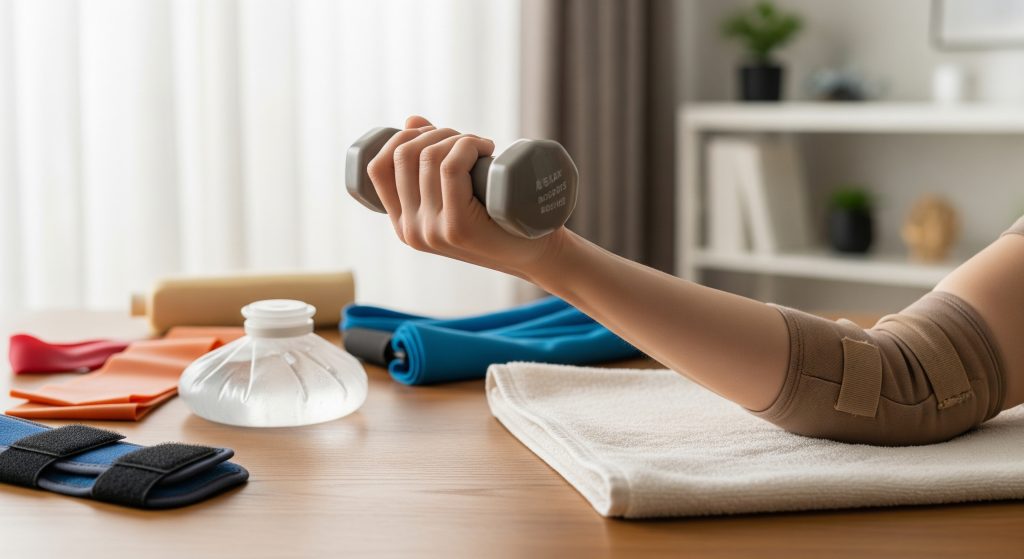
Eccentrics are the backbone of effective tennis elbow physical therapy. They load the wrist extensor tendon while it lengthens, which is how tendons adapt to real life forces. In practice, I use a small dumbbell, the forearm supported on a table, and a slow lowering phase from wrist extension to neutral. The return to start can be assisted with the other hand if needed. Simple, repeatable, and measurable.
-
Start with low pain loads. I aim for mild discomfort only, then settle around it.
-
Use a steady tempo. Three seconds down, brief pause, then reset.
-
Track reps and load weekly to evidence progress.
Why this matters: eccentrics build tendon tolerance and improve grip capacity, which translates to easier lifting and typing. It is basically strength training for a sore tendon with guardrails. I consider them a first line within tennis elbow treatment because they scale well from painful early stages to stronger later phases.
2. Manual Therapy and Soft Tissue Mobilisation
Manual therapy complements loading when used judiciously. I target the common extensor tendon, forearm fascia, and radial nerve mobility where needed. Techniques include gentle soft tissue mobilisation, joint glides at the humeroulnar and radiocapitellar joints, and neural sliders for the radial nerve. The intent is clear. Reduce mechanical sensitivity so exercise tolerance improves.
-
Short manual sessions paired with exercise produce better retention of gains.
-
I re test grip pain post technique to confirm relevance.
Manual work is not the cure. It sets the stage for the work that changes tissue capacity: progressive exercise.
3. Cross-Friction Massage Technique
Cross friction massage can help modulate pain around the tendon insertion. I use it as a focused, time bound tool. Two to three minutes over the sore area, applied across the fibres, followed by a warm up and then loading. This sequence often reduces protective guarding and allows cleaner exercise form. If symptoms spike, I shorten duration and re assess technique. Small, precise doses beat long sessions that irritate tissues.
4. Ice and Heat Therapy Applications
Heat before loading often improves comfort and range as muscles relax and local circulation rises. Ice after higher load sessions can settle reactive soreness. Neither is a fix on its own. I frame them as comfort tools that make the main plan, tennis elbow physical therapy, more tolerable. If morning stiffness dominates, gentle heat and mobility drills come first. If evening soreness lingers, a short ice application can help.
5. Progressive Loading Programme
Progression is where tendons change. I plan a staged increase in load intensity, volume, or complexity. Start with pain stable isometrics, move to eccentrics, then slow concentrics, then functional compound tasks like carry variations. The speed of change depends on irritability, sleep, and workload. When in doubt, I progress one variable at a time to avoid guesswork.
-
Increase only when symptoms remain stable for 24 to 48 hours.
-
Shift from straight wrist work to multi joint tasks as capacity rises.
-
Introduce power last, and only if sport requires it.
Programme timelines vary, but structured phases are standard. As AAOS notes, a therapeutic exercise programme often spans 6 to 12 weeks, advancing from mobility to strengthening while monitoring pain. That cadence keeps risk low and results steady.
Essential Tennis Elbow Exercises for Rehabilitation
1. Wrist Extensor Stretches
I prioritise a controlled flexion stretch with the elbow straight and the fingers gently flexed. Hold for 20 to 30 seconds, two to three reps, several times daily. The goal is easing stiffness without provoking pain. Stretching is supportive. It improves motion quality so strengthening feels cleaner.
2. Resistance Band Exercises
Elastic bands allow graded resistance through range. I use banded wrist extension, radial deviation, and external rotation of the shoulder to build upstream support. Why the shoulder? Scapular strength reduces distal overload during carrying and sport. The sequence I like is warm up, band work, then primary tendon loading. It stacks stability where it counts.
3. Grip Strengthening Activities
Grip matters because daily life is grip dominant. I start with putty squeezes or towel wringing at low intensity, then progress to hand grippers or farmer carry variations. Keep pain tolerable and transient. If grip work flares symptoms, I adjust the angle or the duration rather than abandoning it. The dividend is obvious. Doors, bags, and rackets feel manageable again.
4. Forearm Pronation and Supination
Rotational control stabilises the tendon under load. I use a hammer or dumbbell held by one end, the forearm supported, then rotate slowly through pronation and supination. Small ranges first, then fuller arcs. These become a bridge between isolated wrist drills and functional tasks like turning keys or backhand strokes.
5. Finger Extension Exercises
Finger extensors feed into the common extensor tendon. I train them with rubber band extensions or a dedicated finger web. Ten to fifteen slow reps, focusing on full opening. It seems modest, yet it reduces local fatigue upstream. Less spillover onto the sore tendon during gripping. That is the point.
6. Isometric Hold Positions
Isometrics have a place when pain is high or motion aggravates symptoms. I use mid range wrist extension holds against the other hand for 30 to 45 seconds. Two to five sets, with calm breathing. These holds provide analgesia for many people and form a launchpad for later eccentrics. The rule is simple. No sharp pain during, and no increase the next day. If either appears, I reduce effort and re check form.
Tennis Elbow Braces and Supporting Treatments
Types of Tennis Elbow Braces
A tennis elbow brace can provide short term relief while capacity builds. Two common options exist. Counterforce straps apply targeted compression over the tendon, while sleeves offer broader forearm support and warmth. I choose based on task demands and comfort. Heavy gripping often responds to a counterforce strap. Desk work sometimes feels better with a sleeve.
|
Brace Type |
Primary Use |
|---|---|
|
Counterforce strap |
Targeted tendon offloading during gripping and lifting |
|
Supportive sleeve |
Mild, general support for day long comfort and warmth |
I keep expectations realistic. A brace is a support, not the solution. Tennis elbow physical therapy remains the driver of recovery, while bracing helps navigate busy days with fewer spikes in pain.
Counterforce Strap Positioning
Placement is critical. I position the strap two to three finger widths below the lateral epicondyle on the muscle belly, not directly on the bony point. Tight enough to feel support, never tight enough to numb the hand. Test the fit by performing a light grip task. If grip feels steadier and symptoms drop, the position is likely right. If pain worsens, move the strap slightly or loosen it.
Kinesiology Taping Methods
Taping can cue better movement and provide light support. I often apply a Y strip along the wrist extensors with minimal tension, then a short I strip across the sore zone for awareness. Taping shines during higher demand days or a return to sport session. It does not replace a tennis elbow brace but adds a gentle sensory layer.
Ultrasound Therapy Benefits
Ultrasound is sometimes used for symptom modulation. My stance is pragmatic. If it reduces pain in the short term and allows higher quality loading, it has a role. If not, I drop it. Passive modalities should earn their place by improving readiness for the active work of tennis elbow exercises and strength progression.
Dry Needling Applications
Dry needling can settle hyper irritable muscle bands in the wrist extensors and reduce perceived tightness. I consider it when night ache or spasm limits exercise form. The procedure is brief, followed by a re test of grip and wrist loading. Any benefit must translate into better training. Otherwise, it becomes noise.
Recovery Timeline and Prevention Strategies
Typical Healing Phases
Tendinopathy recovery is variable, but a sensible pattern appears in clinic. Early relief and control, then capacity rebuilding, then return to full function. Many people see early gains in comfort within two to four weeks when adherence is high. Capacity tends to climb across the following two months. Relapses can happen, usually when load spikes faster than tolerance. The fix is predictable. Step back a notch, tidy form, scale again.
-
Phase 1: Calm pain and regain baseline motion and grip tolerance.
-
Phase 2: Build strength with eccentrics, then combined loading.
-
Phase 3: Reintroduce higher demand tasks and sport drills.
Throughout, I keep tennis elbow physical therapy consistent and measured. Consistency beats intensity for tendons.
Activity Modification Guidelines
Modification is not avoidance. I keep life moving with fewer aggravations. Switch heavy pan handles to two hands. Use a neutral wrist when typing. Break up repetitive gripping with micro rests. If a task flares symptoms within minutes, I shorten duration or add a brace for that task. Small changes, large impact.
Workplace Ergonomic Adjustments
Desk setup matters. I aim for neutral wrist alignment, elbow near 90 degrees, and the mouse close to the body. Consider a vertical mouse to reduce sustained wrist extension. Place frequently used items within easy reach. The target is reducing sustained tendon load while capacity rebuilds. A clean setup is quiet medicine.
Sport-Specific Technique Corrections
In tennis, a late contact point and a stiff wrist amplify stress. I work on earlier preparation, relaxed grip, and body rotation through the shot. For lifting sports, I emphasise neutral wrist alignment and proper bar path during pulls and presses. Coaching cues beat brute force. Technique frees the tendon from constant overdrive.
Long-Term Maintenance Programme
Maintenance is insurance. I keep a light version of eccentrics or combined wrist work twice weekly after recovery. Add shoulder and scapular strength to support the chain. Monitor total weekly gripping load in work and sport. If life ramps up, the programme should too. That is how flare ups stay rare and brief.
Making Tennis Elbow Physical Therapy Work for You
A strong plan beats scattered effort. Here is a compact framework I use to keep tennis elbow physical therapy on track and personalised.
-
Define the baseline: pain at rest, pain with grip, and key tasks that matter. Record simple numbers that you can repeat weekly.
-
Start with controllable loading: isometrics and light eccentrics. Keep pain within a tolerable, short lived window.
-
Progress one variable at a time: load, volume, speed, or complexity. Avoid changing all four at once.
-
Support high demand days: consider a tennis elbow brace, taping, or planned micro breaks to avoid spikes.
-
Audit technique in sport and at work: reduce unnecessary wrist extension and death grip habits.
-
Review weekly data: if pain is trending down and function up, continue. If not, adjust.
This is practical and robust, not flashy. It respects tendon physiology and daily reality. It also makes tennis elbow treatment measurable and therefore repeatable.
One last point. Restoring capacity is the job. Comfort tools help, but progressive loading does the heavy lifting. I keep the focus there.
Frequently Asked Questions
How long does tennis elbow physical therapy typically take?
Timelines vary by severity and workload. A focused plan commonly shows meaningful improvements within several weeks, with fuller capacity returning across two to three months. As noted earlier, a structured plan can span 6 to 12 weeks for staged strengthening, which aligns with tendon adaptation rates. I extend or compress phases based on symptom stability and task demands.
Can I do tennis elbow exercises at home without supervision?
Yes, with clear guidance and guardrails. I provide precise exercise cues, a pain boundary, and a progression trigger. Home based tennis elbow exercises work when form is consistent and loads are recorded. If pain persists or function stalls, a short in person review prevents weeks of guesswork.
When should I wear a tennis elbow brace during therapy?
I use a brace for tasks that predictably aggravate symptoms, like heavy carries or long typing periods. Wear it during the task, not all day. The brace reduces peaks in load while tennis elbow physical therapy builds baseline capacity. If dependence grows, I taper use as strength improves.
What’s the difference between tennis elbow and golfer’s elbow treatment?
Both are tendinopathies, but the involved tendons differ. Tennis elbow involves wrist extensors at the lateral elbow. Golfer’s elbow involves wrist flexors at the medial elbow. The treatment principles are similar: controlled loading, technique changes, and graded return to function. Exercise angles and specific drills differ to target the affected tissue.
Should I stop all activities during tennis elbow rehabilitation?
No. I reduce or modify aggravating tasks rather than stopping everything. Strategic activity keeps tissues resilient and maintains general fitness. The goal is calibrated exposure, not avoidance. If a task causes sharp pain or next day spikes, I scale it back and progress slower.
How do I know if my tennis elbow exercises are working?
Look for three signs across a week. Lower pain during previously aggravating tasks, better grip tolerance, and fewer next day flares. Data helps. Track a simple grip strength measure and a task rating out of ten. If those trend in the right direction while pain stays stable or lower, tennis elbow physical therapy is on course. If not, adjust variables methodically.

