






 We do what's right for you...


Essential Rotator Cuff Exercises for Stronger, Pain-Free Shoulders
Dr. Ali Haider Khan
Most people chase heavy presses and ignore the smaller muscles that keep the shoulder honest. That negligence causes many painful setbacks. I treat the shoulder differently. I train control first, strength second, and range that the joint can actually stabilise. The result is simple. More capacity, less irritation. In this guide, I present a precise set of rotator cuff exercises and a clear progression you can apply with confidence.
Essential Rotator Cuff Strengthening Exercises
1. External Rotation with Resistance Band
This is the cornerstone of many rotator cuff exercises. It targets infraspinatus and teres minor, which resist forward translation of the humeral head. I cue a narrow stance, elbow at the side, and a light band to start. Keep the forearm parallel to the floor and rotate outward without letting the elbow drift.
-
Set-up: Tie a band at elbow height. Stand side-on with the working arm farthest from the anchor.
-
Execution: Brace the trunk. Pull the forearm out to about 45 to 60 degrees of external rotation. Pause one second.
-
Volume: 2 to 4 sets of 10 to 15 repetitions at a calm tempo, such as 2-1-2.
-
Common faults: Flaring ribs, hiking the shoulder, or letting the wrist bend. Keep everything aligned.
Progression can include a towel under the elbow to improve cuff isolation, then moving to 90 degrees abduction in later phases. These are not glamorous shoulder strengthening exercises, but they build real capacity.
2. Internal Rotation Exercise
Internal rotation strengthens subscapularis, which is the front anchor of the cuff. I position the band at elbow height again. The elbow stays tucked, and the forearm moves toward the belly with a smooth pull.
-
Set-up: Stand with the working arm closest to the anchor.
-
Execution: Rotate the forearm inward without trunk twist. Pause. Return with control.
-
Volume: 2 to 4 sets of 12 to 15 repetitions. Keep tension modest at first.
-
Coaching cue: Imagine pinching the shoulder blade slightly toward the spine, then allow it to settle as the arm moves.
In practice, pairing internal and external rotation as a superset delivers balanced stimulus and time efficiency. This pairing sits at the core of my rotator cuff exercises sequence.
3. Face Pulls for Posterior Deltoids
Face pulls train external rotation and scapular retraction together. They also hit the posterior deltoid and mid-traps, which support the cuff under load. I set the cable or band at eye level. Wrists remain neutral, and I emphasise a slight external rotation at the finish.
-
Set-up: Use a rope attachment or two handles. Step back for continuous tension.
-
Execution: Pull to the face while drawing the elbows wide and slightly higher than the wrists. Finish tall.
-
Volume: 3 sets of 12 to 15 repetitions. This is a control drill, not a heave.
-
Faults: Overextending the lower back or shrugging. Keep ribs down and neck long.
I sometimes use a 3-0-2 tempo to remove momentum. The shoulder responds well to deliberate time under tension.
4. Prone Horizontal Abduction
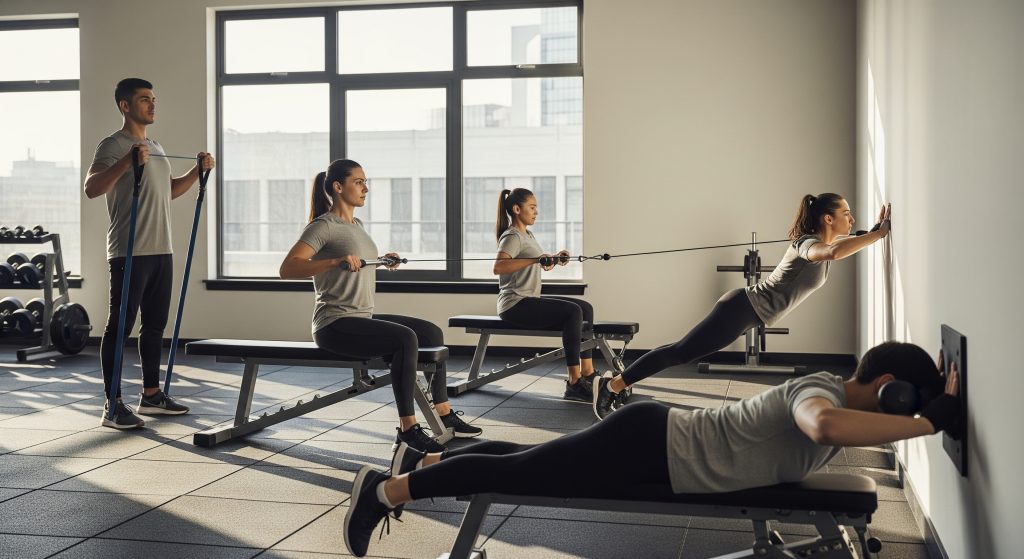
Prone horizontal abduction isolates the posterior cuff and lower traps in a strict position. It is tough in a good way. I lie prone on a bench with a light dumbbell. The thumbs point up to encourage external rotation.
-
Execution: Raise the arms to a T position and hold briefly at the top.
-
Range: Lift until the shoulder blade just begins to move, then stop. No forced arching.
-
Volume: 2 to 3 sets of 8 to 12 repetitions with perfect form.
-
Variation: Y raises for more lower trap bias, but only if the shoulder tolerates the angle.
If the neck tightens, I reduce load and cue a soft chin tuck. Clean movement quality is non-negotiable here.
5. Scapular Wall Slides
Wall slides teach upward rotation and posterior tilt, both critical to pain-free elevation. I place the forearms on the wall, elbows at 90 degrees, and slight pressure through the forearms.
-
Execution: Slide the forearms upward while keeping the ribs stacked over the pelvis.
-
Cue: Think glide, not grind. The shoulder blades should move smoothly around the ribs.
-
Volume: 2 to 3 sets of 8 to 12 controlled repetitions.
-
Regressions: Perform supine wall slides on the floor to train patterning first.
This drill pairs well with banded external rotation. Together they reinforce good scapulohumeral rhythm, which is a simple but vital concept.
6. Side-Lying External Rotation
This is the classic open-chain cuff builder. Lying on the side with a rolled towel under the upper arm, I rotate a light dumbbell outward and pause at the top. The humeral head should feel centred. No pinching at the front of the shoulder.
-
Volume: 3 sets of 10 to 15 repetitions at RPE 6 to 7, which is a moderate effort.
-
Tempo: 2-1-2 to eliminate jerking and teach the shoulder to own each position.
-
Cue: Keep the wrist straight and the elbow fixed in place.
Among rotator cuff exercises, this teaches motor control exceptionally well. Good technique beats load here.
7. Standing Row with Band
Rows build the base for the cuff by strengthening the scapular retractors. I use a band or cable and cue a proud chest with quiet ribs. The shoulder blade initiates, the elbow follows.
-
Execution: Pull to the side of the torso and hold for one second.
-
Grip: Neutral grip suits most shoulders and keeps the wrist relaxed.
-
Volume: 3 to 4 sets of 8 to 12 repetitions, focusing on symmetry left to right.
-
Progression: Half-kneeling row to challenge trunk control and hip stability.
Rows are not strictly rotator cuff exercises, yet they create the environment the cuff needs. Strong scaffolding supports precise movement.
8. Cross-Body Shoulder Stretch
This stretch targets posterior shoulder tissues and can ease a stiff capsule. I bring the arm across the chest and hold it with the other arm. The shoulder stays down and back, not jammed forward.
-
Hold: 20 to 45 seconds, 2 to 3 rounds per side.
-
Feel: Mild stretch behind the shoulder. No tingling, no sharp pain.
-
Tip: Breathe slowly so the nervous system allows release.
Stretching alone is not enough. I always pair mobility work with light rotator cuff exercises to consolidate new range.
Progressive Shoulder Stability Programme
Beginner Phase Exercises
The beginner phase develops baseline motor control and tissue tolerance. I focus on low-load, high-quality movements. The goal is clean reps with no compensations or flare-ups.
-
Side-lying external rotation: 3 sets of 12 to 15.
-
Band internal rotation: 3 sets of 12 to 15.
-
Scapular wall slides: 2 sets of 10.
-
Standing band row: 3 sets of 10 to 12.
-
Cross-body stretch: 2 rounds per side.
Frequency can be 3 non-consecutive days per week. I keep effort at RPE 5 to 7 to allow steady skill acquisition.
Intermediate Strengthening Routine
Once technique stabilises, I add complexity and load. The cuff must work through more range and under mild fatigue. This stage builds resilience.
-
External rotation at 90 degrees abduction: 3 sets of 8 to 12.
-
Prone horizontal abduction: 3 sets of 8 to 12.
-
Face pulls with external rotation finish: 3 sets of 12 to 15.
-
Half-kneeling single-arm row: 3 sets of 8 to 10 per side.
-
Cross-body and doorway stretches: 2 rounds each.
This phase remains technical. It is basically a rehearsal for heavier and more demanding tasks you will add later.
Advanced Stability Challenges
Advanced drills challenge shoulder control in open and closed chain positions. They also expose weak links. I use tempo, single-arm loading, and positional holds to raise the ceiling.
-
Bottoms-up kettlebell carry: 3 sets of 20 to 40 metres per side.
-
High plank shoulder taps: 3 sets of 8 to 12 taps per side, slow and steady.
-
Landmine press with slight arc: 3 sets of 6 to 10, focus on upward rotation.
-
External rotation isometric holds at mid-range: 3 sets of 20 to 30 seconds.
These are functional shoulder stability exercises that stress the system without reckless loading. Control remains the filter for progression.
Weekly Progression Guidelines
Progression must be measured. I raise only one variable at a time. Usually load first, then volume, then complexity. Rarely all at once.
|
Variable |
Guideline |
|---|---|
|
Load |
Increase by 2 to 10 percent when all reps are crisp and pain free. |
|
Volume |
Add 1 to 2 repetitions per set before adding sets. |
|
Tempo |
Slow eccentrics first, such as 3 seconds down, to build control. |
|
Frequency |
Move from 2 to 3 weekly sessions when recovery metrics are positive. |
Deload every fourth week if joints feel irritable or technique drifts. The aim is progress that sticks. Not a flash of strength that vanishes.
Exercises for Shoulder Impingement Relief
Doorway Chest Stretch
A tight anterior chain can bias the shoulder forward. The doorway stretch opens the pecs and allows the scapula to set better. I place forearms on the frame and step through gently.
-
Hold: 20 to 30 seconds. Breathe without shrugging.
-
Angle: Test elbow height to find the least provocative position.
-
Volume: 2 to 3 rounds, then add light activation afterwards.
I often pair this with band external rotation. Mobility plus activation is an effective antidote to exercises for shoulder impingement that only stretch.
Pendulum Swings
Pendulums reduce guarding and help calm reactive pain. I lean forward and let the arm hang. The trunk moves slightly to create a small swing. The shoulder stays relaxed.
-
Pattern: Small circles, side to side, then forward and back.
-
Time: 30 to 60 seconds each pattern.
-
Goal: Decompress, not to prove range.
This drill often clears the way for gentle rotator cuff exercises in early rehab stages.
Isometric Shoulder Exercises
Isometrics can reduce pain and build tolerance. I use gentle pushes into external or internal rotation against a fixed strap or wall. The joint stays still. The muscles work.
-
Intensity: Light to moderate, around RPE 4 to 6.
-
Hold: 20 to 30 seconds, 3 to 5 rounds with brief rests.
-
Positions: Neutral elbow by the side or at 30 to 45 degrees abduction.
These are ideal when movement hurts but some effort is possible. I view them as a bridge to loaded patterns.
Sleeper Stretch Technique
The sleeper stretch targets internal rotation. It can help posterior tightness, but only when done with gentle intent. I lie on the side with the shoulder and elbow at 90 degrees. The top hand guides the forearm toward the floor.
-
Range: Stop at mild stretch. No pressing through pain at the front.
-
Hold: 20 to 30 seconds, 2 to 3 rounds.
-
Tip: Support the head so the neck does not tense.
If the front of the shoulder feels blocked, I switch to cross-body stretch instead. The objective is relief, not bravado.
Modified Push-Up Progressions
Closed-chain loading restores confidence and scapular mechanics. I start with wall push-ups, then bench, then floor. The elbows track at about 30 to 45 degrees from the torso.
-
Wall: 3 sets of 8 to 12, slow and controlled.
-
Bench: 3 sets of 6 to 10, maintain shoulder blade glide.
-
Floor on knees: 3 sets of 6 to 8 before full push-ups.
These progressions double as shoulder stability exercises when executed with intent. The cuff earns its keep here.
Shoulder Mobility and Flexibility Routine
Dynamic Warm-Up Movements
A purposeful warm-up primes the cuff and the scapula. I choose movements that blend motion and control. The goal is readiness, not fatigue.
-
Arm circles, small to large: 20 to 30 seconds each direction.
-
Band dislocates with soft elbows: 2 sets of 8 to 10.
-
Wall slides or floor slides: 2 sets of 8, slow on the way up.
-
Light external and internal rotation with a micro band: 2 sets of 15.
This sequence integrates with rotator cuff exercises seamlessly. It prepares tissues and improves coordination at low cost.
Range of Motion Exercises
Range of motion work maintains joint health when applied sensibly. I favour controlled articular rotations, known as CARs. The movement is slow and circular with a focus on control.
-
Shoulder CARs: 3 slow circles each way per side, staying under pain threshold.
-
Scapular clocks: Elevate, depress, protract, retract in sequence, 2 rounds.
-
Thoracic extensions over a foam roller: 5 to 8 reps.
These shoulder mobility exercises reinforce space for later loading. They also build awareness that carries into lifts.
Post-Workout Stretching Sequence
After training, I consolidate range with low-tension stretches. The aim is recovery and signalling, not aggressive lengthening.
-
Cross-body posterior stretch: 30 seconds, 2 rounds.
-
Doorway pec stretch: 30 seconds each arm.
-
Lat stretch on bench or box: 20 to 30 seconds, keep ribs tucked.
Follow stretches with a few light reps of external rotation. The nervous system stores the new pattern better that way.
Daily Maintenance Routine
Short daily inputs keep shoulders robust between sessions. I use micro-doses that fit into breaks. Consistency beats intensity over time.
-
Two minutes of band external rotation sprinkled through the day.
-
One minute of scapular circles during desk breaks.
-
Brief doorway stretch after long sitting.
-
Occasional isometric holds when the shoulder feels unsettled.
This quiet floor of practice supports the louder work in the gym. The result is steadier progress and fewer setbacks.
Building Stronger, Pain-Free Shoulders
High-function shoulders require three things: composure under load, dependable control, and range that remains usable. Rotator cuff exercises provide the control piece. Rowing and pressing build the load piece. Mobility creates room. There is a rhythm to it.
I structure training with two strength days and one lighter integration day. That schedule balances stimulus and recovery. The integration day blends wall slides, face pulls, and carries. It cements shoulder patterns.
I also track technical markers, not just weight or reps. The humeral head should feel centred. The scapula should glide smoothly. Breathing should stay calm under effort. Small signals but meaningful ones.
As a final note, I rely on simple metrics. Can the arm externally rotate to a functional angle without discomfort. Can isometric holds at mid-range feel solid for 30 seconds. Can carries remain stable with a moderate load. These checkpoints predict tolerance for sport and life.
There is a temptation to skip small work. But that small work protects big lifts and daily tasks. It is arguably the best return on training time. Keep rotator cuff exercises consistent and thoughtful, and the shoulder usually returns the favour.
Frequently Asked Questions
How often should I perform rotator cuff exercises?
I recommend two to four sessions per week for most adults. Frequency depends on soreness, training volume, and sport demands. A practical split is light cuff work on full-body days and a focused session on an upper day. Daily micro-doses also help, such as brief isometrics and one easy band set. This cadence maintains skill and keeps tissues responsive without excess fatigue.
Can I do shoulder strengthening exercises with existing pain?
Yes, provided exercises are symptom guided and sub-pain threshold. I use the traffic light rule. Green is no pain and full control. Amber is mild discomfort that eases within 24 hours. Red is sharp pain or lingering soreness. Stay in green and amber zones. Choose gentle patterns such as isometrics, pendulums, and low-load external rotation. If symptoms escalate, reduce range, load, or complexity.
What resistance band strength is best for beginners?
A light band is best for learning. The cuff responds to precision more than brute force. I seek full range with zero shrug and zero trunk twist. If technique fails before 12 clean repetitions, the band is too heavy. Increase tension only when every rep looks identical and the shoulder feels calm the next day. This approach applies across rotator cuff exercises, not just band work.
How long before seeing improvement in shoulder stability?
Most people notice better control within two to four weeks. Strength changes follow by week six to eight. The exact timeline varies with training age, previous injury, and total workload. Consistency and careful progression matter most. In other words, practice with intent. The shoulder rewards that approach.
Should I feel muscle burn during these exercises?
A mild to moderate burn is acceptable. Sharp pain or joint pinching is not. The cuff prefers controlled fatigue rather than maximal strain. I use RPE 6 to 7 for most sets. That feels like a few reps left in reserve. This keeps quality high and tendons happy. If burn turns to ache later in the day, reduce volume next session.
Can rotator cuff exercises prevent shoulder injuries?
They reduce risk to a meaningful degree, though not in absolute terms. Strong, well-timed cuff activity stabilises the joint during fast or heavy tasks. Add solid scapular control and sensible loading. Injury likelihood usually falls. However, sport is chaotic. No programme can eliminate risk. Good preparation shifts the odds in your favour, which is the best that training can offer.
Practical Programming Snapshot
Here is a concise template that integrates the methods above. It balances capacity, skill, and recovery.
-
Warm-up: Dynamic sequence and two light activation sets.
-
Primary cuffs: External and internal rotation, 3 sets each.
-
Scapular strength: Row and face pull variations, 3 sets each.
-
Closed chain: Push-up or plank progressions, 2 to 3 sets.
-
Cool-down: Cross-body and doorway stretches, then 1 light activation set.
Adjust one dial at a time. Load, volume, or complexity. Not all three together.
Key Cues I Use Often
-
Ribs down, neck long, shoulder blade glides around the ribs.
-
Wrist neutral, elbow quiet, forearm rotates smoothly.
-
Slow down the lowering phase. Own the last 20 percent of range.
-
Stop sets one rep before form breaks. Quality compounds.
Simple cues, repeated consistently, do more than complex drills done inconsistently.
Common Errors to Avoid
-
Using a band that is too heavy and recruiting the upper traps.
-
Training only external rotation and ignoring internal rotation strength.
-
Skipping mobility work and then forcing range during lifts.
-
Chasing volume when form quality is not stable yet.
Fix these and most shoulder issues become manageable. Sometimes quickly.
Glossary for Quick Reference
|
Term |
Meaning |
|---|---|
|
ER/IR |
External rotation and internal rotation at the shoulder. |
|
RPE |
Rate of Perceived Exertion, a 1 to 10 effort scale. |
|
Open chain |
Hand free to move, like side-lying ER. |
|
Closed chain |
Hand fixed, like push-ups or planks. |
|
Scapulohumeral rhythm |
Coordinated motion between the shoulder blade and arm bone. |
Knowing the language speeds learning. It clarifies priorities and cuts guesswork.
Final Perspective
Strong shoulders come from consistent attention to details that others dismiss. Choose measured progress. Pair mobility with activation. Treat technique as training. Use rotator cuff exercises as the spine of your plan and let bigger lifts grow around them. The payoff is capacity that lasts and shoulders that feel trustworthy when it matters.

