






 We do what's right for you...


Emergency Cardiology Services Near You: What Every Family Should Know
Dr. Hriday Kumar Chopra
Disclaimer: The content shared here is for informational purposes only. Always consult a specialist doctor before attempting any treatment, procedure, or taking any medication independently.
Common advice suggests waiting for a routine appointment when chest discomfort feels mild. That approach risks preventable harm. In emergencies, speed, capability, and proximity decide outcomes. In this guide, I explain how to assess services quickly, recognise red flags with clarity, and decide when to call for help. I also outline how to choose a cardiology doctor near me without guesswork.
Essential Emergency Cardiology Services Available Near You
When a cardiac event strikes, the first hour sets the tone for survival and recovery. I prioritise three questions: what services exist within a reachable radius, how fast can they act, and what happens after stabilisation. Below is a quick service map and how to use it in practice.
|
Service |
What it offers in an emergency |
|---|---|
|
24/7 Emergency Cardiac Care Units |
Immediate triage, ECG, stabilisation, and protocol-led treatment for suspected heart attack or arrhythmia. |
|
Mobile Cardiac Ambulance Services |
On-scene assessment, defibrillation, oxygen, and rapid transfer with pre-alert to hospital teams. |
|
Cardiac Catheterisation Labs |
Angiography and angioplasty to restore blood flow, plus valve and structural interventions. |
|
Telemetry Monitoring Services |
Continuous rhythm observation for deterioration detection and timely escalation. |
|
Paediatric Cardiac Emergency Units |
Child-specific resuscitation, imaging, and post-operative cardiac intensive care. |
|
Cardiac Rehabilitation Centres |
Supervised recovery plans covering exercise, risk control, and medication adherence. |
24/7 Emergency Cardiac Care Units
A true round-the-clock cardiac emergency unit handles chest pain, breathlessness, syncope, and palpitation with protocol discipline. I look for immediate ECG, serial troponins, and a defined pathway for thrombolysis or primary PCI. Staffed intensivists and rapid cardiology review matter. So does door-to-needle and door-to-balloon time performance. Ask how they measure both. A strong unit will answer precisely.
-
Confirm on-call interventional cardiology cover overnight and on weekends.
-
Check if the unit coordinates with a cardiac catheterisation lab within minutes.
-
Assess whether family updates and consent procedures are streamlined.
In an urgent search for a cardiology doctor near me, I would prioritise centres that publish these metrics, even if only internally.
Mobile Cardiac Ambulance Services
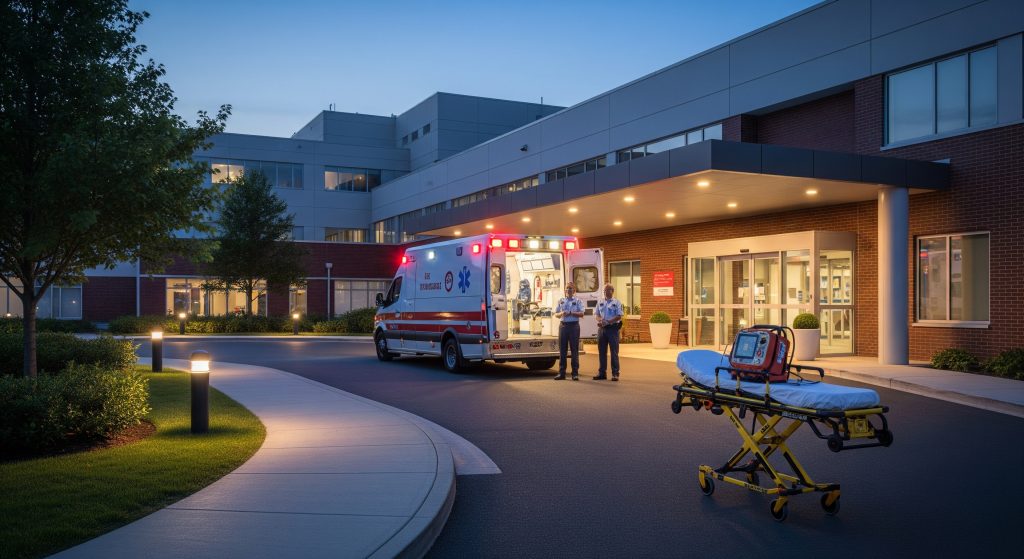
High capability ambulances reduce time to first treatment and improve handovers. Select services that provide ECG acquisition, defibrillation, IV access, and physician or paramedic cover. Some services now carry advanced support for severe cardiac failure. As The Hindu reported, a mobile ECMO ambulance has been introduced to deliver advanced support in transit, extending life-saving options before hospital arrival.
When I shortlist a cardiology doctor near me, I also check which ambulance network the hospital uses, and how pre-alerts are handled in real time.
Cardiac Catheterisation Labs
A well-run cath lab is the fulcrum for heart attack care. The team threads a catheter through an artery to reach the heart and opens blocked vessels. It sounds technical. It is basically targeted plumbing for blood flow restoration. The benefits are clear: faster relief, smaller infarcts, and shorter stays. Risks exist but are managed through pre-procedure checks, sterile technique, and post-procedure observation.
-
Team composition should include trained interventionists, cath lab nurses, and radiographers with defined roles.
-
Capabilities should cover angiography, angioplasty, temporary pacing, and haemodynamic assessment.
-
Operational readiness must include night activation, radiation safety, and backup power.
I want a cardiology doctor near me who performs these procedures regularly, not occasionally. Volume and team rehearsal matter. They reduce errors.
Telemetry Monitoring Services
Telemetry offers continuous rhythm tracking on the ward and in step-down areas. Used well, it flags arrhythmias early and supports safe discharge. Overuse can dilute attention and strain nursing bandwidth. In a peer-reviewed study, non-cardiac diagnoses accounted for 5% of telemetry use on a medical service, highlighting selection issues. As PMC notes, adherence to indication criteria improves clinical yield.
-
Appropriate use includes acute coronary syndrome, high-risk arrhythmia, and early post-op cardiac monitoring.
-
Remote device monitoring cuts time to detect actionable events for pacemakers and ICDs.
-
Clear stop criteria prevent telemetry drift and alarm fatigue.
When I evaluate a cardiology doctor near me, I ask how telemetry protocols are audited. The answer reveals safety culture in one sentence.
Paediatric Cardiac Emergency Units
Children need tailored resuscitation, imaging, and ICU staffing. Paediatric cardiac emergencies often present atypically and escalate fast. Effective units combine rapid echocardiography access, child-appropriate sedation, and a paediatric cardiac intensive care model. Multidisciplinary teams coordinate pre-op and post-op management with precision. I check whether a paediatric cardiologist is on-call and how transfers to cardiac theatres are triggered.
For families, the right paediatric cardiologist near me is not only a clinician. The role includes pathway design, parent counselling, and aftercare planning.
Cardiac Rehabilitation Centres
Rehabilitation starts the day after stabilisation, not weeks later. The goals are straightforward: restore function, reduce recurrence, and build confidence. A robust programme includes supervised exercise, medication adherence, nutrition, psychological support, and risk factor modification. I ask centres about attendance rates and completion rates. If both are high, outcomes follow. If both are low, relapse risk rises.
-
Expect structured sessions with progression targets.
-
Look for blood pressure, lipids, and glucose tracking in the plan.
-
Family education sessions help sustain behaviour change at home.
I involve a cardiology doctor near me early in the rehab plan to align follow up with clinical goals and personal constraints.
Recognising Cardiac Emergencies: When to Seek Immediate Help
Most delays occur in the first decision minutes. Is this indigestion or a heart attack. The question lingers while risk increases. Use the signals below. If they match, treat it as urgent and seek a heart specialist near me or emergency care without delay.
Adult Heart Attack Warning Signs
-
Chest pressure, squeezing, or heaviness lasting more than ten minutes, or recurring in waves.
-
Pain radiating to arm, neck, jaw, or back, especially with cold sweats or nausea.
-
Unexplained breathlessness, overwhelming fatigue, or faintness.
In practice, atypical signs are common in older adults and in those with diabetes. I advise calling emergency services first. Then contact a cardiology doctor near me who can coordinate arrival and immediate evaluation.
Paediatric Cardiac Emergency Symptoms
-
Rapid breathing, poor feeding, or greyish skin in infants.
-
Chest pain with exertion, fainting, or palpitations in older children.
-
Sudden lethargy or collapse, especially during sports.
Children compensate until they cannot. Deterioration can be abrupt. I prefer a pre-identified paediatric cardiologist near me with emergency availability. That simple preparation shortens the most stressful hour a parent can face.
Sudden Cardiac Arrest Indicators
-
Collapse without warning, unresponsiveness, and absent normal breathing.
-
Occasional brief gasps, which are not effective breaths.
Start CPR immediately. Use an AED if available. Then direct the ambulance to an emergency unit with cath lab access. While CPR is underway, a cardiology doctor near me can alert the receiving team and shave precious minutes off definitive care.
Heart Rhythm Emergencies
-
Fast, irregular heartbeat with dizziness, chest tightness, or breathlessness.
-
Slow pulse with syncope or near syncope.
-
Repeated palpitations with low blood pressure or confusion.
Rhythm problems range from benign to life threatening. The safest approach is urgent assessment. I ask for an on-the-spot ECG and electrolyte panel. I also ask whether device therapy or ablation might be necessary. A responsive cardiology doctor near me will outline contingencies clearly.
Post-Surgery Complications
-
Wound redness, drainage, fever, or new swelling in the legs.
-
Sudden weight gain, rising breathlessness, or irregular pulse after discharge.
-
Confusion or unexpected fatigue in the first week.
Complications can be subtle. A quick call to the surgical team is essential. I then coordinate with a cardiology doctor near me for examination and tests. Early action prevents readmission and protects the repair achieved in theatre.
Finding the Right Cardiology Doctor Near Me
Selection under pressure creates error. I recommend identifying preferred clinicians before an emergency. My checklist is practical, centred on evidence, and designed for fast decisions.
Emergency vs Routine Cardiac Care
Emergency care prioritises speed and stabilisation. Routine care prioritises diagnosis depth and long term control. I choose a cardiology doctor near me who handles both, or one who works in a team that does. Continuity matters. It improves decisions when the situation changes from calm to urgent and back again.
-
Emergency-first clinics should show transfer links to higher acuity centres.
-
Routine-first clinics should evidence prevention, lipid management, and structured follow up.
In some cities, the best cardiologist in India will not be the most accessible in a crisis. Balanced choice wins here.
Qualifications of Heart Specialists
Credentials are a proxy for training depth, not a guarantee of outcomes. I review the following as a baseline.
-
Medical degrees and cardiology residency or speciality certification.
-
Interventional, electrophysiology, or imaging fellowships where relevant.
-
Procedure volumes for PCI, device implantation, or ablation.
-
Hospital admitting privileges and emergency rota participation.
I ask for audit summaries rather than glossy claims. A forthright cardiology doctor near me will discuss indications, risks, and success rates with measured clarity. Not every case suits intervention. That honesty protects patients.
Hospital Accreditations to Consider
Accreditations indicate systems quality and safety alignment. They do not replace clinical judgement, but they raise the floor. Look for cardiac centre certification, imaging accreditation, cath lab standards, and ICU staffing benchmarks. I also check whether the emergency department uses time-based cardiac metrics and multidisciplinary reviews.
-
Ask how frequently mock codes and cath lab activations are rehearsed.
-
Review infection control performance and blood product availability.
-
Confirm 24 hour availability of echocardiography and CT where relevant.
If a hospital cannot answer these in one conversation, I reconsider my shortlist for a cardiology doctor near me.
Insurance Coverage and Payment Options
Financial clarity is part of clinical safety. Delayed decisions due to unclear coverage cost time and outcomes. I ask admissions to confirm cashless networks, pre-authorisation steps, and emergency overrides. For non-network cases, I check deposit norms and refund timelines. It is dry, but it prevents chaos at 2 a.m.
-
Keep your policy number, ID, and prior medical records in an accessible folder.
-
Pre-register with a preferred hospital if the insurer allows.
-
Confirm day limits for ICU and step-down care, and device coverage rules.
A practical cardiology doctor near me will also have a coordinator who understands insurers and can escalate when required.
Protecting Your Family’s Heart Health
Emergency readiness does not replace prevention. It complements it. I use a simple quarterly routine built around risk control and rehearsal.
-
Know your baselines. Track blood pressure, fasting glucose, lipids, BMI, and waist. Store values and dates for trend analysis.
-
Review medications. Set alarms for adherence, check for side effects, and keep a current list in your wallet and phone.
-
Practise the plan. Save emergency numbers, hospital addresses, and ambulance contacts. Share them with family members.
-
Train for first response. Learn CPR, locate AEDs at home and office, and refresh skills yearly.
-
Audit lifestyle levers. Assess sleep, activity, diet, and tobacco exposure. Tighten two levers at a time, not six.
I also maintain a micro-network: a GP, a cardiology doctor near me for rapid access, and an emergency-ready hospital. That triangle covers most scenarios to a reasonable extent.
Families often ask whether to chase superlatives. Prestige helps, availability helps more. The best cardiologist in India may set the standard. But the clinician who can see you tonight may save a life.
Frequently Asked Questions
What’s the difference between a cardiologist and cardiac surgeon?
A cardiologist diagnoses and treats heart disease using medicines, imaging, and catheter based procedures. A cardiac surgeon operates on the heart and great vessels. I usually involve both when structural repair or bypass is likely. For first contact, a cardiology doctor near me provides triage, testing, and fast referral when surgery is indicated.
How quickly should I reach a heart specialist near me during chest pain?
If chest pain suggests a heart attack, act within minutes, not hours. Call emergency services and head to an emergency cardiac unit. Simultaneously alert a cardiology doctor near me so the team is ready on arrival. Early ECG and troponin testing guide the next step. Speed reduces heart muscle loss.
Do I need a referral to see the best cardiologist in India?
Referral policies vary by hospital and insurer. Many tertiary centres accept self referrals for urgent concerns. For planned consultations, a GP note can accelerate testing and approvals. In an emergency, a cardiology doctor near me can stabilise and then coordinate specialist review within the same network.
At what age should children see a pediatric cardiologist near me?
Age is not the primary driver. Symptoms and risk factors are. Infants with feeding difficulty or cyanosis need immediate evaluation. Older children with syncope during sport, chest pain on exertion, or known murmurs should be assessed promptly. For known congenital heart disease, I maintain scheduled follow ups and a named cardiology doctor near me for acute issues.
What documents should I carry for emergency cardiac care?
-
Photo ID, insurance card or policy number, and emergency contacts.
-
Current medication list, allergies, and prior procedure summaries.
-
Recent ECG, echocardiogram, stress test, or cath reports if available.
I also keep digital copies in secure cloud storage for instant sharing with a cardiology doctor near me in transit.
How do I verify if my cardiology doctor near me handles emergencies?
I ask three direct questions. Do you participate in the emergency rota. What is your door-to-balloon pathway for STEMI cases. Which ambulance service do you coordinate with for pre-alerts. If these answers are clear and prompt, the practice likely runs an effective emergency interface. As a final cross check, I look for telemetry and cath lab integration, and I ask how follow up is scheduled after discharge. It reveals the strength of the whole chain.
Note: Ambulance availability and hospital services vary by locality. As far as current data suggests, published claims should be verified with a direct call before relying on them in an emergency.

