






 We do what's right for you...


Electric Shock Aid Explained: What to Do Immediately
Dr. Rajesh Kumar Mishra
Common advice says to pull someone away quickly. That instinct can injure a second person. Effective electric shock aid starts by refusing haste. I focus first on power isolation, then breathing, then burns. The order matters because electricity disables in seconds and conceals internal damage for hours. This guide sets out a precise, formal approach to help you act with confidence and restraint. It covers immediate actions, how to judge severity, how to treat electric shock at home for minor cases, and robust prevention. I have written it to be practical. It is basically a field-ready reference you can recall under pressure.
Immediate Electric Shock First Aid Steps
1. Ensure Scene Safety First
Do not rush in. I first assess the environment for live current, water, and metal. High voltage risk requires distance and patience. Maintain a safe perimeter and wait for trained crews to isolate supply. In low voltage settings, I use dry, non-conductive tools to break contact, or I turn off the source. Only then does electric shock aid begin.
-
Keep feet together if on a potentially energised surface.
-
Avoid pooled water and conductive debris.
-
Move bystanders back to reduce secondary casualties.
Speed is valuable. Safety is mandatory.
2. Turn Off Power Source
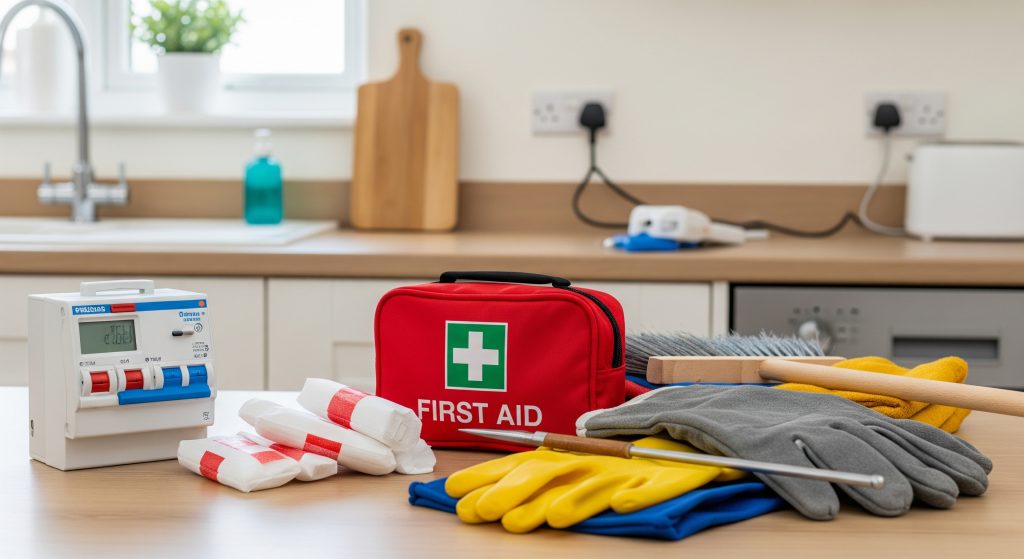
Cut power at the mains, the circuit breaker, or the device switch. If that is impossible, I separate the casualty from the source with a dry wooden broom, a plastic chair, or thick rubber gloves. Never touch the person directly until the power is off and the area is safe. Electric shock aid that begins with power isolation prevents a second collapse.
-
Unplug portable devices by the plug, not the cord.
-
Use only non-conductive aids. No wet fabric or metal.
-
Once the source is off, lock out or label it to prevent re-energising.
3. Call Emergency Services
Call 999 or 112 for any significant exposure. Provide the location, the suspected voltage, and the person’s state. If alone, call on speaker after isolating power. I treat every high voltage contact, loss of consciousness, chest pain, or visible burn as an emergency. Clear information accelerates care, and electric shock aid is time sensitive.
4. Check Breathing and Pulse
When safe, I approach, identify myself, and assess responsiveness. Open the airway with a head-tilt chin-lift if needed. Look for chest rise and listen for breath. Check for a carotid pulse if trained. If there is no normal breathing, start compressions immediately. Where breathing is present, place in the recovery position and monitor closely.
Compression rate guidance is established as Mayo Clinic notes, at 100-120 per minute with full chest recoil.
5. Begin CPR if Needed
If unresponsive and not breathing normally, I begin CPR without delay. Press the chest hard and fast in the centre. Allow full recoil. Minimise pauses. If trained, add rescue breaths at a 30 to 2 ratio. An automated external defibrillator (AED) should be applied as soon as it arrives. Electric shock aid often intersects with cardiac arrest, so decisiveness matters.
-
Start compressions at the set rate and depth.
-
Attach the AED and follow prompts.
-
Continue until the person breathes, help takes over, or you are unable to continue.
6. Position the Victim Properly
If the person is breathing and responsive, I lay them flat and keep them still. Elevate legs slightly if signs of shock appear, unless this causes pain or breathing difficulty. For an unresponsive but breathing person, use the recovery position while protecting the neck and spine if the mechanism suggests a fall.
-
Avoid excessive movement due to possible internal injuries.
-
Loosen tight clothing and maintain warmth.
-
Reassure calmly and limit questions to essential checks.
7. Treat Visible Burns
Electrical entry and exit wounds can be small yet deep. I cool minor burns with cool running water for 20 minutes, then cover with a sterile non-adherent dressing. Do not use ice, oils, or creams. Avoid removing stuck clothing. Electric shock aid for burns prioritises cooling, covering, and preventing contamination.
-
Remove rings and watches early due to swelling risk.
-
Do not burst blisters.
-
Monitor pain and colour changes near the wound.
8. Monitor for Shock Symptoms
Watch for pallor, clammy skin, rapid pulse, and confusion. These can evolve over minutes. I keep the person warm, maintain airway patency, and avoid oral fluids if drowsy or nauseated. Electric shock aid continues until handover, with repeated checks of breathing, pulse, and mental state.
Recognising Electric Shock Symptoms and Severity
Mild Electric Shock Symptoms
Mild exposure may cause transient tingling, localised pain, brief numbness, or muscle twitching. There may be small superficial burns. I still recommend observation for several hours. Electric shock symptoms can amplify, especially with hidden tissue injury.
-
Localised redness or warmth at contact points.
-
Mild headache or brief dizziness.
-
Anxiety and trembling that settles with rest.
Severe Electrical Injury Signs
Warning signs include loss of consciousness, chest pain, shortness of breath, confusion, seizures, or visible deep burns. Entry and exit wounds on opposite limbs suggest current passage through the torso. Muscle rigidity and falls add trauma risk. These signs require urgent electric shock aid and rapid transport.
Delayed Symptoms to Watch
Some complications present late. I advise watchfulness for new weakness, numbness, increasing pain, dark urine, or persistent headache. Arrhythmias can appear after a period of stability. Sleep disturbances and mood changes can also develop. Electric shock symptoms can be delayed, so follow-up matters.
Internal Damage Indicators
Electrical current can injure nerves, muscles, and blood vessels. Deep tissue damage may outsize skin findings. Clues include disproportionate pain, reduced limb movement, swelling, and sensory loss. Urine turning cola coloured suggests rhabdomyolysis. These indicators demand escalation.
|
Indicator |
Implication |
|---|---|
|
Weak pulses or cold limb |
Possible vascular injury |
|
Progressive numbness |
Likely nerve involvement |
|
Severe deep pain with small burn |
Hidden tissue necrosis risk |
|
Dark urine |
Muscle breakdown, kidney risk |
When to Seek Medical Help
Seek urgent care for any high voltage exposure, wet environment shock, pregnancy, chest pain, fainting, seizures, or visible burns. Children and older adults warrant a lower threshold. If in doubt, attend an emergency department. Electric shock aid includes prudent escalation, not just scene care.
How to Treat Electric Shock at Home
Minor Shock Treatment Steps
If symptoms are mild and no red flags exist, home care can be appropriate. I prioritise rest, wound hygiene, hydration, and observation for 24 to 48 hours. Keep a responsible adult present. Electric shock aid at home relies on structured monitoring and conservative measures.
-
Clean minor wounds with saline or clean water.
-
Apply a sterile, non-adherent dressing.
-
Record symptoms and times for later review.
Safe Home Remedies for Burns
Cool running water remains the standard. After cooling, pat dry and cover lightly. Avoid butter, toothpaste, powders, or adhesive dressings on the burn. I use simple analgesia if appropriate. The aim is comfort and infection prevention. This is how to treat electric shock at home without adding risk.
Pain Management Techniques
For mild pain, I use paracetamol or ibuprofen, following labelled doses. Elevation reduces swelling. Gentle cooling with a wrapped cool pack can help after initial irrigation. Avoid topical anaesthetics on broken skin. Persistent or worsening pain requires clinical review. Electric shock aid should not mask serious deterioration.
Wound Care Instructions
Change dressings with clean hands. Inspect for redness, swelling, or discharge. Keep the area dry between changes. Trim loose dead skin only if it lifts easily, and never force it. If the dressing sticks, moisten with saline before removal. Electric shock aid includes meticulous wound care to reduce infection.
-
Use non-adherent dressings to protect fragile tissue.
-
Avoid antiseptics that sting or discolour monitoring.
-
Document changes with dated photos for comparison.
Recovery Monitoring Guidelines
Check temperature, pain scores, and mobility twice daily for two days. Note any muscle weakness, numbness, or dark urine. Avoid strenuous activity for 48 hours. Resume gradually when symptom free. If workplace exposure occurred, inform occupational health. Structured notes support sound decisions.
Stability over the first 24 hours is reassuring. Deterioration at any point is not.
Medical Follow-up Requirements
Even after minor events, I recommend a GP review within 24 to 72 hours. Cardiac assessment may be advised if the current crossed the chest or if palpitations occur. Burns larger than a £2 coin, on the face, hands, feet, genitals, or across joints, warrant specialist input. Electric shock aid does not end when the dressing is applied.
Prevention and Safety Measures
Electrical Safety for Children
Protective covers on sockets, tamper-resistant outlets, and safe cable routing reduce risk. Store chargers and power banks out of reach. Supervise near water and devices. Teach simple rules early. A child-friendly electric shock first aid poster on the fridge reinforces habits.
-
Use residual current devices on home circuits.
-
Keep bath areas device free.
-
Replace damaged toys or chargers promptly.
Household Hazard Identification
I conduct a quarterly walk-through. Look for frayed cords, overloaded adapters, warm outlets, and DIY wiring. Check outdoor sockets, sheds, and extension reels. Water near electrics multiplies risk. Fix faults or call a qualified electrician. Prevention beats the best electric shock aid every time.
|
Risk |
Practical fix |
|
Frayed flex |
Replace cable or device |
|
Overloaded strip |
Use a single high-quality surge strip |
|
Damp utility room |
Dehumidify and install RCD protection |
|
Unlabelled breaker |
Label circuits for quick isolation |
Protective Equipment Guidelines
Use RCD-protected circuits and Type A or Type AC devices as specified. Wear insulated gloves for any electrical maintenance and stand on dry rubber matting. Tools should be VDE rated where relevant. For garden work, use battery kit or RCD-protected mains gear. Testing equipment before use is part of routine discipline.
Emergency Preparedness Checklist
Prepared households respond faster. I maintain accessible items and simple prompts that aid clear thinking under stress. Electric shock aid benefits from rehearsed steps.
-
Circuit breaker map and labels by the consumer unit.
-
First aid kit stocked with non-adherent burn dressings.
-
AED location known at work or community centre.
-
Printed one-page electric shock first aid poster in the kitchen.
-
Family drill on calling 999 or 112 and stating the address.
Essential Takeaways for Electric Shock Aid
-
Isolate the power first. No contact until the source is off.
-
Call 999 or 112 for serious exposure or any concerning symptoms.
-
Check breathing and begin CPR if absent at the set rate.
-
Cool burns with water, then cover with a sterile non-adherent dressing.
-
Monitor for delayed electric shock symptoms for up to 48 hours.
-
Document signs, times, and actions for clinicians.
-
Prevention measures reduce risk more than any treatment can.
-
Electric shock aid is a sequence: power, breathing, burns, monitoring, and follow-up.
Frequently Asked Questions
Can you touch someone who’s been electrocuted?
Yes, but only after the power source has been turned off or the person has been separated using a non-conductive tool. Before that, do not touch. The priority is to avoid becoming a second casualty. Once the area is safe, proceed with electric shock aid as outlined.
How long after electric shock can symptoms appear?
Some issues appear immediately, yet others can emerge hours later. Arrhythmias and neurological symptoms may be delayed. I advise observation for at least 24 hours after any significant event. If new electric shock symptoms arise, seek urgent care.
What’s the difference between AC and DC shock injuries?
Alternating current tends to cause muscle tetany and can prolong contact, which increases injury. Direct current often causes a single muscular contraction that may throw a person clear, adding trauma risk. Severity depends on pathway, duration, and current. Electric shock aid does not change fundamentally between AC and DC, but vigilance about trauma does.
Should you give water to an electric shock victim?
No oral fluids until the person is fully alert, not nauseated, and has no risk of vomiting. If drowsy or confused, avoid fluids to protect the airway. For burns, use cool running water on the skin, not drinks. Priority remains airway, breathing, and circulation.
Can minor electric shocks cause permanent damage?
They can, though not commonly. Hidden nerve or muscle injury occurs in some cases, depending on current path and duration. Persistent numbness, weakness, or pain warrants medical review. Caution is justified. Early electric shock aid followed by follow-up reduces risk.
What household items can cause dangerous electric shocks?
Damaged extension leads, faulty chargers, ungrounded appliances, and bathroom devices near water are common sources. Garden tools in wet conditions also cause incidents. Inspect, replace, and use RCD protection. Prevention is the quiet half of first aid for electrical injuries.
Note: This article supports, but does not replace, certified training. Consider formal first aid for electrical injuries training and keep a concise electric shock first aid poster at home and work for quick reference.

