






 We do what's right for you...


Dry Eye Syndrome: What It Is and How It’s Treated
Dr. Krishna Vaitheeswaran
Standard advice about dry eye syndrome usually starts and ends with eye drops. That is only part of the story. Dry Eyes Treatment works best when you match therapy to the exact mechanism behind your symptoms and habits. This guide sets out the options, when to use them, and how to build a practical plan you can follow day after day.
Treatment Options for Dry Eye Syndrome
Artificial Tears and Lubricating Eye Drops
Artificial tears are the front line of Dry Eyes Treatment when discomfort and fluctuating vision appear. As Dry Eye Disease notes, these drops relieve ocular discomfort and stabilise vision by supporting the tear film.
Formulations differ for good reasons. As Dry Eye Syndrome – StatPearls explains, viscosity enhancers and humectants can bolster the aqueous and lipid layers to reduce evaporation and improve stability. Combination formulas tend to perform well. In fact, Artificial Tears: A Systematic Review – PMC reports that multi-ingredient blends often improve dry eye symptoms faster than single agents.
-
Lipid-based drops support the outer oil layer. As Safe and Effective Lubricant Eye Drops describes, they stabilise the tear film in evaporative dry eye.
-
Gelling agents such as hydroxypropyl guar and hyaluronic acid provide longer relief by creating a moisture-retaining matrix.
-
For regular, long-term use, preservative-free vials are often preferable. As Mayo Clinic advises, preservative-free options reduce the risk of irritation in moderate to severe cases.
Practical approach: select a preservative-free, combination formula for frequent use. Keep a lipid-enhanced drop for windy or low-humidity days. Adjust as your dry eye symptoms change across seasons.
Prescription Eye Drops for Dry Eyes
When frequent lubricants are not enough, prescription anti-inflammatory drops can restore tear production and reduce surface damage. Cyclosporine and lifitegrast target ocular surface inflammation. Results build gradually over several weeks, though not without exceptions in timing or magnitude. Short courses of mild topical steroids may be used to control flares before transitioning to longer-term agents. This tier sits at the core of Dry Eyes Treatment for chronic, inflammatory dry eye syndrome.
-
Expect a staged response over **4 to 12** weeks.
-
Combination with preservative-free lubricants improves comfort during the first month.
-
Monitoring for pressure changes or rare irritation is standard practice.
If you wear contact lenses, these prescriptions may still be appropriate. An ophthalmologist will tailor regimes and review wear schedules and materials.
Punctal Plugs and Tear Duct Procedures
Punctal occlusion reduces tear drainage, thereby improving retention on the ocular surface. As The Pathophysiology, Diagnosis, and Treatment of Dry Eye outlines, plugs are recommended for severe dry eye disease or when lubricants alone fall short. Evidence is encouraging. As How effective and safe are punctal plugs summarises, plugs enhance tear film stability with high retention and low side effects.
-
Soft, temporary plugs allow a reversible trial.
-
Longer-term silicone plugs provide sustained relief.
-
Insertion is a short in-office procedure with minimal downtime.
Symptom relief can be substantial. As Review of Ophthalmology reported, over **70%** of patients in a prospective study experienced noticeable improvement, including vision gains in some cases. This option fits well when Dry Eyes Treatment aims to conserve the tears you already produce.
Warm Compresses and Lid Hygiene
For evaporative dry eye linked to meibomian gland dysfunction, heat and lid care are pivotal. As The Pathophysiology, Diagnosis, and Treatment of Dry Eye Disease describes, warming liquefies thickened oils and restores their flow into the tear film. This simple step reduces evaporation and irritation.
-
Use clean, consistent heat for **8 to 10** minutes.
-
Follow with gentle lid massage and careful cleansing.
-
Repeat daily for several weeks, then taper to maintenance.
Device-based heat masks maintain target temperatures more reliably. As Eyelid Warming Devices notes, these tools are generally safe and effective for gland rehabilitation. Moist compresses aid cleaning and hydration. As Healthline points out, they can be especially helpful when debris or crusting is present. Finally, regular scrubs prevent re-blocking. As Eyelid cleaning details, correct scrub technique improves results and reduces relapse.
Consistent heat, clean lids, and structured follow-up. That trio often turns marginal comfort into sustained relief.
Omega-3 Supplements and Dietary Changes
Nutrition supports the tear film to an extent. Omega-3 fatty acids may improve meibum quality and reduce inflammation in some patients. The effect size varies by dose and baseline diet. A pragmatic approach is to combine oily fish twice weekly with a quality omega-3 supplement if intake is low. Hydration matters as well. Adequate water, reduced ultra-processed foods, and balanced micronutrients help maintain ocular surface integrity. Integrate this with other elements of Dry Eyes Treatment for compounding benefits.
Advanced Treatments and Medical Procedures
When standard therapy stalls, in-office procedures can address root dysfunction. As Advances in Dry Eye Disease Treatment – PMC explains, the emphasis has shifted from masking symptoms to correcting deficiencies and inflammation.
-
Thermal pulsation devices warm and evacuate meibomian glands.
-
Intense pulsed light targets peri-lid vasculature and reduces inflammatory mediators.
-
Meibomian gland probing restores duct patency in selected cases.
-
In-office expression and deep lid cleaning support maintenance.
These options expand the toolkit for dry eye syndrome with evaporative features. As Advances in procedural management describes, procedural care increasingly targets gland function for durable outcomes. Discuss expected timelines, cost, and maintenance to set clear expectations. Precision matters here. The right procedure for the right pattern of disease is decisive.
Understanding Dry Eye Symptoms and When to Seek Help
Early Warning Signs of Dry Eyes
Early dry eye symptoms often look contradictory. Watery eyes may appear alongside grittiness and burning. As Symptomology and Impact of Dry Eye Disease notes, many patients struggle to interpret this mix, so signals are missed.
-
Intermittent blur that improves after blinking.
-
Stinging, scratchy, or sandy sensations.
-
Sensitivity to light and wind exposure.
-
Excess tearing driven by poor tear quality.
As Mayo Clinic explains, insufficient production or excessive evaporation can both cause the same complaints. Early assessment prevents escalation and allows tailored Dry Eyes Treatment before work and reading become a daily challenge.
Progressive Dry Eye Symptoms
With progression, symptoms consolidate and expand. As Defining Dry Eye from a Clinical Perspective highlights, persistent dryness, burning, foreign body sensation, and fluctuating vision become common, especially with prolonged screen time or low humidity. Quality of life drops. As Dry Eye Disease: Impact on Quality of Life and Vision reports, chronic dry eye undermines day-to-day comfort and mood.
Escalation signals include frequent use of drops without relief, morning stickiness, and difficulty with contact lenses. If you recognise this pattern, a structured treatment plan is due.
Symptoms Requiring Immediate Medical Attention
Some signs warrant urgent review. As Dry eye disease: when to treat and when to refer advises, moderate to severe pain, marked photophobia, pronounced redness in one eye, or reduced visual acuity require prompt specialist input.
-
Sudden vision changes or corneal injury risks.
-
Symptoms that deteriorate despite **4** weeks of appropriate care.
-
Severe pain after trauma or surgery.
As Stoney Creek Eye Care notes, coupling pain with light sensitivity or blur raises the threshold for urgent evaluation. It is a safety-first decision.
How Dry Eyes Affect Different Age Groups
Children often under-report discomfort and rub their eyes instead. Seniors may downplay symptoms because they feel inevitable with age. The impacts differ, but Dry Eyes Treatment principles remain consistent: identify the mechanism, correct the environment, then sustain with maintenance habits. Short, age-appropriate routines work best. Brief, frequent breaks help students. Consistent lid hygiene and humidification help older adults. Small changes, repeated, make the difference.
Common Causes and Risk Factors of Dry Eye Syndrome
Environmental Factors Contributing to Dry Eyes
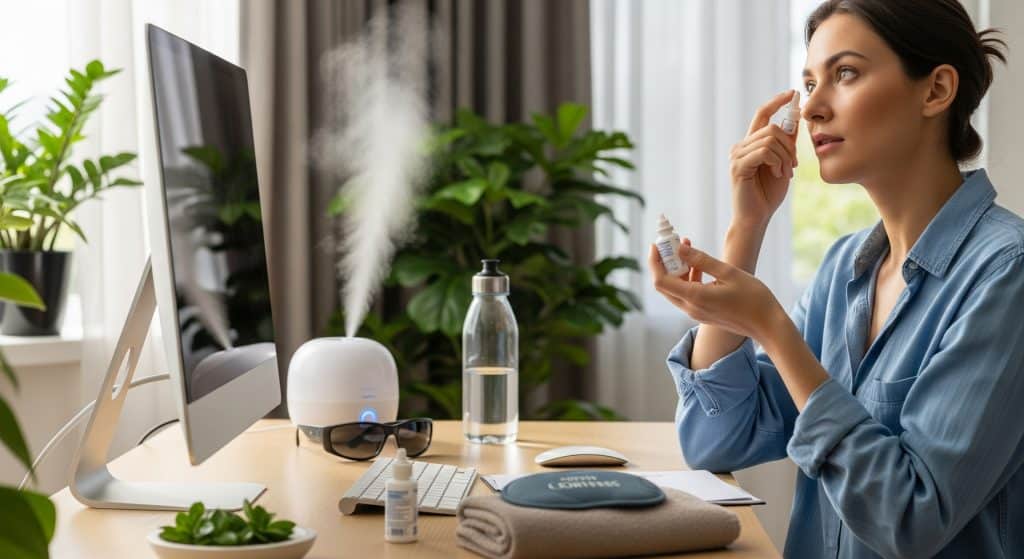
Low humidity, moving air, and airborne irritants drive evaporation and instability. Indoor air conditioning and winter heating are frequent culprits. Outdoors, wind exposure and bright sunlight aggravate the surface. A few targeted adjustments will help:
-
Use a desktop humidifier to maintain indoor moisture.
-
Sit away from direct vents and fans.
-
Wear wrap-around sunglasses in wind and glare.
-
Pre-lubricate before exposure and after.
These are low-cost steps that support any Dry Eyes Treatment, especially for evaporative dry eye syndrome.
Medical Conditions Linked to Dry Eye Syndrome
Systemic conditions are frequent drivers. Autoimmune disorders such as Sjogren’s, rheumatoid arthritis, and thyroid disease alter gland function. Metabolic conditions and sleep disorders can contribute through inflammation and altered blinking. Ocular surface disease, rosacea, and allergy also complicate the picture. The mechanism matters. Identify it, and therapy becomes more precise and more effective.
Medications That Cause Dry Eyes
Many common medicines reduce tear volume or degrade tear quality. As STANDARD TREATMENT GUIDELINES outlines, antihistamines, tricyclic antidepressants, diuretics, beta blockers, and isotretinoin are frequent contributors. As Dry Eye Disease also notes, SSRIs and tricyclics can reduce secretion, and isotretinoin may affect meibomian glands. Additional agents add risk. As Epidemiology and Risk Factors of Dry Eye Disease reports, antidepressants such as venlafaxine or duloxetine have been linked with increased dry eye risk.
|
Medication class |
Mechanism related to dry eye causes |
|---|---|
|
Antihistamines, decongestants |
Reduce lacrimal secretion and tear moisture |
|
Antidepressants, antipsychotics |
Alter neurotransmission that supports tear production |
|
Isotretinoin |
Impacts meibomian gland lipid output |
|
Beta blockers, diuretics |
Reduce aqueous secretion or change ocular surface homeostasis |
|
Hormonal therapies |
Influence tear film stability via endocrine pathways |
Discuss alternatives with your prescriber where feasible. Never adjust or cease medication without medical advice.
Age and Hormonal Changes
Age is a strong risk factor. As Dry Eye Disease notes, prevalence increases after **50**, with women more affected, particularly during and after menopause. Hormones regulate gland function. As Hormones and dry eye disease explains, reductions in oestrogen, progesterone, and androgens affect meibomian and lacrimal output, reducing volume and stability.
Balanced Dry Eyes Treatment acknowledges the endocrine context. Eye care, lifestyle, and sometimes systemic collaboration are all required. It is a whole-person problem, so it deserves a whole-person plan.
Digital Eye Strain and Screen Time
Screen use suppresses blink rate and increases incomplete blinks. That drives evaporation and instability, especially in air conditioned rooms. Adopt the 20-20-20 rule. Every 20 minutes, look at something 20 feet away for 20 seconds. Use larger fonts, higher contrast, and lower glare. Place monitors slightly below eye level to reduce palpebral aperture and slow evaporation. This is straightforward and powerful. And it leaves your focus intact.
Living with Dry Eye Syndrome
Daily Eye Care Routine
Build a short, repeatable routine. As STANDARD TREATMENT GUIDELINES OPTHALMOLOGY emphasises, daily artificial tears, warm compresses, and hydration form the base. As Mayo Clinic advises, combine a humidifier with the 20-20-20 rule and regular reviews. Environmental controls help. As Cleveland Clinic notes, air purifiers and weather protection reduce flare-ups.
-
Morning: warm compress **8** minutes, lid massage, preservative-free drop.
-
Day: scheduled lubricants, screen breaks, water bottle at desk.
-
Evening: clean lids, gentle massage, final lubricating gel if needed.
Consistency beats intensity. A small regimen, executed daily, outperforms sporadic bursts.
Home and Workplace Modifications
Set the environment to protect the tear film.
-
Humidity: aim for a comfortable range with a desktop humidifier.
-
Airflow: redirect vents and avoid face-level fans.
-
Lighting: reduce glare and use task lighting to avoid squinting.
-
Seating: place screens slightly below eye level and at arm’s length.
-
Breaks: micro-pauses for blinking during sustained reading.
These changes strengthen any Dry Eyes Treatment by cutting triggers at the source.
Protecting Eyes During Different Activities
Outdoor conditions demand preparation. As STANDARD TREATMENT GUIDELINES OPTHALMOLOGY notes, wind and UV exposure aggravate symptoms. Hydration is fundamental. As Environmental and Occupational Triggers indicates, low humidity and dust increase severity, so shield your eyes and pre-lubricate before exposure.
-
Wrap-around sunglasses limit airflow and reduce evaporation.
-
Polarised lenses cut glare on water and roads.
-
Use a lubricating drop before cycling or hiking.
-
Carry single-use vials for safe reapplication.
As Chinn’s Vision Care highlights, wrap-around frames are particularly effective on windy days. Small preparation. Large payoff.
Managing Dry Eyes in Children and Seniors
Children show different patterns. As CU Anschutz notes, symptoms often go unreported, with screen time and urban air as key risks. A simple routine works: regular breaks, outdoor play, adequate hydration, and a preservative-free drop if recommended. Quality of life improves. As An Investigation of Psychosocial Outcomes found, effective treatment correlates with better psychological measures in paediatric patients.
For seniors, consistency and safety come first. Community screening and straightforward regimens help. As Operational Guidelines emphasise, early detection and structured care at the primary level reduce visual impairment. Incorporate lid hygiene, environmental support, and review of medications with known dry eye causes. That review often reveals simple wins.
Taking Control of Your Dry Eye Treatment
Effective care is cumulative. Start with a clear diagnosis of mechanism, not just a list of complaints. Build a plan that stacks interventions: lubricants, heat, hygiene, environment, and targeted prescriptions. Add procedures when conservative steps stall. Keep a brief log for **2** weeks to track triggers, drop usage, and relief. Then adjust.
In practice, Dry Eyes Treatment succeeds when it is specific, consistent, and reviewed. The skills are simple. The discipline is the work.
Frequently Asked Questions
Can dry eye syndrome be permanently cured?
Dry eye syndrome is usually a chronic condition. Many patients achieve stable control rather than a cure. With the right mix of therapies and environment, symptoms can be minimal for long stretches. Relapses do occur, especially with seasonal changes or new medications.
How long does it take for dry eye treatment to work?
Timelines vary. Lubricants can help within minutes. Warm compresses and lid care need **2 to 4** weeks for gland changes. Prescription anti-inflammatories often show benefits after **4 to 12** weeks. Procedural therapies can offer faster gains, followed by maintenance.
Are over-the-counter eye drops safe for long-term use?
Preservative-free artificial tears are generally suitable for frequent, long-term use. Preserved drops are acceptable for occasional use, but frequent dosing may irritate the surface. Choose preservative-free formulations when you need multiple daily applications over extended periods.
Can children develop dry eye syndrome?
Yes. Children can develop dry eye syndrome, often linked to high screen time, allergy, or environment. Symptoms are easily missed. Short, structured routines and regular breaks are effective. Paediatric review is advisable when symptoms persist or academic tasks suffer.
What’s the difference between dry eyes and eye allergies?
Dry eyes relate to tear quantity or quality. Allergies involve immune reactions to allergens such as pollen or dander. Itch dominates in allergy. Grittiness and burning are typical of dryness. Both can co-exist, so a clinician may recommend combined strategies.
Should I stop wearing contact lenses if I have dry eyes?
Not necessarily. Switching to daily disposables, reducing wear time, and using compatible lubricants may suffice. Some patients need a break during flares or a review of lens materials. An eye care professional can align lens choice with your Dry Eyes Treatment plan.

