






 We do what's right for you...


Cochlear Implant Cost Explained: What You Need to Know
Dr. Poonam Singla
Cochlear Implant Cost Explained: What You Need to Know
The conventional wisdom around cochlear implants has always painted them as prohibitively expensive medical devices accessible only to the wealthy. That assumption is not just incomplete. It is actively preventing families from exploring options that might genuinely transform their lives. The cochlear implant cost conversation has shifted dramatically in India over the past decade, with government schemes, improved insurance frameworks, and competitive hospital pricing creating pathways that did not exist before. Understanding these costs requires looking beyond the headline surgery figure to grasp the complete financial picture.
Cochlear Implant Device and Surgery Costs
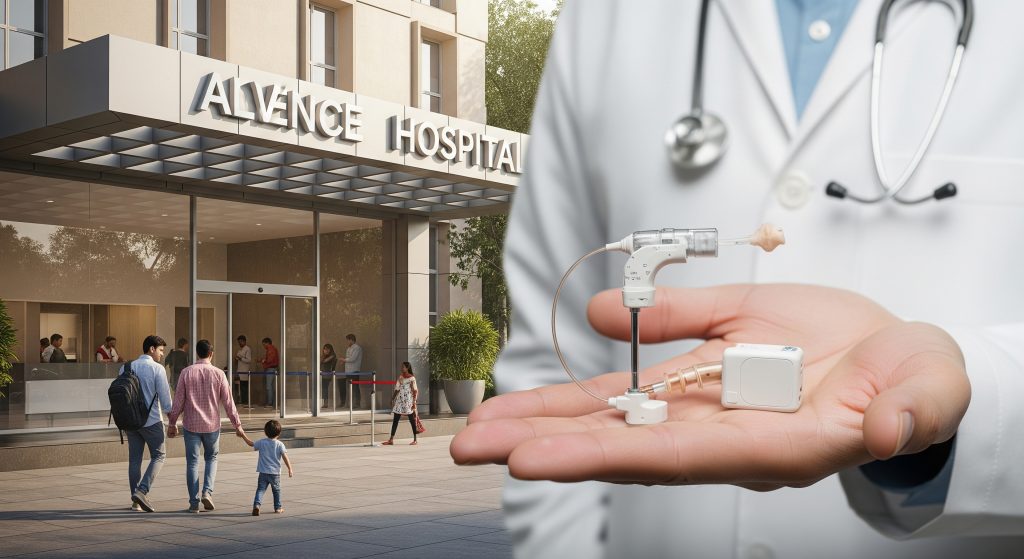
Breaking down the cochlear implant surgery cost requires separating the device expense from the surgical procedure itself. The implant device typically accounts for the lion’s share of the total bill. It is basically a sophisticated piece of medical technology containing an external processor, transmitter coil, and an internal receiver-stimulator with electrode array. Each component carries its own price tag, and the brand you choose matters significantly.
1. Unilateral Cochlear Implant Price Range
A unilateral implant addresses hearing loss in one ear. This option represents the entry point for most families exploring cochlear implantation. The cochlear implant price in India for a single-ear procedure starts at approximately INR 10 lakh at the lower end. This figure can stretch to INR 18 lakh or more depending on the hospital tier, surgeon experience, and chosen device brand.
What drives this variation? Several factors come into play:
-
Device brand and model – Premium processors with advanced features cost more
-
Hospital category – Tier-1 metropolitan hospitals charge higher facility fees
-
Surgeon expertise – Specialists with extensive implantation experience command premium fees
-
Inclusive packages – Some hospitals bundle pre-operative tests and post-operative mapping sessions
The single-ear approach works well for many patients, particularly adults who developed hearing loss later in life and have residual hearing capability in the non-implanted ear. But what about children born with bilateral profound deafness?
2. Bilateral Cochlear Implant Price Range
Here is where the numbers get serious. Bilateral implantation means placing devices in both ears. The logic is straightforward. Two ears provide better sound localisation, improved speech understanding in noisy environments, and more natural hearing experiences. The cost doubles, naturally, but the outcomes often improve disproportionately.
The bilateral cochlear implant price range varies significantly across Indian cities. According to Tour2India4Health, bilateral implants in India can reach up to INR 27.5 lakh which remains substantially lower than global costs. Meanwhile, premium facilities in Mumbai charge between INR 32 lakh to INR 55 lakh for bilateral procedures, as noted by DivinHeal.
That is a massive range. The difference comes down to implant type, surgeon expertise, and hospital facilities chosen. Think of it like buying a car. The basic model gets you from point A to point B. The premium variant adds features that enhance the journey.
3. Leading Cochlear Implant Brands Available
Three manufacturers dominate the cochlear implant market globally, and all three operate extensively in India. Understanding their offerings helps families make informed choices.
|
Brand |
Key Products |
Notable Features |
|---|---|---|
|
Cochlear Limited |
Nucleus 8, Kanso 2 |
Widest electrode array options, strong app connectivity |
|
MED-EL |
SYNCHRONY 2, RONDO 3 |
Longest electrode arrays, MRI compatibility up to 3.0 Tesla |
|
Advanced Bionics |
Marvel CI, Naída CI |
Direct Bluetooth streaming, waterproof processors |
Each manufacturer caters to different compatibility and performance requirements suitable for both adults and children. SkyQuest reports that Cochlear’s Kanso 2 and Nucleus 8 processors represent their latest innovations, specifically designed to accommodate paediatric and adult patients. All three brands offer extensive warranties, typically spanning ten years for internal components.
Don’t bother comparing every tiny specification between brands until you have consulted with your audiologist about which electrode array length and processor style suits the specific hearing loss profile. That conversation matters infinitely more than reading spec sheets online.
4. Hospital and City-wise Cost Variations
The same surgery with the same device can cost vastly different amounts depending on where it happens. This geographical price variation frustrates many families, but understanding it helps in planning.
Cochlear implant costs across India range from approximately INR 75,000 to INR 10 lakh for the surgery component alone, excluding the device cost.
Metropolitan centres like Mumbai, Delhi, and Chennai typically charge higher rates. Their advantages include access to experienced implant surgeons, comprehensive rehabilitation programmes, and advanced surgical facilities. Tier-2 cities often offer the same devices at reduced hospital charges, though rehabilitation support may require additional travel.
Key factors affecting the final cochlear implant surgery cost include: brand of implant used, surgeon fees, chosen healthcare facility, pre-operative investigation complexity, and length of hospital stay required.
Some hospitals offer package deals bundling the implant device, surgery, hospital stay, initial mapping sessions, and basic rehabilitation. These packages simplify budgeting but require careful scrutiny to understand exactly what is included and what remains billable separately.
Insurance Coverage and Government Schemes
The single most frustrating part of cochlear implant planning is figuring out who pays for what. Families often discover mid-process that their insurance policy has unexpected exclusions or that government scheme paperwork takes months to process. Knowing these pathways upfront saves tremendous stress.
Government-Funded Programmes for Cochlear Implants
India operates several government-funded programmes targeting hearing-impaired citizens. These schemes have genuinely transformed access for economically disadvantaged families. The challenge lies in understanding eligibility criteria, application processes, and realistic timelines.
The central government recognises cochlear implants as an essential rehabilitative device rather than a cosmetic procedure. This classification matters. It means government healthcare schemes can legitimately fund implantation for eligible beneficiaries. The political will exists. The implementation, however, requires patience.
ADIP Scheme Eligibility and Benefits
The Assistance to Disabled Persons for Purchase/Fitting of Aids and Appliances (ADIP) Scheme represents the primary central government pathway for cochlear implants. This scheme falls under the Ministry of Social Justice and Empowerment.
Eligibility requirements include:
-
Indian citizenship
-
Certified hearing disability (documented by authorised medical professional)
-
Monthly income below the specified threshold (varies by state)
-
Recommendation from an RCI-registered audiologist confirming candidacy
The ADIP scheme can cover the full cost of cochlear implants for eligible beneficiaries, including the device, surgery, and initial programming sessions. The catch? Processing times vary enormously. Some families report receiving approvals within months. Others wait over a year. Starting the application process early while exploring parallel options makes practical sense.
RBSK Programme for Children
The Rashtriya Bal Swasthya Karyakram (RBSK) specifically targets children from birth to 18 years. This programme screens for and manages various childhood conditions, including hearing defects. Children identified with profound hearing loss through RBSK screening can receive referrals for cochlear implantation under government sponsorship.
What makes RBSK particularly valuable is its proactive screening approach. Teams visit Anganwadi centres and schools, identifying children who might otherwise never receive hearing assessments. Early identification dramatically improves outcomes. A child implanted before age three develops speech and language skills far more naturally than one implanted later.
The programme operates through district-level health authorities. Parents should enquire at their local District Early Intervention Centre (DEIC) about cochlear implant referral pathways.
Private Health Insurance Coverage Limitations
Let’s be honest. Private health insurance for cochlear implants in India remains deeply problematic. Most standard health insurance policies either exclude cochlear implants entirely or impose severe limitations that make claims practically worthless.
Common insurance limitations include:
-
Pre-existing condition clauses – Congenital deafness often falls under exclusions
-
Device cost caps – Policies may cover surgery but cap implant device reimbursement at INR 50,000 when actual costs exceed INR 8 lakh
-
Waiting periods – Coverage may only activate after two to four years of continuous policy renewal
-
Specific exclusion riders – Some policies explicitly exclude hearing aids and cochlear implants
The cochlear implant cost with insurance scenario requires extremely careful policy review before assuming coverage exists. Request specific written confirmation from your insurer detailing exactly what amounts will be reimbursed for device purchase, surgery, and rehabilitation. Generic assurances mean nothing when claim time arrives.
Some newer health insurance products marketed as “comprehensive” or “super top-up” policies have begun including cochlear implant coverage. These typically come with higher premiums and waiting periods but represent genuine progress in the insurance sector.
State-Specific Government Initiatives
Beyond central schemes, several Indian states run their own cochlear implant programmes. These initiatives often move faster than central government schemes and may have less stringent eligibility requirements.
States with notable cochlear implant support programmes include:
-
Tamil Nadu – Chief Minister’s Comprehensive Health Insurance Scheme covers cochlear implants
-
Andhra Pradesh – Aarogyasri scheme includes cochlear implantation for eligible families
-
Kerala – State programmes for children with hearing impairment
-
Maharashtra – Mahatma Jyotiba Phule Jan Arogya Yojana covers cochlear implants at empanelled hospitals
Eligibility typically requires BPL (Below Poverty Line) card holders or families below specified income thresholds. Application processes run through district health offices or scheme-specific portals. Processing times range from weeks to several months depending on state administrative efficiency and scheme funding availability.
Additional Expenses and Long-term Costs
The surgery bill represents just the beginning. What drives families crazy is discovering additional expenses after committing to the procedure. These costs are predictable. They should be part of the initial budget conversation but frequently get overlooked.
Pre-operative Evaluation Expenses
Before anyone picks up a scalpel, extensive evaluations determine cochlear implant candidacy. These assessments are not optional. They are essential for surgical planning and outcome prediction.
Pre-operative evaluation typically includes:
-
Comprehensive audiological assessment (INR 2,000 to INR 5,000)
-
High-resolution CT scan of temporal bones (INR 3,000 to INR 8,000)
-
MRI scan to assess cochlear anatomy (INR 8,000 to INR 15,000)
-
Speech and language evaluation (INR 1,500 to INR 3,000)
-
Psychological assessment for candidacy (INR 2,000 to INR 4,000)
-
General anaesthesia fitness evaluation (INR 1,500 to INR 3,000)
Total pre-operative evaluation costs typically range from INR 20,000 to INR 40,000 depending on hospital pricing and specific tests required. Some package deals include basic evaluations. Others bill every test separately.
Post-operative Rehabilitation Therapy Costs
Here is the part families often underestimate. Switching on a cochlear implant does not instantly restore normal hearing. The brain requires training to interpret the new electrical signals as meaningful sound. This training happens through auditory verbal therapy (AVT) and requires significant time commitment.
Rehabilitation therapy is not optional. It is where the actual hearing development happens.
AVT sessions typically cost between INR 500 to INR 2,000 per session depending on therapist qualifications and location. Paediatric recipients generally need two to three sessions weekly for the first two years, then weekly sessions for another two to three years. The math becomes sobering quickly.
Calculate roughly: 100 to 150 sessions annually for initial years at INR 1,000 per session average equals INR 1 to 1.5 lakh yearly rehabilitation expense. This continues for several years. The total rehabilitation cost often rivals the surgery cost over time.
Quality of rehabilitation directly correlates with outcomes. Cutting corners here undermines the entire investment. Families living far from qualified therapists face additional travel expenses or may need to explore teletherapy options.
Device Maintenance and Battery Replacement
Cochlear implant processors require ongoing maintenance and consumable replacements. These recurring costs continue throughout the device lifespan.
Battery costs depend on processor type:
-
Disposable batteries – INR 200 to INR 400 per pack (lasting 3 to 5 days typically)
-
Rechargeable battery modules – INR 15,000 to INR 25,000 (replacement every 2 to 3 years)
Annual battery expense ranges from INR 15,000 to INR 30,000 for disposable battery users. Rechargeable options reduce ongoing costs but require periodic module replacement.
Additional consumables include cable replacements (INR 3,000 to INR 6,000), coil covers, and drying kits. Budget approximately INR 20,000 to INR 40,000 annually for routine maintenance and consumables.
External Processor Replacement Costs
External processors typically have functional lifespans of five to seven years. Technology advances. Processors wear out. Children outgrow paediatric models. Eventually, replacement becomes necessary.
Processor upgrade costs range from INR 4 lakh to INR 8 lakh depending on brand and model. This represents a significant expense that families should anticipate. Some manufacturers offer upgrade programmes or trade-in discounts. Insurance policies almost never cover processor upgrades, treating them as new purchases rather than medical necessity.
The internal implant component rarely needs replacement and typically lasts decades. The external processor, however, is the vulnerable element requiring eventual reinvestment.
Follow-up and Mapping Sessions
Mapping is the process of programming the cochlear implant processor to optimise sound perception for each individual recipient. Initial mapping happens shortly after surgery (switch-on). Subsequent mapping sessions fine-tune programming as the brain adapts to electrical stimulation.
Mapping session frequency typically follows this pattern:
-
Multiple sessions in the first month post-activation
-
Monthly sessions for the first year
-
Quarterly sessions for years two and three
-
Annual sessions thereafter
Each mapping session costs INR 1,500 to INR 4,000 depending on the centre. First-year mapping expenses alone can reach INR 25,000 to INR 40,000. These sessions require travel to centres with trained audiologists and appropriate equipment. Not all audiology centres can map all implant brands.
Making an Informed Decision About Cochlear Implant Investment
The week after I first watched a child hear her mother’s voice through a newly activated cochlear implant, the tears in that small clinic room were not just about that moment. They were about every moment that would follow. The mother saying goodnight. The teacher calling on her in class. The friend whispering a secret.
But here is the reality nobody talks about openly enough. Cochlear implantation is not just a medical procedure. It is a multi-year commitment requiring sustained financial investment, time dedication for rehabilitation, and emotional resilience when progress feels slower than expected.
The total cochlear implant investment, properly calculated, looks something like this:
|
Expense Category |
Unilateral (Single Ear) |
Bilateral (Both Ears) |
|---|---|---|
|
Device and Surgery |
INR 10 to 16 lakh |
INR 20 to 30 lakh |
|
Pre-operative Evaluation |
INR 20,000 to 40,000 |
INR 25,000 to 50,000 |
|
First Year Rehabilitation |
INR 1 to 1.5 lakh |
INR 1.2 to 2 lakh |
|
Annual Maintenance (ongoing) |
INR 30,000 to 50,000 |
INR 50,000 to 80,000 |
|
Processor Upgrade (after 5-7 years) |
INR 4 to 8 lakh |
INR 8 to 15 lakh |
Sounds overwhelming? It can be. But consider the alternative costs. The economic impact of untreated profound hearing loss includes reduced educational attainment, limited employment opportunities, and social isolation. The cochlear implant cost with insurance or government scheme support becomes substantially more manageable for eligible families.
Start the process by getting formal candidacy evaluation. Consult multiple implant centres for comparative pricing. Apply simultaneously to relevant government schemes regardless of timeline uncertainties. Explore insurance policy fine print before assuming coverage exists.
And remember. The real measure of value is not what something costs. It is what it enables. For children implanted early, that means joining mainstream education. For adults, it means participating fully in professional and social life. Those outcomes are difficult to price.
Frequently Asked Questions
What is the average total cost of unilateral cochlear implant surgery in India?
The average total cost for a unilateral cochlear implant in India ranges from INR 10 lakh to INR 16 lakh. This includes the device cost, surgical fees, hospital charges, and initial programming sessions. Metropolitan centres typically charge at the higher end while tier-2 city hospitals offer more competitive pricing for equivalent devices and surgical expertise.
Does health insurance typically cover cochlear implant costs in India?
Most standard health insurance policies in India either exclude cochlear implants entirely or impose significant limitations. Common restrictions include low device cost caps, pre-existing condition exclusions for congenital deafness, and long waiting periods. Some newer comprehensive policies have begun including cochlear implant coverage with higher premiums. Always obtain written confirmation from your insurer specifying exact coverage amounts before proceeding.
Which government schemes provide free cochlear implants for eligible children?
The ADIP Scheme (Assistance to Disabled Persons) under the Ministry of Social Justice and Empowerment provides cochlear implants for eligible children meeting income and disability certification criteria. The RBSK Programme (Rashtriya Bal Swasthya Karyakram) identifies and refers children with profound hearing loss for government-sponsored implantation. Several state schemes including Tamil Nadu’s CMCHIS, Andhra Pradesh’s Aarogyasri, and Maharashtra’s MJPJAY also cover cochlear implants for eligible beneficiaries.
How much does auditory verbal therapy cost after cochlear implant surgery?
Auditory verbal therapy sessions typically cost between INR 500 to INR 2,000 per session. Paediatric recipients generally require two to three sessions weekly initially, transitioning to weekly and then less frequent sessions over three to five years. Annual rehabilitation expenses often reach INR 1 to 1.5 lakh during intensive therapy phases. This ongoing cost rivals the initial surgical investment over time and remains essential for optimal outcomes.
What factors affect the final price of cochlear implant surgery?
Primary factors affecting cochlear implant surgery cost include: the device brand and model chosen, surgeon experience and reputation, hospital tier and location, inclusion of pre-operative evaluations in package pricing, length of hospital stay required, and bundled versus unbundled service structures. Secondary factors include anaesthesia team fees, ICU charges if required, and geographic cost variations between metropolitan and tier-2 cities.
Are cochlear implant costs different for children versus adults?
The base device and surgery costs remain similar for children and adults. Differences emerge in rehabilitation requirements and long-term expenses. Children typically need more intensive and longer-duration rehabilitation therapy. They also require processor upgrades as they grow and technology advances. Adults may face additional pre-operative evaluation costs for complex hearing loss histories. Some government schemes exclusively target paediatric recipients, creating different funding pathways for children versus adults.

