






 We do what's right for you...


Breathing Difficulty First Aid Explained: What Everyone Should Know
Dr. Rajesh Kumar Mishra
People are often told to stay calm and wait for help during a breathing emergency. That advice is incomplete. In the first minutes, skilled action matters. I wrote this guide to make breathing difficulty first aid practical, structured, and usable under pressure. It is basically a checklist you can follow when seconds feel loud.
Immediate Steps for Breathing Difficulty First Aid
1. Assess the Situation Quickly
I start by scanning for immediate danger, then I focus on the person. Safe scene, then care. For breathing difficulty first aid, I follow a simple sequence: look, listen, and think in short loops. Look for effort, posture, and colour. Listen for wheeze, stridor, or silence. Think about likely causes, and whether the airway might be compromised.
Key signs of serious distress include rapid breathing, blue lips, chest retractions, and grunting. A person who cannot speak in full sentences is in trouble. If symptoms escalate or the person becomes drowsy, I call 999 without delay. While waiting, I loosen tight clothing and keep the person as still as possible. No food or drink. Comfort and oxygen demand rarely mix well.
-
Ask brief questions: Where does it feel tight? Any known condition or inhaler?
-
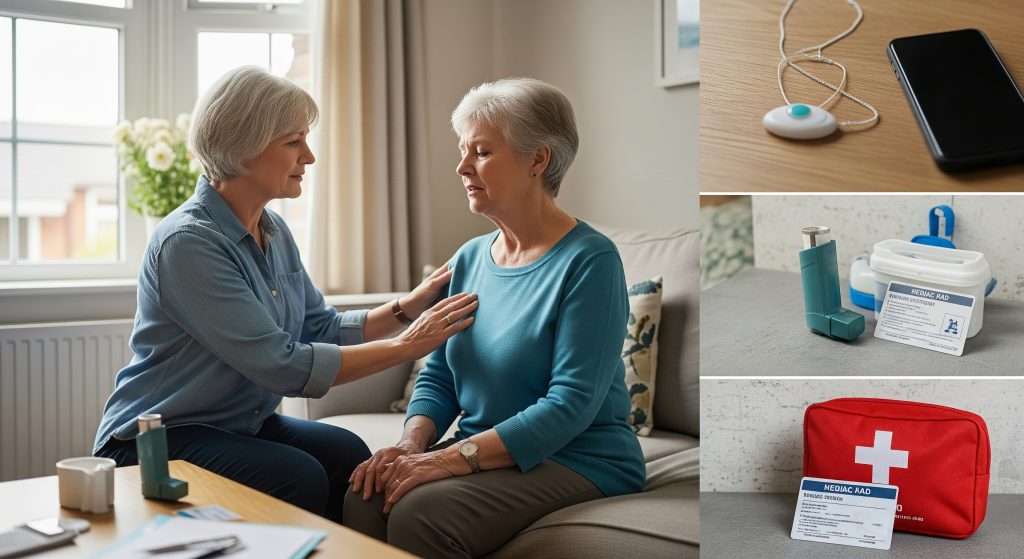
Check for medical jewellery or a card listing conditions or medicines.
-
Note onset: sudden, gradual, or triggered by food, exercise, or allergens.
This early picture guides the next step. Clarity helps. Panic does not.
2. Position the Person Properly
Positioning is fast, low risk, and effective. For most conscious people, I help them sit upright. Slightly forward with elbows supported often eases breathing. As Mayo Clinic notes, upright or forward-leaning positions can enhance airflow. If the person becomes unresponsive but still breathes, I use the recovery position. Side-lying, mouth downward, head gently tilted back. It keeps the airway open and lets fluids drain.
-
Do not force a flat position unless CPR is required.
-
Avoid pillows that flex the neck forward.
-
Support the arms to reduce accessory muscle fatigue.
Better mechanics mean better oxygen. It buys crucial time.
3. Clear the Airway
If I suspect a blocked airway, I move quickly. Ask the person to cough forcefully if they can still breathe or speak. If coughing fails and the airway remains obstructed, I transition to back blows and abdominal thrusts. In adults and older children, the standard sequence is five back blows followed by five abdominal thrusts, as Mayo Clinic outlines. I repeat that cycle until the object dislodges or the person becomes unresponsive.
-
Never perform blind finger sweeps. Remove only what is clearly visible.
-
If the person collapses, start CPR and check the mouth before breaths.
-
For suspected swelling rather than a solid object, do not perform thrusts.
Breathing difficulty first aid is decisive here. A clean airway changes everything. Seconds count.
4. Monitor Vital Signs
Monitoring is not passive. I set a quiet rhythm: check breathing quality, pulse presence, and responsiveness. I watch for improved colour or reduced effort. I listen for new wheeze or silence. I time any inhaler use and note the response at 1 to 3 minutes. If symptoms worsen, I escalate to emergency services or prepare for CPR.
-
Breathing: count rate, watch depth, note noises.
-
Circulation: feel pulse if trained, check skin temperature and moisture.
-
Disability: assess alertness, confusion, or agitation.
Small changes can signal a turning point. Improvement or decline. Either way, I act on it.
5. When to Call Emergency Services
I do not delay calling 999 if any of these apply:
-
Breathing is noisy, gasping, or absent.
-
The person cannot speak more than a few words.
-
Lips or face turn blue or grey.
-
There is known asthma with no relief from a reliever inhaler.
-
There is suspected anaphylaxis or rapid throat swelling.
-
There is a sudden, severe onset after choking or trauma.
While waiting, I continue breathing difficulty first aid. I keep the person warm, calm, and positioned for maximum airflow. If unresponsive and not breathing normally, I begin CPR immediately.
First Aid for Specific Breathing Emergencies
First Aid for Choking Adults
Choking presents fast and visibly. The person may clutch the throat, fail to speak, or produce a high-pitched sound. If they can cough forcefully, I encourage coughing. If not, I act. Deliver five firm back blows between the shoulder blades. Then five abdominal thrusts. Alternate until the obstruction clears or the person collapses. This is the gold standard for first aid for choking in adults.
-
If pregnant or obese, use chest thrusts instead of abdominal thrusts.
-
Once the airway clears, medical review is sensible due to possible bruising.
-
If unresponsive, begin CPR and inspect the mouth before rescue breaths.
Breathing difficulty first aid here is physical and methodical. Precision beats force.
First Aid for Choking Children
Children over one year can receive back blows and abdominal thrusts. That age threshold is supported by American Red Cross. I kneel to their height, support the chest, and deliver controlled techniques. For infants under one year, do not use abdominal thrusts. Use back blows and chest thrusts instead.
-
Keep the head lower than the chest during back blows for better effect.
-
Never shake a child or perform blind sweeps.
-
After any significant choking event, seek medical assessment.
If the child becomes unresponsive, I start CPR immediately. Airway checks happen between cycles. It is draining and focused work.
Asthma Attack First Aid Steps
Asthma is common and serious. I apply a calm, repeatable plan for asthma attack first aid. Help the person sit upright and forward. Use their reliever inhaler, usually a short-acting bronchodilator. A spacer improves delivery. Take slow, steady breaths if possible. If there is no improvement or symptoms escalate, call 999. Repeat inhaler doses as directed on the action plan.
-
Do not lie the person flat. It worsens breathing mechanics.
-
Keep them warm and reassure them to reduce unnecessary air hunger.
-
Watch for exhaustion, a quiet chest, or confusion. These are red flags.
I treat this as breathing difficulty first aid with strict discipline. Early reliever use saves lives, though not in every case.
Allergic Reaction Breathing Problems
Allergic reactions range from mild to life-threatening. When breathing is affected, I think anaphylaxis until proven otherwise. If the person has an adrenaline auto-injector, I help them use it without delay. I call 999 and position them sitting, or lying on their side if faint. I remove triggers when safe and loosen restrictive clothing.
-
Use a second auto-injector if symptoms persist after five minutes.
-
Do not allow the person to stand suddenly. Sudden collapse can follow.
-
Monitor breathing and prepare for CPR if breathing becomes absent.
Breathing difficulty first aid for allergic reactions is time critical. Fast adrenaline, stable posture, and continuous monitoring make the difference.
Panic Attack Breathing Support
Panic can mimic severe respiratory disease. The person feels air-starved, chest tight, and dizzy. I first exclude a physical cause to the extent possible. I keep the person upright, slow the pace, and coach steady nasal breathing. I avoid paper bags. I use brief counts, such as four seconds in and six seconds out. A cool cloth and minimal stimulation help.
-
Use short, grounded phrases. Panic feeds on speculation.
-
If symptoms do not settle or there are chest pains, call 999.
-
Encourage follow-up care for recurrent episodes.
In practice, breathing difficulty first aid in panic is about control and reassurance. Calm is the intervention.
Age-Specific Breathing Emergency Techniques
Infant Breathing Difficulty Response
Infants are fragile and physiologically different. I observe for nasal flaring, chest recession, and poor feeding. Positioning is gentle. I keep the head neutral and the airway aligned. For suspected obstruction, I use back blows and chest thrusts only. If unresponsive and not breathing normally, I start CPR with careful technique.
-
Keep the infant warm, but do not overwrap.
-
Avoid excessive head tilt. Airways are small and easily kinked.
-
Seek urgent medical help for any sustained breathing difficulty.
Breathing difficulty first aid in infants rewards precision over strength.
Toddler Airway Obstruction Management
Toddlers explore and aspirate objects. The signs can be sudden coughing, gagging, or silent struggle. If coughing is ineffective, I move to back blows and abdominal thrusts, scaled to size. I stabilise the torso and avoid excessive force. If the child becomes unresponsive, I transition to CPR and periodic mouth checks.
-
Inspect high-risk toys and food cut to safe sizes.
-
Teach slow eating habits. It reduces risk meaningfully.
-
After resolution, a clinical check is sensible for airway injury.
This is breathing difficulty first aid adapted to a small, moving target. Calm hands matter.
School-Age Children Emergency Care
For school-age children, I follow adult frameworks with size adjustments. I check for asthma plans and reliever access. I coordinate with school staff or carers. If choking, I use back blows and abdominal thrusts at child height. If an allergic reaction is suspected, I assist with the prescribed auto-injector and call 999.
-
Document the episode details for clinicians. Time, trigger, response.
-
Avoid crowding the child. Noise and fear increase distress.
-
Encourage slow breathing with simple counting cues.
Breathing difficulty first aid in this group relies on preparation and crisp coordination.
Elderly Breathing Crisis Support
Elderly patients may have COPD, heart disease, or frailty. I assess gently and consider medication interactions. Positioning upright, warm, and supported is almost always beneficial. I check for oxygen use, inhalers, or nitroglycerin if chest pain is present. I call 999 early if there is rapid decline or new confusion.
-
Watch for silent hypoxia. Normal talk can mask falling oxygen.
-
Beware of aspiration risks after meals or with sedation.
-
Have a low threshold for medical review after stabilisation.
For this group, breathing difficulty first aid is often about speed and dignity. Small wins add up.
Prevention and Preparedness Strategies
Home Safety Checklist
-
Remove small choking hazards. Check floors and low shelves weekly.
-
Cut food into safe sizes. Avoid whole nuts for young children.
-
Install and test smoke and carbon monoxide alarms.
-
Ventilate cooking areas and avoid indoor smoke exposure.
-
Label and store allergens separately. Keep epinephrine accessible.
-
Maintain inhalers, spacers, and action plans in a visible location.
These steps reduce the odds of crisis. They also make breathing difficulty first aid more effective when needed.
Essential First Aid Supplies
-
Reliever inhaler with spacer and an asthma action plan.
-
Two adrenaline auto-injectors for known anaphylaxis risk.
-
Pocket mask or face shield for rescue breaths.
-
Nitrile gloves and alcohol wipes.
-
Medical information card for each household member.
-
Charged phone with emergency contacts on speed dial.
I keep equipment together and checked monthly. Breathing difficulty first aid works best when tools are ready and people know where they are.
Warning Signs to Watch
|
Warning sign |
What it may indicate |
|---|---|
|
Lips or face turning blue |
Poor oxygenation and imminent collapse risk |
|
Unable to speak in full sentences |
Severe airflow limitation or airway obstruction |
|
Sudden silence after coughing fit |
Complete obstruction requiring immediate action |
|
Wheezing with exhaustion or confusion |
Failing asthma control and impending respiratory failure |
|
Rapid swelling of lips or throat |
Possible anaphylaxis needing adrenaline and 999 |
|
Chest pain with breathlessness |
Possible cardiac event requiring urgent care |
These signs justify rapid escalation. Breathing difficulty first aid is still useful, but definitive care is now vital.
Conclusion
Breathing emergencies punish hesitation. A clear protocol reduces risk and improves outcomes. Assess quickly, position well, clear the airway if blocked, monitor relentlessly, and call 999 when red flags appear. Adapt the techniques to age and cause. Stock the right tools and practise the steps. This is breathing difficulty first aid in its most useful form. Simple. Calm. Repeatable.
Frequently Asked Questions
How long should I wait before starting CPR if someone stops breathing?
Do not wait. If the person is unresponsive and not breathing normally, start CPR immediately. Call 999, place the phone on speaker, and follow instructions. Every minute without CPR reduces survival. Breathing difficulty first aid becomes resuscitation at this point.
Can I perform the Heimlich manoeuvre on myself if I’m choking alone?
Yes. Make a fist above the navel and pull inward and upward with the other hand. You can also thrust your upper abdomen against a firm surface like a chair back. Alternate methods until the object dislodges or you lose consciousness. If unresponsive, anyone nearby should start CPR and continue the airway checks between cycles. This is first aid for choking adapted for self-rescue.
What’s the difference between choking and having an asthma attack?
Choking is a mechanical blockage. Onset is sudden, and the person may be unable to speak or cough effectively. Asthma is airway narrowing from inflammation and spasm. Wheeze, tightness, and breathlessness may build or surge with a trigger. The response differs. Choking needs back blows and thrusts. Asthma attack first aid requires reliever inhaler use, posture, and early 999 if there is no improvement.
Should I give water to someone having breathing difficulty?
No. Liquids risk aspiration and do not address the cause. Focus on posture, loosening tight clothing, and the correct intervention. That might be inhalers, an auto-injector, or airway techniques. Breathing difficulty first aid avoids food and drink until the person is stable and fully alert.
Is it safe to move someone experiencing breathing problems?
Move only to improve airflow or reach safety. Sitting upright with support is generally beneficial. Avoid unnecessary walking, which increases oxygen demand. If unresponsive but breathing, use the recovery position. If not breathing normally, start CPR where they are.
How do I know if a child’s breathing difficulty is serious enough for A&E?
Go to A&E or call 999 if the child cannot speak in full sentences, turns blue, seems very drowsy, or does not improve with usual medicines. Sudden symptoms after choking, food exposure, or a sting are also high risk. In children, err on the side of caution. Breathing difficulty first aid buys time, but definitive care is essential.
This guide provides breathing difficulty first aid from assessment to prevention. It covers first aid for choking and asthma attack first aid with structured steps.

