






 We do what's right for you...


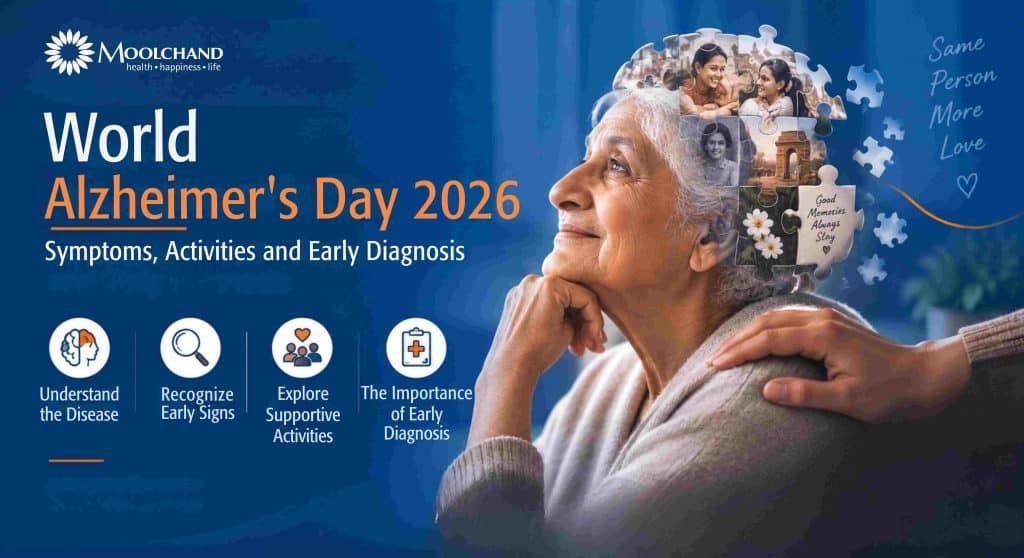
World Alzheimer’s Day 2026: Symptoms, Activities and Early Diagnosis
Intorduction
Memory helps us hold on to people, places, and precious moments. When memory begins changing, families often feel confused and worried. World Alzheimer’s Day 2026 encourages people to understand these changes and seek timely medical advice. Observed on September 21, the day raises awareness about Alzheimer’s disease and dementia. It also encourages families to discuss memory concerns without fear or embarrassment.
For many families, early symptoms may look like normal ageing. A person may forget names, repeat questions, or misplace belongings. However, persistent changes can affect everyday life. Understanding what is Alzheimer’s disease can help families recognise when medical advice may be needed. Moolchand Healthcare supports patients and families through specialist medical care and coordinated healthcare services in Delhi.
What Is World Alzheimer’s Day 2026?
World Alzheimer’s Day 2026 will be observed on September 21. It is part of World Alzheimer’s Month, which takes place throughout September. The day focuses on awareness, understanding, diagnosis, care, and support for people affected by dementia.
The importance of World Alzheimer’s Day extends beyond one calendar date. It encourages families to learn about memory changes and possible warning signs. It also helps reduce the stigma surrounding dementia. Open conversations can encourage people to seek professional guidance earlier.
For families in Delhi, access to appropriate medical support can make these conversations easier. A Delhi hospital with access to different medical specialties can help patients receive suitable evaluation. Moolchand Healthcare provides multidisciplinary healthcare services for patients and families seeking medical guidance.
World Alzheimer’s Day 2026 Theme
The World Alzheimer’s Day 2026 theme focuses on early diagnosis. The campaign message is, “The Earlier You Know, The More You Can Do: A Dementia Diagnosis Matters.” The message highlights how understanding a condition earlier can help individuals and families plan appropriate care.
The World Alzheimer’s Day 2026 theme also encourages people to question the belief that memory loss is always a normal part of ageing. Occasional forgetfulness can happen to anyone. Persistent or worsening changes require closer attention.
Early medical assessment can help identify possible reasons for memory problems. Doctors can review symptoms, medical history, medicines, and other health factors. This can help families understand what steps may be appropriate.
What Is Alzheimer’s Disease?
Many families ask, what is Alzheimer’s disease when they notice repeated memory problems. Alzheimer’s disease is a progressive brain disorder that affects memory, thinking, behaviour, and daily functioning. It is the most common form of dementia.
An Alzheimer’s disease definition includes gradual changes in cognitive abilities. These changes can affect how a person remembers information, communicates, makes decisions, and performs familiar activities.
Understanding what is Alzheimer’s disease can help families identify concerning changes. A person may initially experience subtle symptoms. These symptoms can become more noticeable as the disease progresses.
Alzheimer’s disease affects each person differently. Symptoms can vary in type and severity. Therefore, families should avoid assuming that every memory problem means Alzheimer’s disease. Professional evaluation is important for understanding the underlying cause.
Understanding Alzheimer’s Meaning
The Alzheimer’s meaning is often misunderstood. Alzheimer’s disease is not simply ordinary forgetfulness. It involves progressive changes that can interfere with daily life.
For example, occasionally forgetting where you placed your phone is common. Repeatedly losing important items and being unable to retrace your steps may be more concerning. Similarly, forgetting a name occasionally differs from regularly struggling to recognise familiar people.
Understanding the Alzheimer’s meaning can help families respond with patience. A person experiencing memory changes may become frustrated or anxious. Supportive communication can make everyday situations easier.
An Emotional Story About Alzheimer’s Disease
Riya first noticed changes in her mother, Anita. Anita had always remembered every family birthday. She also knew the names of neighbours she had known for decades.
One afternoon, Anita called Riya several times about the same appointment. Riya gently reminded her about the appointment. Anita apologised and said she had simply forgotten.
A few weeks later, Anita misplaced her house keys. Then she forgot where she had kept important documents. The family initially considered these incidents normal ageing.
Riya noticed another change during a family dinner. Anita struggled to remember the name of her grandson. She looked embarrassed and became quiet.
Riya decided to discuss the changes with her family. They encouraged Anita to seek medical advice. The family was nervous about the consultation. Anita feared that something serious might be wrong.
The doctor listened to her concerns and reviewed her symptoms. Further assessment was suggested to understand the changes.
The process was emotional for everyone. Yet, it gave the family something valuable. They finally had a clearer understanding of what Anita was experiencing.
Riya changed how she communicated with her mother. She started using gentle reminders instead of repeated corrections. She also helped organise appointments and daily routines.
Anita still enjoyed her morning tea. She still loved family conversations and evening walks. Her condition did not change who she was.
This story shows why awareness matters. Early conversations can help families understand changes sooner. They can also encourage appropriate medical support.
Alzheimer’s Disease Symptoms to Watch
The Alzheimer’s disease symptoms can develop gradually. Early symptoms may sometimes be mistaken for normal ageing. Recognising persistent changes can help families seek appropriate medical advice.
Common Alzheimer’s disease symptoms may include repeated memory problems and asking the same questions. A person may forget recent conversations or important events. They may also misplace belongings and struggle to find familiar items.
Difficulty completing familiar tasks can also occur. Some people may become confused about dates, locations, or familiar routes. Finding the right words during conversations can become harder.
Changes in mood and behaviour may also appear. A person may become withdrawn or lose interest in familiar activities. They may also experience increased confusion or anxiety.
These symptoms do not automatically confirm Alzheimer’s disease. Other health conditions can cause similar changes. A qualified healthcare professional can help determine whether further assessment is needed.
Why Early Alzheimer’s Diagnosis Matters
Early diagnosis can help families understand persistent memory changes. It can also provide an opportunity to discuss suitable care and support.
Doctors can review symptoms and medical history during an assessment. They may also consider other health conditions and medicines. This helps create a clearer picture of the person’s health.
The message behind World Alzheimer’s Day 2026 places strong emphasis on early diagnosis. Knowing the possible cause of symptoms can help families plan ahead. It can also help patients participate in important healthcare decisions.
For families searching for a psychiatry hospital in Delhi, appropriate specialist assessment can be an important consideration. Cognitive, behavioural, and emotional symptoms may require different areas of expertise. Depending on the situation, patients may need neurological, psychiatric, internal medicine, or other specialist evaluation.
World Alzheimer’s Day Activities
There are many ways to observe World Alzheimer’s Day activities in a meaningful way. Hospitals can organise awareness sessions and educational programmes. Families can discuss memory health with older relatives.
Community groups can arrange memory walks, awareness talks, caregiver sessions, and fundraising events. Schools and workplaces can share educational information about dementia.
Healthcare organisations can also use social media to explain Alzheimer’s disease symptoms and the importance of timely assessment. Simple educational content can help families recognise concerning changes.
Moolchand Healthcare can use World Alzheimer’s Day activities as an opportunity to promote awareness about brain health and timely medical consultation. Patient education can help families understand when professional guidance may be appropriate.
How Families Can Support Someone With Alzheimer’s
Family support can make a meaningful difference. People living with Alzheimer’s disease may need patience and understanding. Clear communication can help reduce confusion.
Family members should speak calmly and give enough time for responses. They should avoid unnecessary arguments about forgotten details. Gentle reminders can be more helpful than repeated corrections.
Familiar routines can also provide comfort. Regular meal times and safe daily activities can create greater predictability. Physical activity may be encouraged when medically appropriate.
Caregivers also need support. Caring for someone with dementia can become demanding over time. Families can divide responsibilities and seek professional guidance when necessary.
Most importantly, Alzheimer’s disease should not define the person. Their memories may change, but their emotions, preferences, relationships, and dignity remain important.
Alzheimer’s Disease and Brain Health
Brain health is connected with overall health. Managing conditions such as high blood pressure and diabetes can support healthier ageing. Regular physical activity can also benefit overall health.
A balanced diet and adequate sleep are important for general wellbeing. Avoiding tobacco can reduce several health risks. Maintaining social connections can also support healthy ageing.
These steps cannot guarantee protection from Alzheimer’s disease. However, managing certain health and lifestyle factors may help reduce or delay some dementia risks.
People should discuss individual health concerns with qualified medical professionals. Personal risk can depend on age, health conditions, family history, and other factors.
When Should You Consult a Doctor?
Persistent memory changes deserve attention. This is especially true when they interfere with work, relationships, safety, or daily activities.
Families can begin by discussing concerns with a qualified doctor. The doctor can review symptoms and medical history. Further specialist assessment may then be recommended.
People searching for the best psychiatrist in Delhi should consider the type of symptoms requiring evaluation. Psychiatric care can be relevant for certain behavioural or emotional concerns. Cognitive symptoms may also require neurological or medical assessment.
Similarly, families searching for the best hospital in Delhi may look for coordinated specialist services. A multidisciplinary Delhi hospital can help patients access different areas of medical expertise when required.
Moolchand Healthcare provides access to multiple medical specialties in Delhi. Patients can discuss their symptoms with appropriate healthcare professionals and receive guidance based on their individual needs.
Why World Alzheimer Day Still Matters
The term World Alzheimer day is commonly used when people search for information about this global awareness event. World Alzheimer’s Day is observed on September 21 every year.
The day provides an opportunity to discuss Alzheimer’s disease openly. It encourages people to learn about symptoms and available support. It also helps families understand that seeking medical advice is not something to fear.
Awareness should continue throughout the year. Families can learn about dementia, caregiving, brain health, and early diagnosis whenever concerns arise.
Alzheimer’s Care at Moolchand Healthcare
Moolchand Healthcare has a long history of providing healthcare services in Delhi. The hospital brings together multiple medical specialties and healthcare professionals under one system.
For families concerned about memory changes, the first step is understanding the symptoms. Depending on the individual situation, medical assessment may involve different specialties.
Patients and caregivers can discuss their concerns with qualified doctors. Appropriate evaluation can then be recommended based on symptoms and medical history.
If you are looking for a psychiatry hospital in Delhi, a coordinated healthcare setting can help address complex concerns. Moolchand Healthcare provides specialist medical services for patients seeking care in Delhi.
The focus remains on compassionate care, appropriate medical guidance, and patient needs.
Research and the Future of Alzheimer’s Care
Research continues to explore Alzheimer’s disease and other forms of dementia. Scientists are studying new diagnostic methods, medicines, and approaches to patient care.
Clinical trials are an important part of dementia research. They help researchers evaluate potential treatments and understand their effects.
The future of Alzheimer’s care may include better diagnostic tools and more personalised treatment approaches. However, research continues, and families should rely on qualified medical professionals for current treatment guidance.
Reliable information can help patients and caregivers make informed healthcare decisions.
How to Observe World Alzheimer’s Day 2026
There are simple ways to participate in World Alzheimer’s Day 2026. Start by talking with your family about memory and brain health. Encourage older family members to discuss persistent changes rather than ignoring them.
You can also participate in local awareness programmes. Memory walks, educational sessions, caregiver discussions, and community events can help spread awareness.
Another meaningful step is supporting caregivers. Listen to their experiences and offer practical help when possible.
Social media can also spread awareness. Share information from trusted healthcare organisations rather than unverified medical claims.
Most importantly, take persistent memory changes seriously. Encourage timely medical advice when symptoms begin affecting everyday life.
Frequently Asked Questions About World Alzheimer’s Day 2026
1. When is World Alzheimer’s Day 2026?
World Alzheimer’s Day 2026 will be observed on September 21. The day is part of World Alzheimer’s Month, which takes place throughout September.
2. What is the World Alzheimer’s Day 2026 theme?
The World Alzheimer’s Day 2026 theme focuses on early diagnosis. The campaign highlights the importance of knowing earlier and understanding what can be done.
3. What is Alzheimer’s disease?
Alzheimer’s disease is a progressive brain disorder. It mainly affects memory, thinking, behaviour, and everyday functioning. It is the most common form of dementia.
4. What are the main Alzheimer’s disease symptoms?
Common Alzheimer’s disease symptoms include persistent memory problems, repeated questions, confusion, difficulty completing familiar tasks, and communication changes. Behavioural changes may also occur.
5. Is forgetfulness always Alzheimer’s disease?
No. Forgetfulness can have many causes. Persistent or worsening memory changes should be discussed with a healthcare professional.
6. Why does early diagnosis matter?
Early diagnosis can help explain concerning symptoms. It can also support care planning and discussions about available treatment and support.
7. What are some World Alzheimer’s Day activities?
World Alzheimer’s Day activities can include awareness talks, memory walks, educational sessions, caregiver programmes, fundraising events, and community discussions.
8. Can Alzheimer’s disease be prevented?
There is no guaranteed way to prevent Alzheimer’s disease. However, some dementia risk factors may be reduced or delayed through healthy lifestyle choices and appropriate healthcare.
9. Which doctor should assess memory problems?
A physician can begin the assessment and recommend appropriate specialist care. Depending on the symptoms, a neurologist, psychiatrist, geriatric specialist, or another doctor may be involved.
10. Where can families seek Alzheimer’s-related care in Delhi?
Families can consult a suitable specialist based on their symptoms and medical needs. Moolchand Healthcare in Delhi provides access to multiple medical specialties and coordinated healthcare services.
Conclusion
World Alzheimer’s Day 2026 reminds us that memory changes deserve understanding and attention. Knowing what is Alzheimer’s disease can help families recognise symptoms without unnecessary fear.
The World Alzheimer’s Day 2026 theme highlights the importance of early diagnosis. Timely medical advice can help families understand persistent changes and explore appropriate care.
If you notice ongoing Alzheimer’s disease symptoms in a loved one, consider speaking with a qualified healthcare professional. Do not assume every memory problem is Alzheimer’s disease.
Moolchand Healthcare provides multidisciplinary healthcare services in Delhi. Patients can seek appropriate medical guidance based on their symptoms and individual healthcare needs.
This World Alzheimer’s Day, start a conversation about memory health. Listen with patience, notice persistent changes, and seek medical advice when needed.

