






 We do what's right for you...


What You Need to Know About Obesity in India and Its Causes
Personal willpower is often presented as the fix for rising waistlines. That explanation misses the point. The real reasons for obesity in India run deeper, across diets, work patterns, cities, and policy. I will map the evidence, separate signal from noise, and show where action is most likely to work.
Current State of Obesity in India
Recent Statistics and Prevalence Rates
India has moved from sporadic hotspots to a broad and persistent obesity problem. As far as current data suggests, roughly a quarter of adults carry obesity or are moving toward it. I see the metabolic picture shifting earlier in life too, with teens and young adults showing higher risk markers. It is basically a national nutrition transition that reached scale faster than behaviour changed.
Two realities coexist. Undernutrition has not vanished, and yet calorie surplus and poor diet quality have expanded. That tension explains why the reasons for obesity in India cannot be reduced to personal choice. Food systems, pricing, and the built environment shape outcomes long before individuals make a decision at lunch.
Regional Variations Across States
State patterns are not uniform, and the differences matter for policy design. Puducherry reports an obesity rate of 36.9 percent, with urban lifestyles driving the surge, as Obesity in India State Wise Data Explained details. Southern states such as Tamil Nadu and Kerala show rising prevalence linked to rapid urbanisation and dietary change. Northern states like Punjab also sit high on the chart, tied to rich dietary practices and lower physical activity.
These contrasts reflect local food economies, cultural norms, and job structures. The reasons for obesity in India therefore vary by district as much as by state. A single intervention will underperform if it ignores such context.
Age and Gender Differences
Risk climbs with age, then plateaus, then rises again with menopause for women. Men often accumulate abdominal fat earlier, while women face a sharper increase after childbirth or with hormonal shifts. I also see care burdens and safety constraints limiting activity for many women in cities. Those patterns complicate counselling and change the balance of dietary advice and activity prescriptions.
|
Pattern |
Practical implication |
|---|---|
|
Earlier abdominal fat in men |
Prioritise waist-centric tracking and early strength training. |
|
Perimenopausal weight gain |
Focus on protein intake, resistance exercise, and sleep quality. |
|
Postpartum shifts |
Gradual reconditioning and flexible nutrition planning. |
These dynamics are part of the reasons for obesity in India that go beyond total calories. Hormones, sleep, and stress intersect with diet quality to set trajectories.
Urban vs Rural Distribution
Urban centres consistently report higher prevalence. Urban adolescents show an obesity prevalence of 12.7 percent versus 5.4 percent in rural peers, as the Journal of Community Health Management reports. The typical urban day includes long commutes, high screen time, and energy-dense convenience food. Rural areas are changing too, but the shift is slower and often uneven.
That gap highlights structural issues. Sidewalks, public transport quality, and access to fresh food shape behaviour. The reasons for obesity in India cannot be solved by advice alone if the daily route to work makes walking impractical.
Economic Burden of Obesity
The macro picture is costly. Obesity affects roughly one in four adults and draws an estimated $28.9 billion annually from the economy through chronic disease and lost productivity, as the Economic Times summarises. Healthcare systems face rising cardiometabolic loads, and employers face absenteeism and presenteeism. The bill compounds across decades.
Economic cost is not just hospital spending. It is also reduced labour participation, lower educational attainment for children in affected households, and higher welfare needs. That is why the reasons for obesity in India deserve fiscal attention, not just public health messaging.
Primary Dietary Causes of Obesity
1. Ultra-Processed Food Consumption
Ultra-processed foods compress cost, convenience, and shelf life into one package. The trade off is energy density with low satiety and weak micronutrient profiles. I see these products displacing whole grains, pulses, and home cooking in urban and peri-urban markets. That displacement is one of the central reasons for obesity in India today.
-
High palatability drives passive overconsumption.
-
Portion sizes scale up as packaging grows larger.
-
Added sugars and refined fats alter appetite signalling.
Reducing exposure, not just counting calories, often yields steadier progress. It is practical and it sticks.
2. Traditional to Modern Diet Shifts
Several regions moved from millet and pulse heavy plates to refined rice and wheat plus snacks. The fibre gap widened. Protein density fell. Cooking oils poured more freely. These shifts explain a sizeable share of the reasons for obesity in India, especially where work has become less physical. The old diet was not perfect, but it balanced energy with satiety better.
I advise a partial reversion. Keep familiar dishes, but swap refined grains for millets and add legumes at lunch and dinner. Small changes compound.
3. High-Calorie Fast Food Culture
Fast food is no longer an occasional treat. It has become a routine lunch or late night option near offices and campuses. The combination of deep fried items, refined buns or wraps, and sugary sauces pushes energy intake far above need. Marketing bundles upsell portions and sides without much resistance.
For many clients, a simple rule helps. Choose one indulgence per meal: either fried or sweet, not both. It cuts energy load without killing convenience.
4. Sugary Beverages and Snacks
Sugar-sweetened beverages add energy without satiety. That creates a stealth surplus. Policy debates often focus on soda taxes. Those can help, but the product range is broader, including fruit drinks, energy drinks, and flavoured teas. The result is predictable weight gain in teenagers and young adults.
Replace sugary drinks with water, soda water, or unsweetened tea for four weeks. Most people report an immediate drop in cravings.
Snack patterns follow a similar arc. Packaged sweets, bakery items, and savoury snacks appear mid afternoon and again late evening. The causes of obesity in india here include default availability in workplaces and near schools. Restructuring snack stations and vending choices is a low friction fix.
5. Increased Edible Oil Consumption
Households now buy and use more oil than a decade ago. The cooking repertoire also tilts toward frying. Oils are not inherently problematic. Dose and frequency matter. A tablespoon here and there becomes several per meal without clear awareness. It is one of the underappreciated reasons for obesity in India.
-
Measure oil into a spoon rather than free pouring.
-
Prefer saute and grill methods on weekdays.
-
Keep deep frying for planned occasions only.
6. Carbohydrate-Rich Dietary Patterns
Plates dominated by refined rice or wheat drive large glucose swings. That physiology fuels hunger and snacking. I am not advocating extreme low carbohydrate plans. I am recommending higher protein and fibre at each meal. That simple ratio change often reduces total energy intake without counting.
The causes of obesity in india often converge on one pattern. Too many refined carbohydrates, too little protein, and almost no fibre. Fix that sequence first.
Lifestyle and Environmental Factors
1. Sedentary Work Culture
Desk centred roles expanded across IT, finance, and services. Meetings extend for hours. Breaks are rare. Physical activity is postponed to evenings, then skipped due to fatigue or traffic. This pattern is now standard in metros and tier two cities. It amplifies the reasons for obesity in India for educated, white collar groups.
-
Adopt meetings that include short standing segments.
-
Schedule two five minute movement breaks every hour.
-
Use stairs for one or two floors as a public commitment.
2. Reduced Physical Activity Levels
Formal exercise remains low for many. More importantly, non exercise activity thermogenesis (NEAT) has collapsed. Fewer household chores, fewer walking errands, and less manual work drain daily energy expenditure. It is basically silent, cumulative, and hard to notice.
Design NEAT back in. Walk for short calls, carry groceries twice a week, and garden or sweep at home. The reasons for obesity in India shrink when movement is a default, not an appointment.
3. Increased Screen Time
Screen time crowds out movement and sleep. Late night scrolling pushes bedtimes, and tired people snack more the next day. That cycle repeats. It shows up in weight gain and mood swings. A simple cut off time helps. So do charging stations outside the bedroom.
Small guardrails beat occasional discipline. Every time.
4. Impact of Rapid Urbanisation
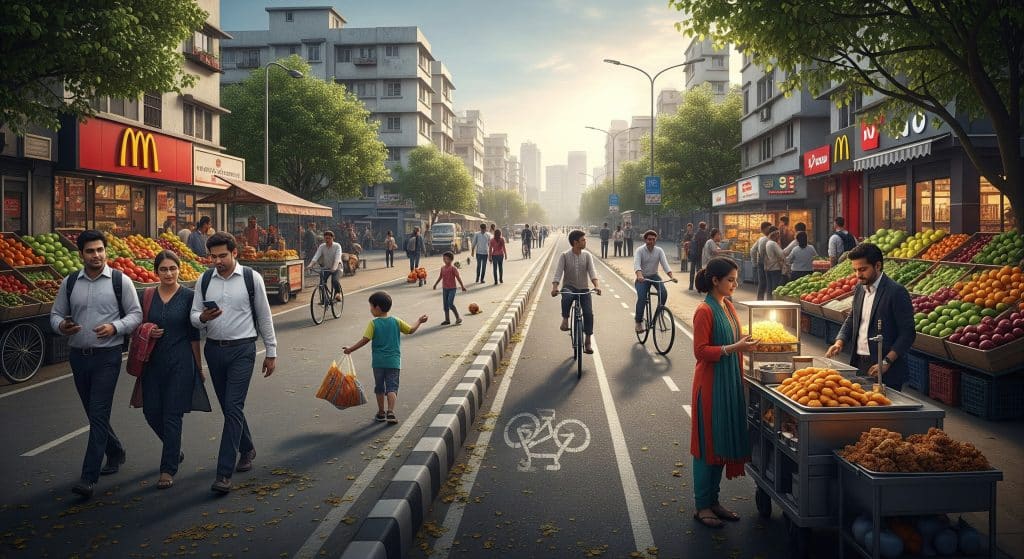
Urbanisation brought jobs, but it also compressed living space and commute times. Pavements are inconsistent, parks are scarce, and food retail concentrates around processed options. For many families, daily logistics leave little energy for cooking or sport. Those constraints explain several reasons for obesity in India that individual coaching alone cannot fix.
City design is health policy. Even when it does not call itself that.
5. Limited Outdoor Activity Spaces
Children need safe, open play areas. Many do not have them. Schools often lack usable grounds, and neighbourhoods prioritise parking over play. That reduction in free play lowers fitness and raises obesity risk across adolescence. It also reduces social cohesion, which matters for long term habits.
-
Reclaim school yards for after hours play.
-
Open gated grounds to supervised community sport on weekends.
-
Protect at least two pocket parks per ward.
6. Mechanised Transport Dependence
Short trips are now motorised by default. Cars, bikes, and rideshares replace five to fifteen minute walks. The cumulative effect is large. Walking and cycling infrastructure changes this quickly when implemented well. Until then, households can reassign local errands to foot or cycle where safe.
Transport choices are embedded in the reasons for obesity in India. They are also among the easiest to improve at scale.
Special Risk Factors and Vulnerable Groups
Childhood Obesity Crisis
Childhood obesity is rising faster than adult obesity in several districts. Energy surplus often comes from sweetened drinks and fried snacks, plus long school hours and tutoring. Once established, these patterns track into adulthood. Early action matters.
-
School meal standards with defined protein and fibre targets.
-
Restrictions on sugary drink availability within school premises.
-
Daily sport that counts for grades, not just attendance.
These measures tackle the reasons for obesity in India before they harden into lifelong habits.
Genetic Predispositions in Indians
Indians carry a high risk phenotype for central adiposity and insulin resistance. The so called thin fat profile places fat viscerally, even at lower body weights. It raises diabetes and heart disease risk at lower BMI. That is why BMI alone misclassifies risk in this population.
Clinically, I prioritise waist circumference, lipid panels, and fasting insulin when available. Genetics is not destiny, but it raises the stakes for prevention.
Socioeconomic Status Patterns
At higher incomes, convenience and eating out raise energy intake. At lower incomes, cheap energy dense foods displace diverse staples. Both routes increase risk, through different mechanisms. Access to safe activity space and healthcare also differs by income and postcode. These structural drivers appear across states and explain persistent gradients.
Policy must address these gradients directly. Otherwise the reasons for obesity in India will remain stratified and stubborn.
Triple Burden of Malnutrition
India now faces undernutrition, micronutrient deficiencies, and obesity at once. Households can include a stunted child and an adult with obesity. Food quality, not just quantity, sits at the centre of this paradox. Fortification and diet diversity reduce all three burdens.
It is an uncomfortable truth. But acknowledging it unlocks integrated solutions.
Abdominal Obesity Prevalence
Waist circumference is a stronger predictor of cardiometabolic risk than BMI for many Indians. Abdominal obesity is widespread in cities and rising in smaller towns. It reflects diet quality, sleep, stress, and alcohol patterns. Measuring and discussing waist size normalises early risk detection.
Call it what it is. A clearer risk signal that responds well to targeted nutrition and strength training.
Taking Action Against India’s Obesity Epidemic
Addressing the reasons for obesity in India requires action at four levels: policy, community, workplace, and household. I will focus on interventions that are feasible now, budget aware, and scalable.
-
Policy and pricing. Align incentives with health. Expand clear front of pack labelling and restrict misleading claims. Structure taxes to discourage high sugar beverages and ultra processed snacks while protecting basic staples. Pair pricing with access, not just penalties.
-
Food environments. Redesign school and hospital canteens with set protein and fibre minimums per meal. Contract vendors against a standards charter. Make water the default beverage. It reduces several causes of obesity in india with one operational change.
-
Urban design. Build continuous footpaths, safe crossings, and protected cycle lanes in dense corridors. Open school grounds for community sport after hours. Small infrastructure creates daily activity without willpower.
-
Workplace programmes. Tie wellness budgets to measurable outcomes. Offer protein forward cafeteria options. Schedule walking meetings for short agendas. Provide strength training access twice a week. Track participation, not just announcements.
-
Clinical screening. Shift to risk based screening at younger ages. Measure waist circumference, blood pressure, fasting glucose, and lipids. Use brief interventions that include nutrition, activity, and sleep. Refer high risk cases for dietitian support.
-
Household tactics. Stock default foods that solve the 4 pm and 9 pm slots. Roasted chana, fruit, curd, paneer, boiled eggs, and nuts. Plan oil use weekly. Cook one extra portion of a protein dish for the next day.
-
Education with specificity. Teach portion sizes with plates and spoons, not abstract calories. Demonstrate how to assemble a protein plus fibre breakfast in five minutes. Specific beats generic advice.
-
Digital guardrails. Set household screen curfews and phone free bedrooms. Sleep quality improves and so does appetite regulation. It directly reduces the reasons for obesity in India built on fatigue and cravings.
In analytics terms, focus on CAC for change: the cost of acquiring a new habit. Lower it with defaults and environment design, then celebrate early wins. Momentum compounds.
Frequently Asked Questions
What percentage of Indians are currently classified as obese?
Recent estimates place obesity in roughly a quarter of adults, with higher rates in several urban clusters. I would frame it as a steady upward trend rather than a fixed number. The reasons for obesity in India are widening, so prevention needs to scale faster.
How does India’s BMI classification differ from international standards?
Indian cut offs for risk assessment are typically lower due to higher metabolic risk at lower BMI. Clinicians often treat a BMI near 23 as overweight risk and 25 as obesity risk in practice. Waist circumference and triglyceride to HDL ratios refine the picture. This nuance reflects physiology, not preference.
Which Indian states have the highest obesity rates?
Southern states such as Kerala and Tamil Nadu, parts of the North like Punjab, and territories such as Puducherry report higher prevalence. Urban lifestyles, diet shifts, and lower activity explain these differences. These patterns align with the broader reasons for obesity in India discussed above.
What role does genetics play in obesity among Indians?
Genetics increases susceptibility, particularly to abdominal fat and insulin resistance. It raises risk at lower BMI and accelerates metabolic complications. Genetics sets the stage. Diet, sleep, stress, and movement decide the performance.
Can obesity and undernutrition exist in the same family?
Yes. The triple burden is real. A child can face stunting while an adult relative carries obesity. Low diet diversity, high refined carbohydrates, and limited protein link these outcomes. Tackling food quality helps both.
What are the projected obesity rates for India by 2030?
Projections vary by methodology, but the direction is upward without intervention. Urban prevalence will likely outpace rural figures. The credible route to bending the curve is clear: improve food environments, redesign cities for movement, and reduce exposure to ultra processed foods. That is how the reasons for obesity in India can be reversed, step by step.

