






 We do what's right for you...


What Is Spondylosis? A Simplified Explanation for All Ages
Dr. Vishal Nigam
Common advice frames back and neck pain as a simple muscle issue. That misses a frequent driver of discomfort: Spondylosis. You see it described as wear and tear. The truth is more precise. Spondylosis refers to age-linked changes in the spine that involve discs, joints, and ligaments. You can manage it effectively with the right information and steady habits.
Types of Spondylosis and Where They Occur
Spondylosis describes degenerative changes across the spine. The pattern depends on the region affected and your activity profile. You may notice stiffness on waking. You may also feel local pain after prolonged sitting. The location of symptoms often matches the affected segment.
|
Spinal region |
Typical features |
|---|---|
|
Cervical (neck) |
Neck stiffness, headaches, shoulder blade pain, occasional arm tingling |
|
Thoracic (mid-back) |
Band-like ache across ribs, posture-linked discomfort, rare nerve symptoms |
|
Lumbar (lower back) |
Low back ache, gluteal pain, leg heaviness on walking, stiffness after rest |
Cervical Spondylosis in the Neck
Cervical spondylosis affects discs and facet joints in your neck. It often presents as stiffness with a reduced turning arc while driving. You might notice headaches that start at the base of the skull. Arm symptoms can appear if a nerve root is irritated by bone spurs or a bulging disc.
-
Common triggers: long screen hours, awkward pillows, cycling posture.
-
Typical relief: gentle motion, heat, and short breaks every 30 to 45 minutes.
-
Red flags: progressive hand weakness, balance changes, or severe night pain.
Use simple pacing. Short, regular movement tops long, infrequent sessions. Small habits compound here.
Lumbar Spondylosis in the Lower Back
Lumbar spondylosis usually leads to localised low back pain that eases with light walking. Some people feel leg heaviness after distance walking. That pattern likely reflects spinal canal narrowing with age. Sitting or bending forward can reduce the strain temporarily.
-
Common triggers: heavy lifting without bracing, prolonged sitting, deconditioning.
-
Useful supports: core training, hip mobility, and steady aerobic work.
-
Watch for: progressive leg weakness or changes in bladder control.
Work capacity grows gradually. But the process is predictable if you train consistently and rest sensibly.
Thoracic Spondylosis in the Mid-Back
Thoracic changes are less symptomatic, yet posture often drives discomfort. You may feel a tight band around the chest after long sessions at a desk. Gentle extension and rotational drills usually help. Breathing work can reduce protective muscle guarding and ease the ache.
-
Main focus: mid-back mobility, rib movement, and ergonomic setup.
-
Progress marker: easier upright posture without fatigue by late afternoon.
Small ergonomic tweaks shift load. Cumulative load is the point.
How Age Groups Experience Spondylosis Differently
Spondylosis is age-associated but not confined to older adults. The expression varies with decade and demands.
-
Teens to 20s: rare symptoms. When present, heavy sport or genetics may contribute.
-
30s to 40s: stiffness after inactivity and episodic flares during busy periods.
-
50s plus: more frequent morning stiffness, slower recovery from flare-ups.
Imaging often shows changes before symptoms. That can sound alarming. It should not be. Many findings are incidental and manageable.
Recognising Spondylosis Symptoms
Symptoms cluster around stiffness, local pain, and movement intolerance. The pattern over a day helps with recognition. Your response to rest and activity also guides self care choices.
Early Warning Signs
-
Morning stiffness lasting under 30 minutes that eases with a shower or walk.
-
Local ache after long static postures, especially screens or driving.
-
Reduced comfortable range, such as turning the neck or bending to tie shoes.
Early intervention reduces flare frequency. Short walks and easy mobility work serve you well here.
Progressive Symptoms Over Time
-
More frequent pain episodes with smaller triggers.
-
Longer stiffness periods after rest or travel days.
-
Occasional nerve irritation, such as tingling, that tracks a limb.
These changes are common with Spondylosis. They respond to structured strengthening and better load management.
Symptoms Specific to Cervical Spondylosis
-
Neck pain that worsens with overhead work or long phone use.
-
Headaches starting at the neck and moving to the temples.
-
Arm tingling or numbness when turning or extending the neck.
Severe or progressive weakness warrants prompt review. It is rare but important.
Symptoms Specific to Lumbar Spondylosis
-
Low back pain that improves when leaning on a trolley while shopping.
-
Gluteal ache or leg heaviness after walking longer distances.
-
Stiffness after prolonged sitting that eases within 20 minutes of moving.
These signs fit lumbar spondylosis patterns. Track walking tolerance and changes week to week for clarity.
When Pain Becomes Chronic
Persistent pain over several months shapes behaviour and mood. Sleep disruption and reduced activity can maintain the cycle. Address both the tissue load and the nervous system response. That is the effective route.
-
Use steady routines for sleep and movement.
-
Consider guided physiotherapy and graded exposure to feared tasks.
-
Monitor progress with simple PROMs (patient reported outcome measures).
Progress compounds slowly, then shows quickly. Stay systematic.
Spondylosis Exercises and Physical Management
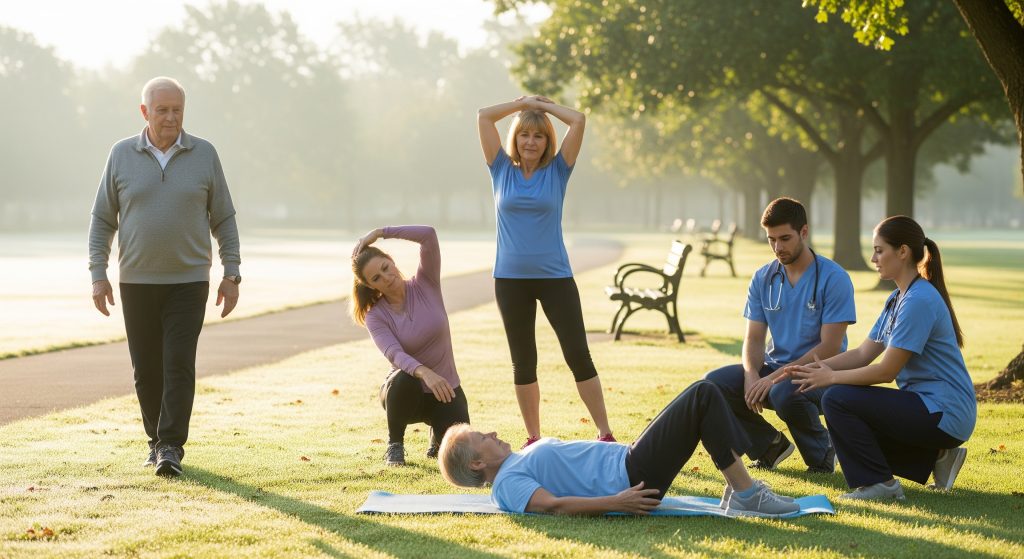
Movement remains the central pillar for Spondylosis. Choose low risk, high return drills. Then progress by small, regular increments. The phrase spondylosis exercises simply means a programme tailored to your symptoms and capacity.
Safe Stretching Exercises for Beginners
Begin with controlled, pain-free ranges. Hold stretches briefly and repeat. Aim for easy motion, not maximal length.
-
Chin nods: sit tall, gently draw chin back, hold 5 seconds, repeat 8 times.
-
Thoracic open book: side lying, rotate top arm to open chest, breathe, repeat 8 each side.
-
Hip flexor lunge stretch: short holds of 15 seconds, 3 rounds per side.
-
Frequency: little and often, 1-2 sets across the day.
-
Stop if pain sharpens or tingling spreads.
Comfortable repetition beats force. Always.
Strengthening Exercises for Core Support
Strength protects joints and stabilises movement under load. Focus on co-ordination first, then intensity. Core here means the trunk muscles that brace your spine.
-
Abdominal bracing: exhale, tighten gently, hold 8 seconds, rest, repeat 10 times.
-
Dead bug: slow alternating limbs, keep ribs down, 8-10 reps each side.
-
Glute bridge: lift hips without back arching, 10-12 reps, 2-3 sets.
-
Side plank on knees: 20 second holds, build to 45 seconds.
Programmer shorthand helps here. Think RPE (rate of perceived exertion) at 6 to 7 while learning. Then add load.
Specific Exercises for Cervical Spondylosis
Cervical spondylosis prefers gentle mobility plus deep neck flexor work. Keep the shoulders relaxed throughout.
-
Isometric neck holds: press hand into head lightly, hold 5 seconds, 6 directions.
-
Scapular retraction: band pull apart, slow control, 12 reps.
-
Chin tuck with lift: small lift while keeping the tuck, 6-8 reps.
Pair exercises with workstation breaks. Better ergonomics lowers repeated strain on sensitive structures.
Specific Exercises for Lumbar Spondylosis
Lumbar spondylosis benefits from hip and trunk conditioning. Movement choices should not spike pain the next day.
-
Bird dog: reach opposite arm and leg, pause, 8 each side.
-
Hip hinge drill: learn to hinge without spinal flexion, 10 reps.
-
Step-ups: low box, balanced stance, 8-10 reps each side.
Progress by small steps. Add volume over load at first, then increase weight later.
Activities to Avoid
Short-term avoidance can calm a flare. Long-term blanket avoidance reduces capacity. Aim for modification, not permanent bans.
-
Prolonged end-range neck positions, especially with load.
-
Heavy lifting to fatigue without bracing or technique support.
-
High impact plyometrics during acute episodes.
Return to activities with graded exposure. Track response over 24-48 hours to judge tolerance.
Physical Therapy Approaches
Effective plans combine education, exercise, and manual therapy when needed. Techniques include joint mobilisation, soft tissue work, and neural gliding. Outcome tracking matters more than the exact modality list.
-
Start with ADLs (activities of daily living) goals, such as comfortable driving for 45 minutes.
-
Set progress checks every 2 to 4 weeks.
-
Adjust loads based on symptom behaviour and objective tolerance.
Therapy should make you stronger and less fearful of movement. Anything else misses the point.
Treatment Options and Medical Care
For Spondylosis, conservative care is the mainstay. Medication can support flare control. Procedures and surgery help selected cases with specific indications.
Conservative Treatment Methods
-
Exercise therapy: mobility, strength, and aerobic capacity built gradually.
-
Education: pacing, ergonomics, sleep, and stress strategies.
-
Manual therapy: short courses to reduce pain while you build capacity.
-
Bracing: time-limited use during acute episodes or heavier tasks.
Conservative care addresses both symptom relief and long-term resilience. That combination sustains results.
Medication Options
Medication should support function while rehabilitation progresses. Use the lowest effective dose and review regularly.
|
Medication |
Primary role |
|---|---|
|
Paracetamol |
Baseline analgesia for mild discomfort |
|
NSAIDs |
Short-term anti-inflammatory effect during flares |
|
Topical NSAIDs |
Local relief with fewer systemic effects |
|
Neuropathic agents |
For nerve-irritation pain patterns, time-limited |
|
Muscle relaxants |
Selected cases with marked spasm, brief courses |
Discuss interactions and contraindications with your clinician. Especially with blood pressure, kidney disease, or gastric concerns.
Alternative Therapies
Some adjuncts may help short-term comfort. Evidence quality varies, depending on methodology and condition specifics.
-
Acupuncture for pain modulation in flares.
-
Yoga or Pilates for graded mobility and control.
-
Heat and TENS for temporary analgesia during activity ramp-up.
Alternate modalities should not replace progressive strengthening. They can support it.
Surgical Interventions
Surgery targets clearly defined structural problems with concordant symptoms. Typical indications include severe nerve compression not improving with conservative care. It is considered only after organised non-surgical care fails.
-
Cervical procedures for stubborn radiculopathy with matching imaging and examination.
-
Lumbar decompression for neurogenic claudication with functional limitation.
-
Fusion considered for instability or recurrent severe compression, selected cases.
Discuss risks, returns, and rehabilitation timelines in detail. Informed choice is essential.
Long-term Management Plans
Long-term control relies on consistent habits rather than occasional fixes. Plan across training, work setup, and recovery.
-
Exercise calendar with 2-3 strength sessions and 3-4 aerobic sessions weekly.
-
Ergonomic baselines: monitor height, lumbar support, and regular micro-breaks.
-
Sleep window of 7-9 hours and wind-down routine to stabilise recovery.
-
Flare plan: reduce loads by 30-50% for 3-7 days, then rebuild.
Clarity reduces anxiety. A written plan also speeds decisions when pain spikes.
Living Well with Spondylosis
Life with Spondylosis is not a life on the sidelines. It is a life organised around smart loading. Build routines that protect capacity and mood.
-
Daily movement: brisk walks, cycling, or swimming for 20-40 minutes.
-
Strength floor: maintain baseline lifts you can complete without next day aggravation.
-
Workstation: neutral neck position, feet on the floor, screen at eye level.
-
Micro-breaks: 2 minutes every 30-45 minutes to reset posture and circulation.
-
Sleep posture: supportive pillow for the neck, side or back sleeping preferred.
-
Stress management: brief breathing drills, short breaks, realistic pacing.
Progress rarely feels dramatic day to day. It feels steady, then obvious when you look back two months.
Use spondylosis exercises as daily scaffolding. Add hobbies, social time, and purposeful work around that frame. If symptoms shift or escalate, seek a clinical review early. Small adjustments prevent long setbacks.
Frequently Asked Questions
Can spondylosis be completely cured?
Spondylosis reflects structural ageing, so a complete reversal is unlikely. Relief and control are very achievable. Many people reach stable, low-symptom lives with training, ergonomic changes, and periodic reviews.
At what age does spondylosis typically start?
Changes may appear on imaging in the 30s, sometimes earlier. Symptoms often surface later, depending on load, fitness, and genetics. Early habits pay off. Small actions today reduce tomorrow’s flares.
Is spondylosis hereditary?
There is a genetic component to disc and bone changes, at least from available studies. Environment and behaviour contribute heavily. Training status and body weight influence symptom severity to a large extent.
Can young adults develop spondylosis?
Young adults can show early changes, especially with high training loads or previous injuries. Symptoms are less common yet possible. Restore balance with mobility, strength, and improved recovery routines.
What’s the difference between spondylosis and arthritis?
Spondylosis is a broad term for spinal degeneration that includes disc and joint changes. Arthritis usually refers to joint inflammation. In the spine, both often coexist. The management principles remain similar.
How long do spondylosis flare-ups last?
Flares often settle over 3-14 days when load is reduced and movement is maintained. Severe episodes can take longer. A written flare plan shortens the tail and preserves confidence.
Can spondylosis cause permanent disability?
Most cases do not. Some people experience persistent limitations, though not without exceptions. Early rehabilitation and targeted care reduce that risk significantly. Seek specialist input if neurological signs appear.
Final note. Spondylosis is common and manageable. Build capacity, optimise setup, and keep moving. The combination works.

