






 We do what's right for you...


What Is Plantar Fasciitis Surgery? Cost, Risks, and Recovery
Dr. Neetan Sachdeva
Conventional advice insists that persistent heel pain always yields to rest, stretches, and better shoes. That counsel works for many, yet a subset keeps limping despite months of diligence. This is where I assess plantar fasciitis surgery with clear thresholds, realistic benefits, and measured risks. The goal is not a quick fix. It is a durable return to pain-limited activities without trading one problem for another.
Types of Plantar Fasciitis Surgery
1. Endoscopic Plantar Fasciotomy (EPF)
I consider EPF when structured care has failed over six to nine months and imaging supports a plantar fascia origin. EPF uses tiny portals and an endoscope to release a portion of the thick, fibrous band at the heel. The intention is simple. Reduce tension and inflammation while preserving enough fascia to maintain arch support.
-
Indication: recalcitrant plantar fasciitis with localised medial heel pain and morning start-up pain.
-
Technique: limited partial release under visual control to protect nerves and soft tissue.
-
Typical course: protected weight bearing early, then progressive loading.
In practice, EPF is the most common form of plantar fasciitis surgery I discuss with active adults, because incision size is small and return to routine walking is usually quicker than open methods. But over-release risks arch strain. Precision matters.
2. Open Plantar Fascia Release
Open release offers direct exposure and control, which can be helpful in complex anatomy or when prior procedures complicate the field. The principle mirrors EPF. Perform a partial release of the medial band, avoid full detachment, and protect the calcaneal fat pad.
-
Advantages: excellent visibility and ability to address concurrent pathology.
-
Limitations: longer wound healing, slightly higher scar tenderness probability.
-
Best suited: revision cases, atypical heel pain causes, or when endoscopic equipment is unavailable.
For some patients, the open approach offers clarity and fewer intraoperative surprises. The trade-off is a more deliberate recovery.
3. Gastrocnemius Recession Surgery
Calf tightness often drives plantar fascia overload. When ankle dorsiflexion remains limited despite therapy, I consider a gastrocnemius recession. This lengthens the tight calf component and reduces the traction force through the heel with each step. It is not a plantar fascia cut. It is a load management operation.
-
Indication: isolated gastrocnemius contracture on Silfverskiold testing with persistent pain.
-
Benefit: pressure reduction through the fascia during stance and push-off.
-
Risk: transient calf weakness and cramps while the muscle adapts.
I often pair a recession with plantar fasciitis surgery in select cases. Done judiciously, it can improve gait mechanics and long-term comfort.
4. Nano-Arthroscopic Release Technique
Nano-arthroscopy employs very small cameras and instruments to perform a focused partial release with minimal soft tissue disruption. Conceptually, it sits between EPF and open surgery, with visualisation through needle-sized optics.
-
Potential upside: tiny portals and less postoperative irritation of the fat pad.
-
Considerations: equipment availability and surgeon learning curve.
-
Use case: patients prioritising minimal scarring and rapid shoe comfort postoperatively.
This is still plantar fasciitis surgery in aim and effect, just executed with smaller hardware. The fundamentals remain unchanged.
Heel Spur Removal During Surgery
Heel spurs frequently coexist with plantar fasciitis but are not the sole driver of pain. I remove a spur only if it obstructs the release or shows clear mechanical irritation. Routine spur excision is unnecessary and may increase soft tissue trauma.
-
Key point: the pain generator is usually the degenerate fascia insertion, not the spur itself.
-
Action: address the fascia first, then consider the spur if intraoperative findings justify it.
Persistent heel pain is more about tissue overload and micro-tears than about a bony spike. Relief comes from load reduction and controlled healing.
Plantar Fasciitis Surgery Cost in India
Cost Range for Different Procedures
Costs vary widely by city, hospital tier, and whether additional procedures are performed. Rather than fixed figures, I advise thinking in bands and components. EPF usually sits below an open release with adjuncts, while a combined gastrocnemius recession tends to add theatre time and consumables.
|
Procedure |
Relative Cost Band |
|---|---|
|
Endoscopic Plantar Fasciotomy |
Moderate |
|
Open Plantar Fascia Release |
Moderate to High |
|
Gastrocnemius Recession (alone) |
Moderate |
|
Combined Release + Recession |
High |
|
Nano-arthroscopic Release |
Moderate to High |
Package quotes often include surgeon fee, anaesthesia, theatre charges, day-care room, and basic medications. Implants are rare in this context, but specialised endoscopic kits may influence pricing.
Factors Affecting Surgery Price
-
City and hospital tier: metro, corporate hospitals usually price higher than regional centres.
-
Surgeon experience: senior specialists may charge a premium for complex cases.
-
Anaesthesia choice: local with sedation can be more economical than general anaesthesia.
-
Diagnostic add-ons: imaging, nerve blocks, orthoses, and physiotherapy packages can increase totals.
-
Length of stay: most are day-care, but complications increase cost.
Two additional variables matter. Combined procedures, and whether postoperative physiotherapy is bundled or billed separately.
Hospital-Specific Pricing Variations
Hospitals price by service lines and negotiated vendor contracts. A centre that handles a high volume of foot and ankle cases often offers tighter, predictable packages. Smaller facilities may separate theatre and consumables billing, which looks lower at first but rises with each line item.
-
Ask for an itemised estimate with inclusions and exclusions.
-
Clarify charges for any unplanned overnight observation.
-
Confirm whether post-surgical dressings and follow-ups are included.
I also request clarity on cancellation or postponement policies. Schedules change. Bills should not escalate without explanation.
Insurance Coverage and Payment Options
-
Insurance: many plans cover plantar fasciitis surgery when documented as medically necessary after failed conservative care.
-
Pre-authorisation: obtain a clinical summary, imaging, and a surgeon letter to streamline approval.
-
Cashless vs reimbursement: hospital network status determines the pathway and out-of-pocket risk.
-
Payment plans: some centres provide zero-cost equated monthly instalments for day-care surgeries.
I advise maintaining a written record of prior non-operative care. It supports medical necessity and reduces disputes later.
Risks and Complications of Surgery
Common Post-Operative Complications
Most patients progress without incident. The common issues are predictable and manageable with early review and physiotherapy. These include temporary heel tenderness, swelling, and a sense of tightness when first loading the foot.
-
Scar sensitivity or numbness near the incision.
-
Prolonged soreness during first steps in the morning.
-
Calf cramping if a recession was performed.
These are not failures of plantar fasciitis surgery. They are part of tissue adaptation during the first weeks.
Nerve Damage and Entrapment Issues
The medial and inferior calcaneal nerve branches traverse the surgical field. Irritation or entrapment can cause burning pain or altered sensation. Endoscopic visualisation reduces risk, but does not remove it entirely.
-
Prevention: meticulous dissection plane selection and limited release width.
-
Management: rest, neuropathic pain medication, and targeted desensitisation therapy.
Persistent neuralgia is uncommon, yet it drives disproportionate distress. I address it early and specifically.
Foot Instability and Arch Problems
Releasing too much fascia can weaken the medial longitudinal arch. Patients may notice midfoot fatigue, lateral column pain, or a flatter footprint on wet test. The antidote is prevention. Execute a partial, not total, release and pair it with strengthening.
-
Orthoses to support the arch during the adaptation phase.
-
Intrinsic foot muscle training and calf conditioning.
When planned and performed precisely, plantar fasciitis surgery improves load sharing without destabilising the arch. Poorly targeted surgery does the opposite.
Infection and Wound Healing Concerns
Infection risk is generally low with day-care foot procedures. Smoking, diabetes, and poor skin quality increase risk. I maintain strict wound care protocols, keep the dressing dry, and escalate at the first sign of spreading redness or discharge.
-
Red flags: fever, increasing warmth, purulent fluid, escalating pain after initial improvement.
-
Action: prompt review, culture where indicated, and antibiotics tailored to findings.
Most superficial issues resolve. Deep space infection is rare, but serious.
Long-Term Success Rates and Failures
Outcomes are favourable for a majority of appropriately selected patients. Relief builds gradually as tissue remodels and gait normalises. Failures occur when underlying drivers persist, like severe calf contracture, suboptimal footwear, or poor adherence to rehabilitation.
Plantar fasciitis surgery is a tool. It succeeds to the extent that mechanics, strength, and footwear are addressed alongside the operation.
Recovery Timeline and Rehabilitation
Immediate Post-Surgery Phase
Day 0 to Day 3 is about pain control, elevation, and wound protection. I keep the dressing dry, monitor for bleeding, and begin gentle toe and ankle pumps to limit stiffness and encourage circulation.
-
Weight bearing: protected, typically in a post-op shoe or boot, as advised.
-
Medication: analgesics and anti-inflammatories as tolerated.
-
Positioning: elevate above heart level several times a day.
It feels counterintuitive, but early, gentle movement helps. Stillness invites stiffness.
Week 2-6: Walking Boot Stage
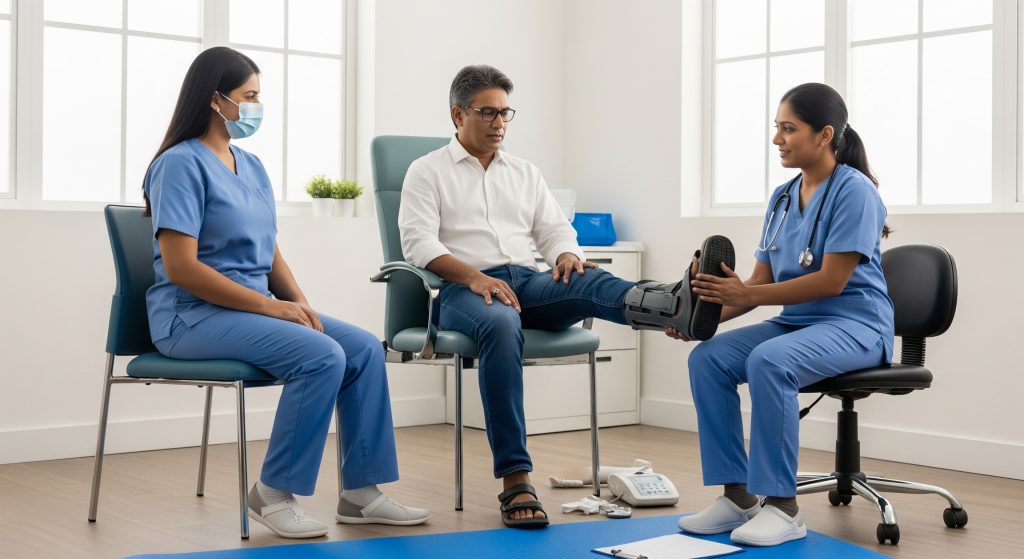
At the two-week mark, sutures usually come out and swelling has reduced. This is when I progress to more deliberate loading in a controlled boot. The aim is to normalise gait pattern while protecting the healing fascia.
-
Begin short, frequent walks on level ground.
-
Start low-load calf and foot intrinsic activation under physiotherapy guidance.
-
Maintain calf flexibility work without provoking heel pain.
Physiotherapists may use the term ROM for range of motion, and WBAT for weight bearing as tolerated. The acronyms matter less than the principle. Slow, steady, and consistent wins here.
Week 6-10: Transition to Normal Shoes
By week six to eight, many transition from a boot to supportive trainers with cushioned insoles. I recommend a gradual increase in time spent in regular shoes to avoid a sudden spike in load. Swelling can persist at day’s end. That is normal to a point.
-
Use supportive insoles or custom orthoses during this phase.
-
Introduce low-impact cardio like cycling or swimming.
-
Progress plantar fascia loading with controlled, pain-tolerant exercises.
The best shoes for plantar fasciitis tend to have a stable heel counter, modest heel-to-toe drop, and a torsion-resistant midsole. Comfort is the final judge.
Physical Therapy Requirements
Rehabilitation is the multiplier on surgical benefit. I structure therapy around strength, mobility, and load tolerance. This includes calf strengthening, foot intrinsic work, balance drills, and progressive plantar tissue loading.
-
Windlass mechanism training: controlled dorsiflexion of the big toe to tension and then relax the fascia.
-
Calf work: straight-knee and bent-knee raises for gastrocnemius and soleus balance.
-
Tissue capacity: graded hops, then gentle jog intervals when symptom-free at lower loads.
Plantar fasciitis exercises continue long after the incision heals. They keep the fascia strong enough for everyday life and sport.
Return to Work and Athletic Activities
Desk work often resumes within two weeks with foot elevation. Standing roles take longer, as sustained load stresses the fascia. Running and pivoting sports return in phases, with criteria-based progression rather than calendar dates.
|
Desk duties |
Often 1 to 2 weeks with modifications |
|
Light standing work |
Often 3 to 6 weeks with breaks |
|
Running drills |
Commonly 8 to 12 weeks if symptoms allow |
|
Full sport |
Variable, usually after strength and hop tests are symmetric |
These are guideposts. Pain response, strength, and gait quality decide the exact timing.
Making the Right Decision About Plantar Fasciitis Surgery
I advocate a structured pathway before committing to an operation. Identify the dominant contributors, exhaust high-value conservative options, and set realistic expectations on recovery and effort. Then decide deliberately.
-
Confirm diagnosis: rule out alternative heel pain causes like nerve entrapment or stress fracture.
-
Address load: modify standing time, add rest intervals, and adjust training intensity.
-
Footwear: trial the best shoes for plantar fasciitis with appropriate insoles.
-
Rehab: complete a consistent block of plantar fasciitis exercises guided by a physiotherapist.
-
Adjuncts: consider night splints, taping, and targeted injections if indicated.
If pain persists beyond six to nine months despite diligent care, plantar fasciitis surgery becomes a reasonable option. Selection then hinges on anatomy, lifestyle, and the willingness to commit to rehabilitation. There is no single right choice. There is a right choice for this foot, in this context, with this set of goals.
The decision is not just about the day in theatre. It is about the three months after, and the miles to come.
Frequently Asked Questions
When should I consider surgery for plantar fasciitis?
I consider surgery when structured non-operative care has failed after several months and when clinical testing supports plantar fascia origin. A clear plan for postoperative rehabilitation should also be in place. Without that plan, the probability of durable relief drops.
What is the success rate of plantar fasciitis surgery?
Success is high in well-selected patients and when only a partial release is performed. Relief is typically gradual, not instantaneous. Outcomes improve further when footwear, calf flexibility, and strength are addressed together.
Can plantar fasciitis return after surgery?
Yes, recurrence can occur if underlying load drivers return or if calf tightness persists. Ongoing plantar fasciitis exercises, shoe selection, and sensible training loads remain essential safeguards. Surgery reduces pain generators. It does not immunise the foot against future overload.
What are the best non-surgical alternatives to try first?
My priority set includes a progressive loading programme for the fascia and calf, taping, night splints, and orthoses. Footwear changes using the best shoes for plantar fasciitis are fundamental. In certain cases, targeted injections or shockwave therapy can complement rehabilitation.
How long before I can walk normally after surgery?
Many patients walk short distances in a protective shoe within days and in a boot during the first few weeks. A typical transition to supportive trainers occurs around six to eight weeks. Full normalisation varies with workload and rehabilitation adherence.
Is endoscopic surgery better than open surgery?
Endoscopic surgery usually enables smaller incisions and a faster return to routine walking. Open surgery offers direct visibility and broader options when anatomy is complex. The better choice is the one that fits the pathology, not a universal rule. Surgeon expertise with the chosen method matters more than the label.

