






 We do what's right for you...


What Is Hypertension Management and Why It Matters in 2025
Dr. Hriday Kumar Chopra
Disclaimer: The content shared here is for informational purposes only. Always consult a specialist doctor before attempting any treatment, procedure, or taking any medication independently. Treatment costs and pricing may vary depending on the patient’s condition, medical requirements, hospital, and other factors.
Salt-cutting and a single tablet are often pitched as the whole answer. That advice is incomplete. In practice, Hypertension Management works best as a precise system that blends lifestyle, medicines, monitoring, and timely follow up. I approach it as a repeatable care loop: measure, adjust, support, and review. Done consistently, it prevents strokes and kidney failure. It also restores confidence to daily life.
Top Hypertension Management Strategies for Optimal Blood Pressure Control
1. Lifestyle Modifications and Dietary Approaches
Behaviour first. Pharmacology next. Hypertension Management starts with modifiable habits that lower blood pressure and reduce long term risk. Yet adherence is often poor. As WHO EMRO reports, average adherence to lifestyle measures sits near 27.4%, with barriers that include awareness gaps and financial constraints. That single number explains why structured support matters as much as advice.
My practical approach prioritises three pillars:
-
Nutrition with a heart healthy pattern. A workable hypertension diet plan centres vegetables, fruit, pulses, whole grains, and low salt cooking. I advise 2 or 3 simple swaps first, such as dal without extra salt and curd in place of cream.
-
Movement most days. Brisk walking, cycling, or stair climbs. Short bouts add up, and patients keep at it when it fits daily routes.
-
Stress hygiene and sleep. Mindful breathing and a fixed lights out time are unglamorous. They help nonetheless.
Here is why this sequence helps. Food and sleep shape baseline blood pressure. Activity improves endothelial function. Together they potentiate medicines, so lower doses often suffice. But still, lifestyle work stalls without coaching. I use brief check ins, a one page plan, and a progress log. Small, visible wins build momentum.
Two quick examples:
-
A teacher swapped mid morning namkeen for roasted chana and added a 15 minute walk after lunch. Systolic values fell by 6 to 8 points over eight weeks.
-
A driver practised 5 minute box breathing at traffic halts. Evening readings steadied, and headaches eased.
Hypertension Management succeeds when the plan is simple enough to follow on a busy Monday. That is the bar I use.
2. Pharmacological Treatment Options
Medicines are central to Hypertension Management once thresholds are crossed or risk is high. As WHO Guidelines for Pharmacological Treatment of Hypertension outline, treatment starts at roughly 140/90 mmHg, and earlier for those with established cardiovascular disease. Combination therapy is recommended for many patients with stage 2 disease. The goal is durable control with the fewest pills.
My decision flow is straightforward:
-
Confirm diagnosis with repeated, standardised readings.
-
Estimate 10 year risk and check comorbidities.
-
Start a first line agent and titrate or combine promptly if control lags.
First line classes include thiazide diuretics, ACE inhibitors, ARBs, and calcium channel blockers. Single pill combinations improve adherence and reduce prescription complexity. I watch for cough with ACE inhibitors, ankle swelling with dihydropyridines, and potassium shifts with diuretics. A brief safety table helps patients remember what to observe.
|
Medicine point |
How I explain it |
|---|---|
|
Timing |
Take at the same hour daily to stabilise levels. |
|
Missed dose |
Skip if close to the next dose. Do not double. |
|
Side effects |
Report new cough, dizziness, ankle swelling, or cramps. |
|
Interactions |
Inform before starting NSAIDs or herbal supplements. |
The principle is simple. Use the right class, reach the target, and maintain the fewest changes. And yet, titration delays are common. I schedule early reviews to avoid therapeutic inertia.
3. Home Blood Pressure Monitoring Techniques
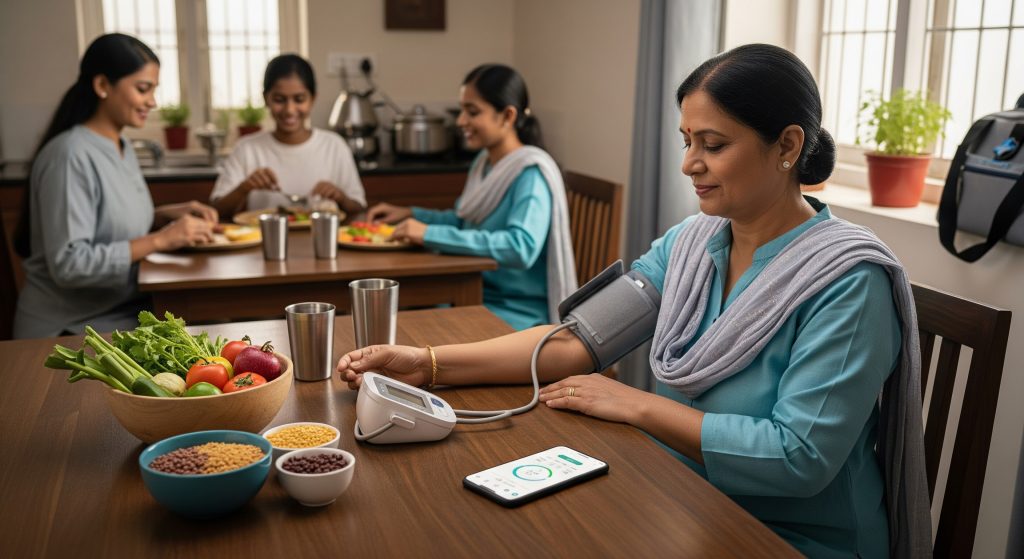
Home monitoring converts Hypertension Management from guesswork to guided care. It reduces white coat effects and captures day to day variability. I recommend validated upper arm devices with correct cuff size and a clear logbook.
My standard protocol is easy to remember:
-
Rest quietly for 5 minutes. Sit upright with back support and feet flat.
-
Place the cuff at heart level on the bare upper arm.
-
Measure twice in the morning and twice in the evening for a week before reviews.
-
Record the date, time, and any symptoms, such as palpitations or headache.
Education on technique matters more than brand. Patients who learn posture and cuff placement see fewer false alarms. This empowers timely dose adjustments and better conversations during visits. One more benefit is engagement. A visible trendline often motivates sustained lifestyle work.
Common pitfalls include using wrist devices, measuring after coffee, and recording isolated spikes. I encourage a calm retest after five minutes. Outliers usually settle.
4. Team-Based Care and Patient-Centred Approaches
Hypertension Management is a team sport. Nurses, pharmacists, and community health workers extend reach and continuity. Standardised protocols reduce variation and keep treatment moving.
My preferred care model assigns clear roles:
-
Nurse educator reinforces salt strategies, device technique, and follow up dates.
-
Pharmacist checks adherence, simplifies regimens, and flags interactions.
-
Physician focuses on diagnosis, titration, and comorbidity control.
This division improves control rates and patient knowledge. It also eases bottlenecks in busy clinics. The patient experience should be predictable and supportive. Short queues, clear instructions, and a single contact number go a long way.
Consistency beats intensity in chronic care. Small, regular touches outperform occasional, heroic fixes.
I also use unattended automated measurements in clinic rooms where possible. Readings are typically steadier when people sit alone for a few minutes. It reduces over diagnosis and fights noise.
5. Digital Health Tools and Mobile Applications
Digital tools now anchor Hypertension Management for many patients. They simplify logs, nudge adherence, and enable remote reviews. As WHO India highlighted, the Simple app supported telemedicine at Health and Wellness Centres, with about 1,200 staff trained to use it during lockdowns. That early success showed how lightweight software can keep care continuous.
What I look for in an app:
-
Quick entry for readings and tablets, plus reminders that respect user schedules.
-
Shareable reports for appointments.
-
Offline mode and data export to standard formats.
Apps are not a replacement for clinical judgement. They are instruments that make adherence and review easier.
6. Risk-Based Treatment Decisions
Equal readings do not equal equal risk. Hypertension Management works best when treatment intensity matches the person, not just the numbers. I use age, diabetes status, kidney function, and prior events to calibrate targets and review intervals.
A practical split helps:
-
Lower absolute risk: focus on lifestyle intensity, single agent starts, and longer follow up cycles.
-
Higher absolute risk: early combination therapy, tighter home monitoring, and closer reviews.
This approach minimises overtreatment in low risk groups and under treatment in high risk groups. It also aligns with how people live and work.
Current Medications and Treatment Protocols
First-Line Drug Classes and Combination Therapy
The core pharmacology in Hypertension Management is stable and well tested. Thiazide diuretics, ACE inhibitors, ARBs, and calcium channel blockers cover most clinical scenarios. Choice depends on age, renal profile, and coexisting conditions.
Why combinations early? Two mechanisms at modest doses often control pressure better than one at a high dose. Single pill combinations reduce pill burden and improve adherence. I usually reassess within four to six weeks after any change. If the response is partial, I add rather than endlessly push one drug.
Clinical caveats:
-
Use ARBs if an ACE inhibitor cough emerges.
-
Pair a diuretic with a calcium channel blocker when oedema appears.
-
Check electrolytes after diuretic initiation and dose escalations.
The method is disciplined and repeatable. It is basically a cycle of measured trial, monitoring, and timely escalation.
New Emerging Medications for Resistant Hypertension
Resistant hypertension deserves a structured search for missed factors. White coat effect, poor adherence, and subclinical sleep apnoea can all masquerade as drug resistance. When true resistance persists, mineralocorticoid receptor antagonists provide strong additional control in many cases.
Emerging agents under study include aldosterone synthase inhibitors and novel sympatholytics. Their promise lies in targeting mechanisms upstream of current drugs. Evidence is growing, though long term safety data will refine their place. I consider referral to a specialist centre when three classes at sensible doses fail, including a diuretic.
Device therapies, such as renal denervation, have re-entered discussion. Patient selection and realistic expectations matter. Not every uncontrolled case benefits.
India-Specific Treatment Guidelines and Protocols
India’s protocols emphasise standardised pathways and essential medicines. Hypertension Management in public programmes prioritises affordability, continuity, and task sharing across cadres. Screening, diagnosis, and treatment are defined with clear steps so that primary care teams can act without delay.
Key operational features I support:
-
Fast initiation after confirmed diagnosis to reduce organ damage risk.
-
Use of a limited, reliable formulary to ensure steady supply.
-
Regular registers and follow up tracking to prevent silent dropouts.
Community health workers add reach for refill reminders and blood pressure checks. This is particularly effective for rural and peri urban populations. The approach is pragmatic and cost aware.
Managing Hypertension with Comorbidities
Hypertension Management rarely occurs in isolation. Diabetes, coronary disease, chronic kidney disease, and obesity frequently co-exist. The plan should align medicine choices with organ protection.
Typical patterns I use:
-
Diabetes or albuminuria: prefer an ACE inhibitor or ARB for renal protection.
-
Coronary disease: ensure beta blockers and statins where indicated, plus strict pressure control.
-
Chronic kidney disease: watch potassium and dose adjust diuretics carefully.
Polypharmacy risks rise as conditions accumulate. Single pill combinations and a clear, written schedule reduce confusion. I also ask about hypertension symptoms that may point to end organ strain, such as exertional chest pressure or nocturia. Early signals allow preemptive action.
Digital Innovation and Technology Integration
List of Evidence-Based Hypertension Management Apps
Several tools support Hypertension Management and self tracking. I prefer apps that keep data ownership clear and exportable.
-
SmartBP: clean logging, trend graphs, and shareable summaries for consultations.
-
BP Smart+ or similar trackers: Bluetooth sync with validated cuffs and simple reminders.
-
Simple: used in public programmes for fast registration, follow up prompts, and teleconsult support.
Feature checklist I share with patients:
-
Manual and Bluetooth entry options.
-
Medication reminders that can be paused during travel.
-
PDF or CSV export for clinic records.
One caution. Fancy dashboards are useless if entries take too long. The best app is the one a patient will actually use every day.
Remote Monitoring and Telehealth Solutions
Remote reviews shorten the feedback loop in Hypertension Management. A doctor can see a week of readings and adjust therapy without waiting for the next clinic slot. This helps those with mobility challenges or long commutes.
Operationally, I deploy a simple workflow:
-
Baseline in clinic with education on home technique.
-
Two weeks of structured home readings uploaded through the app or a call.
-
Video or phone review to adjust doses and update the plan.
Telehealth is effective when the boundaries are clear. Urgent symptoms still require in person care. Routine titration benefits from speed and convenience.
AI-Powered Blood Pressure Management Tools
Artificial intelligence is entering Hypertension Management in measured ways. Risk stratification models help flag patients who are likely to default or who need earlier combination therapy. Pattern recognition in home readings can also prompt alerts for masked hypertension or nocturnal spikes.
Useful applications I have seen:
-
Adherence risk scores that trigger extra follow up calls.
-
Automated summaries that highlight morning surge or high variability.
-
Wearable signals that correlate activity, sleep, and blood pressure trends.
These tools are adjuncts. Clinical judgement remains decisive, particularly for edge cases and medication side effects. The technology should serve the care plan, not override it.
Data Privacy and Security Considerations
Trust underpins digital Hypertension Management. Data must be portable, protected, and used only with informed consent. I look for encryption in transit and at rest, clear retention policies, and transparent sharing rules.
Practical safeguards for clinics and patients:
-
Use strong authentication for portals and clinician consoles.
-
Restrict access by role. Log and audit all data exports.
-
Provide patients a simple notice describing what data is collected and why.
Interoperability is valuable, but not at the cost of weak controls. Good governance weighs access benefits against exposure risk. A brief annual drill for incident response is worth the time.
India’s National Hypertension Control Initiatives
IHCI Programme Implementation and Progress
The India Hypertension Control Initiative has focused on standardised protocols, uninterrupted drug supplies, and team based delivery. Hypertension Management within IHCI emphasises rapid initiation of therapy and reliable follow up. The programme’s strength lies in its simplicity. Few medicines, clear steps, and accountable registers.
Implementation has leaned on capacity building for primary care teams and on practical tools for tracking. Progress varies by state, but the overall direction is consistent. Scalable processes first, bespoke refinements later.
Achieving the 25 by 25 Target
The 25 by 25 framing sharpened attention on premature mortality from non communicable diseases. Hypertension Management is central to that ambition because strokes and heart attacks drive much of the burden. The path to meaningful gains is not mysterious. Detect earlier, treat consistently, and support adherence.
Three levers matter most:
-
Community detection linked to immediate treatment, not just referral.
-
Regular drug availability through primary care with simple regimens.
-
Data systems that show who is controlled and who needs a call.
Targets are useful only when they change behaviour on the ground. That is the test that counts.
Community-Based Screening and Management
Community screening is effective when integrated with definitive care. Hypertension Management stalls when screening camps end without follow up plans. I prefer models where readings trigger on the spot counselling, a starter prescription when indicated, and an assigned follow up date.
Role clarity helps:
-
Community health workers identify adults at risk and facilitate initial measurements.
-
Nurses confirm elevated readings and register patients.
-
Clinicians initiate treatment and set review intervals.
This approach shortens the time from detection to control. It also keeps people within a familiar local service, improving return rates.
Integration with NPCDCS and Health Wellness Centres
Integration is the multiplier. Hypertension Management aligns naturally with the National Programme for Prevention and Control of Cancer, Diabetes, Cardiovascular Diseases and Stroke. Health and Wellness Centres provide the front door for detection, counselling, and refills close to home.
The practical advantages are clear:
-
Decentralised access reduces travel costs and missed doses.
-
Task sharing enlarges clinic capacity without sacrificing quality.
-
Shared registers across programmes reduce duplication and loss to follow up.
This is how policy meets daily life. Services are local, predictable, and respectful of people’s time.
Conclusion
Hypertension Management in 2025 is not a mystery. It is a disciplined loop that blends lifestyle, right dose medicines, home monitoring, and reliable follow up. Digital tools can accelerate each step when chosen and governed well. Team based delivery turns guidelines into everyday practice and helps patients carry the plan when life gets busy.
The opportunity is straightforward. Keep the plan simple. Match intensity to risk. Close feedback loops with home readings and timely reviews. Do this consistently and blood pressure control improves, quietly and persistently. Maybe that is the point. Sustainable control is built from small, repeatable wins.
Frequently Asked Questions
What are the key hypertension symptoms to watch for?
Most people feel nothing, which is why Hypertension Management relies on regular measurement. When present, hypertension symptoms can include morning headaches, nosebleeds, blurred vision, chest discomfort, or breathlessness. Any acute neurological signs, such as sudden weakness or speech difficulty, require emergency care. Absence of symptoms does not imply safety.
Which hypertension diet plan works best for Indian patients?
I recommend a culturally adapted plan that patients can sustain. A practical hypertension diet plan replaces salted snacks with roasted pulses or fruit, uses lemon and spices for flavour, swaps refined grains for millets or brown rice, and limits pickles and papads. Curd, dal, seasonal vegetables, and nuts form the core. The right diet is the one continued on busy days.
How do new aldosterone synthase inhibitors compare to traditional medications?
They act upstream in the aldosterone pathway and may help in resistant cases. Traditional agents like ACE inhibitors, ARBs, diuretics, and calcium channel blockers remain first line in Hypertension Management due to depth of evidence and wide experience. Emerging drugs will likely complement, not replace, current anchors once long term safety is clearer.
What are the primary hypertension causes in young adults?
Genetic predisposition, high salt intake, obesity, sedentary routines, alcohol, and chronic stress contribute. Secondary causes, such as thyroid disorders or renal disease, must be considered when onset is early or severe. A structured workup ensures Hypertension Management addresses true drivers, not just the numbers.
Can digital apps replace regular doctor visits for hypertension management?
No. Apps support Hypertension Management by improving tracking and adherence, and by enabling remote adjustments. They do not replace clinical assessments, physical examinations, or investigations when needed. A hybrid model works best: home readings and teleconsults between periodic in person reviews.

