






 We do what's right for you...


What Is Cystic Acne? Causes, Symptoms, and Treatments Explained
Dr. Payal Gupta
Conventional advice suggests treating every spot the same way. That approach fails with cystic breakouts. I raise the bar here with a clear, evidence-led explanation of what works, what helps a little, and what wastes time. I focus on practical choices for cystic acne treatment, sensible adjuncts at home, and the habits that reduce future flare-ups.
Top Medical Treatments for Cystic Acne
Cystic disease sits deep in the skin. Topicals alone often fall short. I approach cystic acne treatment as a phased plan: reduce inflammation fast, cut bacterial load, normalise shedding, and prevent scarring. Below is the clinical toolkit I rely on, matched to typical scenarios.
|
Treatment |
Primary role |
Notes |
|
Oral Isotretinoin |
Resets oil production |
Most effective for severe, scarring acne |
|
Topical Retinoids |
Normalises follicular shedding |
Foundation for maintenance therapy |
|
Oral Antibiotics |
Anti-inflammatory and antibacterial |
Short courses, always with a topical |
|
Hormonal Therapies |
Targets androgen-driven oil |
Useful for cyclical flares |
|
Corticosteroid Injections |
Rapid swelling relief |
For single painful cysts |
|
Benzoyl Peroxide |
Reduces C. acnes and resistance |
Pairs well with antibiotics |
|
Combination Therapy |
Multi-pathway control |
Improves efficacy and reduces relapse |
Oral Isotretinoin
For deep, scarring acne, this is the definitive cystic acne treatment. It reduces sebum, stabilises keratinisation, and cuts C. acnes colonisation. In practice, one course often achieves long remission. I counsel patients on dryness, mood changes to a degree, and strict pregnancy prevention. Liver function and lipids require monitoring. A simple way to frame it: this is the reset button for severe disease.
-
Best suited for nodulocystic or refractory acne (to be taken only under medical supervision)
-
Course length typically several months.
-
Maintenance with a topical retinoid lowers relapse risk.
Prescription Topical Retinoids
Adapalene, tretinoin, and tazarotene normalise follicular turnover. That prevents microcomedones, the earliest lesion. They also help resolve post-inflammatory hyperpigmentation (PIH) over time. I prefer adapalene for sensitive skin. A pea-sized amount, three nights weekly, then build to nightly. This becomes the backbone of ongoing cystic acne treatment once inflammation is controlled.
-
Expect initial dryness and mild irritation.
-
Use a non-comedogenic moisturiser to improve tolerance.
-
Night-time application is usually best.
Oral Antibiotics
Doxycycline or lymecycline can suppress inflammatory lesions. The goal is short duration, not a long-term fix. I always pair an oral antibiotic with benzoyl peroxide or a retinoid to reduce resistance. This is a bridge therapy within a wider cystic acne treatment plan, not the destination.
Hormonal Therapies
When flares track the menstrual cycle or show lower face predominance, I consider hormonal control. Combined oral contraceptives and spironolactone reduce androgen effects on sebaceous glands. Monitoring potassium is prudent for higher spironolactone doses. This route can be a cornerstone of cystic acne treatment for appropriate candidates.
-
Particularly useful for persistent adult acne.
-
Discuss contraceptive needs and contraindications.
-
Benefits accrue over several months.
Corticosteroid Injections
An intralesional steroid can deflate a painful cyst within 24 to 48 hours. I reserve it for large, event-threatening lesions. It reduces the risk of scarring. As a precise tool, it complements broader cystic acne treatment rather than replacing it.
-
Targets single, deep nodules or cysts.
-
Pain is brief and manageable.
-
Rarely, temporary skin thinning can occur.
Benzoyl Peroxide Treatments
Benzoyl peroxide is simple and effective. It reduces C. acnes and limits antibiotic resistance. Washes are convenient for body acne. Gels allow targeted use on the face. I advise starting at lower strengths to limit dryness.
-
Use a white towel to avoid bleaching.
-
Apply to the whole affected area, not only spots.
Combination Therapy Approaches
Most patients improve faster with a combined plan. One common approach pairs a topical retinoid at night with benzoyl peroxide in the morning. Add an oral antibiotic for a time if inflammation is prominent. For severe disease, move directly to isotretinoin. This layered cystic acne treatment covers multiple pathways and reduces relapse.
-
Sequence matters: calm inflammation, then maintain.
-
Review at defined intervals and taper wisely.
-
Maintenance is the quiet hero of clear skin.
List of Effective Home Remedies and Natural Treatments
Home care cannot replace medical therapy for severe cysts. It can, however, reduce pain, swelling, and triggers.These fit within a responsible cystic acne treatment protocol for mild relief and better skin behaviour.
Ice Therapy Application
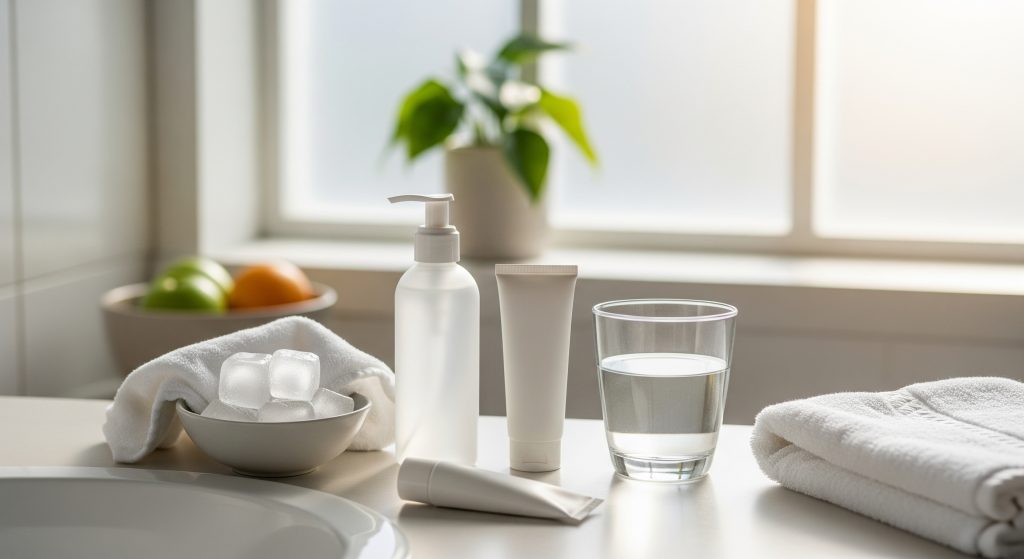
Cold constricts vessels and reduces swelling. Wrap an ice cube in a clean cloth and apply for short intervals. Ten minutes on, twenty minutes off. It will not cure a cyst, but it can lower pain and redness.
-
Avoid direct ice on bare skin.
-
Use in the first 24 to 48 hours of a flare.
-
Combine with your prescribed routine.
Tea Tree Oil Benefits
Diluted tea tree oil shows antibacterial activity in vitro.It may assist with minor lesions when diluted in a carrier oil. Patch test first. For deep cysts, its impact is limited.
-
Use a low concentration to avoid irritation.
-
Do not apply to broken skin.
-
Stop if stinging or redness develops.
Warm Compress Techniques
Warmth increases circulation and helps ease discomfort. A clean, warm compress for several minutes can soften the area. It can help when a lesion is calming down. This is supportive, not curative. Consider it a comfort tool within cystic acne treatment at home.
-
Use clean cloths each time.
-
Test temperature to avoid burns.
-
Limit sessions to short periods.
Gentle Cleansing Routines
Harsh scrubs aggravate cysts. A mild, non-foaming cleanser preserves the barrier. Twice daily is sufficient. After exercise, a quick cleanse helps. Look for non-comedogenic labels. This single habit improves tolerance to active medications and stabilises outcomes.
-
Keep water lukewarm, not hot.
-
Pat dry, then moisturise while damp.
-
Avoid fragrance-heavy products that may irritate.
How to Prevent Cystic Acne Through Diet and Lifestyle
Prevention draws on multiple levers. Diet, stress, sleep, exercise, and skincare habits each influence risk. None is a magical fix. Together, they change the baseline and support your medical cystic acne treatment over the long term.
Low Glycemic Index Foods
High glycaemic spikes can drive insulin and IGF-1. That cascade stimulates oil production. I advise a low GI pattern: oats, legumes, brown rice, fibrous vegetables. You can still enjoy fruit and dairy in balanced portions. This is a steady, pragmatic approach.
-
Build meals around protein and fibre.
-
Swap refined grains for whole grains.
-
Monitor personal triggers with a simple log.
Foods to Avoid
Some individuals react to high sugar, whey-heavy shakes, or frequent skim milk. The response varies by person. I recommend a structured elimination for four weeks, then reintroduce. Track outcomes. This method turns guesswork into useful data.
-
Reduce sugary drinks and ultra-processed snacks.
-
Be cautious with whey protein if flares track workouts.
-
Consider fermented dairy as a gentler alternative.
Stress Management Techniques
Stress mediators like cortisol can increase sebum and inflammation. Be practical here. Choose methods that fit your routine. That can be brisk walks, brief breathing drills, or short journalling. Consistency beats intensity. The improvement is incremental, then noticeable.
-
Practice 4-7-8 breathing for two minutes.
-
Schedule micro-breaks during demanding days.
-
Protect non-negotiable recovery time weekly.
Skincare Habits
Good habits protect the barrier and reduce triggers. The rule is simple: cleanse, treat, moisturise, protect. Always keep formulas non-comedogenic and fragrance minimal. For men with facial hair, shave with the grain and use a gentle gel. Stable routines make medical therapy easier to tolerate.
-
Moisturise even when oily, using light gels.
-
Apply broad-spectrum SPF daily to prevent PIH.
-
Avoid picking, which raises scarring risk.
Sleep and Exercise Benefits
Sleep normalises hormonal rhythms and supports immune repair. Aim for regular bedtimes and adequate duration. Exercise improves insulin sensitivity and mood. Both exert small, steady effects on skin behaviour. Over a quarter, those effects can compound.
-
Keep screens out of the last hour before bed.
-
Favour regular, moderate training over extremes.
-
Hydrate and cleanse soon after workouts.
Conclusion
Severe breakouts respond best to a clear medical plan and steady habits. That combination wins. Isotretinoin is used when disease is scarring or stubborn (but only in consultation with dermatologist). Use retinoids and benzoyl peroxide for maintenance. Add targeted tools for pain and flares. Complement with practical home care, not miracle claims. Then anchor prevention through diet, stress control, and sleep. It is basically disciplined, repeatable cystic acne treatment guided by results rather than trends.
Frequently Asked Questions
How long does cystic acne treatment typically take to show results?
Meaningful change often appears at 6 to 8 weeks. Deep cysts resolve more slowly. By 12 weeks, the trend should be clear. With isotretinoin, improvements can start within the first month, then accelerate. Maintenance continues beyond clearance to prevent rebound. Patience is part of effective cystic acne treatment.
Can cystic acne be cured permanently?
Isotretinoin can induce long remissions, sometimes permanent. Many cases improve markedly with proper combination therapy and ongoing retinoid maintenance. Some will experience intermittent flares under stress or hormonal shifts. That is manageable. A pragmatic plan keeps control steady over time.
What are the main differences between cystic acne and regular acne?
Cystic acne arises deeper, with larger, painful nodules and a higher scarring risk. Regular acne often shows surface comedones and small papules. The deeper inflammation explains the need for stronger interventions. It also explains why gentle routines alone are insufficient. This is why targeted cystic acne treatment is distinct.
Is it safe to combine home remedies with prescription treatments?
Yes, when chosen carefully. Ice, gentle cleansing, and warm compresses are usually safe. Essential oils and herbal pastes require patch testing and restraint. Avoid harsh scrubs and unverified devices. Home steps should support, not replace, prescribed cystic acne treatment.
When should I see a dermatologist for cystic acne?
Immediately- Seek specialist care when breakouts are painful, scarring, or persistent after over-the-counter care. Also seek help if acne affects mental health or daily function. Early specialist intervention lowers the scarring burden. It also shortens the path to an effective cystic acne treatment plan.
Can dietary changes alone clear cystic acne?
Diet can help to an extent, especially with a low glycaemic pattern. For deep cysts, diet alone rarely clears the condition. Combine nutrition changes with medical therapy for best results. Use diet to reduce triggers and support consistent outcomes. That is how to prevent cystic acne from dominating day-to-day life.

