






 We do what's right for you...


What Is Cranberry Extract and How Does It Work?
Dr. Mohammed Tabish Rayee
Most advice reduces urinary tract health to a single trick: drink more juice. That overlooks how targeted nutraceuticals actually work. I focus here on cranberry extract because it concentrates the active compounds that matter and removes much of the sugar and noise. In practice, cranberry extract is not a cure for infection. It is a preventive tool with a plausible mechanism and solid practical use, especially for recurrent urinary tract issues. I will explain the forms available, how it works at a molecular level, where it helps, and how to use it safely. Precision matters. So does consistency over time.
Forms and Types of Cranberry Extract Available
Cranberry Extract Capsules and Tablets
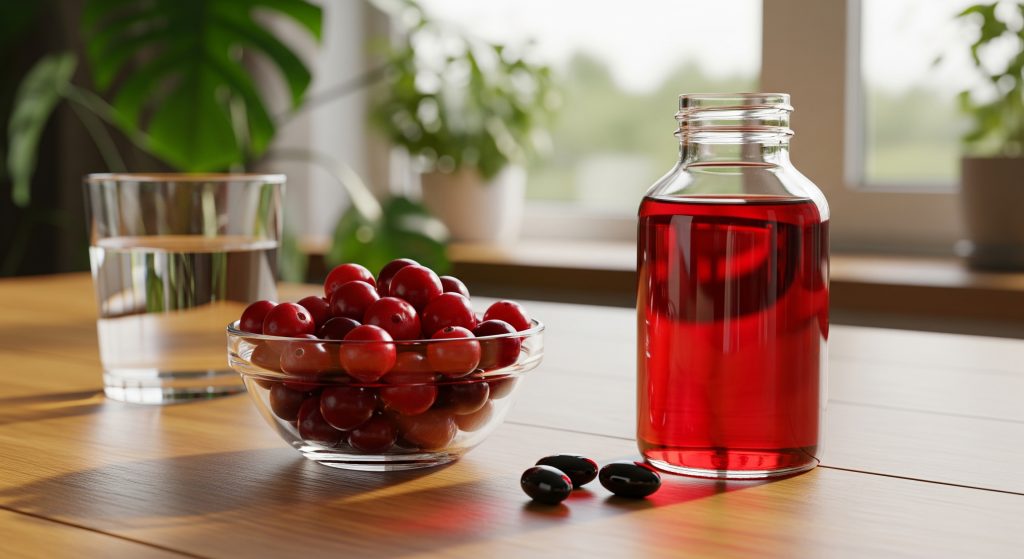
When clients ask for predictability, I usually direct them to cranberry extract capsules or tablets. These formats standardise the key actives, travel well, and allow consistent dosing. They also avoid the sugar load that often accompanies sweetened juice blends. For many, capsules are the cleanest way to test response and adjust dose within a week or two.
-
Consistent content of active compounds per serving.
-
Convenient for work and travel, with minimal taste issues.
-
Lower risk of gastrointestinal discomfort versus very acidic juices.
If tablets are difficult to swallow, smaller capsule sizes or sprinkle capsules can help. I prefer capsules for their faster disintegration. It is a modest difference, but noticeable for some users.
Liquid Cranberry Extract and Juice Concentrates
Liquid extract and juice concentrates offer a suitable alternative for those who dislike pills. The flavour is intense, which can be helpful to encourage mindful dosing. I recommend unsweetened options where possible. Dilution with water or herbal tea reduces acidity without distracting from the active content. For children, a small measured dose in a reusable bottle works well during the school day.
Here is why liquids can make sense:
-
Flexible dosing for sensitive stomachs or smaller body sizes.
-
Potentially faster onset due to quicker gastric emptying.
-
Practical for users with swallowing difficulties.
But flavour fatigue is real. Rotating formats helps adherence over months. It is basically a compliance tactic.
Standardised vs Non-Standardised Extracts
Standardised extracts list the percentage of proanthocyanidins, often abbreviated as PACs. This matters because PACs are the compounds linked to anti-adhesion activity in the urinary tract. Non-standardised products may be perfectly acceptable, yet they introduce uncertainty. I prioritise products with declared PAC content using a validated method of measurement.
|
Type |
What it means |
|---|---|
|
Standardised extract |
PAC content stated per dose for reproducible intake. |
|
Non-standardised extract |
PACs not specified; composition can vary between batches. |
In practice, the choice comes down to control. If I need to evaluate whether cranberry extract is helping, standardisation reduces variables. That is the point.
Dosage Forms for Different Age Groups
Different age groups benefit from different formats. For adults, cranberry extract capsules and tablets provide simplicity and reliable dosing. For teenagers, chewables or small capsules often improve adherence. For younger children, drops or diluted liquid extract are usually best. I advise dosing based on product guidance adjusted to body weight where appropriate, then monitor tolerance for a week before any change.
-
Adults: standard capsules or tablets for precision.
-
Teenagers: smaller capsules or chewables to aid consistency.
-
Children: liquid extract with careful measurement and dilution.
Older adults may prefer capsules to avoid added sugars and manage caloric intake. Small adjustments go a long way in daily routines.
How Cranberry Extract Works in the Body
Proanthocyanidins (PACs) and Their Anti-Adhesion Properties
Cranberry extract is valued for its PACs, particularly type A linkages. These compounds do not act like antibiotics. They influence how certain bacteria interact with urinary tract surfaces, making attachment more difficult. Roughly speaking, reduced adhesion lowers the chance of colonisation and symptomatic infection over time.
Anti-adhesion is a physical-meets-biochemical strategy. It targets behaviour, not outright bacterial killing.
I see this as a practical complement to clinical care. It respects the microbiological reality. It also explains why consistency matters for preventive use.
Mechanism of Preventing Bacterial Attachment
Uropathogenic E. coli often use fimbriae to cling to uroepithelial cells. PACs alter that interaction to some extent. The result is a higher likelihood that bacteria are flushed during urination rather than anchored and multiplying. This is prevention, not treatment.
-
PACs interact with bacterial adhesion structures.
-
Surface attachment weakens, making clearance easier.
-
Lower adherence decreases biofilm formation risk.
I emphasise this distinction because expectations must be realistic. When symptoms are acute, medical evaluation is the priority. Cranberry extract for uti prevention works upstream of that point.
Role of Flavonoids and Phenolic Acids
Beyond PACs, cranberry extract contains flavonoids and phenolic acids. These contribute antioxidant activity and may modulate local inflammation. The combined effect likely supports the urinary tract environment, though individual responses vary. As far as current data suggests, the synergy matters more than any single molecule in isolation.
From a formulation perspective, whole-fruit extracts preserve a broader polyphenol profile. That can be useful. It can also make standardisation harder. There is a trade off between breadth and control.
Gut Microbiota Transformation and Bioavailability
Polyphenols are metabolised by the gut microbiota, which affects bioavailability. Metabolites may be the actual bioactive forms in circulation. This is one reason two people can take the same cranberry extract and see different outcomes. Microbiome composition differs by diet, antibiotics history, and age.
A brief technical note: I sometimes reference CFU when discussing probiotic co-use. CFU means colony forming units, a measure of viable bacteria. Probiotics are not mandatory here. They can, however, support a stable gut environment after antibiotic courses. That stability may influence how polyphenols are processed and absorbed.
Cranberry Extract Benefits and Clinical Applications
1. Prevention of Recurrent UTIs in Women
In recurrent cases, the objective is to extend time between symptomatic episodes. Cranberry extract can assist by reducing bacterial adhesion events in the bladder. I advise pairing it with hydration habits and timely toileting, which sound basic but move the needle. For sexually active individuals, post-coital hygiene also matters. Small behaviours compound.
-
Use a standardised dose consistently once or twice daily.
-
Pair with adequate fluid intake and routine voiding.
-
Track episodes over three months for a fair assessment.
This is a prevention strategy, not a stand-alone defence. But it is often the steady habit that reduces flare frequency and frustration.
2. UTI Prevention in Children and Teenagers
For children and teenagers, the priority is safety and adherence. Liquid cranberry extract allows weight-appropriate dosing and easy mixing. School routines complicate intake, so I prefer morning and evening schedules. Toileting habits and constipation management share equal importance. Reduced bladder residuals matter as much as any supplement in this age group.
Caregivers should watch for gastrointestinal discomfort. Start low and titrate with care. I keep language simple with families and emphasise consistency over perfection.
3. Benefits for High-Risk Groups and Elderly
High-risk groups include individuals with neurogenic bladder, catheter use, or diabetes. The elderly may face incomplete bladder emptying and polypharmacy. For these profiles, cranberry extract benefits are incremental and supportive. Expectations should be measured. I also cross check for possible interactions with anticoagulants or antiplatelet agents before recommending any regimen.
Hydration, pelvic floor support, and scheduled voiding remain core pillars. Cranberry extract fits in as a daily preventive layer, not the centrepiece.
4. Additional Health Benefits Beyond UTI Prevention
Secondary benefits are often raised, including oral health support and general antioxidant activity. The evidence is suggestive rather than definitive. I treat these as potential extras, not programme drivers. If someone values antioxidant intake, whole foods and diverse polyphenols still come first.
That said, a standardised cranberry extract adds little burden and may provide mild systemic support. It is a reasonable inclusion in a structured routine. But it should not displace proven medical advice.
Proper Usage, Dosage, and Safety Considerations
Recommended Daily Dosage Guidelines
Products vary in strength, so I advise following the label of a reputable brand. For adults using cranberry extract capsules, once or twice daily dosing is common. Liquid extract is typically measured in millilitres per day and diluted. Begin at the lower end for one week, check tolerance, then adjust to the intended dose.
|
Format |
Typical approach |
|---|---|
|
Capsules/Tablets |
Once or twice daily, with water, at consistent times. |
|
Liquid Extract |
Measured millilitres daily, diluted, spaced across the day. |
|
Chewables |
Child friendly option, count towards total daily dose. |
I prefer time of day consistency. It simplifies adherence and reduces missed doses. Simple wins are often the decisive ones.
Duration of Use for Optimal Benefits
Preventive strategies require time. I suggest a trial of **8 to 12** weeks for a fair evaluation. This duration covers several bacterial exposure cycles and typical behavioural variations. If there is no change after three months, I reassess dose, formulation, or whether cranberry extract is fit for the objective.
Once benefits are observed, maintain a steady dose for another **8** weeks. Then consider tapering to the lowest effective routine. That cadence respects both physiology and daily life realities.
Side Effects and Potential Interactions
Most users tolerate cranberry extract well. Mild gastrointestinal discomfort or reflux can occur, especially with undiluted liquids. Taking capsules with food often helps. Rarely, individuals report loose stools at higher liquid doses. Reduce the amount and re-evaluate in several days.
-
Potential additive effects with anticoagulants or antiplatelets.
-
Acidic liquids may aggravate reflux in sensitive users.
-
Added sugars in some products undermine metabolic goals.
If a prescription medicine is involved, I align timing to reduce overlap. I also document any change using a simple symptom diary. Small details prevent guesswork later.
Precautions for Specific Health Conditions
Individuals with a history of kidney stones should review oxalate exposure across diet and supplements. While cranberry extract is typically lower volume than juice, prudence is warranted. Those with diabetes should avoid sweetened liquids and monitor glycaemic response to any companion beverages.
Pregnancy and breastfeeding deserve careful discussion. I defer to the obstetric plan and avoid non-essential additions early on. If approved, a standardised low dose with clear monitoring is my baseline approach. Caution is sound practice here.
Making an Informed Decision About Cranberry Extract
Decision quality improves with realistic expectations. Cranberry extract is a preventive aid, not a treatment for active infection. It works by reducing bacterial adhesion, which relies on consistency and time. For daily use, cranberry extract capsules provide simplicity and standardisation. Liquids suit those who need flexible dosing or prefer non-pill formats.
-
Pros: targeted mechanism, low sugar load, fits daily routines, scalable dose.
-
Cons: variable individual response, requires patience, potential interactions to consider.
My practical guidance is simple. Choose a reputable, standardised product. Set a **12 week** evaluation window. Track symptoms and adherence. If outcomes are favourable, maintain the lowest effective dose. If not, adjust the plan. Clarity beats hope as a strategy.
Frequently Asked Questions
Can cranberry extract treat an active UTI infection?
No. Cranberry extract does not eradicate an active infection. It supports prevention by reducing bacterial attachment. If symptoms suggest an acute UTI, medical assessment and appropriate treatment are required. Use cranberry extract for uti prevention once the acute episode has resolved and the clinician agrees.
How long does it take for cranberry extract to show preventive effects?
A reasonable window is **8 to 12** weeks. Responses vary due to microbiome differences and behavioural factors. I advise tracking episodes, fluid intake, and adherence over that period. Early changes can occur, but durability matters more than a quick result.
Is cranberry extract safe for children and pregnant women?
For children, liquid formats with careful dosing are generally acceptable. Begin low and monitor tolerance. In pregnancy, decisions should be clinician led. If used, a conservative, standardised dose with explicit monitoring is prudent. Personal medical history always guides the final choice.
What is the difference between cranberry juice and cranberry extract capsules?
Juice provides hydration and polyphenols but often includes substantial sugar. Capsules deliver concentrated active compounds with predictable dosing and minimal sugar. For structured prevention, cranberry extract capsules usually provide better control. Taste and tolerability still influence the final selection.
Can cranberry extract cause kidney stones?
The risk appears context dependent. Juice can contribute dietary oxalate load for some individuals. Cranberry extract uses smaller volumes, yet caution is wise in those with a stone history. Review total oxalate exposure and speak with a clinician in higher risk cases. Prudence first.
Should cranberry extract be taken with or without food?
Either is acceptable. Taking capsules with food may reduce reflux for sensitive users. Liquid extract is often more comfortable when diluted and sipped. Consistency of timing is more important than strict meal rules. Choose the approach that supports adherence every day.
Final note: I have framed cranberry extract benefits with measured language by design. Prevention is a discipline. The routine is the therapy.

