






 We do what's right for you...


What Is a Mammography Procedure & Why It’s Vital for Breast Screening
Early detection advice often stops at get a scan and hope for the best. That misses the real question you face: which Mammography Procedure, at what age, and with what trade offs. This guide clarifies those choices. It sets out the options with measured evidence and practical steps so you can schedule the right test at the right time.
Types of Mammography Procedures and Their Key Differences
1. Standard 2D Digital Mammography
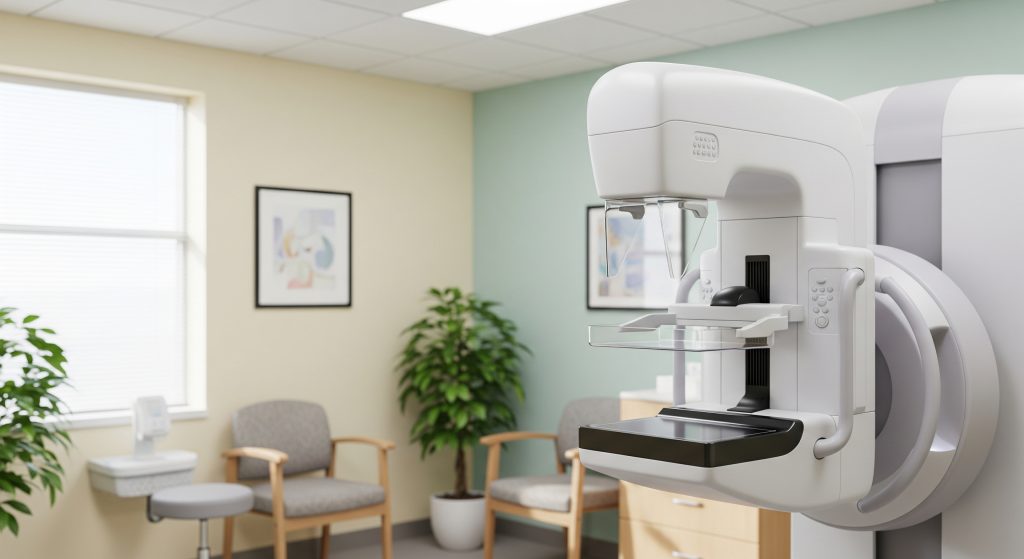
Standard 2D digital mammography remains the foundation of breast cancer screening. As Model Curriculum Handbook explains, it produces two dimensional images that reveal masses and microcalcifications, which are typical early signals of cancer. You lie or stand, your breast is briefly compressed, and two views per breast are captured for a straightforward Mammography Procedure.
-
Strengths: widely available, quick appointments, and established quality controls.
-
Considerations: sensitivity falls in dense breast tissue, which can mask tumours.
Researchers have noted limits in certain higher risk groups. As JAMA Oncology reports, 2D alone can miss cancers in women with a family history, where 3D imaging often performs better. In practice, if you have dense breasts or elevated risk, your clinician may suggest a different Mammography Procedure or a supplemental test.
2. 3D Mammography (Digital Breast Tomosynthesis)
3D mammography, also called digital breast tomosynthesis, acquires multiple low dose images at different angles and reconstructs them into thin slices. That stacked view reduces tissue overlap. As Komen notes, the slice by slice approach lowers false positives and can flag small lesions that 2D may obscure. For you, the Mammography Procedure feels similar in setup, though the unit may move in an arc while acquiring images.
-
Typical benefit: clearer separation of normal tissue from suspicious findings.
-
Operational detail: exams can take slightly longer, and some centres bill a modest supplement.
The clinical takeaway is simple. If you have dense breasts or prior callbacks, 3D is often preferable, subject to local availability and cover.
3. Screening vs Diagnostic Mammograms
The purpose of the exam determines the Mammography Procedure you receive. As StatPearls outlines, a screening mammogram checks for cancer when you have no symptoms, while a diagnostic mammogram investigates a sign or a prior abnormality with extra views. The distinction affects timing, radiation dose, and reporting speed.
-
Screening: standard two views per breast, routine schedule, lower dose.
-
Diagnostic: targeted additional angles, immediate review, may add ultrasound.
Detail matters. As PMC describes, diagnostic studies are tailored to the specific area and may involve more radiation than screening, though still within safe bounds. During a screening visit, you typically leave and receive results later. During a diagnostic workup, you may remain while the radiologist completes focused imaging.
Comparison of Radiation Exposure and Safety Levels
Radiation exposure from a Mammography Procedure is low. As PMC notes, digital mammography carries a lower lifetime attributable risk than modalities such as MBI or PEM, with a favourable benefit to risk ratio from ages 40 to 80. Typical mean glandular dose for two standard views is about **2.5** mGy, and the associated cancer risk is small compared with the gains of early detection.
-
Context: risk exists to a degree, but current data supports routine screening.
-
Perspective: a single screening approximates weeks of background radiation.
In fact, as Breastcancer.org summarises, one screening’s dose is comparable to roughly 26 days of natural background exposure. The core point stands. The imaging risk is low and the potential benefit substantial.
Accuracy Rates and Detection Capabilities
Accuracy hinges on both the technology and your breast density. As StatPearls emphasises, 3D mammography increases cancer detection in dense tissue by reducing overlap. In mixed practice, sensitivity improves and unnecessary callbacks fall when tomosynthesis is used.
-
Combined approaches improve yield, particularly when ultrasound is added.
-
Interpretation uses BI RADS, which guides follow up intensity.
Evidence supports the blend. As PMC reports, combining mammography with ultrasound pushes sensitivity up to **84.9** percent in comparative analyses. Earlier, we noted the layered benefits of 3D. As American Cancer Society explains, tomosynthesis tends to reduce recall rates and detect more advanced cancers than 2D alone.
Current Mammogram Guidelines and Screening Recommendations
USPSTF 2024 Guidelines for Average-Risk Women
Guidelines have shifted. As USPSTF states, average risk women should undergo breast cancer screening every two years from age 40 through 74. This recommendation replaces later start ages seen in past iterations and aims to reduce disparities in late stage diagnoses.
-
Modality: a Mammography Procedure using digital 2D or 3D is acceptable.
-
Uncertainties: evidence for dense breasts and those over 75 remains under review.
The message for you is clear. Begin screening at 40 unless your clinician individualises earlier or more frequent imaging based on risk.
American College of Radiology Recommendations
Risk assessment must start early. As American College of Radiology advises, all women should have a risk evaluation by age 25, with particular attention to Black women and those of Ashkenazi Jewish descent. Higher than average risk often warrants annual MRI in addition to a Mammography Procedure, sometimes beginning in the late twenties.
-
High risk pathways often combine annual MRI and yearly mammography.
-
Dense breasts can justify MRI if available and appropriate.
Earlier, targeted imaging reduces interval cancers. Policy and access vary by region, so confirm benefits and referrals with your provider.
Guidelines for High-Risk Individuals
High risk is not one size fits all. As PMC outlines, consensus supports annual mammograms or MRIs beginning earlier than average risk schedules. If a close relative was diagnosed young, a common approach is to start about 10 years before that age. As ACOG notes, this earlier timing can be prudent in family history cases.
-
Use a validated risk model to estimate lifetime risk.
-
At or above **20** percent lifetime risk, MRI plus mammography is often appropriate.
As American Cancer Society details, a 20 percent or higher lifetime risk usually triggers intensified surveillance. That rarely means only one test. It means a program.
Age-Specific Screening Frequencies
Screening cadence balances detection benefits and potential harms such as false positives. As NCBI summarises, routine screening should start at 40 and continue either annually or biennially depending on risk and preference. The USPSTF biennial interval reduces total recalls. Annual imaging detects slightly more cancers, particularly in dense breasts, though with more callbacks.
|
Age band |
Common approach |
|---|---|
|
40 to 49 |
Biennial per USPSTF or annual per ACR; choose based on risk and preference. |
|
50 to 74 |
Biennial acceptable; annual if higher risk or dense breast tissue. |
|
75+ |
Individualised; consider health status and expected benefit. |
The CDC’s public guidance mirrors the biennial option from 40 to 74, reinforcing the role of a regular Mammography Procedure for breast cancer screening.
Special Considerations for Dense Breast Tissue
Dense tissue reduces mammographic sensitivity. You still gain from screening, but adjunct imaging may be recommended. 3D tomosynthesis often mitigates overlap, and MRI or ultrasound can supplement when risk or prior findings justify it. The practical step is simple. Confirm your density category from your report and ask how that should shape your next Mammography Procedure.
Mammogram vs Ultrasound for Breast Cancer Screening
When Mammography Is the Primary Choice
Mammography remains the first line test for population breast cancer screening. It detects microcalcifications and early architectural distortion better than ultrasound. It is also standardised, quality assured, and widely available. If you are at average risk and over 40, a scheduled Mammography Procedure is the appropriate baseline, with ultrasound reserved for specific indications.
Role of Breast Ultrasound as Supplemental Screening
Ultrasound complements mammography rather than replaces it. As PubMed reports, adding ultrasound increases sensitivity in women with dense breasts, although it may reduce specificity and raise false positives. In dense tissue, the combined protocol can reveal small, node negative cancers that 2D might miss.
-
Strength: better characterisation of cysts and solid lesions.
-
Operational use: targeted scans for areas of concern after your Mammography Procedure.
Evidence aligns across reviews. As PMC shows, sensitivity for ultrasound can approach **96** percent in dense breasts versus **74** percent for mammography alone. The trade off is more callbacks, which needs measured communication to avoid anxiety.
Effectiveness in Dense Breast Tissue
Dense breasts require layered strategy. 3D mammography improves detection by separating overlapping tissue. Supplemental ultrasound adds sensitivity, while MRI offers the highest sensitivity in selected high risk cases. Your goal is to match risk, breast density, and test performance. A tailored Mammography Procedure plus the right adjuncts is the pragmatic answer.
Limitations and Advantages of Each Method
Each method has strengths and compromises. As PMC notes, ultrasound often shows higher sensitivity but lower specificity than mammography, especially in younger or dense breasted patients. In contrast, mammography tends to retain better specificity in older groups, which can reduce unnecessary biopsies for that cohort.
-
Mammography: detects calcifications, established screening workflows, broad availability.
-
Ultrasound: characterises masses, no ionising radiation, helpful adjunct after a Mammography Procedure.
3D adds value across ages. As American Cancer Society highlights, tomosynthesis lowers recall rates and raises detection compared with 2D. A balanced approach is often most effective.
Mammogram Cost and Insurance Coverage
Average Costs Without Insurance
Prices vary by region, modality, and facility. As GoodRx notes, a screening mammogram without insurance can cost less than **200** dollars to over **300** dollars. Historical analyses suggest typical out of pocket payments represent a fraction of the full charge. As PMC reported in prior national data, out of pocket spending averaged about **33** dollars, roughly **14** percent of mean total cost in that sample.
-
Expect higher fees for a 3D Mammography Procedure, though differentials are narrowing.
-
Ask for self pay rates or bundled pricing if uninsured.
Always request the CPT code and an estimate in advance. Then compare.
Medicare and Private Insurance Coverage
Coverage is generally favourable for screening. For most private plans under current US rules, screening mammograms are covered as a preventive benefit without cost sharing for eligible ages. Medicare Part B typically covers one screening mammogram per year for beneficiaries aged 40 and older, with diagnostic imaging subject to coinsurance and deductibles. Policies can differ by state and plan, so verify how your Mammography Procedure and any follow up ultrasound or MRI will be billed.
-
Confirm whether tomosynthesis is covered as screening in your plan.
-
Clarify the difference between screening and diagnostic billing before the appointment.
One practical tip. Ask the ordering clinician to specify the indication correctly on the referral, which helps avoid inadvertent diagnostic billing for a screening visit.
Free and Low-Cost Screening Programmes
There are robust programmes for those facing cost barriers. As CDC details, the NBCCEDP supports free or low cost screening and diagnostic services for eligible uninsured or underinsured women, often focusing on ages 40 to 64. Charitable programmes can also bridge gaps. As National Breast Cancer Foundation explains, its network funds screening mammograms, diagnostic tests, and clinical exams across the US.
-
Many private plans cover screening at no cost under preventive care rules.
-
Local non profits may assist with transport and diagnostic follow up.
As Check for a Lump notes, some organisations even fund travel and diagnostics, which removes practical obstacles to keeping your Mammography Procedure on schedule.
3D Mammography Additional Costs
3D usually adds a modest surcharge where not fully covered. As PMC shows, digital breast tomosynthesis can add an incremental cost per screened woman due to equipment and time. Coverage is improving as systems recognise the clinical value. As Mayo Clinic notes, many insurers now cover 3D, yet variation persists by state and plan.
Before you book, ask two questions: Is 3D billed at screening rates, and what is the out of pocket maximum for this Mammography Procedure. Clear answers prevent surprise invoices.
Making Informed Decisions About Your Mammography Procedure
Your aim is to match risk, breast density, and modality. Use a quick checklist.
-
Clarify risk: family history, prior chest radiation, genetic factors, or prior high risk lesions.
-
Confirm breast density and its implications for detection and callbacks.
-
Select modality: 3D mammography as first choice in dense breasts; consider ultrasound or MRI as indicated.
-
Set cadence: annual if higher risk or dense tissue; biennial acceptable for some average risk profiles.
-
Budget: confirm mammogram cost, coverage, and billing type before scheduling.
Two brief examples help anchor the decision. A 46 year old with dense breasts and no family history chooses annual 3D screening, with ultrasound only if recalled. A 38 year old BRCA carrier works with her clinician on annual MRI plus a Mammography Procedure beginning now, not at 40. Different risks. Different playbooks.
One final point. Screening is not a single event. It is a long term habit that pairs a timely Mammography Procedure with prompt diagnostic follow up when results are unclear. Consistency beats intensity.
Frequently Asked Questions
How should I prepare for my mammography procedure appointment?
Schedule when breasts are least tender, often the week after your period. Avoid deodorant, powders, or lotions on the chest and underarms, as particles can mimic calcifications. Bring prior images or ensure the facility can obtain them, which reduces false positives. Wear a two piece outfit for convenience. If this is your first Mammography Procedure, mention any implants, surgeries, or symptoms at check in.
What happens if my mammogram shows abnormal results?
Do not panic. Many callbacks resolve with extra views or ultrasound. If your screening suggests an abnormality, you will be invited for a diagnostic Mammography Procedure, possibly followed by targeted ultrasound. If concern persists, image guided biopsy provides definitive pathology. Most findings are benign. The key is timely follow up and clear communication with your clinician.
Can I have a mammogram if I have breast implants?
Yes. Inform the facility in advance so they schedule an experienced technologist. Additional implant displaced views help visualise more tissue. The Mammography Procedure is safe for implants, though images take longer and compression is adjusted for comfort. In some cases, ultrasound supplements screening. Keep your implant details on file for future comparisons.
How painful is the mammography procedure?
Discomfort varies, but compression typically lasts only seconds per view. Technologists aim for sufficient compression to reduce motion and dose while minimising pain. If you are sensitive, take a simple analgesic beforehand as advised by your clinician. Communicate during positioning. A well performed Mammography Procedure should be tolerable and brief.
When will I receive my mammogram results?
Screening results are usually delivered within several days, sometimes faster via online portals. Diagnostic results can be discussed on the day or shortly after, especially if same day ultrasound is performed. If you hear nothing within the expected window, call the facility. Timely reporting is part of a quality Mammography Procedure.
Should I continue getting mammograms after age 75?
It depends on health status and life expectancy. If you are in good health with a life expectancy of 10 years or more, continued screening can be reasonable. If significant comorbidities limit benefit, stopping may be appropriate. Discuss with your clinician and align the Mammography Procedure schedule with personal priorities and overall care goals.
Quick recap
-
Use a Mammography Procedure as the primary test for breast cancer screening, starting at 40 for most.
-
Prefer 3D if you have dense breasts, and add ultrasound or MRI when risk warrants.
-
Follow mammogram guidelines, verify mammogram cost and coverage, and keep prior images for comparison.
-
Consistency matters more than any single visit. Stay on schedule.
If you have questions about mammogram vs ultrasound or need help interpreting mammogram guidelines, discuss options with your GP or radiology provider. A short call now prevents delays later.

