






 We do what's right for you...


What Is a Holter Monitor Test and Why It’s Done
Dr. Hriday Kumar Chopra
Disclaimer: The content shared here is for informational purposes only. Always consult a specialist doctor before attempting any treatment, procedure, or taking any medication independently. Treatment costs and pricing may vary depending on the patient’s condition, medical requirements, hospital, and other factors.
One quick ECG rarely tells the full story. Heart rhythm problems come and go, and short tests miss them. That is why I rely on a Holter Monitor Test when symptoms are intermittent or puzzling. It continuously records heart activity while normal life continues. The result is a practical view of what the heart does across a day and a night, not just a minute in clinic.
Why Holter Monitor Tests Are Performed
Detecting Irregular Heart Rhythms
I use a Holter Monitor Test to capture rhythms that appear briefly and then vanish. Atrial fibrillation, supraventricular tachycardia (SVT), pauses, or ventricular ectopy can be elusive. As Journal of the Saudi Heart Association reports, targeted Holter analysis identified SVT mechanisms with a positive predictive value of 98% in specific cohorts. That figure underscores the point. Continuous recording plus symptom correlation often resolves the diagnosis.
Evaluating Heart Palpitations
Palpitations feel simple to describe but complex to classify. I offer a Holter Monitor Test or a holter monitor for palpitations when symptoms recur. The goal is to match each sensation with an ECG event. Benign extra beats, short SVT bursts, or anxiety related tachycardia can look similar to patients yet differ in management. Captured evidence allows precise reassurance or targeted therapy.
Monitoring Heart Function After Heart Attack
After a myocardial infarction, arrhythmia risk is higher for a period. I use a Holter Monitor Test to check for silent atrial fibrillation, ventricular ectopy burden, or intermittent blocks. These findings shape treatment choices. They can prompt changes to beta blockers, referral for electrophysiology review, or device consideration in select cases. Early detection reduces uncertainty and supports safe recovery.
Assessing Chest Pain Causes
Chest pain is not always ischaemia. It can be rhythm related, postural, or oesophageal. A Holter Monitor Test helps separate these possibilities by linking symptoms and rhythm changes. If pain episodes track with ST segment shifts or frequent ectopy, I escalate cardiac evaluation. If the tracing is stable during pain, I consider musculoskeletal or gastrointestinal causes. Evidence trims unnecessary tests.
Checking Medication Effectiveness
Antiarrhythmic and rate control therapies deserve objective review. I schedule a Holter Monitor Test after a dose change or new drug start. I compare baseline rhythm patterns with the current recording. Reduced ectopic burden, better rate control in atrial fibrillation, and fewer symptomatic events are encouraging. Lack of improvement can justify switching agents or adjusting doses.
Diagnosing Silent Ischaemia
Some patients experience ischaemia without pain. As StatPearls notes, roughly 70% to 80% of transient episodes may be symptom free in certain groups. I consider a Holter Monitor Test to look for suggestive ECG changes during daily stressors. This approach is particularly relevant in diabetes, where symptoms can be muted. It is a prudent way to flag higher risk profiles.
How Holter Monitor Tests Work
Portable Heart Monitor Components
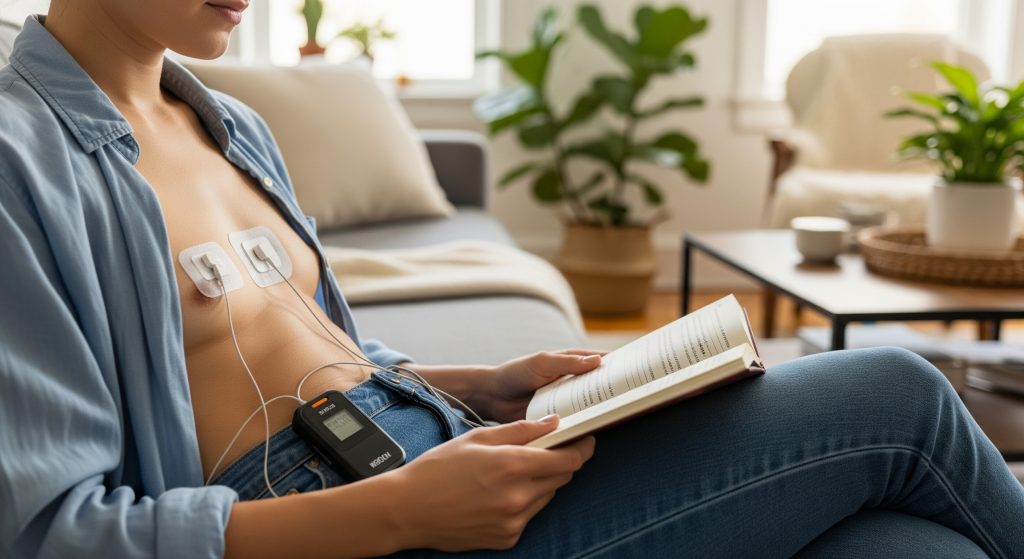
The device is a portable heart monitor with adhesive electrodes on the chest. A small recorder tracks every heartbeat continuously. I prefer units with clear event markers and robust battery life. The setup is light and discreet. People work, sleep, and commute while it records.
Electrode Placement Process
Signal quality relies on careful skin prep and correct lead positions. I clean the skin, remove oils, and sometimes trim hair. I place electrodes at standard sites to minimise artefact. Good adhesion prevents data gaps during movement. It looks simple. It is basically precision work.
Recording Duration Options
Most patients wear the recorder for 24 to 48 hours. For infrequent symptoms, I choose longer options. As StatPearls describes, some systems extend up to two weeks to capture rare events. The decision depends on symptom frequency and clinical suspicion. More data helps when episodes are sporadic.
Daily Activities During Monitoring
I ask patients to follow usual routines. Normal activity improves diagnostic yield because triggers occur in context. Avoid water exposure and strong electromagnetic fields. Keep mobile phones a short distance from the recorder when possible. The aim is a typical day with clean signals.
Keeping an Event Diary
The diary is as important as the tracing. I ask for times, actions, and symptoms in plain words. Chest tightness, skipped beats, dizziness, or shortness of breath should be logged. Food, exercise, and medicines matter too. This timeline lets me align symptoms and ECG events with confidence.
Preparing for Your Holter Monitor Test
What to Wear
Choose a two piece outfit for easy access to the chest. A buttoned shirt is ideal. Avoid tight or high waisted garments that obstruct electrode areas. Comfortable layers reduce tug on cables and improve wear time.
Skin Preparation Requirements
Bathe beforehand because the device must remain dry during the recording. Do not apply lotions or oils. I clean the skin with alcohol wipes and gently exfoliate if needed. Good contact reduces noise and false alarms.
Medications to Continue
In most cases, I advise continuing regular medication. Stopping drugs can distort the clinical picture. If a specific pause is required, I will state it clearly. Bring a current medication list to the appointment. Clarity prevents confusion later.
Activities to Avoid
Avoid swimming, showers, and saunas while wearing the recorder. Keep away from strong magnets and unshielded electrical sources. Do not remove electrodes unless a clinician advises it. These small steps preserve data integrity.
Results and Follow-Up Care
Normal vs Abnormal Readings
A normal report shows a stable rhythm with expected rate variability. Minor isolated ectopic beats may appear and are often benign. Abnormal results cover a spectrum and require context. The table below outlines common terms.
|
Term |
What it means in practice |
|---|---|
|
Sinus rhythm |
Normal impulse from the sinoatrial node with expected variability across day and night. |
|
AF or atrial fibrillation |
Irregularly irregular rhythm, rate control and stroke prevention strategy may be required. |
|
SVT |
Supraventricular tachycardia bursts that can cause palpitations and light headedness. |
|
PVCs |
Premature ventricular contractions, isolated or frequent; assess burden and symptom link. |
|
NSVT |
Non sustained ventricular tachycardia, short runs needing risk assessment. |
|
Pauses or AV block |
Conduction delays that may explain syncope and sometimes require pacing. |
Common Findings Explained
I see three patterns frequently. First, frequent ectopic beats with minimal symptoms, which often need only reassurance and follow up. Second, short self terminating SVT or atrial fibrillation episodes, which respond well to rate control or trigger management. Third, bradycardia during sleep with no symptoms, which is usually physiological. Context matters more than labels.
Treatment Options Based on Results
Management follows the evidence. I may adjust medicines, recommend electrolyte review, or consider catheter ablation for troublesome SVT. High PVC burden with reduced ventricular function warrants closer evaluation. Symptomatic bradyarrhythmias can lead to pacemaker discussion. When the study is reassuring, the best treatment is often education and routine review.
When to Contact Your Doctor
Seek advice if palpitations intensify, if chest pain accompanies breathlessness, or if faints occur. New neurological symptoms with irregular pulse require urgent assessment. If electrodes detach or the device alarms repeatedly, call the clinic. Better to ask early than to lose critical data.
Holter Monitor Side Effects
Holter monitor side effects are uncommon and usually minor. Possible issues include mild skin irritation from adhesives, local redness, and transient itch. Sweating can loosen electrodes and degrade signal quality. Rarely, people react to the adhesive and need alternative patches. Report any significant discomfort promptly.
Making Sense of Your Holter Monitor Test
Interpreting results is not about a single number. I look at rhythm patterns, symptom timestamps, rate variability, and day night differences. I weigh the diary, the tracing, and the clinical history together. This is where a Holter Monitor Test is strongest. It reflects life as lived, not life in a waiting room.
The best Holter report is a clear pairing of symptoms and rhythm, leading to one decisive next step.
Two practical tips help. First, wear the recorder during activities likely to trigger symptoms. Second, keep the diary precise with times and short descriptions. Small habits, large diagnostic yield. If symptoms are infrequent, I may choose a longer wearable or an event recorder. It is a simple trade off between duration and detection.
Frequently Asked Questions
Can I shower whilst wearing a Holter monitor?
No. The recorder and electrodes must stay dry throughout the test. Plan a bath or shower before the fitting. Use a gentle cloth wash for the face and hands if needed. Keeping the system dry preserves data quality.
How long does it take to get Holter monitor test results?
Most reports are available within a few working days. Complex studies can take longer because of manual review. I prioritise urgent findings and contact patients sooner when necessary. Your clinician will advise timelines at fitting.
Will the Holter monitor interfere with my pacemaker?
No, standard Holter systems record signals and do not deliver energy. They do not reprogram pacemakers. I still advise keeping cables tidy and avoiding magnets. If there is a device clinic involved, I coordinate review.
Is a Holter monitor test covered by insurance?
Coverage depends on the policy and indication. Documented symptoms, prior heart disease, or presurgical assessment usually qualify. The clinic team can provide item codes and supporting notes. Contact your insurer for confirmation.
What’s the difference between a Holter monitor and an event monitor?
A Holter Monitor Test records continuously for a set period. An event monitor records for longer and saves segments when activated or auto triggered. I choose based on symptom frequency. Continuous data suits daily symptoms, event systems suit rare episodes.
Can children safely wear Holter monitors?
Yes. Paediatric sized electrodes and gentle adhesives are available. I prepare skin carefully and explain the process to families. Activity is encouraged within guidance. The approach is similar, just scaled for comfort and safety.

