






 We do what's right for you...


What Causes Leg Swelling? Common Culprits Uncovered
Dr. Hriday Kumar Chopra
Disclaimer: The content shared here is for informational purposes only. Always consult a specialist doctor before attempting any treatment, procedure, or taking any medication independently. Treatment costs and pricing may vary depending on the patient’s condition, medical requirements, hospital, and other factors.
Rest and salt reduction get most of the attention. Both help, but they miss the point. Persistent leg swelling signals a process, not a single trigger. I approach Leg Swelling Causes like a clinician would a puzzle. Pattern first, then mechanism, then remedy. This article maps the common culprits, the recognisable patterns, and the practical actions that work. It also clarifies where leg swelling during pregnancy fits and when peripheral edema demands urgent review. The aim is simple. Clear thinking that leads to better decisions and better outcomes.
Common Causes of Leg Swelling
1. Venous Insufficiency
Chronic venous insufficiency sits near the top of Leg Swelling Causes in primary care. Faulty valves raise venous pressure. Fluid moves into tissues and produces dependent swelling around the ankles. Skin may darken, itch, or harden over time. Untreated cases can progress to ulcers. Risk rises with age, obesity, pregnancy, and prior deep vein thrombosis. I look for heaviness that worsens through the day and visible varicose veins. The pattern matters. Elevation helps, but targeted compression and calf muscle activation change the trajectory.
2. Heart Failure
Heart failure belongs in any discussion of Leg Swelling Causes. Reduced cardiac output and high venous pressures drive fluid into the interstitial space. This is classic peripheral edema, often with breathlessness and fatigue. Swelling is usually bilateral and worse by evening. I ask about orthopnoea and rapid overnight weight gain. Those clues point to fluid overload. Management focuses on diuretics, sodium restriction, and disease-modifying therapy. Treat the pump, and the legs improve.
3. Kidney Disease
Kidney disease changes fluid handling and albumin balance. The result is lower limb swelling that can be subtle at first. In the context of Leg Swelling Causes, renal aetiologies often produce bilateral edema. Protein loss or reduced filtration both contribute. I check for nocturia, foamy urine, and blood pressure shifts. A simple urine dip, eGFR, and albumin levels guide next steps. Address the renal issue and track fluid status with disciplined follow-up.
4. Liver Disease
Liver disease features prominently among Leg Swelling Causes because hypoalbuminaemia lowers oncotic pressure. Fluid moves out of vessels into tissues. Ascites can coexist, complicating mobility and venous return. As WHO IRIS indicates, edema was observed in 58% of chronic liver disease cases in one cross-sectional analysis. I watch for stigmata of chronic liver disease and unintended weight loss. The fix is upstream: manage the liver condition, optimise nutrition, and balance diuretics with careful monitoring.
5. Deep Vein Thrombosis
DVT is a critical entry in Leg Swelling Causes because delay invites harm. Swelling is typically unilateral and painful. The limb may feel heavy and warm. As J Postgrad Med Inst notes, DVT accounted for 51.9% of painful swollen leg presentations in a sample of 241 patients. I use a Wells score to stratify risk, then a D-dimer and Doppler ultrasound as indicated. Here is the principle. Rule out clot fast, and treat decisively if present.
6. Lymphoedema
Lymphoedema stems from impaired lymphatic drainage. It can follow cancer treatment, infection, or injury. As Leg Swelling Causes go, this one often produces firm, non-pitting swelling. The skin can thicken, and the foot shape may change. Secondary causes are common, but primary lymphatic disorders occur too. Early intervention helps. Compression, skin care, and manual lymphatic drainage reduce symptoms and protect function. Progress is gradual. Consistency wins.
7. Medication Side Effects
Drugs appear on more Leg Swelling Causes lists than many expect. Calcium channel blockers, certain diabetes agents, and hormonal therapies can provoke edema. So can some antidepressants and NSAIDs. Onset often matches a dose change or a new prescription. Review the chart, confirm timing, and consider alternatives. Small adjustments prevent months of avoidable discomfort.
8. Prolonged Standing or Sitting
Gravity alone can be persuasive. Long days on the feet or long-haul travel slow venous return. Fluid pools around the ankles by evening. This is one of the simplest Leg Swelling Causes, and it is widespread. The answer is also simple. Move the ankles, walk briefly each hour, elevate after work, and consider light compression if recovery lags. Prevention beats cure here.
Leg Swelling During Pregnancy
Normal Pregnancy-Related Swelling
Increased blood volume and hormonal shifts make leg swelling during pregnancy common. The third trimester amplifies it. Most cases are gradual and symmetric. As PubMed reports, roughly 80% of pregnant individuals develop clinical edema. I advise elevation, side-lying rest, hydration, and gentle walking. Support stockings can help during long workdays. Sudden swelling deserves review to exclude disorders of blood pressure and organ function.
Preeclampsia Warning Signs
Preeclampsia is a serious subset within Leg Swelling Causes in pregnancy. Look for new hypertension after 20 weeks, headache, visual changes, or right upper quadrant pain. Swelling can escalate quickly. I do not wait. Blood pressure check, urine protein, and prompt obstetric input are the baseline. Early recognition protects both parent and baby.
Gestational Hypertension Impact
Gestational hypertension increases risk for preterm birth and growth restrictions. Edema may accompany the rise in pressure. In this context, leg swelling during pregnancy is a signpost, not a diagnosis. I counsel on blood pressure targets, monitoring, and timely escalation. Clear thresholds avoid ambiguity during a stressful period.
Third Trimester Changes
Late pregnancy adds mechanical pressure from the uterus and soft tissue changes. Venous return slows. Swelling appears by afternoon and improves overnight. This sits firmly among physiological Leg Swelling Causes. I still assess the pattern. Asymmetry, pain, or breathlessness push the problem into a different category.
Recognising Peripheral Edema Patterns
Pitting vs Non-Pitting Edema
I use a quick bedside distinction to prioritise Leg Swelling Causes and actions. Press the shin for five seconds. Note the response.
|
Type |
Typical meaning |
|---|---|
|
Pitting oedema |
Indentation remains. Suggests systemic fluid overload, such as heart or kidney disease. |
|
Non-pitting oedema |
Skin rebounds. Suggests lymphatic blockage, local inflammation, or hypothyroidism. |
This simple check narrows Leg Swelling Causes fast. It directs imaging, labs, and therapy in a practical way.
Unilateral vs Bilateral Swelling
Side matters in peripheral edema. Unilateral swelling suggests DVT, venous obstruction, or lymphatic injury. Bilateral swelling points to heart, kidney, or liver issues. I ask three questions. How fast did it appear, which side, and what changes by morning. These answers sharpen the differential within seconds.
Morning vs Evening Patterns
Timing refines Leg Swelling Causes in daily life. Minimal swelling on waking with a steady build through the day suggests venous insufficiency or desk-bound hours. Persistent swelling from morning to night indicates fluid retention or lymphoedema. I pair this with weight trends and activity logs for clarity.
Associated Warning Symptoms
Shortness of breath, chest discomfort, calf pain, fever, or skin colour change all escalate urgency. These features shift peripheral edema from benign to high risk. I document onset, triggers, and progression. Detail here speeds safe decisions.
Red Flag Signs
Some signals must trigger immediate care. These include sudden unilateral swelling, swelling with chest pain or breathlessness, and swelling following injury with severe pain. Rapid assessment rules out DVT, heart failure, or compartment syndrome. Act first. Refine later.
Leg Swelling Treatment Approaches
Elevation Techniques
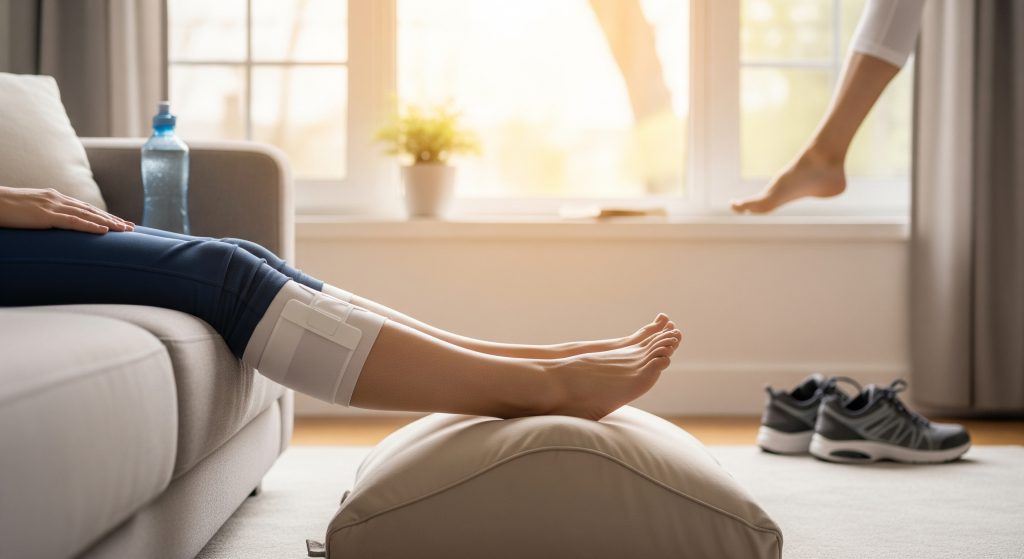
Elevation is foundational across many Leg Swelling Causes. The method is specific. Lie flat and raise the legs above heart level for 15 to 20 minutes. Repeat two to three times daily. I also suggest a pillow wedge for evening rest. Avoid half measures. Height and duration matter for fluid shift.
-
Position properly – heels supported, knees relaxed, hips neutral.
-
Combine with ankle pumps to engage the calf muscle pump.
-
Avoid prolonged sitting after an elevation session.
Compression Therapy Options
Compression improves venous return and reduces interstitial fluid. The right grade and fit are crucial. For many Leg Swelling Causes, knee-high graduated stockings suffice. I consider class I or II for daily control. Multilayer wraps help advanced cases and ulcer care. Intermittent pneumatic devices support patients with limited mobility. Fit testing avoids wasted effort.
Dietary Sodium Reduction
Excess sodium drives water retention. Reducing salt supports most Leg Swelling Causes that involve fluid overload. I recommend a food label audit and a short list of swaps. Choose unsalted nuts over crisps. Pick herbs and lemon over ready sauces. In heart failure, sodium restraint is often pivotal. Hydration remains important even during salt reduction.
Exercise and Movement
Motion is medicine for venous and lymphatic return. I use a simple routine for peripheral edema control.
-
Walk for 10 minutes, three times per day.
-
Perform 20 ankle pumps every hour while seated.
-
Add mini-squats and heel raises for two sets daily.
Water-based exercise aids deconditioned patients. Buoyancy reduces joint load and supports range. Over time, strength rises and swelling falls. Steady and repeatable wins.
Diuretic Medications
Diuretics address fluid overload from several Leg Swelling Causes, especially heart and renal conditions. I match the agent to the mechanism. Loop diuretics for congestion. Thiazides for mild hypertension with edema. Monitor weight, electrolytes, and kidney function. Over-diuresis will cause dizziness and cramps. The dose should follow the data, not habit.
Treating Underlying Conditions
Lasting relief requires upstream action. Each of the major Leg Swelling Causes has a core fix.
-
Venous disease – compression, ulcer care, and selected procedures for reflux.
-
Heart failure – guideline therapy, sodium restriction, and clear follow-up.
-
Renal or liver disease – targeted specialist management and nutrition.
-
Lymphoedema – skin care, compression, and manual drainage.
-
DVT – anticoagulation and graded return to activity.
This is the organising principle. Treat the cause and the swelling follows.
Massage and Lymphatic Drainage
Manual lymphatic drainage helps in selected cases. The technique is gentle and directional. It encourages proximal flow before distal work. I pair it with compression and exercise for best effect. Avoid deep tissue work in suspected DVT or acute infection. The right therapy at the wrong time creates risk.
Taking Action Against Leg Swelling
Most people want a reliable plan, not generic advice. Here is a concise path I use to triage Leg Swelling Causes and act.
-
Check for red flags. If present, seek urgent assessment.
-
Identify the pattern. Unilateral vs bilateral. Pitting vs non-pitting. Morning vs evening.
-
List likely causes based on pattern and history.
-
Start universal support – elevation, movement, and light compression if safe.
-
Arrange targeted tests only where they change management.
-
Address the cause and track response with simple measures.
Small, consistent changes add up. And yet, serious pathology must never be missed. Hold both truths together.
Frequently Asked Questions
When should I worry about swollen legs?
Concern rises with sudden onset, one-sided swelling, pain, chest symptoms, or skin colour change. These features suggest serious Leg Swelling Causes such as DVT or heart strain. Seek urgent care if any appear, or if swelling persists despite elevation and rest.
Can dehydration cause leg swelling?
Indirectly, yes. Dehydration can trigger hormonal responses that hold onto salt and water. That cycle may worsen peripheral edema in vulnerable people. True dehydration alone is not among primary Leg Swelling Causes, but it can aggravate an existing tendency.
Why do my legs swell more in summer?
Heat dilates veins and lowers venous tone. More fluid pools in dependent tissues by late afternoon. This effect magnifies other Leg Swelling Causes like venous insufficiency. Cooling, elevation, and compression can reduce the end-of-day build-up.
Is leg swelling always serious?
No. Many cases relate to prolonged standing, travel, or pregnancy. These are common Leg Swelling Causes with simple remedies. But swelling can also signal heart, kidney, liver, or clotting problems. The pattern and associated symptoms guide the level of concern.
How quickly should leg swelling resolve with treatment?
Mechanical measures help within days. Compression and elevation reduce girth and heaviness quickly. Diuretics for fluid overload work over 24 to 72 hours. Structural causes, like lymphoedema or venous reflux, improve over weeks with a steady plan.
Can certain foods reduce leg swelling?
Lower sodium intake helps where fluid overload drives swelling. Whole foods with minimal processing reduce hidden salt. Adequate protein supports oncotic pressure. These steps assist many Leg Swelling Causes, especially those with heart or liver involvement.

