






 We do what's right for you...


What Causes Ankle Pain and How to Get Fast Relief
Dr. Neetan Sachdeva
Rest it and wait is the usual advice for a sore ankle. It helps, but it is rarely enough on its own. I prefer a structured approach that reduces pain quickly, protects healing tissues, and restores function with smart progressions. In this guide, I outline what actually works for ankle pain relief, how to match treatment to the likely ankle pain causes, and which ankle pain exercises speed recovery without inviting setbacks.
Effective Methods for Fast Ankle Pain Relief
1. RICE Protocol for Immediate Relief
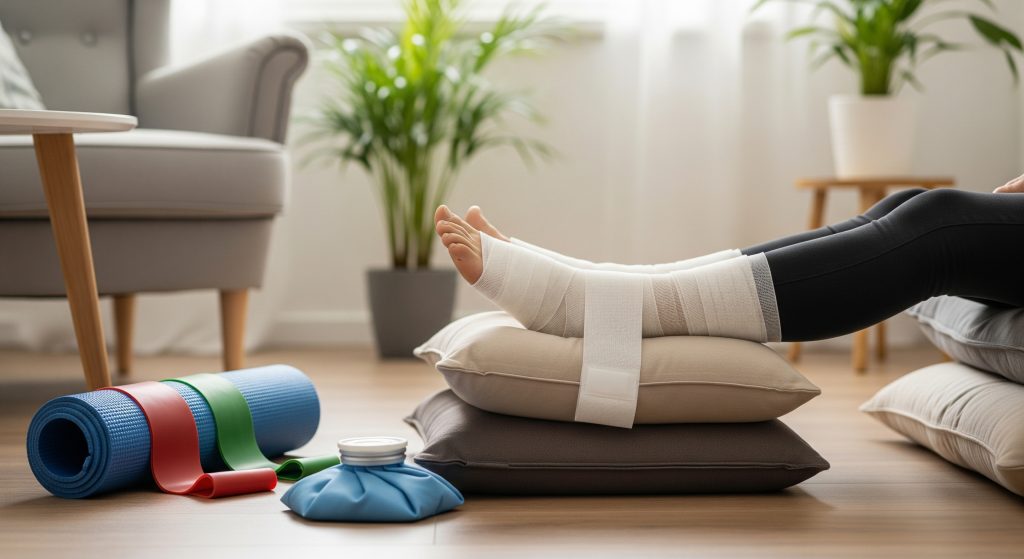
I start with RICE because it controls the early reaction and buys time for diagnosis. Rest limits further tissue stress. Ice eases pain and dampens swelling in the acute phase. Compression manages fluid build-up and provides light support. Elevation reduces pooling and throbbing. This quartet is simple, but it sets the stage for faster ankle pain relief and safer progression to activity. I also pair RICE with short walks at home once pain allows, as complete inactivity delays recovery.
-
Rest: brief relative rest, not bed rest.
-
Ice: short bouts, towel barrier, check skin.
-
Compression: snug wrap, reassess tightness.
-
Elevation: ankle higher than the hip when possible.
2. Over-the-Counter Pain Medications
For many people, simple medicines reduce pain enough to move and sleep. As Mayo Clinic notes, non-prescription options such as ibuprofen, naproxen sodium, or paracetamol are often sufficient after a sprain. I suggest using the lowest effective dose for the shortest period. Combine medication with RICE rather than using tablets to push through pain. That combination provides more reliable ankle pain relief than either method alone.
Two cautions. Anti-inflammatories are not for everyone. Check personal risks and current prescriptions. And do not mask severe pain to continue sport. That is how minor damage becomes an avoidable weeks-long problem.
3. Compression and Support Techniques
Compression reduces swelling and provides immediate comfort. A cohesive bandage or elastic wrap, applied from the forefoot upward, supports the joint and limits fluid accumulation. A figure-of-eight wrap is practical for most ankles. For added stability in the first days, an ankle sleeve or a semi-rigid brace can help during walking. Bracing is a tool, not a crutch. I use it to enable movement without provoking pain, then gradually taper as strength returns. This sequence accelerates ankle pain relief while protecting healing ligaments.
-
Elastic wrap for early swelling control.
-
Semi-rigid brace for short walks and errands.
-
Reassess fit as swelling changes.
4. Elevation and Positioning Methods
Elevation is simple but effective. I place the ankle on pillows so the heel sits supported and the forefoot is not compressed. Keeping the ankle above hip height reduces throbbing and allows the wrap to do its job. I also coach relaxed breathing while elevated. It helps people settle, which indirectly reduces muscle guarding. Small detail, real effect. Integrate elevation into the daily rhythm after small activity blocks to sustain ankle pain relief through the day.
Positioning during sleep matters too. A soft pillow under the calf avoids direct pressure on tender tissues and prevents awkward rotations that can flare symptoms overnight.
5. Cold and Heat Therapy Applications
Cold first, heat later is a useful rule of thumb. As Johns Hopkins Medicine explains, cold therapy reduces nerve activity and swelling; short applications of about 10 to 20 minutes with a cloth barrier are a safe pattern. I use cold in the early phase to modulate pain after activity bouts or rehab sessions.
Heat has a place once swelling settles. It relaxes tight muscles and eases stiffness before gentle mobility work. Some people benefit from contrast therapy, alternating cold and warmth, to stimulate circulation and comfort. If in doubt, choose cold early, then trial heat cautiously when the ankle is no longer puffy. The right modality at the right time extends ankle pain relief rather than provoking rebound soreness.
6. Gentle Stretching for Pain Reduction
Stretching reduces protective muscle tension and restores easy motion. I start with pain-free ankle circles, alphabet tracing in the air, and seated calf stretches with a strap. These movements lubricate the joint and improve comfort without loading weak tissues. Over a few days, I add kneeling ankle rocks and gentle dorsiflexion holds against a wall. This step is modest, but it compounds. Gradual mobility gains translate to steadier gait and sustained ankle pain relief during daily tasks.
-
Ankle circles: slow, controlled, pain-free range.
-
Calf strap stretch: light tension, steady breathing.
-
Kneeling rocks: small range, smooth rhythm.
Common Ankle Pain Causes and Their Specific Treatments
Ankle Sprains and Ligament Injuries
Sprains remain the leading ankle pain causes in sport and daily life. A sudden twist stresses the lateral ligaments and triggers swelling and bruising. I divide care into two phases. The protection phase focuses on RICE, supported loading, and a brace if walking is unsteady. The rebuild phase uses targeted strength and balance work to prevent recurrence. Early confidence with short, pain-free steps is a key signal that ankle pain relief strategies are working. Lingering instability needs structured rehab rather than repeated rest cycles.
-
Protect: wrap, elevate, short walks in a brace.
-
Rebuild: calf raises, band work, balance drills.
Arthritis-Related Ankle Pain
Osteoarthritis and inflammatory arthritis can both affect the ankle. The pattern often includes morning stiffness, swelling after activity, and reduced motion. Management begins with load management, supportive footwear, and mobility-focused physiotherapy. I emphasise strength in the calf and intrinsic foot muscles to share load more evenly across the joint. Well-chosen insoles may reduce irritation and maintain day-to-day ankle pain relief. If conservative measures plateau, medical options such as injections or surgical consultation may be appropriate, depending on severity and functional goals.
Achilles Tendonitis
Overuse of the calf complex can inflame the Achilles tendon. People notice pain at the back of the ankle, worse with stairs or first steps after sitting. I use relative rest, short cold applications after activity, and a progressive loading plan. Isometrics can provide quick comfort, then slow calf raises on the floor, followed by step-down eccentrics as symptoms settle. Footwear with a small heel lift can reduce tendon strain during walking. This plan improves tendon capacity and provides durable ankle pain relief without prolonged time off.
Plantar Fasciitis Impact on Ankles
Plantar fasciitis starts in the heel but often changes ankle mechanics. To avoid pain, people shorten stride and limit dorsiflexion, which strains the ankle joint. Treatment still centres on calf and plantar fascia stretches, gentle rolling, and supportive shoes with firm heel counters. When the heel settles, I add controlled ankle mobility to restore normal gait. That transition produces noticeable ankle pain relief in daily walking and reduces the risk of secondary sprains caused by guarded movement patterns.
Stress Fractures and Overuse Injuries
Bone stress reactions present as pinpoint pain that worsens with impact and eases at rest. Early recognition matters. If focal tenderness and swelling appear after a training spike, I shift to low-impact activity and request imaging if symptoms persist. A boot may be necessary for comfort in some cases. During deload, I maintain hip and knee strength to preserve readiness. Gradual reloading with cadence control and surface management prevents relapse. This measured approach restores confident movement and steady ankle pain relief.
Ankle Pain When Walking: Identifying Triggers
Many people report ankle pain when walking that flares after a few minutes, then lingers. Triggers vary. Tendon irritation, joint stiffness, or poor footwear can all contribute. I screen for stride length, foot rollover, and push-off symmetry. Small adjustments help. Shorter strides, a stable trainer with midfoot support, and a gentle warm-up walk before errands often change the experience quickly. Add two simple ankle pain exercises, such as seated calf raises and banded eversion, and walking tolerance usually improves within days.
Targeted Ankle Pain Exercises and Rehabilitation
1. Range of Motion Exercises
Restoring range without provoking pain is my priority early on. I begin with ankle clocks: point the toes like a second hand to trace circles in both directions. Then I add alphabet tracing and gentle dorsiflexion rocks against a wall. These drills reintroduce motion safely and help reduce stiffness. They also prepare the joint for later strengthening. The result is smoother gait and incremental ankle pain relief during simple tasks.
-
Circles: 20 slow reps each way.
-
Alphabet: upper and lower case, relaxed ankle.
-
Wall rocks: small, controlled shifts.
2. Strengthening Exercises for Ankle Stability
Strength protects. I build from easy to demanding. Start with seated calf raises and progress to standing double-leg, then single-leg. Add tibialis anterior work with controlled toe lifts against a wall. Finish with step-down eccentrics once pain is calm. This sequence improves force control through the full range. It supports consistent ankle pain relief because better strength means less irritation during daily loading.
-
Calf raises: floor, slow tempo, full heel lift.
-
Toe lifts: controlled up and down, avoid rocking.
-
Step-downs: small step, smooth lower, quiet landing.
3. Balance and Proprioception Training
After an injury, the body often loses its feel for joint position. I rebuild that sense with brief, frequent balance drills. Stand on one leg near a counter. Add head turns or gentle reach tasks. Progress to a cushion or balance pad when ready. Short, daily balance practice reduces re-sprain risk and supports long-term ankle pain relief by improving reflex control.
-
Single-leg stance: eyes forward, steady breathing.
-
Reach matrix: small reaches in three directions.
-
Cushion stance: only when pain-free on the floor.
4. Resistance Band Workouts
Bands let me target key motions without impact. Anchor a band for dorsiflexion pulls, then switch to plantarflexion, inversion, and eversion. Keep the shin steady and move only the foot. Two slow sets per direction build endurance without flaring symptoms. I integrate band work on alternate days with balance drills on the others. This rhythm consolidates gains and compounds ankle pain relief across the week.
-
Dorsiflexion pulls: toes toward you, steady tension.
-
Inversion-eversion: smooth arcs, no jerks.
-
Plantarflexion: full point, controlled return.
5. Low-Impact Activities for Recovery
Movement speeds recovery, provided impact stays low. I often start with stationary cycling, pool walking, or gentle yoga flows. These choices maintain circulation and joint nutrition while avoiding pounding. A short session after your exercises can flush stiffness and extend ankle pain relief for the rest of the day. When pain remains calm for a week, I add brisk walking intervals on flat ground.
Prevention Strategies and Long-Term Management
Proper Footwear Selection
Footwear is a frequent lever for both performance and comfort. I look for stable heel counters, adequate midfoot support, and a forefoot that bends where the toes bend. Grip matters on wet surfaces, and a secure fit prevents sliding that irritates tissues. For those with recurrent issues, a mild lateral support feature may reduce awkward roll moments. Better shoes reduce the load that your rehab must absorb and help maintain ankle pain relief during longer days.
|
Feature |
Why it matters |
|---|---|
|
Stable heel counter |
Limits unwanted roll and improves control. |
|
Midfoot support |
Shares load across the arch and ankle. |
|
Non-slip outsole |
Reduces slips on wet or smooth floors. |
|
Correct length and width |
Prevents rubbing and toe gripping. |
Lifestyle Modifications for Ankle Health
Capacity builds in training and decays with long inactivity. I recommend two habits that protect ankles year-round. First, warm up with calf raises, ankle circles, and short balance holds before sport. Second, maintain two brief strength sessions per week for calves and peroneals. If weight is trending up, small changes in activity and diet support ankle pain relief by reducing joint load. Finally, rotate training surfaces and volumes to avoid predictable overuse spikes.
-
Warm up: 5 minutes of specific ankle prep.
-
Strength maintenance: 2 short sessions weekly.
-
Plan training: avoid sudden volume jumps.
When to Seek Professional Medical Help
Some presentations require prompt assessment. Inability to bear weight, visible deformity, or numbness are red flags. As Mass General Brigham notes, pain that fails to improve within 48 to 72 hours, or extreme swelling and bruising after a twist, warrants medical review. An experienced clinician can differentiate sprain from fracture, guide imaging, and set the right loading plan. Early clarity prevents chronic instability and preserves the gains you make with rehab.
Alternative Therapies and Complementary Treatments
Some complementary options fit well within a conventional plan. Gentle massage reduces guarding. Mindfulness practice can moderate pain perception and improve adherence to exercises. Acupuncture may assist comfort for select individuals. I position these as adjuncts rather than replacements. The core drivers remain activity modification, progressive loading, and good footwear. Use complementary care to extend ankle pain relief, not to avoid the essentials of strength and balance work.
Taking Control of Your Ankle Pain Relief Journey
Fast comfort is the start, not the finish. The reliable path is simple: calm the joint, restore motion, build strength, and sharpen balance. Then test capacity with controlled walking, cycling, or yoga. Track what helps and what irritates. Adjust volume before pain spikes. If obstacles persist, seek a clear diagnosis and refine the plan. With that methodical approach, ankle pain relief becomes durable and your confidence returns to daily movement, sport, and the long days that demand both.
Frequently Asked Questions
How long does ankle pain typically last after an injury?
Recovery varies with severity and loading. Mild sprains often settle in a few weeks when managed with RICE, compression, and early mobility. Moderate sprains can require longer due to swelling and instability. A structured plan that restores strength and balance delivers more dependable ankle pain relief than rest alone.
Can I exercise with mild ankle pain?
Yes, if pain is mild and improving with movement. Choose low-impact drills and ankle pain exercises that do not provoke symptoms during or the day after. Prioritise range of motion, gentle calf work, and balance holds. Reduce or avoid impact work until walking is steady and swelling is minimal.
What are the warning signs that ankle pain needs immediate medical attention?
Inability to bear weight, severe swelling, marked deformity, or numbness indicates urgency. A loud pop at injury with rapid bruising is also concerning. If home care fails to improve symptoms over a short period, arrange assessment. Timely diagnosis protects long-term ankle pain relief.
Which ankle pain exercises are safe for beginners?
Start with ankle circles, alphabet tracing, seated calf raises, and gentle banded pulls. Add single-leg balance near a stable surface. Keep tempo slow and range pain-free. These choices support joint nutrition, improve control, and deliver early ankle pain relief without unnecessary strain.
Why does ankle pain worsen at night?
Reduced daytime movement allows fluid to pool and tissues to stiffen. Night positions may also pressure tender areas. Elevation before bed, a short bout of gentle mobility, and a supportive pillow under the calf often help. These small steps preserve ankle pain relief into the night.
Are home remedies effective for chronic ankle pain relief?
Home strategies help when they are part of a plan. Footwear changes, activity pacing, mobility work, and progressive strengthening provide lasting benefits. Cold or heat can assist comfort at the right times. If symptoms persist or function stalls, seek guidance to address the underlying ankle pain causes.

