






 We do what's right for you...


What Are the Main Causes of Bladder Cancer in India?
Dr. Mohammed Tabish Rayee
Conventional advice often reduces bladder risk to smoking alone. That view is incomplete. In India, the picture includes tobacco in many forms, contaminated groundwater in specific belts, and exposure to industrial chemicals in everyday work. I outline the main bladder cancer causes as they apply to the Indian context, then link them to warning signs, bladder cancer stages, treatments, and what action actually changes outcomes. The goal is simple. Clarity that supports earlier assessment and better decisions.
Primary Causes of Bladder Cancer in India
Tobacco Smoking and Risk Levels
Combustible tobacco remains the single most important driver among bladder cancer causes. Smoke carries carcinogens that enter the bloodstream and reach the urothelium, where they irritate and damage DNA over years. Cigarettes lead this risk. Cigars and waterpipes also contribute, as the underlying exposure is chemical rather than the specific format of use. In practice, risk rises with intensity and duration of smoking, and falls after cessation. The curve does not flatten immediately, but the direction improves.
-
Heavy daily smoking stacks exposure. So does starting young.
-
Secondhand smoke adds marginal risk in high exposure settings.
-
Stopping reduces risk over time. Earlier is better.
I stress hydration and smoke cessation together. It is basic, not simplistic. Well hydrated urine dilutes and decreases the contact time of carcinogens with the bladder lining. But abstinence from smoke is the core move.
Smokeless Tobacco Products
India’s smokeless products widen the map of bladder cancer causes. Khaini, gutkha, zarda, and betel quid with tobacco deliver nitrosamines and heavy metals to the urinary tract. These compounds are carcinogenic after metabolic activation and excretion. The problem scales with frequency and the duration of use. Quitting is not trivial, but it is achievable with structured support and nicotine replacement. Policy environments matter too, yet individual action still pays off.
-
Do not assume smokeless equals harmless. The mechanism is different, not safer.
-
Look for quit-line support, behavioural counselling, and step-down plans.
Arsenic-Contaminated Drinking Water
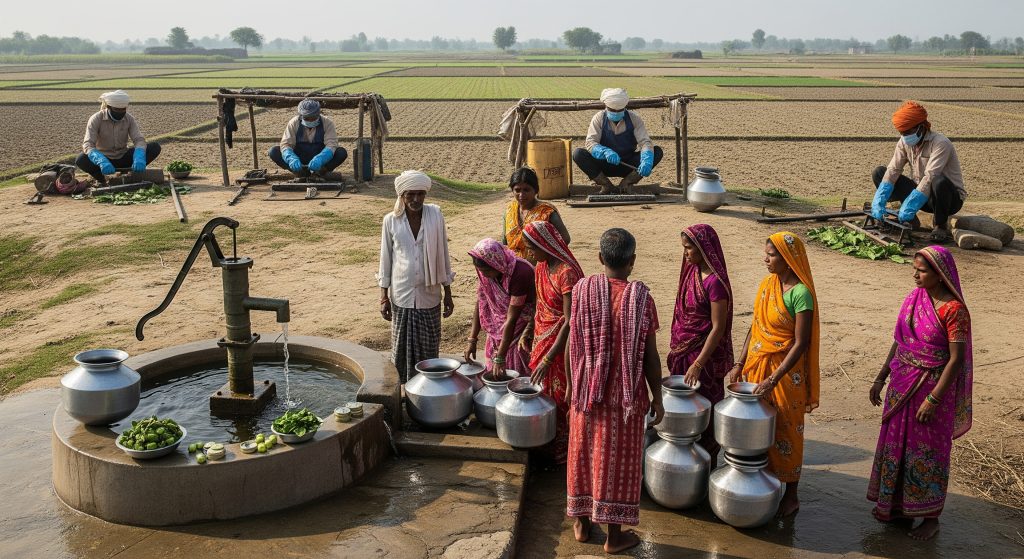
Groundwater arsenic is a serious contributor among bladder cancer causes in alluvial belts. The risk arises from chronic intake of contaminated water that is drawn from shallow tube wells or poorly tested sources. At higher concentrations, risk rises materially for several cancers. As PMC notes, very high arsenic levels in drinking water have been linked to elevated bladder cancer risk, especially with long exposure durations.
Where does this matter in India. Eastern and north-eastern districts report recurrent issues, with several blocks requiring remediation or source switching. Practical risk reduction looks plain but decisive.
-
Test the water source. Use certified labs or government testing camps.
-
Prefer piped, treated water or verified deep aquifers where available.
-
Use household treatment only if it is certified for arsenic removal.
This is one area where community-level action is as important as personal habits. One unsafe village well can sustain exposure for decades.
Industrial Chemical Exposures
Industrial chemicals are another clear strand in bladder cancer causes. The classic culprits are aromatic amines used in dye and rubber processes. Exposure can occur in manufacturing, printing, leather finishing, and auxiliary operations like cleaning vats. Solvents also matter in some lines, particularly where ventilation is poor and personal protection is inconsistent. The mechanism is again biological activation and excretion, which brings metabolites into prolonged contact with the bladder mucosa.
-
High-risk tasks: mixing, dyeing, cutting, cleaning, and waste handling.
-
Risk accumulates with unprotected exposure and poor engineering controls.
-
Periodic occupational health checks can pick up early urinary abnormalities.
Respiratory protection alone is insufficient if dermal exposure remains. The correct hierarchy prioritises substitution, containment, and then personal protective equipment.
Occupational Risk Groups
Bladder cancer causes often cluster in specific jobs because exposure pathways repeat daily. Painters, dye workers, rubber and leather workers, some hairdressers, dry cleaners, and long-term users of organic solvents have been profiled internationally as higher risk groups. In the Indian setting, small workshops and informal units face added vulnerability because compliance systems are variable. As PMC reports, occupational hazards account for approximately 10% of bladder cancer cases, highlighting the need for structured workplace controls and medical surveillance.
Controls that actually work include closed transfer for chemicals, local exhaust ventilation, gloves suited to the chemical class, and written change-out schedules for filters. Training is not a once-a-year exercise. It must be tied to task risk and monitored.
Warning Signs and Symptoms
Blood in Urine (Haematuria)
Visible blood in urine is the most consistent early signal. It may appear once and then clear, which tempts delay. That is a mistake. Microscopic haematuria also matters when found on routine testing. The key point is simple. Any unexplained haematuria warrants a structured evaluation that rules out stones, infection, and tumours in an orderly sequence. Imaging, urine cytology, and cystoscopy form the backbone of that workup.
-
Single episode or recurrent, both need evaluation if the cause is unclear.
-
Anticoagulants may uncover bleeding but do not explain a tumour away.
Early assessment enables organ-sparing options. Delay narrows choices.
Urinary Changes and Frequency
Beyond haematuria, changes in frequency, urgency, and nocturia can signal bladder irritation. These overlap with benign conditions, especially urinary tract infection and overactive bladder. That overlap confuses many cases at first contact. A trial of antibiotics is reasonable if infection is likely, but unresolved symptoms should not drift for months. Escalate to imaging and endoscopic review if red flags persist.
-
Watch for urgency, frequency, and burning without clear infection.
-
Track recurrence over weeks, not years. Patterns matter.
When counselled clearly, patients describe patterns more precisely. That improves the diagnostic yield.
Pain and Discomfort Patterns
Early bladder tumours are often painless. When pain occurs, it is usually suprapubic discomfort, flank pain from obstruction, or dysuria that does not fit a typical infection. Pelvic pain intensifies as disease invades muscle or adjacent structures. It is not the severity alone. It is the combination with bleeding or recurrent urinary symptoms that raises concern.
Analgesics can mask important signals. Document symptoms before medication when feasible.
Differences Between UTI and Bladder Cancer
UTI usually presents with fever, dysuria, urgency, and sometimes foul-smelling urine. Cultures are positive and symptoms respond to targeted therapy. Bladder cancer tends to recur with sterile cultures and intermittent visible bleeding. Another clue is age and risk profile. Smokers and those with industrial exposures deserve lower thresholds for referral. One caution. Both conditions can coexist, which complicates interpretation.
-
Recurrent UTI with negative culture warrants urology review.
-
Haematuria plus irritative symptoms is a reason to investigate further.
Clear pathways reduce delay. That is the point of primary care algorithms.
When to Seek Medical Attention
Immediate review is justified for any episode of visible haematuria, persistent microscopic haematuria without explanation, or urinary symptoms that fail reasonable therapy. Those with known exposures or tobacco history should not defer. Presenting early expands treatment options and reduces the need for radical surgery. It also avoids the slow drift that many regret later. Put simply. If in doubt, check.
Bladder Cancer Stages and Treatment Options
Non-Muscle Invasive Bladder Cancer
Non-muscle invasive disease remains limited to the mucosa or lamina propria. It is treated primarily with transurethral resection and tailored intravesical therapy. Risk stratification guides intensity. Low risk tumours may need a single immediate instillation. High risk disease may require induction and maintenance with intravesical immunotherapy or chemotherapy. When people ask about bladder cancer stages, this is usually where the conversation begins, because surveillance schedules and recurrence risk hinge on this category.
-
Critical steps: complete resection, risk assignment, and a clear follow-up plan.
-
Surveillance uses cystoscopy at defined intervals. Compliance matters.
Recurrence is common to an extent, but progression can be contained with vigilant care.
Muscle Invasive Bladder Cancer
Once tumour invades detrusor muscle, the strategy changes. Curative options focus on radical cystectomy with urinary diversion, or bladder preservation using chemoradiation in well selected cases. Neoadjuvant chemotherapy improves control and survival in eligible patients. Decision making weighs tumour stage, performance status, kidney function, and patient preference. MDT review is essential here.
-
Fit patients often receive neoadjuvant chemotherapy before surgery.
-
Bladder preservation protocols demand strict imaging and cystoscopic response checks.
Quality outcomes depend on centre experience. Volume correlates with perioperative safety, though not without exceptions.
Metastatic Bladder Cancer
Metastatic disease requires systemic therapy. First-line options include platinum-based regimens where renal function allows. Immunotherapy is now an established line in several settings. Targeted agents or antibody drug conjugates are used based on prior treatments and biomarkers. Palliative radiotherapy helps with pain or bleeding control. Clear goals of care should be set early and reviewed as disease biology declares itself.
Hope is realistic, but it must be calibrated. Control and comfort can coexist.
Surgery and Bladder Removal
Radical cystectomy removes the bladder and nearby nodes, with urinary diversion via ileal conduit, neobladder, or continent reservoir. Each diversion has trade-offs in continence, complexity, and long-term care. Enhanced recovery protocols reduce complications and hospital stay. Prehabilitation improves resilience through nutrition and conditioning. The surgical plan must also include sexual function and fertility counselling ahead of time.
|
Diversion |
Typical Considerations |
|---|---|
|
Ileal conduit |
Shortest operative time, stoma care required, reliable drainage |
|
Orthotopic neobladder |
No stoma, continent potential, requires training and good renal function |
|
Continent reservoir |
Catheterisation through stoma, body image benefit, more follow-up |
Technique choice should align with anatomy, oncological safety, and the patient’s capacity for self-care.
Chemotherapy and Immunotherapy
In non-muscle invasive disease, intravesical therapy provides high local concentration with limited systemic exposure. In muscle invasive and metastatic settings, systemic chemotherapy remains central when kidneys tolerate cisplatin. Immunotherapy agents can deliver durable responses in a subset, particularly where PD-L1 expression or high tumour mutational burden is present. Biomarker testing is not academic. It changes lines of therapy.
-
Cisplatin ineligibility shifts regimens, often to carboplatin-based approaches.
-
Immune-related adverse events require prompt recognition and steroids.
Combination sequences continue to evolve. Evidence updates are frequent, and local availability varies.
Radiation Therapy Options
Radiotherapy supports both curative and palliative aims. In bladder preservation, it pairs with radiosensitising chemotherapy and strict selection. Dose and field planning must respect bowel and marrow constraints. For palliation, short hypofractionated schedules control bleeding and pain with minimal burden. Motion management and adaptive planning help maintain precision.
Good radiotherapy is not just about machines. It is contouring, QA, and team discipline.
Survival Rates and Prognosis in India
Five-Year Survival Statistics by Stage
Five-year outcomes vary strongly by stage at diagnosis and completeness of treatment. Non-muscle invasive disease has favourable control when resected fully and managed with appropriate intravesical therapy. Muscle invasive disease does better with timely systemic therapy and radical treatment, ideally in high-experience centres. Metastatic disease outcomes are improving with immunotherapy combinations, though response heterogeneity remains.
-
Stage at diagnosis remains the dominant determinant of trajectory.
-
Treatment intent and fitness shape the curve as much as biology.
Discussions about bladder cancer survival rates should state stage and treatment received. Otherwise, numbers mislead.
Age-Related Survival Differences
Age influences prognosis through biology, comorbidity, and treatment tolerance. Younger patients often present with lower stage disease and tolerate intensive therapy better, which improves outcomes. Older patients carry more comorbid conditions and may have reduced renal function, limiting options. As far as current data suggests, careful optimisation and geriatric assessment can narrow this gap for many.
Chronological age is a proxy. Physiological fitness is the variable to measure.
Factors Affecting Prognosis
Several variables modify outlook beyond stage. The most consistent include grade, variant histology, lymphovascular invasion, nodal status, performance status, and renal function. Treatment timing is another lever. Delays from decision to surgery or therapy initiation can erode control. Access to experienced centres and adherence to surveillance also matter, particularly in non-muscle invasive disease where recurrence risk is meaningful.
-
Smoking status at diagnosis correlates with recurrence and complications.
-
Occupational exposure history can hint at multifocal disease biology.
-
Response to neoadjuvant chemotherapy is a strong prognostic signal.
Prognosis is not static. It updates with each response assessment and follow-up cystoscopy.
Gender Differences in Outcomes
Men are diagnosed more often. Women sometimes present later because haematuria is misattributed or symptoms are less specific. This timing issue can translate into stage differences at diagnosis. Outcomes then follow the biology and the pathways of care. Better awareness and direct referral protocols can shrink this gap. The message for clinicians is straightforward. Do not downplay haematuria in women or delay cystoscopic evaluation.
Equity in evaluation leads to equity in outcomes. That is actionable.
Taking Action Against Bladder Cancer
Risk reduction and early detection do not require exotic measures. They require consistent ones. Here is a practical checklist aligned to the main bladder cancer causes and the clinical pathways described above.
-
Stop tobacco in all forms.
-
Set a quit date. Use pharmacotherapy and counselling. Track lapses without shame.
-
Hydrate well to dilute urinary carcinogens. It complements cessation.
-
-
Secure safe drinking water.
-
Test private wells if you live in known risk belts. Switch to treated sources when feasible.
-
Use certified arsenic filters if piped options are unavailable.
-
-
Reduce occupational exposure.
-
Ask for safety data sheets and fit-tested PPE. Gloves must match solvent class.
-
Push for engineering controls and closed handling. Document training completion.
-
-
Escalate early for haematuria or persistent urinary symptoms.
-
If infection treatments fail, seek urology review. Do not cycle antibiotics endlessly.
-
Follow through with imaging, cytology, and cystoscopy when advised.
-
-
Choose centres with volume and clear protocols.
-
Ask about MDT meetings, diversion options, and enhanced recovery pathways.
-
Confirm surveillance schedules and contact points for new symptoms.
-
Prevention and prompt evaluation are the levers within reach. Use them consistently, and outcomes change.
Frequently Asked Questions
How much does smoking increase bladder cancer risk in India?
The increase varies by intensity and duration, but smoking remains the leading modifiable factor among bladder cancer causes. Heavy, long-term smoking multiplies risk compared with never-smokers. Stopping reduces risk progressively over time. The reduction is meaningful even after decades of exposure.
Which Indian states have highest arsenic contamination affecting bladder cancer rates?
Groundwater arsenic has been reported in parts of West Bengal, Bihar, Jharkhand, Assam, and Uttar Pradesh. Districts within these states differ widely. Local testing is therefore essential. Where contamination persists, switching to treated piped water or verified deep aquifers is advisable.
Can bladder cancer be completely cured if detected early?
Yes, early-stage disease can be cured with complete resection and appropriate intravesical therapy, or with bladder preservation protocols in selected cases. Cure rates are highest when diagnosis occurs before muscle invasion. Adherence to surveillance prevents missed recurrences and supports durable control.
What occupations have the highest bladder cancer risk in India?
Higher risk is seen in dye and textile work, rubber and leather processing, painting, dry cleaning, and some hairdressing roles. The common thread is exposure to aromatic amines or organic solvents without robust controls. As PMC highlights, occupational factors contribute to approximately 10% of cases, underscoring the value of engineered controls and medical surveillance.
Is bladder cancer hereditary or only caused by environmental factors?
Most cases relate to environmental and occupational exposures and personal habits such as tobacco use. Hereditary syndromes exist but are uncommon. Family history can still influence risk perception and vigilance. If multiple relatives had urothelial or related cancers at young ages, a genetics review is reasonable.
bladder cancer causes

