






 We do what's right for you...


What Are the Best Shin Splints Exercises for Quick Pain Relief?
Dr. Ali Haider Khan


Rest alone rarely fixes medial shin pain. Strength and mobility do. I use a simple structure: reduce irritation, restore range, then rebuild load tolerance. The following programme prioritises fast relief without skipping the fundamentals. It focuses on precise technique, clear progressions, and realistic timelines. I keep the guidance practical and measurable, because that is what helps people return to running safely.
Top Shin Splints Exercises for Immediate Pain Relief
In acute phases, I select shin splints exercises that reduce tension and improve circulation. The goal is relief now and better loading tomorrow. I keep the volume modest and the tempo steady to avoid flare ups.
1. Calf Stretches for Quick Relief
This stretch targets the gastrocnemius. It often eases pulling at the shin by reducing calf stiffness. I coach alignment first, then gentle load.
-
Face a wall. Step the sore leg back with the knee straight.
-
Keep the heel down and toes pointing forwards.
-
Lean in until a firm stretch is felt high in the calf.
-
Hold 30 seconds. Repeat 3 to 4 times per side.
I include this early within shin splints exercises to reduce compensatory overstride. Subtle change, meaningful effect.
-
Common cue: ribs down, pelvis neutral.
-
Stop if numbness or sharp pain appears.
2. Toe Taps for Strengthening
Toe taps activate tibialis anterior with low impact. They build endurance that supports the shin during stance and swing.
-
Sit tall on a chair with feet flat.
-
Lift toes up, keep heels planted.
-
Tap the toes up and down with control.
-
Perform 3 sets of 20 to 30 taps.
I class this as a gateway movement within shin splints exercises. It reinforces dorsiflexion without compressive load.
3. Heel Raises for Calf Stability
Strong calves lower stress on the shin by sharing load. Technique matters more than height.
-
Stand near support. Feet hip width.
-
Press through the big toe and second toe.
-
Rise smoothly. Pause. Lower for 3 seconds.
-
Start with 3 sets of 10 to 12 repetitions.
I include slow eccentrics within shin splints exercises to condition tendons. Quality beats quantity here.
-
Progress to single leg when symptoms settle.
-
Avoid rolling to the outside of the foot.
4. Soleus Stretches with Bent Knee
This variation targets the deep calf. It often unlocks limited ankle mobility that drives shin overload.
-
Stand facing a wall. Step the sore leg back.
-
Bend both knees, keep the back heel down.
-
Shift weight forwards until a stretch is felt low in the calf.
-
Hold 30 to 45 seconds. Repeat 3 times.
I place this early in shin splints exercises because the soleus works hard during mid stance. It deserves specific care.
5. Heel and Toe Walking Exercises
These drills train foot control and endurance with light load. They also reveal asymmetry quickly.
-
Heel walk for 20 metres. Toes lifted, knees soft.
-
Rest, then toe walk for 20 metres. Heels high, posture tall.
-
Complete 2 to 3 rounds if symptoms allow.
As part of shin splints exercises, this pairing builds tolerance through the ankle complex. Short distance, high focus.
6. Foam Rolling for Muscle Release
Foam rolling reduces tone in tight tissues around the shin. It is not a cure, but it helps prepare for loading.
-
Roll the calf from ankle to knee. Pause on tender spots.
-
Use a ball for the tibialis anterior, gently.
-
Spend 60 to 90 seconds per region.
I integrate this between shin splints exercises to improve comfort. Light pressure only during irritable phases.
-
Avoid direct rolling on the shin bone.
-
Breathe slowly to reduce guarding.
7. Resistance Band Ankle Exercises
Targeted band work strengthens the ankle in four planes. Control through range is the priority.
-
Dorsiflexion: band over forefoot, pull toes towards shin.
-
Plantarflexion: band anchored, press away as if gas pedal.
-
Inversion and eversion: move the foot inward and outward.
I rotate these within shin splints exercises on alternate days. Two sets of 12 to 15 repetitions per direction is sufficient.
Targeted Stretching Routines for Shin Splints Treatment
Specific mobility reduces hotspot loading and improves gait mechanics. I organise these into short blocks that fit alongside shin splints exercises. This supports comprehensive shin splints treatment without overcomplication.
Tibialis Anterior Stretches
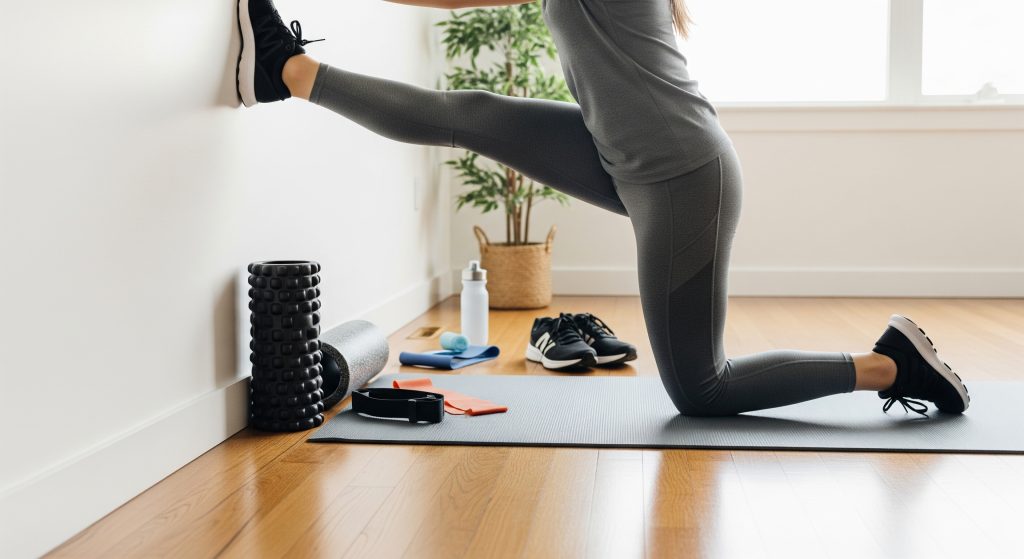
Kneel or sit with the ankles pointed. Gently press the tops of the feet into the floor. Hold a mild stretch across the front of the shin. I use this in tandem with shin splints exercises to balance tension front to back.
-
Hold 20 to 30 seconds.
-
Repeat 3 to 4 times.
Achilles Tendon Mobility Work
Stiffness at the Achilles often limits ankle dorsiflexion. I coach slow calf pumps against a band to mobilise the tendon safely. This integrates well with shin splints exercises during warm up.
-
Perform 20 slow pulses.
-
Stop if morning stiffness worsens the next day.
Standing Wall Calf Stretches
The wall setup offers reproducible alignment. I cue a straight back knee and a level pelvis. It complements other shin splints exercises by ensuring reliable end range loading.
-
Hold 30 seconds per set.
-
Repeat 3 sets per side.
Seated Shin Muscle Stretches
In seated position, point the toes and gently curl them under. This targets the toe extensors and front compartment. I pair it with light toe spreads from the shin splints exercises menu.
Towel Stretches for Flexibility
Use a towel looped around the forefoot to pull into dorsiflexion. Keep the knee straight to bias the gastrocnemius. I often alternate this with bent knee holds to match demands from shin splints exercises.
Kneeling Shin Stretches
From tall kneeling, sit back onto the heels with care. If comfortable, add a small lean to one side. This creates a precise stretch along the tibialis anterior. I schedule this after shin splints exercises to reset tone.
Strengthening Programme to Prevent Shin Splints
Strength closes the gap between pain relief and performance. I prioritise stability, foot control, and progressive calf load. These integrate seamlessly with earlier shin splints exercises.
Single-Leg Balance Training
Stand on one leg for 30 to 45 seconds. Keep the big toe grounded and the hip level. Add head turns or eyes closed to progress. This stability work complements shin splints exercises by reducing wobble at foot strike.
-
Complete 3 to 4 rounds per side.
-
Train near something stable for safety.
Step-Up Exercises for Lower Legs
Use a low step first. Drive through the midfoot, control the descent for 3 seconds. Choose a height that keeps the knee tracking. I align this with shin splints exercises to build controlled force acceptance.
-
3 sets of 8 to 12 repetitions per side.
-
Hold light dumbbells when pain free.
Foot Intrinsic Muscle Exercises
Short foot drills teach the arch to support load. Pull the ball of the foot towards the heel without toe curling. This integrates with shin splints exercises by improving foot stiffness at push off.
-
Hold 5 seconds for 8 to 10 repetitions.
-
Practice barefoot on a firm surface.
Progressive Calf Raise Variations
Progress from two legs to single leg, then deficit raises on a step. Add tempo and pauses at mid range. These progressions pair with shin splints exercises to restore running tolerance methodically.
-
Target 3 sessions per week.
-
Leave 2 to 3 reps in reserve during rehab.
Core Stability for Lower Leg Support
Pallof press and side plank improve pelvic control. Better trunk control reduces overstride and braking forces. This indirectly supports the shin during stance. I programme them alongside shin splints exercises to unify the chain.
Hip Strengthening Exercises
Glute bridge and hip abduction raise frontal plane stability. Fewer knee collapses mean less tibial stress. I maintain these while returning to running. They complement the foot focus within shin splints exercises.
Recovery Methods and When to Return to Activity
Rehab is not only about exercises. Load management and symptom rules guide safe decisions. I prefer simple rules that are easy to apply in training.
Rest and Activity Modification Guidelines
Reduce impact volume first, not all movement. Keep pain at or below mild during daily tasks. I keep walking, cycling, and mobility whilst limiting hills and speed. These adjustments protect gains from shin splints exercises.
-
Avoid back-to-back hard sessions.
-
Use soft surfaces during early phases.
Ice Therapy Application Techniques
Use ice for comfort during flare ups. Apply for 10 to 15 minutes with a thin cloth barrier. I schedule it after training or after shin splints exercises to moderate post session soreness.
Gradual Return to Running Protocol
Begin with run walk intervals on flat ground. Increase total running time by small increments per session. Hold pace easy and cadence steady. Keep the strength and shin splints exercises on non running days initially.
-
Week 1: 1 minute run, 2 minutes walk, repeat for 20 minutes.
-
Week 2: 2 minutes run, 1 minute walk, repeat for 24 minutes.
-
Advance only if symptoms remain stable.
Cross-Training Alternatives During Recovery
Elliptical, cycling, and deep water running maintain fitness with lower tibial stress. Rowing suits many as well. I rotate modalities to avoid monotony. This preserves capacity whilst the shin splints exercises rebuild tolerance.
Warning Signs to Stop Exercise
Stop if pain sharpens, swelling develops, or night pain appears. Reduce load if morning pain increases meaningfully. If symptoms escalate despite modified training, pause. Restart with a shorter block of shin splints exercises and reassess.
Conclusion
Effective care follows a clear order: calm symptoms, restore movement, then strengthen for lasting change. I rely on a concise set of shin splints exercises and pair them with mobility and progressive loading. This structure supports both quick relief and sustainable performance. For persistent cases, integrate these steps within a broader shin splints treatment plan and consult a clinician. The objective is consistent progress, not heroic sessions. Build capacity steadily and running becomes enjoyable again.
Frequently Asked Questions
How long should I hold each shin splint stretch?
I recommend 20 to 45 seconds per hold, repeated 3 to 4 times. Shorter holds suit acute pain. Longer holds suit stiff but calm tissues. Integrate holds around your shin splints exercises rather than replacing them.
Can I continue running whilst experiencing mild shin splint pain?
Yes, if pain stays mild during and after the run, and settles by the next morning. Reduce distance and remove hills. Keep the shin splints exercises on alternate days to maintain tissue capacity.
How many times per week should I perform shin splint exercises?
Two to four sessions per week works for most people. Alternate focus between mobility and strength. Keep one lighter day for recovery. Progress volume only when symptoms remain stable across sessions of shin splints exercises.
What footwear changes help reduce shin splint symptoms?
Choose shoes with adequate cushioning, a stable platform, and a secure heel counter. Replace worn pairs promptly. Consider a gradual shift away from overly soft midsoles. I align footwear adjustments with your shin splints exercises plan.
When should I seek professional medical help for shin splints?
Seek assessment if pain persists at rest, night pain develops, or tenderness localises to a sharp point on bone. Also seek help if symptoms fail to improve after two to three weeks of structured shin splints exercises.
Are compression socks effective for shin splint recovery?
Compression socks can improve comfort and reduce perceived fatigue. They do not replace strength or mobility work. Use them alongside your shin splints exercises and load management for best results.

